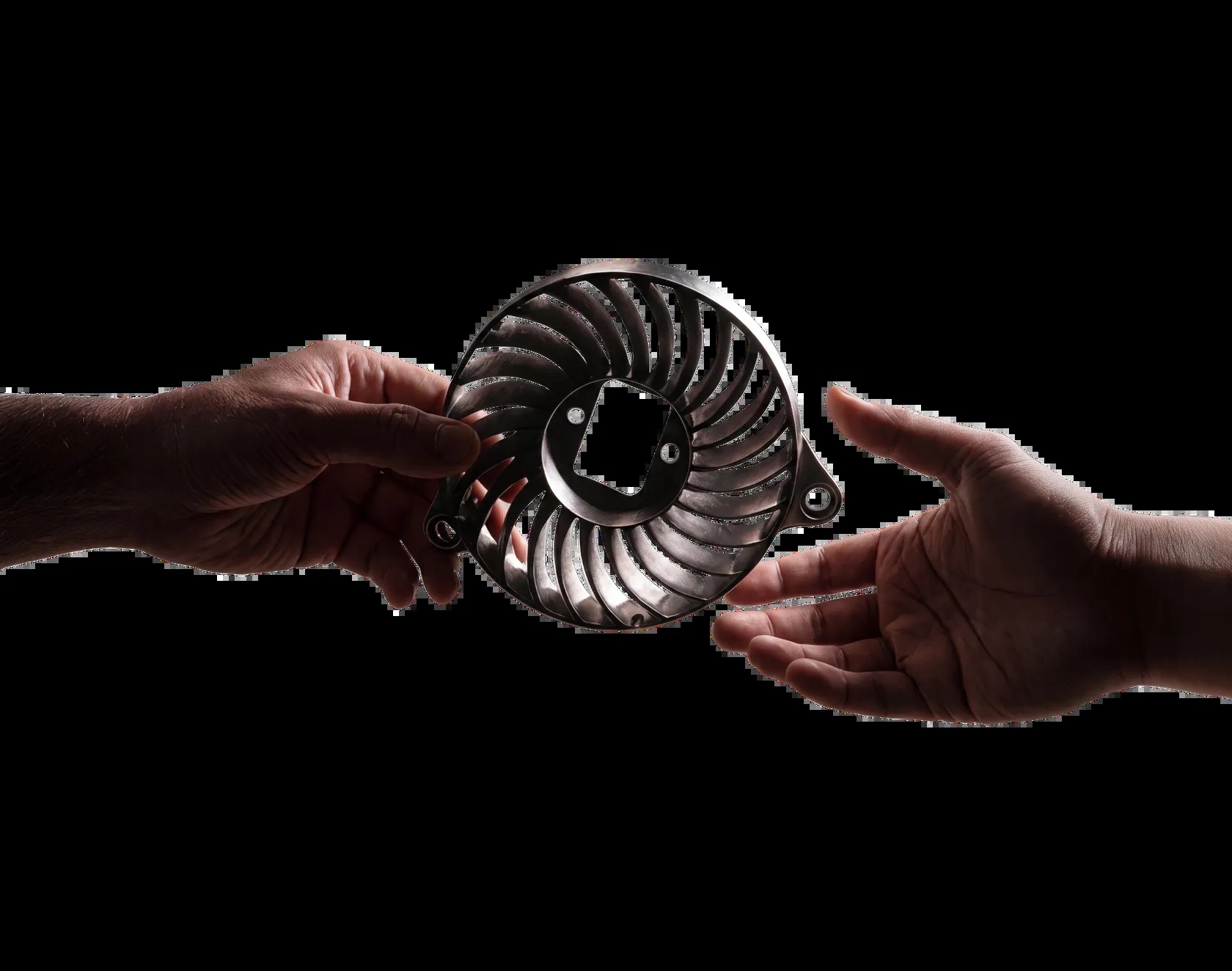
The object that helped launch Foundry Lab was a metal bracket. David Moodie had made it with borrowed equipment and materials, and showed it to WNT Ventures. A bracket is an excellent antidote to startup theatre: nobody applauds its vision. It either does its job or it does not. This one suggested that a stubborn manufacturing problem might have a practical answer.
- Print a ceramic mold, then cast the metal inside it.
- Keep casting’s material behavior for meaningful functional tests.
- Buy parts through FoundryLab Direct, or explore an in-house system.
A metal bracket with better manners
Moodie was running an industrial design consultancy, Makegood. Developing products had exposed an awkward gap. A manufacturer could obtain something shaped like the proposed component, yet still struggle to obtain a prototype made by the process intended for production. Geometry was only half the conversation. Strength and heat dissipation had to enter it too.
The familiar remedies carried their own inconveniences. Conventional casting demanded preparation and tooling. Direct metal printing offered another manufacturing route, with different material behavior. For a design destined to be cast, testing a substitute could leave the central question unanswered. Foundry Lab’s opportunity lay in making the relevant specimen sooner.
The company’s historical account dates microwave experiments to 2017. By 2018, WNT was backing the project. Moodie had not initially set out to raise money or build an international business. Technical and commercial diligence helped reveal the opportunity. There was, however, a considerable distance between a promising bracket and a machine somebody else could operate.
“I had cast a few parts but not a full system.”David Moodie, recalling the early investment
Print the thing around the thing
Foundry Lab’s trick is to give 3D printing a different assignment. It prints the ceramic mold. Metal feedstock goes into that mold, and a proprietary microwave furnace melts it into the required form. Cooling solidifies the casting. The workflow avoids the separate act of pouring molten metal familiar from a conventional foundry.
- 01DesignCAD + specifications
- 02PrintCeramic mold
- 03CastMelt + solidify
- 04FinishPrepare + inspect
The distinction matters. This is still casting, with casting’s finishing requirements. Removing a sprue, for example, remains part of the work. The novelty is the preparation and controlled furnace process, rather than a suspension of metallurgy. Engineers get a faster route to the kind of part their design calls for.
In 2021, the company reported making aluminum brake shoes from CAD in under eight hours. Its current service advertises 72 hours. Those figures describe different scopes: an early demonstration and today’s customer-facing proposition. Treating them as interchangeable would make a tidy chart and a poor purchasing decision.
The steel pin is the point
Eaton supplied a more revealing example than a stopwatch. In a development effort announced in November 2023, Foundry Lab cast aluminum components containing stainless steel pins. The application required preserving a conventional casting method and material while incorporating an existing feature. Changing the design to accommodate a new process would itself create engineering work.
This is where the company fits among manufacturing alternatives. A printer, machine shop or traditional foundry may each be appropriate. Foundry Lab competes for work where the casting is important and the delay is painful: functional prototypes, small batches and legacy components. Eaton’s evaluation demonstrates a specific application, rather than a universal verdict on additive manufacturing.
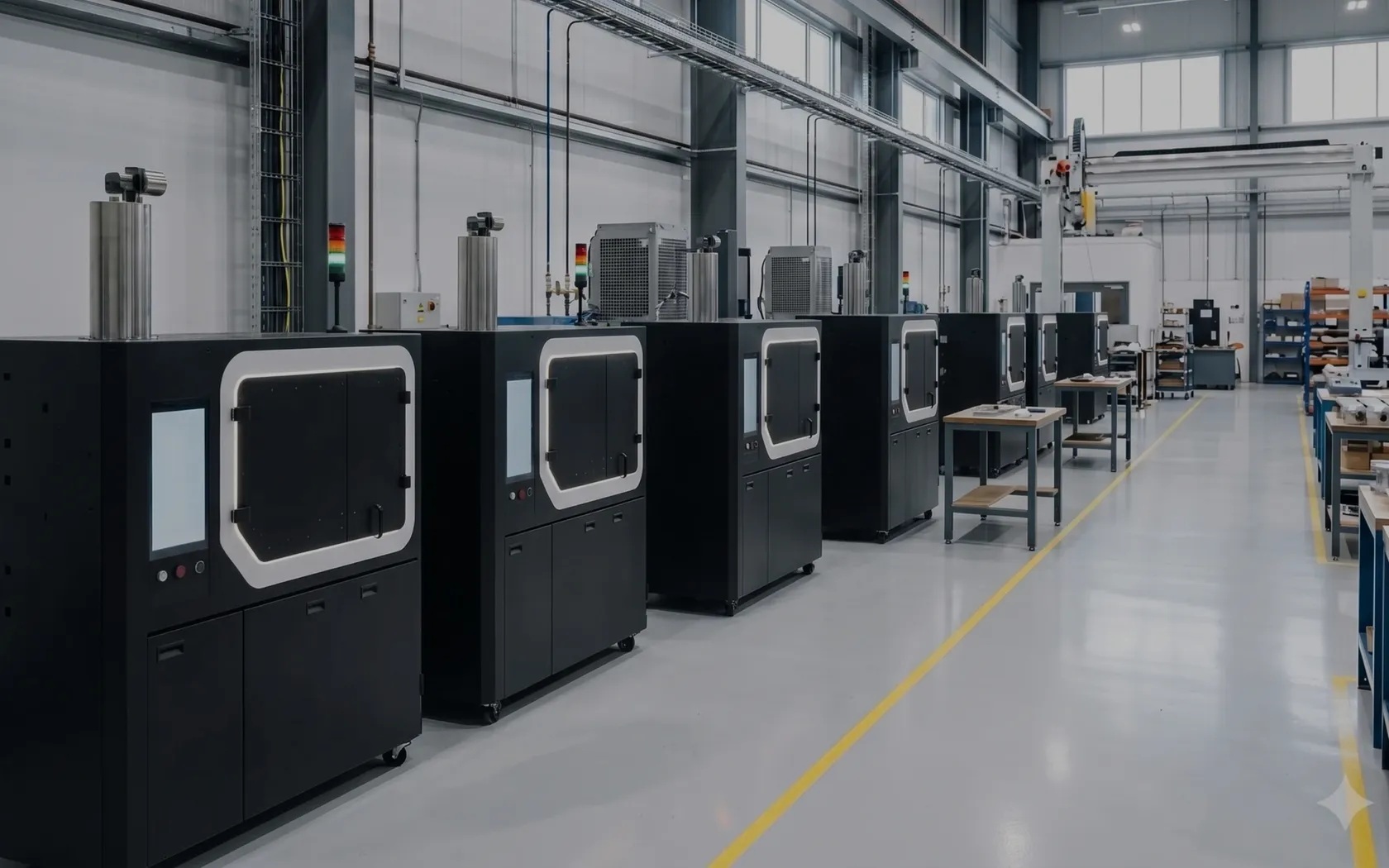
The customer story widened in November 2024, when the New Jersey Innovation Institute announced a DMC-3 purchase. The system had launched commercially in the US that June. NJII’s defense manufacturing work brought another concern into view: rebuilding casting capacity and helping a workforce with limited hands-on foundry experience acquire it.
Even a fast foundry can run out of ink
One documented setback was almost comically ordinary. A supply disruption left New Zealand without binder ink, with three months before replenishment. Foundry Lab had a prospective customer waiting for demonstration parts. The team found stock in a research laboratory and persuaded its owners to release it. The microwave could move quickly; procurement had other plans.
WNT’s account also describes investors encouraging the company to stay in stealth while it developed the prototype. That choice bought technical development time, but limited what customers could trial. The lesson is practical: completing the machine and obtaining its consumables mattered as much as explaining what it might eventually do.
The first part carries the bill
Tooling is an expense that arrives before useful parts. In a 2022 company announcement, Moodie said automotive prototype die-casting tools could cost upwards of $200,000. That was his example, rather than a price list. It explains why a method that bypasses hard tooling deserves attention when the required quantity is small.
FoundryLab Direct advertises CAD-to-production parts in 72 hours, with no minimum order. Scope and specifications still belong in the quote.
Foundry Lab now offers two ways in: order castings through FoundryLab Direct, or inquire about an in-house DMC system. NJII’s purchase establishes the equipment route; the current quote form makes the service route explicit. Global headquarters are in Austin, with R&D in the Wellington region. The proposition has expanded from prototyping toward production and sustainment.
Building that capability required capital. The company announced an $8 million US-dollar Series A in November 2021. A July 2025 SEC filing recorded approximately $9.69 million sold in a preferred-stock offering. Financing measures the resources committed to the business; it does not tell an engineer whether a particular casting meets its specification.
Start with the test you need
The useful borrowing from Foundry Lab is a method of thinking. Specify what must remain faithful to production, then question the slow steps around it. Its answer was to preserve casting and reinvent mold preparation. A team evaluating the service can begin with one component, its alloy, critical dimensions and inspection requirements.
There are boundaries. The current quote form lists a maximum envelope of 380 millimeters in diameter by 350 millimeters high. A faster casting still needs suitable geometry, finishing and application-specific validation. For work within those constraints, the attractive prospect is straightforward: reach the physical test sooner, learn from it, and spend less time admiring a drawing.
See the metal for yourself
Explore Foundry Lab, follow its LinkedIn and X updates, or read about NJII’s DMC-3 purchase and the Eaton development effort.
↗ Watch the casting process explained↗ David Moodie on TechMates↗ Foundry Lab’s technology introduction