A company can change owners in a day. Its knowledge takes longer to move. That distinction sits at the center of Bill Balliette’s manufacturing career, and it gives his latest appointment a history worth following. In August 2026, Novastone announced the acquisition of Alumistar, the California aluminum casting business he now leads as CEO. Years earlier, in Austin, he had already worked through the purchase, operation and sale of another specialist manufacturer.
There is a temptation to tell an acquisition story through the moment of arrival: the announcement, the new title, the photograph. Balliette’s story becomes more interesting when the camera stays after the ceremony. His earlier business, Alpha Slip Rings, made components for machines whose moving parts still needed an electrical connection. A small piece of hardware, doing an exacting job. A rather good subject for someone interested in how a business keeps working.
A business that remembers
At Alpha, essential manufacturing knowledge had been concentrated in two employees. Balliette put that knowledge into written production instructions. The detail is modest enough to escape a celebratory deal announcement, but it changes how the ownership story reads. Here was a buyer dealing with the actual memory of a company: what people knew, how work was done, and how the next person could learn it.
Think of the difference between possessing a machine and understanding its use. Equipment can appear in an inventory. Judgment is harder to count. A practiced employee may know which instruction needs an exception, which sequence saves time, or which apparently small variation deserves attention. Those are general questions for any incoming owner, rather than a description of an undisclosed day inside Alpha. They explain why the documented handover of knowledge deserves a place beside the financial handover.
The written procedure has an unfair reputation. It sounds like something that arrives in a binder and immediately begins collecting dust. Done well, it offers a more generous possibility: the experienced worker does not have to repeat every explanation, and the newcomer does not have to rediscover every mistake. The company gets another way to remember. In a story about succession, a useful set of instructions can be as consequential as an impressive speech.
Conceptual illustration of the knowledge-transfer problem, not a measured performance claim.
The small part with a difficult job
Alpha’s products had a useful talent: operating where space and conditions imposed awkward constraints. United Equipment Accessories describes the business it acquired as a slip-ring manufacturer serving applications with limited room and demanding environments. Its markets included oil and gas, marine, industrial and entertainment equipment. The range is a reminder that a specialist component can travel into very different kinds of machinery while remaining obscure to almost everyone outside its trade.
Balliette also wrote about that work. His June 2019 article in Oilfield Technology, titled “Small but mighty,” examined a slip ring developed for a downhole swivel tool. The engineering problem joined size requirements with the conditions the tool would encounter. It is an unusually concrete addition to a CEO’s public record: a discussion of the object, rather than simply a claim about leadership.
That kind of object keeps a business story honest. A component has to fit. A connection has to function. A customer’s equipment offers little sympathy for an elegant presentation if the part cannot do its job. These are the practical stakes behind the word “technical.” For a leader in such a business, explaining value means understanding what the product allows someone else to accomplish.
An owner on both sides of the handover
Balliette led Alpha from 2012 until its sale in 2018, then remained with United Equipment Accessories in a division management and sales role. UEA dates the acquisition to October 2018. The sequence matters: it puts him on both sides of a transfer, first as the owner of the acquired business and then as someone responsible for its place within a larger organization.
A sale can make a biography look tidier than the experience it describes. Before and after become two clean boxes. Integration is the space between them. Customers continue to need answers; colleagues need to understand new routines; a product still has to reach the people who use it. Remaining through that period gives the ownership cycle a second act, one with more operating detail and fewer opportunities for a ribbon-cutting photograph.
For Balliette, the route to Alumistar therefore includes a previous company that he had both led independently and helped carry into new ownership. That is a useful lens for the present appointment. The question is how experience with a smaller technical manufacturer can inform the leadership of a casting business with its own history, products and customer expectations.
Balliette begins leading Alpha Slip Rings.
UEA acquires Alpha; Balliette stays for integration.
Alumistar acquisition announced with Balliette as CEO.
A California assignment
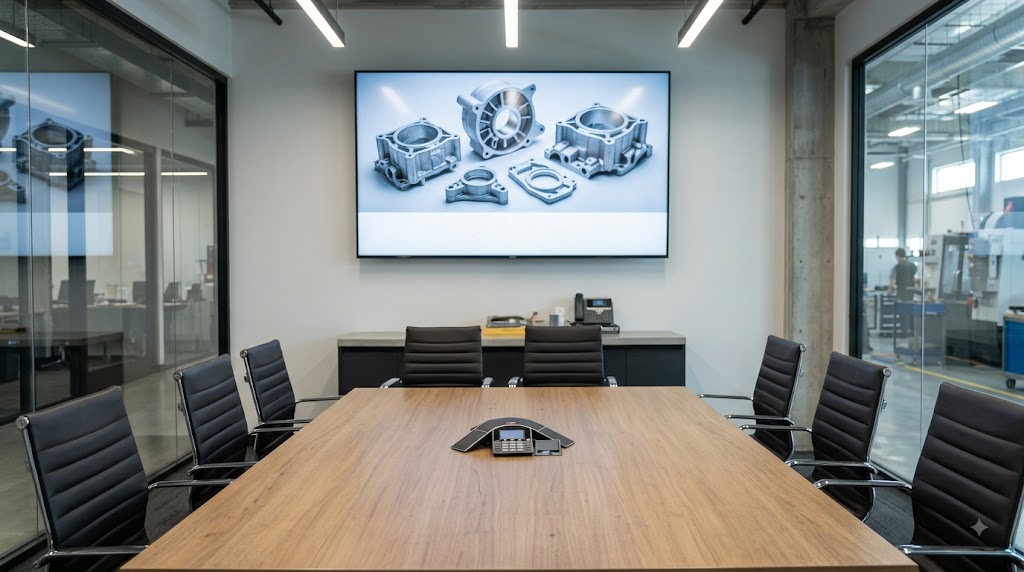
Alumistar is the parent of Pacific Cast Products and Performance Aluminum Products, based in Ontario, California. Its aluminum alloy castings serve aerospace, defense, industrial and commercial customers. Balliette’s new assignment puts him inside an established manufacturing enterprise, with an existing team and an existing record of work.
The public announcement frames his task around preservation as well as growth. That pairing deserves some attention. An incoming leader has to decide what can improve without treating everything inherited as an obstacle. Customers have reasons for buying from a supplier. Employees have reasons for doing work in a particular way. A new owner needs to understand those reasons before deciding which ones should change.
In casting, as in other manufacturing trades, the finished component is the visible result of a much larger set of decisions. A buyer may see the shape and specification. The business has to organize the work that produces them. Leadership lives in that gap between the product a customer wants and the organization capable of delivering it repeatedly.
The people around the transaction
Novastone’s program backs experienced operators in buying and leading established companies. Its portfolio CEO model connects the search and acquisition process with ongoing company leadership. The structure gives Balliette a set of investment partners around the operating assignment, rather than leaving the acquisition as an isolated financial event.
“stakeholders who understand the operational realities of manufacturing businesses”Bill Balliette, on the Alumistar investment group
South Highland Ventures also announced an investment in Alumistar, describing it as the first investment from SHV ETA Fund I and highlighting the founder ownership transition. That adds another perspective on why the deal exists. An established enterprise can offer a new owner an opportunity while giving earlier ownership a route to succession.
The appealing part of that arrangement is also its demanding part. The investor, the outgoing owner and the incoming CEO arrive with different responsibilities. A shared plan has to survive contact with daily work. Decisions about spending, staffing, customers and priorities give the partnership substance. Capital helps make an acquisition possible; agreement about operating responsibility helps make it workable.
Balliette’s public comments put manufacturing experience inside that partnership. They suggest a practical ambition: work with backers who appreciate what running the company entails. Read alongside his earlier ownership cycle, that emphasis gives the latest deal a recognizable shape. The person who will answer for the business is present at the beginning of its new ownership.
Life beyond the acquisition
The career record has a quieter companion in Dartmouth’s alumni history. In 1999, Balliette joined Peter Kong, Andy Thompson and Dan Toal on the winning team in a reunion golf scramble. The tournament supported the Esteban Oyenque memorial scholarship. More than forty people helped with the event, which raised over $6,000. A team win, in a setting built around remembering a classmate.
In 2021, he appeared in another alumni connection: a Zoom reunion of participants in Dartmouth’s Mainz language study program. Travel memories had become a reason to gather again, across the distance and years. Neither episode needs to carry a grand theory of character. They belong in the story because people keep older connections alongside the jobs that occupy their biographies.
His public LinkedIn activity brings the industrial interests back into view. He has shared material about manufacturing investment and succession in family businesses. He has also passed along a Spanish-learning course. The combination is pleasantly ordinary: professional questions, familiar contacts and something another person might find useful. A business profile benefits from leaving room for that scale of human interaction.
What the next chapter asks
Alumistar gives Balliette another chance to lead a manufacturer through an ownership change. His earlier experience supplies a concrete point of comparison, without turning a previous transaction into a prediction. A casting business brings its own demands. The operating work has to be done on its own terms.
What makes the story worth following is the attention to continuity. A business contains relationships, practiced judgment and routines that have acquired meaning through use. Buying it creates the responsibility to understand those things. Growing it asks for decisions about which of them to strengthen, which to revise and which to leave alone.
The little slip ring remains an apt image for this career. Something moves, yet the connection has to hold. At Alumistar, the movement is a change in ownership and leadership. Balliette’s assignment is to help an existing company keep making things while giving its next chapter somewhere to go.