There is a pleasant absurdity to designing an airplane. The canvas is longer than a swimming pool. It moves at 500 miles an hour. Most people see it through glass, rain, jet lag, or the tiny rectangle of a phone. The paint must flatter a curved metal body, survive weather, respect technical no-paint zones, stay legible across a runway, and avoid adding unnecessary weight. Then somebody asks whether the logo could be a little bigger.
Forward Media made a business out of this collision between imagination and constraint. The New York company is a branding, public-relations, and performance-media agency. Its specialist arm, Forward Studio, works primarily with airlines, airports, aerospace ventures, and mobility companies. The offer ranges from naming and identity to aircraft liveries, booking interfaces, lounges, uniforms, advertising, launch events, media relations, and executive profiles. A conventional agency might see separate assignments. Forward sees one trip.
That position is more practical than poetic. A traveler does not experience an airline's organization chart. She sees an ad, taps a booking button, follows airport signage, meets a gate agent, sits beneath a reading light, and watches a painted tail disappear beyond the terminal. Each piece deposits or withdraws a little confidence. Forward's house phrase is blunt enough to fit on a baggage tag: everything communicates.
The old obsession became the new strategy
The story begins far from a runway. Edmond Huot grew up on a farm in Canada, drawing airliners and building model planes. He studied English and history rather than design, worked in Air Canada reservations, taught himself creative software, and kept sketching. His friend Peter Clark, an account manager with an entrepreneurial streak, suggested they start a graphic-design business in 1992. They called it ClarkHuot.
Clark became the commercial counterweight to Huot's visual instinct. Their practice expanded, moved into the United States, and worked across a broad collection of corporate brands. Yet aviation kept tugging at them. In 2012, Island Air called on a Friday and wanted early livery concepts by Wednesday. That was the first aviation assignment, and the first lesson: enthusiasm is useful, but speed, cultural judgment, and production discipline are what get a design onto metal.
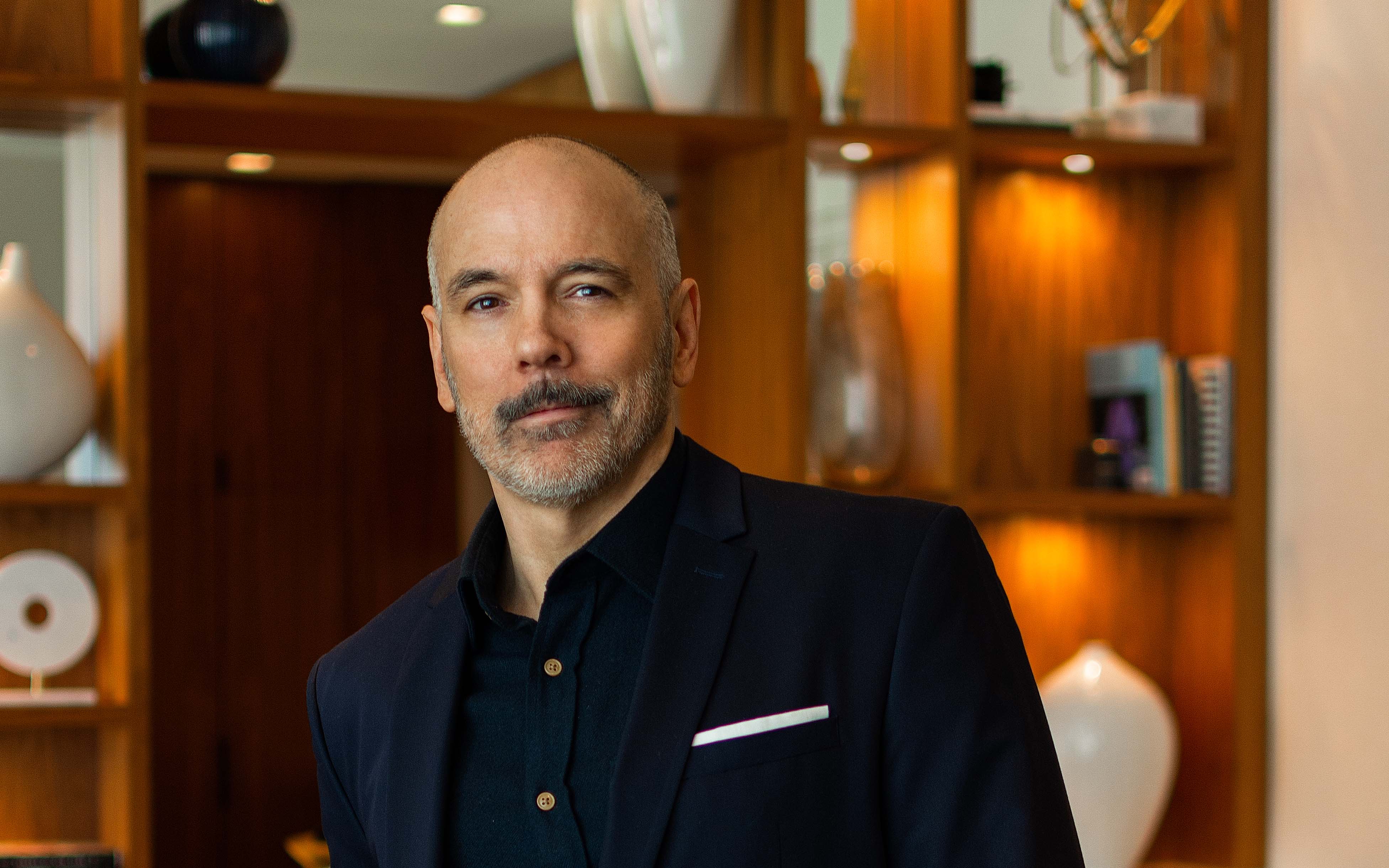
By 2016, Clark and Huot were deliberately concentrating on airline work. In 2019, they broadened the business under the Forward Media name. What failed first was not a campaign or a color scheme. It was the boundary around the old offer. Airline clients who hired a design shop also needed public relations and digital media. The partners changed their positioning because the customer's problem refused to remain neatly inside the design department.
“Everything communicates.”Forward Studio's operating philosophy
A logo with an operating manual
Forward's process begins with research rather than a sketch. For Island Air, the team studied Hawaiian culture, geography, artifacts, local artists, and the spirit of aloha. For Northern Pacific Airways, it examined Alaska and Asia, early explorers, customer segments, and the new carrier's proposed route logic. The point was not to collect exotic references for a mood board. It was to avoid the far more expensive error of turning a living culture into decoration.
Once the story is agreed, the system can expand: name, type, color, iconography, aircraft, cabin, advertising, digital product, event, and press narrative. Huot calls the ingredients a kit of parts rather than a rigid rulebook. That distinction matters. An identity that works only when a designer is supervising it is not much use to an airline posting a gate change at 5:20 in the morning.
The famous object is still the livery, and it is where romance meets a spreadsheet. White paint reflects heat, makes corrosion and leaks easier to spot, can improve visibility to birds, and usually weighs less than an elaborate scheme. More paint means more weight, and more weight means more fuel. Leased aircraft may eventually change owners, which favors surfaces that are simpler to strip and repaint. The industry's white-fuselage convention, nicknamed “Euro White,” did not spread because every designer had the same minimalist awakening. Economics helped.
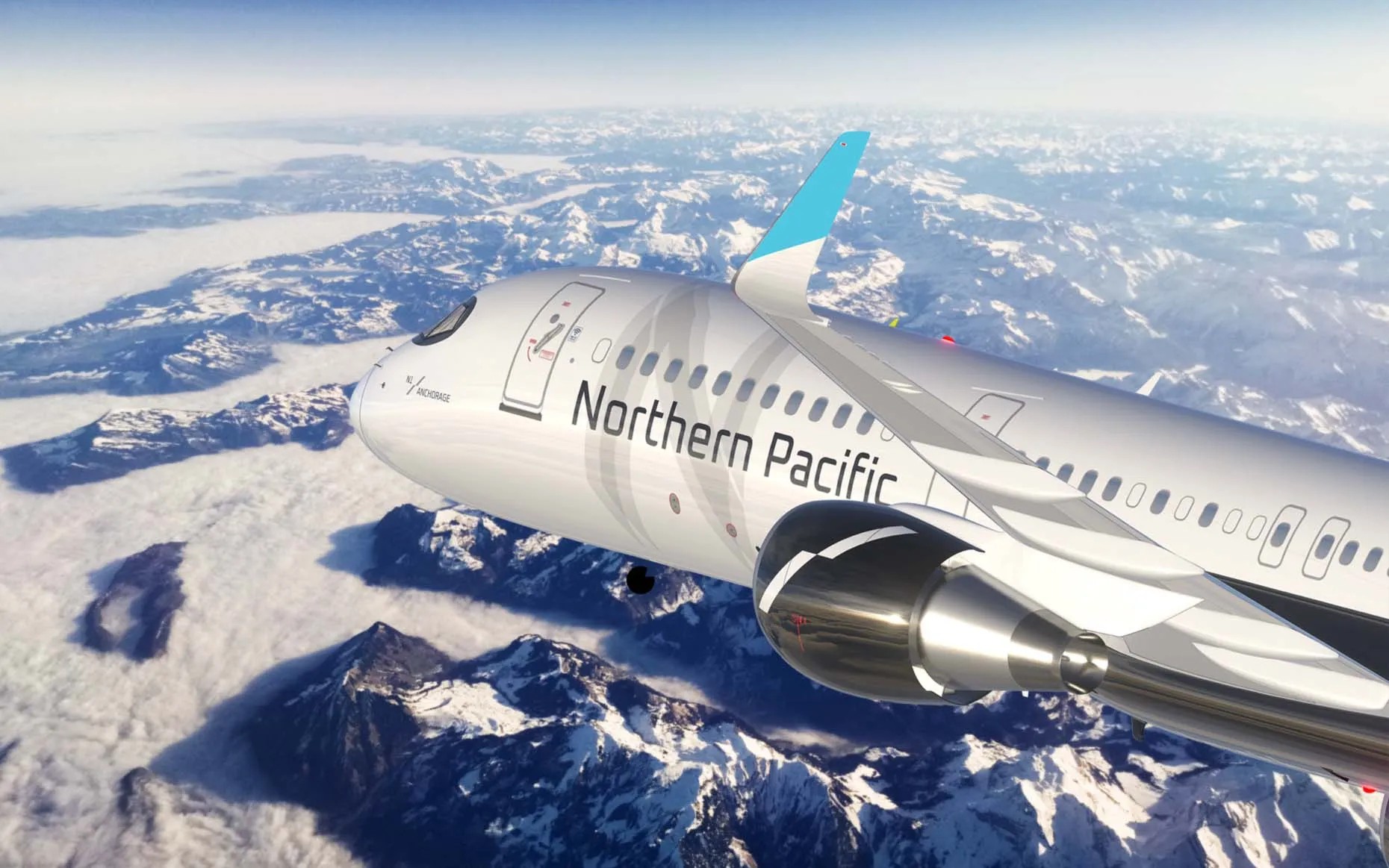
Forward's Northern Pacific work shows the scale of the assignment. The firm helped name the airline, designed its identity and Boeing 757 livery, and extended the vocabulary into campaigns, merchandise, cabin concepts, and launch materials. The startup later became New Pacific Airlines, a reminder that a well-made brand cannot remove commercial, regulatory, or legal uncertainty from an airline venture. Design can make a proposition coherent. It cannot make routes profitable or aircraft available.
The boutique in the middle
The agency's competitors live at both ends of a long runway: giant consultancies able to staff global transformations, and small studios that specialize narrowly in identity or aircraft graphics. Forward argues for the middle. It offers senior access and aviation fluency, then assembles developers, renderers, researchers, designers, PR specialists, and media buyers around the assignment. That can be faster and less cumbersome for a startup or midsize carrier whose owner wants to inspect the work directly.
Illustrative map of the integrated offer, not reported revenue allocation.
The business model follows. Forward sells projects and ongoing professional services, not software seats. Huot said in 2022 that early assignments ran roughly $25,000 to $100,000, while broader programs later reached $500,000 to $1 million. Those figures are historical examples, not a current price list. The real unit being sold is coordinated judgment: deciding which research matters, which symbol will travel, which claim a journalist will believe, and which click should be measured.
Its customer list makes the range visible. Tailwind Air used the studio across identity, advertising, interiors, digital experience, photography, and PR. UATP, a travel-payment network founded in 1936, hired it for interviews, research, benchmarking, a new brand language, UI, and UX. Canada Jetlines sought a refreshed digital experience. Public portfolios also name FlyCoin, InterCaribbean Airways, Wasaya Airways, Experian, Frontiers North Adventures, and work connected to Singapore Airlines.
This breadth is the differentiator, but it is also the condition. An integrated system works when the client can give one story authority across departments. It works when leaders join the research, make decisions, and accept that the cheapest paint choice may not be the strongest brand choice - or that the most beautiful concept may be operationally foolish. It works poorly when procurement slices every touchpoint into unrelated vendors, when executives cannot agree on the airline's promise, or when design is asked to disguise a broken passenger experience.
The method worth stealing
A company need not own a Boeing 757 to copy Forward's best habit. Start by studying context before making artifacts. Reduce the research to a small set of attributes that can guide real choices. Build a vocabulary flexible enough for the people who will actually use it. Then walk the customer's path and ask whether each moment repeats the same promise. The useful question is not, “Does this look consistent?” It is, “Does this decision mean the same thing here?”
Forward Media's own history follows that method. Clark and Huot did not wake up with a clever niche deck. They noticed an old obsession, listened when customers asked for adjacent help, and reorganized the offer around the whole problem. The result sits somewhere between a design studio, a PR shop, and a performance agency. That sounds untidy until one remembers the passenger, staring out through terminal glass. To her, the tailfin, the headline, the boarding pass, and the delayed-flight notification all belong to the same company. She is right.
Keep flying
See the work, follow the studio, or listen to longer conversations about airline identity and livery design.