The next person to take an aircraft does not simply want the keys. They want its history: the maintenance performed, the components fitted, the repairs documented. Somewhere in that history is the particular record someone needs to see. Finding it can become a project of its own. flydocs has made a business out of making that search less painful - and the eventual aircraft handover easier to manage.
Its territory is the meeting point of engineering evidence and commercial obligations. Airlines operate the aircraft; lessors own many of them; maintenance organisations generate documentation along the way. flydocs supplies cloud software and specialist people to help those parties organise records and prepare transitions. The company’s stated ambition is to facilitate a third of commercial aviation asset transactions. That is a target, not a claim about its present market share.
The archive has a deadline
Virgin Atlantic’s experience gives the idea some weight. In a 2024 customer account, the airline described an implementation that took around eight months to load historical records for 44 aircraft. Integrating existing systems was the principal IT difficulty and took several weeks of joint work. The project involved records, aircraft acquisitions and returns, IT, quality assurance and procurement teams.
The change was useful because records could be retrieved quickly and shared remotely during returns. Virgin also checked that lessors would accept the platform for questions and responses. A lessor’s query could be assigned to the appropriate employee, with evidence returned for assessment. That agreement about how to work mattered alongside the technology.
“In those years, we haven’t had one late redelivery.”
Lee Butterfield · Virgin Atlantic
Recalling 17 years with flydocs, September 2024
That is one customer’s account, not a guarantee for the next fleet. An earlier Virgin Atlantic case study describes a year-long trial before a full-fleet launch in June 2011. The relationship gave flydocs a demanding development partner and gave the airline time to test the approach. For a product expected to help at a consequential handover, a patient trial was a sensible sales demonstration.
A search box with an engineering department
The foundation is Digital Records Management, or DRM. It creates a digital record of an aircraft’s maintenance history and turns complex documentation into structured, searchable material. Users can retrieve evidence for reviews, audits and transitions. The pitch is easy to grasp: an archive becomes much more useful when a colleague on the other side of the world can find the same document.
Figures displayed on flydocs’ DRM page. These are company-reported totals, not annual results.
The records platform also connects with maintenance and engineering systems. Cebu Pacific’s 2021 selection of flydocs covered 66 aircraft and specifically highlighted its AMOS interface. That example explains the practical attraction of integration: maintenance information and its supporting documentation can move between the systems people already use. Nobody wants an impressive new database that requires a second shift of copying.
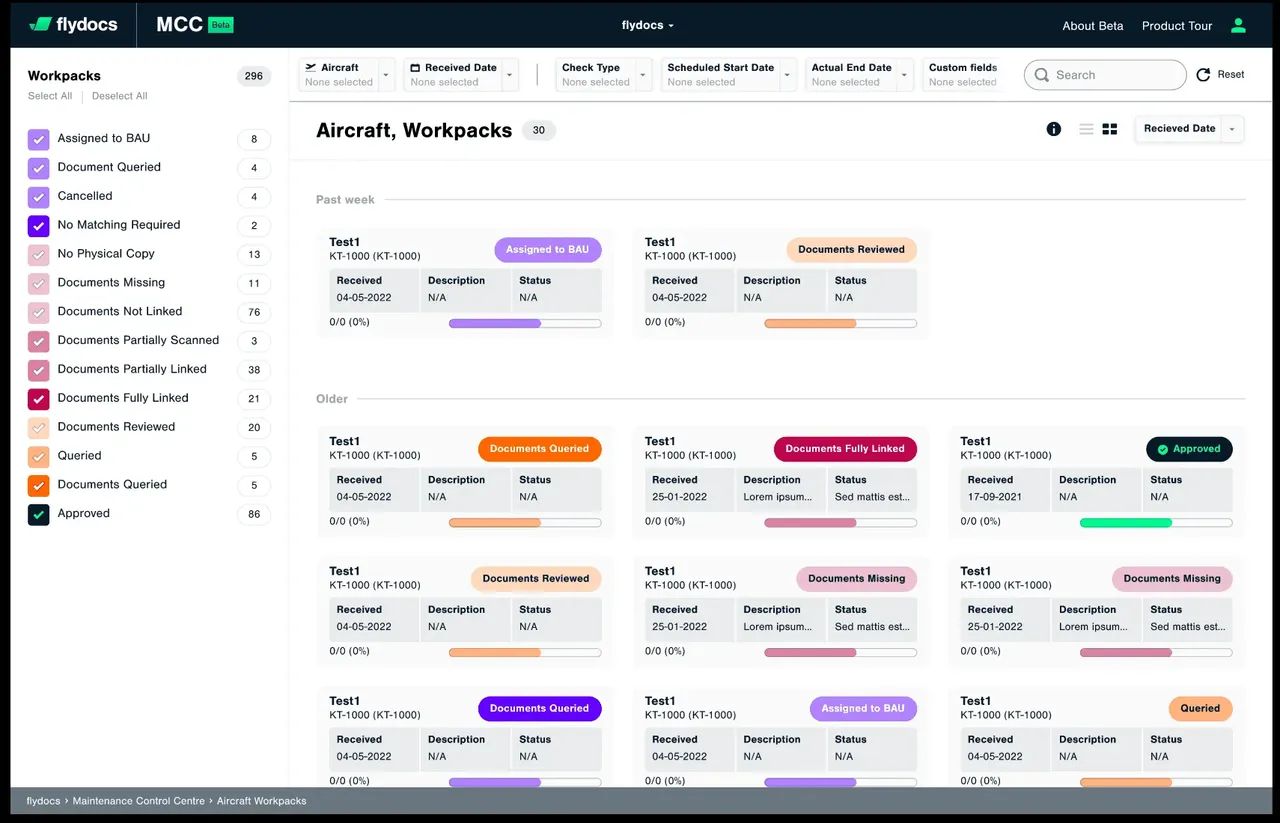
The software comes with a decidedly human counterpart. flydocs’ engineering services include building and auditing records, interpreting lease contracts and supporting projects on site or remotely. A customer can buy additional expertise or broader transition management. That combination gives the business a role beyond storing files: it can help determine what needs to be assembled and how the handover should proceed.
The lease starts before the return
Records describe what happened. Lifecycle Asset Management, or LAM, uses that history alongside lease conditions and operating data to help teams plan. It compares an asset’s status with contractual requirements, tracks major components and supports forecasts. Maintenance reserve claims, future events and commercial exposure become things teams can examine together instead of reconstructing separately.
CollectMaintenance records
and component history
CompareCurrent asset status
and lease conditions
PlanMaintenance work
and aircraft redelivery
Porter Airlines offers a recent example of that progression. On July 15, 2026, flydocs announced Porter’s LAM go-live, describing it as the first customer for that product in the Americas. Porter already used DRM. Its maintenance director, Gavin Pais, pointed to maintenance reserve tracking and lease-return management as reasons for adopting the additional software.
The commercial logic is clear: once records are assembled, they can support decisions throughout a lease. Porter’s announcement also described a broader mobile view bringing together fleet status, maintenance progress and return information through the technical-operations partnership. These are connected jobs, though a launch announcement alone cannot establish how much money the airline will ultimately save.
There is a smaller-scale version of the same problem inside the Asset Trading Solution. Components have histories, too. The product organises their documentation and helps assemble sales packs, including records tracing a component back to its origin. flydocs markets it as AI-powered. Its value proposition centres on making documentation available when stock is received, managed or offered for sale.
When the software was there but the habits stayed
The most revealing recent account concerns an unnamed European carrier with more than 80 aircraft. In a July 2026 consultancy case, flydocs described a customer using its records platform mainly for storage and search. Documents remained scattered across systems and shared drives. Some stations still relied heavily on paper; important software modules were switched off or seldom used.
This was an adoption problem with a familiar shape. Buying the platform had not brought the working practices together. flydocs proposed consolidation, better maintenance-system integration and a phased plan, including testing fuller capabilities on one aircraft transition in 2026. The case presents anticipated improvements rather than a completed, quantified savings result.
The useful lesson is modest enough to copy: pick one consequential workflow and follow it all the way through. Check where documents arrive, who validates them, where questions are answered and what happens at handover. A faster search is welcome. A coherent process requires more people to agree on more things.
The bill includes the work around the software
flydocs sells business software through enterprise relationships, complemented by technical and professional services. The Aeromexico agreement announced in April 2026 runs for five years and covers almost 170 aircraft. flydocs reported migration and go-live in under three months, building on an airline that had used AMOS since 2015. That is a specific deployment claim, not a universal implementation schedule.
For a buyer, the cost calculation needs to include integration, historical-record preparation, training and the people who will maintain the process. The sensible comparison is the entire workflow before and after adoption: staff effort, duplicate handling, external support and exposure to a difficult return. Those are questions to put into procurement, rather than assume away because a platform is cloud-based.
In November 2025, flydocs introduced Professional Services and PartnerPoints. The service range covers consultancy, platform improvement, training-related support and specialist technical work. PartnerPoints lets customers prepay for access to services, from small configuration jobs to larger engagements, without initiating another purchase order each time. It is an unglamorous feature aimed at an unglamorous source of delay.
An industrial parent, and a familiar rival
flydocs was established in 2007; its co-founders were Adrian and Anne Ryan, formerly CEO and COO. Growth Capital Partners invested in April 2015. The investor’s account describes spending on sales leadership, stronger commercial processes and an expanded Indian development and engineering team. It also identifies a recurring compliance-services revenue opportunity. Growth required organisational work as well as product development.
In June 2016, Lufthansa Technik became a shareholder, replacing GCP. flydocs now identifies itself as wholly owned by the maintenance group. The industrial connection became more visible through the Digital Tech Ops Ecosystem formed in 2023: AMOS handles maintenance and engineering management, AVIATAR supplies data and analytics capabilities, and flydocs contributes records and asset management.
That gives flydocs a specific competitive position, but aircraft records software is not an empty market. AerData’s STREAM also supports remote document access, transition collaboration and integration with maintenance systems. The relevant comparison is therefore deeper than whether a vendor offers search. Buyers need to examine their existing systems, the transition workflow and the expertise available when records become complicated.
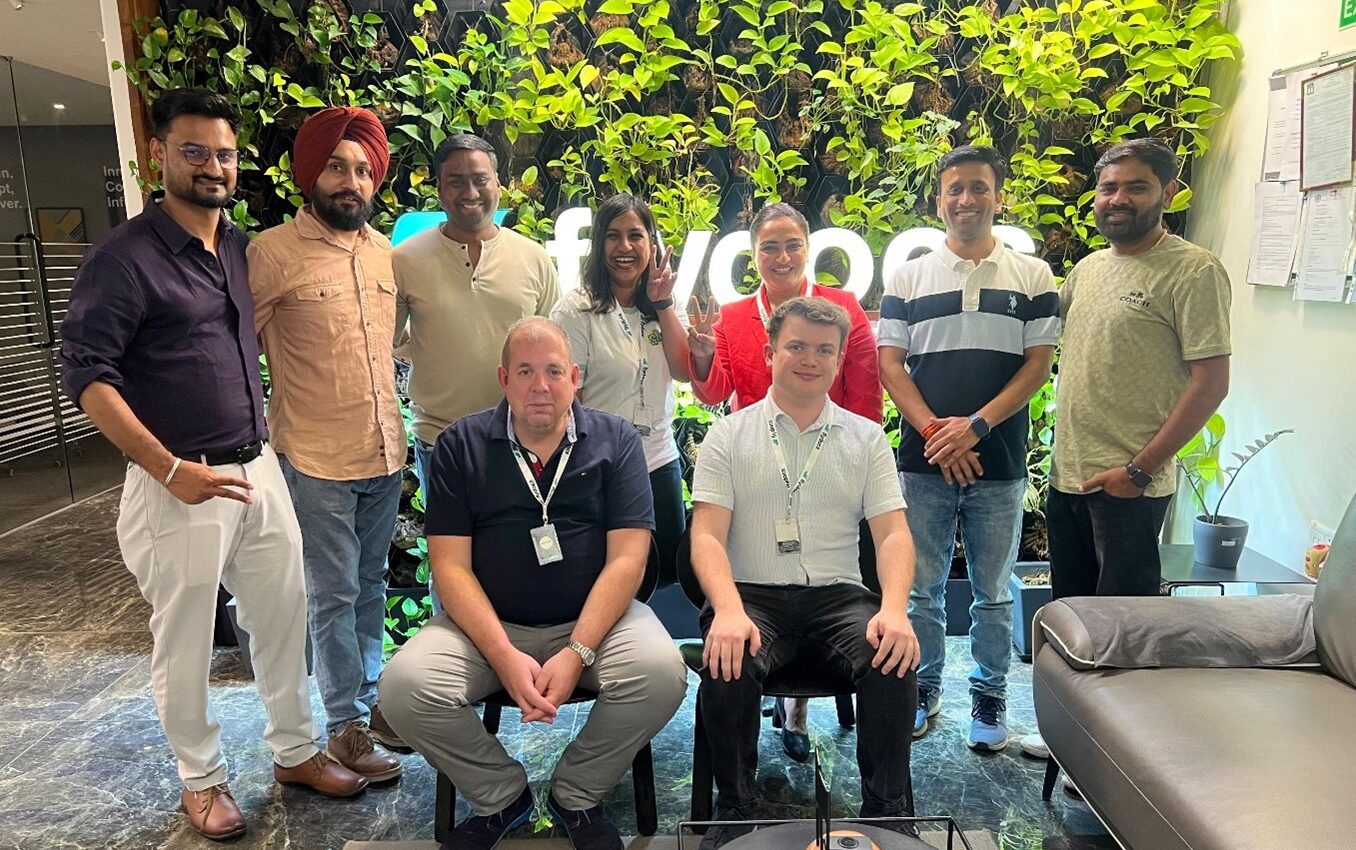
The company’s employment pitch names transparency, respect and collaboration as its values, with town halls and informal leadership sessions. Its Vadodara office announcement makes hybrid work tangible through shared workspaces, a library and a mini gym. These are declared practices and facilities, not proof of every employee’s experience. They do show a business trying to connect a distributed technical workforce.
The next handover is the test
flydocs’ March 2026 product roadmap described expanding AMOS integration and plans for an AI-assisted bridging check to compare maintenance programmes and identify differences. It also set out redelivery and financial-management modules under development. These were announced plans; they should be distinguished from the confirmed customer go-lives.
The direction is worth watching because it pushes the business closer to decisions made before a return deadline arrives. But the adoption case offers the necessary grounding. Fragmented records, unused modules and disconnected habits can survive a software purchase. The practical test for flydocs is whether the next person who needs evidence can find it, assess it and act on it in time.
Keep following the paper trail
Talk to flydocs · News and product updates · Virgin Atlantic’s experience · Porter’s LAM rollout
Website · LinkedIn · X · Instagram · Facebook · YouTube channel