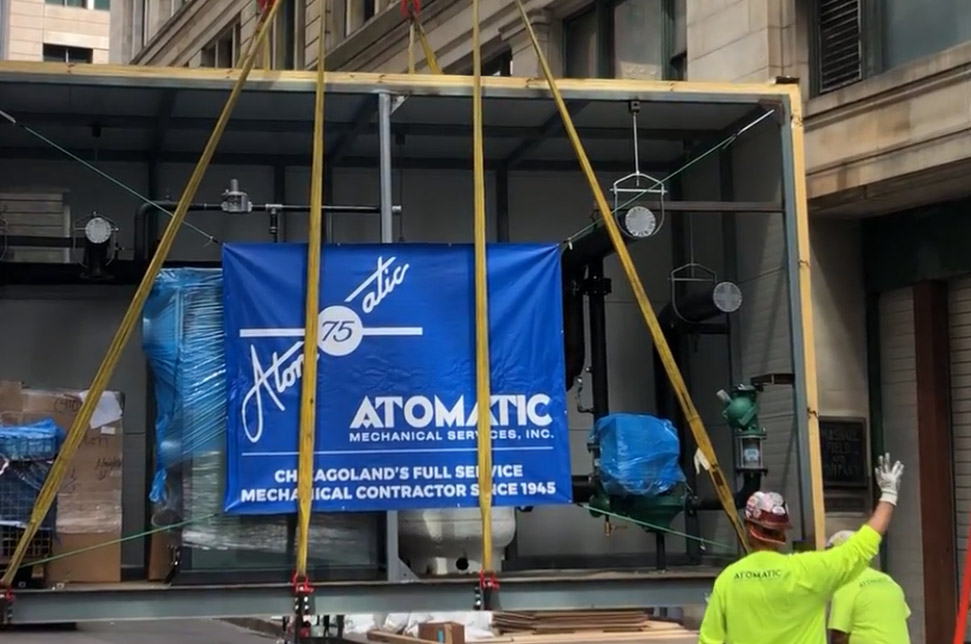
The insulation was falling out of the curbs for 38 roof exhaust fans. Someone would have to pay. In Autodesk’s account of the dispute, the supplier blamed mechanical contractor Atomatic for letting the equipment get wet. The proposed repair bill: $75,000. Atomatic opened its project records. Delivery-day weather information and photographs of an open-bed truck established a different account. The vendor covered the cost.
- Connect drawings, bids and field records so information survives each handoff.
- Sell that connection to contractors, owners and design teams as subscription software.
- Carry Construction Cloud into Autodesk Forma, its broader industry cloud.
This is a useful place to begin with Autodesk Construction. There is no robot laying bricks in this episode. The valuable object is a record made before anyone knew there would be an argument. Construction software can sound abstract until a photograph changes who pays a bill.
A billion dollars to cross the gap
Autodesk Construction is the construction business inside Autodesk, the software company behind Revit and AutoCAD. Its customers include general contractors coordinating whole projects, specialty trades delivering individual systems, owners watching budgets, and designers whose intentions must survive contact with the site. The expertise sits where building models meet the practical business of getting work approved, priced and completed.
Autodesk pursued that territory with a chequebook. It completed the PlanGrid acquisition in December 2018 for $875 million net of cash. PlanGrid brought mobile access to plans and field documentation. In January 2019, Autodesk completed its $275 million purchase of BuildingConnected, adding bid management and subcontractor qualification. Together, those two transactions cost $1.15 billion. They were acquisitions by the parent, rather than fundraising rounds for a construction startup.
The purchases addressed different moments in the same project. BuildingConnected helped assemble the people who would do the work. PlanGrid helped those people consult the plans and document what happened. Autodesk already had design tools and BIM 360. Construction Cloud, unveiled in November 2019, brought that collection under a common proposition: information should travel with the building.
“We will transition from acquiring leading construction technology companies to integrating these solutions”
Andrew Anagnost, Autodesk CEO, January 2019
The drawing should remember
Consider an estimator working from a two-dimensional drawing generated from a detailed building model. The model contains quantities. The estimator then measures quantities again. The information exists, but the handoff has stripped away its usefulness. That is the kind of repetition Autodesk’s construction products are designed to remove.
Windover Construction connected Revit data with Autodesk Takeoff so its estimating team could use model quantities while keeping 2D takeoff available where needed. Autodesk’s customer story reports roughly 30 percent estimating-time savings and more than 50 percent savings in quantity takeoff. These are reported results from one company’s workflow. The replicable idea is to preserve usable model data when it moves between teams.
- 01 / ModelDesign intent and quantities
- 02 / EstimateMeasure, price and bid
- 03 / FieldBuild, inspect and record
A workflow diagram, not a claim that every transfer is automatic.
Today the product names require a small translation. Autodesk Construction Cloud joined Autodesk Forma on March 24, 2026. Autodesk Build became Forma Build; Docs became Forma Data Management; Takeoff became Forma Takeoff. Autodesk said the branding change required no project migration. The larger ambition is to connect planning, design, construction and operations within one industry cloud.
Inside that family, Build handles field and project management: requests for information, submittals, quality, safety, costs and daily records. Data Management supplies the common environment for files and models. Takeoff handles quantification. BuildingConnected and TradeTapp address bidding and qualification. These tools serve different decisions, which matters when a buyer is choosing how much software a particular team actually needs.
The subscription is the easy part
Autodesk sells subscriptions, with individual products and bundles. Its pricing page offers user-, project- and account-based arrangements; major bundles invite buyers to request a quote. A contractor therefore needs a price for its actual participation pattern. A handful of office users and a project involving many external collaborators are different purchasing problems.
Implementation adds another calculation. Someone must decide which record is authoritative, who can publish a revision, and how subcontractors join. My reading of the customer examples is straightforward: begin with a repeated failure in the workflow, assign ownership, and test whether the next person receives usable information. Buying access alone cannot make people capture evidence before a dispute.
That also defines the conditions under which the approach disappoints. Model-based takeoff depends on the information in the model. A delivery photograph helps only if somebody takes it and can retrieve it. If partners keep essential decisions in private messages, the shared project record stays incomplete. A small team with a narrow documentation problem may find a broad platform more work than the problem warrants.
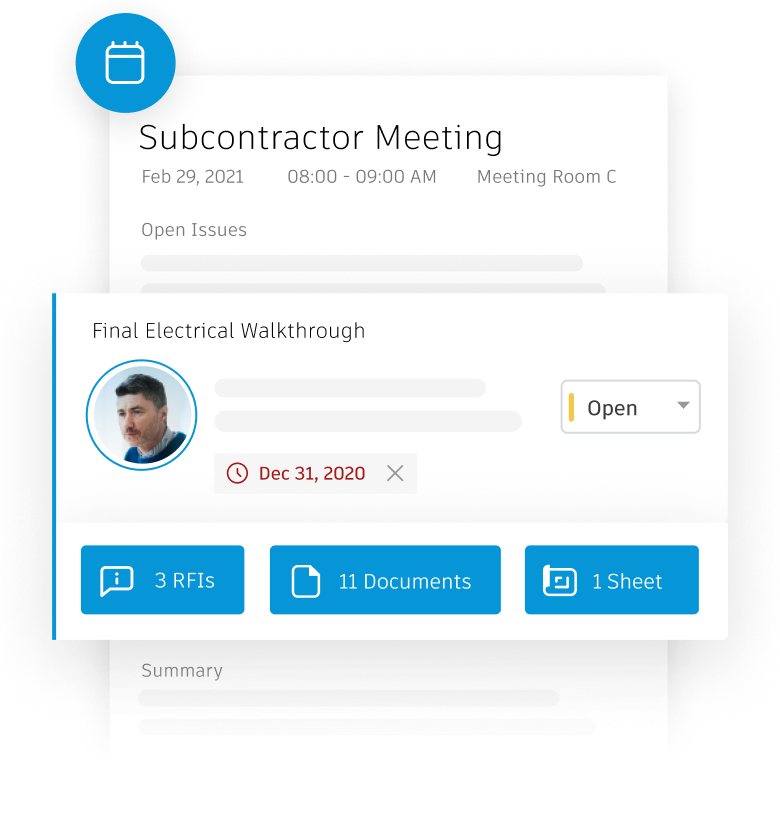
A useful trial would follow one live process all the way through. Pick a drawing revision or an inspection issue. Include the person who creates it, the person who approves it, and the crew member who needs the answer. Check whether attachments, locations and decisions remain understandable on a phone. Measure the time spent finding the right information. That test puts the proposed benefit in the hands of the people expected to produce it.
The next handoff is the test
Autodesk competes in a market that includes Procore, Oracle and Trimble. Its distinctive position is the connection to design authoring: the information can begin in Autodesk software before the construction team starts managing it. For a business already organized around Revit, that continuity deserves examination alongside the cost and effort of adopting another system.
Connections extend outside Autodesk, too. Forma Construction Connect supports workflows with Microsoft Teams. The promise makes practical sense: construction companies already have conversations, documents and business systems elsewhere. The question for a buyer is whether an integration removes a real transfer task in its own process.
At the parent company, Autodesk’s published Culture Code emphasizes simplicity, customer outcomes and accountable decision makers. Those are employer commitments; the product offers a more observable test of them. Can an administrator establish sensible permissions? Can a field user record an issue without recreating its context? Can the next project reuse a working process? These questions turn a sprawling software portfolio into a set of decisions a contractor can assess.
The recent updates are revealingly specific. September 2026 release notes include generally available transitions for supported BIM 360 project data and a public beta linking schedules to model elements. In October, Autodesk named Diana Colella to lead its AEC business. The ambition keeps expanding. Its everyday test remains modest: when information crosses to the next team, can that team use it?
Keep the project moving
FOLLOW THE CONVERSATION
WATCH THE TOOLS AT WORK