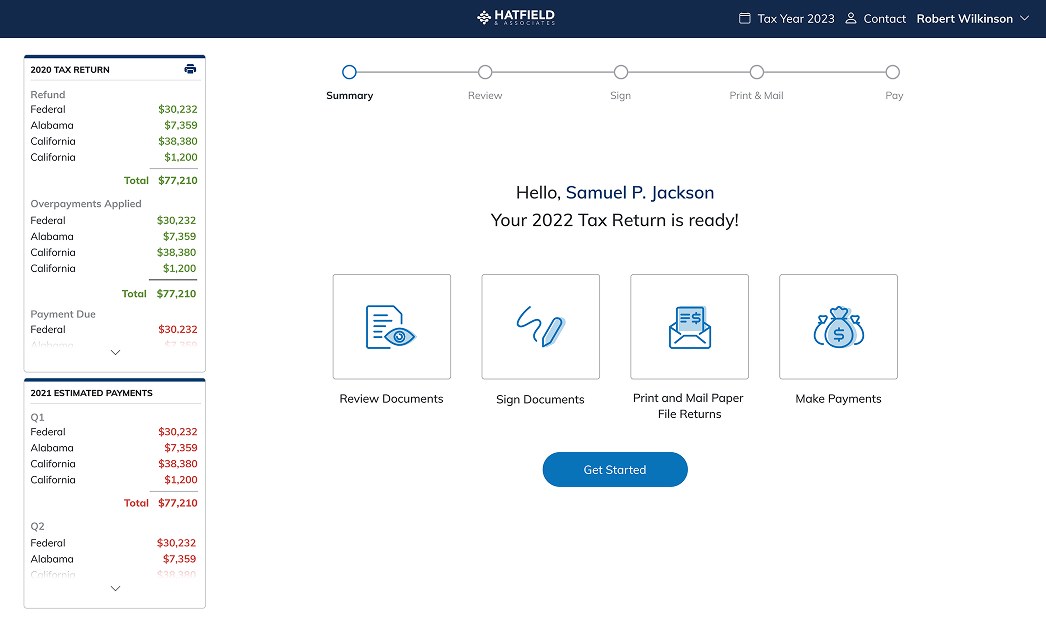
At Sikich, the tax arithmetic was only part of the problem. During a Lean process review, the firm noticed how much time disappeared into helping clients use portals and hunting down signed Forms 8879. Mailed returns brought rising postage costs and unreliable delivery. Clients found the paper a nuisance. The finished return had become the beginning of another job.
- SafeSend automates the handoffs around tax preparation: gathering, assembly, delivery and signatures.
- Accounting firms buy the software; their clients use it to supply documents, review returns and sign.
- Thomson Reuters bought the company for $600 million in cash in January 2025.
Jerry Schmit, a partner on Sikich’s tax team, heard about SafeSend Returns and recognized an answer. The firm tested it with selected clients in fall 2016, then made it the preferred delivery and signature method for individual returns. Interest in business returns followed. This was a rather practical vote of confidence: people who had used it wanted to use it for more work.
A company built from the margins
SafeSend began in 2008 as cPaperless, founded by Steve Dusablon and Andrew Hatfield. Its first product, TicTie Calculate, worked in the accountant’s electronic workpapers. Think tickmarks, calculator tapes, bookmarks and cross-references inside Adobe Acrobat. The ambition was close enough to touch: make a familiar document easier to prepare and review.
Secure file exchange followed in 2010; SafeSend Returns arrived in 2016. The sequence matters. The company accumulated knowledge of the chores surrounding a tax return, then connected more of them. A general signature tool knows where to put a signature. A tax workflow also needs to know about return packages, payment vouchers, authorization forms and the people waiting for K-1s.
“that simple solution is what we need.”
Jerry Schmit, Sikich partner, on discovering SafeSend Returns
K-1 distribution is a revealing example. Either the firm or the business client can enter the email addresses of partners and shareholders and deliver their forms electronically. Schmit’s case study describes a client frustrated by another firm’s portal because it could not tell whether the K-1s had arrived. The document was available; the delivery remained a mystery.
Follow the missing document
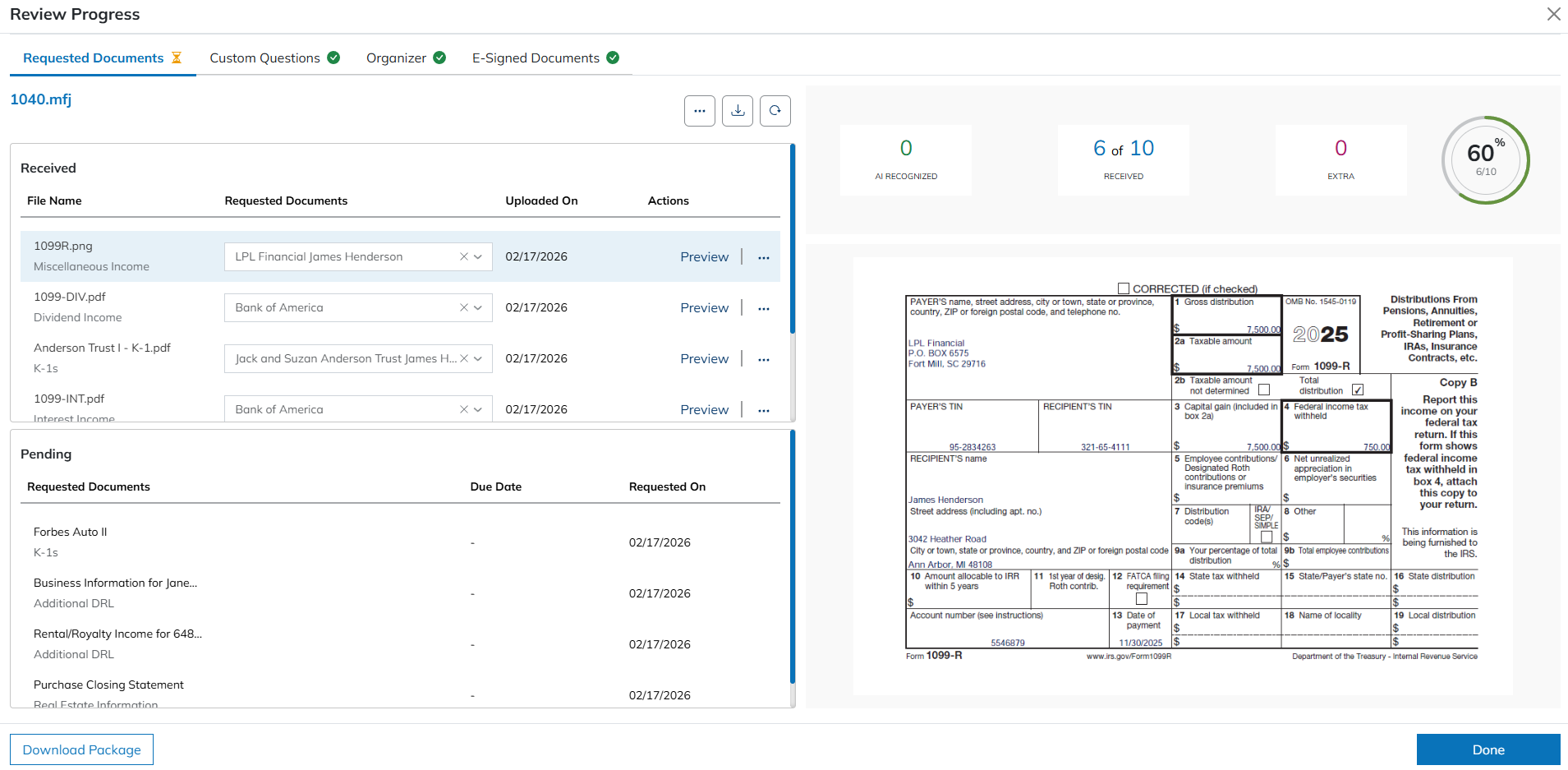
The original opening was the last mile. By August 2024, SafeSend was moving upstream. SafeSend One brought its tools together, while Next Gen Gather AI tackled intake: request lists, questionnaires and the collection of source documents. Dusablon attributed that expansion to customers pointing out trouble at the front of the engagement. Solving delivery had made the earlier bottleneck harder to ignore.
Gather AI generates document requests and recognizes and categorizes uploaded material. Staff can see what has arrived and what is outstanding. Custom questionnaires narrow the questions clients encounter. The appeal is ordinary and substantial: stop rediscovering, through another email, that the file needed to start work is still missing.
SafeSend handles client coordination around the calculation. Step 02 belongs to the firm’s tax preparation system.
That distinction keeps the product in perspective. SafeSend works alongside UltraTax CS, GoSystem Tax RS, CCH Axcess Tax, ProSystem fx Tax and Lacerte. It occupies the connective space between professional preparation and client action. Its expertise lies in making that space less dependent on somebody remembering to follow up.
The economics of one less chase
Lead Edge Capital announced an investment partnership in April 2021, backing further product development and expansion. Then came the larger transaction: Thomson Reuters acquired SafeSend in January 2025. The $600 million was a purchase price, rather than a funding round. At announcement, the buyer forecast roughly $60 million in 2025 revenue. That was an expectation, not a reported year-end result.
Cash paid by Thomson Reuters for SafeSend
For a firm buying the software, the economics are much smaller and more repetitive. SafeSend describes per-return or per-delivery pricing, with Essential Gather, Essential Deliver and Premium packages. Premium adds tools including Letter Builder, API connections and TicTie Calculate. The public page lists no per-seat, support or knowledge-based authentication fees; dollar prices require a quote.
A useful buying calculation therefore starts with the firm’s own work: how many packages go out, how long assembly takes, and how many times staff pursue a signature. Measure those before choosing a package. The savings claim that matters is the one your team can reproduce under its own deadlines.
The buyer also said SafeSend would continue to support multiple vendors. That promise matters to a practice already invested in another company’s preparation software. A workflow purchase becomes a different proposition if it demands replacing the system that calculates the return. SafeSend’s published integrations make the surrounding process the point of entry.
There is a human version of the same expertise. In SafeSend’s BMSS case study, administrative operations manager Melody Young describes a customer-success manager who previously worked in firm administration. Knowing why a letter gets stuck, or who must retrieve it when a colleague is absent, gives support a vocabulary the buyer recognizes.
Teach the client before the deadline
Sikich’s experience offers a copyable rollout: test with a group, explain the change in advance, and show clients a short video. Software can remove a handoff while still leaving a person confused. A better route through the paperwork needs an introduction, preferably before everyone is watching the calendar.
SafeSend’s onboarding guide turns that introduction into assigned work: name a champion, involve the administrative leader, test sample returns and give users hands-on training. The guide also calls for a follow-up discussion to adjust the firm’s process after practical experience.
Fit also deserves a demonstration. Gather’s documentation says only PDF and image files undergo AI recognition. Test the actual documents your clients send, along with the tax systems and organizer formats your firm uses. A process depending on unrecognized material will still need manual attention. Automatic reminders are useful only when the request itself is right.
The paperwork keeps moving
The competitive field includes CCH Axcess ShareSafe and Progress ShareFile for delivery, and DocuSign for signatures. The 2026 CPA Firm Management Association survey recorded SafeSend at 58% for tax return delivery among respondents. Its 162 participating firms leaned toward medium and larger practices; that figure describes the sample, rather than every accounting firm in America.
Ownership has not ended development. July 2025 brought Letter Builder, with reusable templates and bulk sending. July 2026 added custom shared folders, federal gift-tax return support and request lists generated from prior return data. The same release notes documented fixes for delivery, reminders and application stability. Even software built to chase paperwork has its own housekeeping.
SafeSend’s lesson travels beyond accounting. Examine the moment a skilled worker thinks the job is done. Follow what happens next: who must receive something, approve something, or remember something. A surprising amount of business can be hiding in the wait.