A shelf label is a very small place for an advertising campaign to fall apart. The circular promises one thing. The email repeats it. Then the customer reaches the aisle, looks down, and needs the price to make sense. Somewhere behind that little rectangle of paper is a coordination problem. Fisher, the family-owned advertising and printing business, has built an operation around problems of precisely this kind.
- Fisher combines creative work, owned printing presses, and logistics.
- Its customers include grocery, furniture, and hardware retailers.
- Digital campaigns and store signage extend the printed offer.
Its Sign Shop offers a wonderfully concrete example: turn a spreadsheet into shelf talkers using variable data printing. The retailer supplies changing information; the production process turns it into signs shoppers can read. This is the part of advertising that rarely gets a glamorous presentation. Yet it connects the offer someone saw at home to the product they might actually buy.
A garage business learns to keep moving
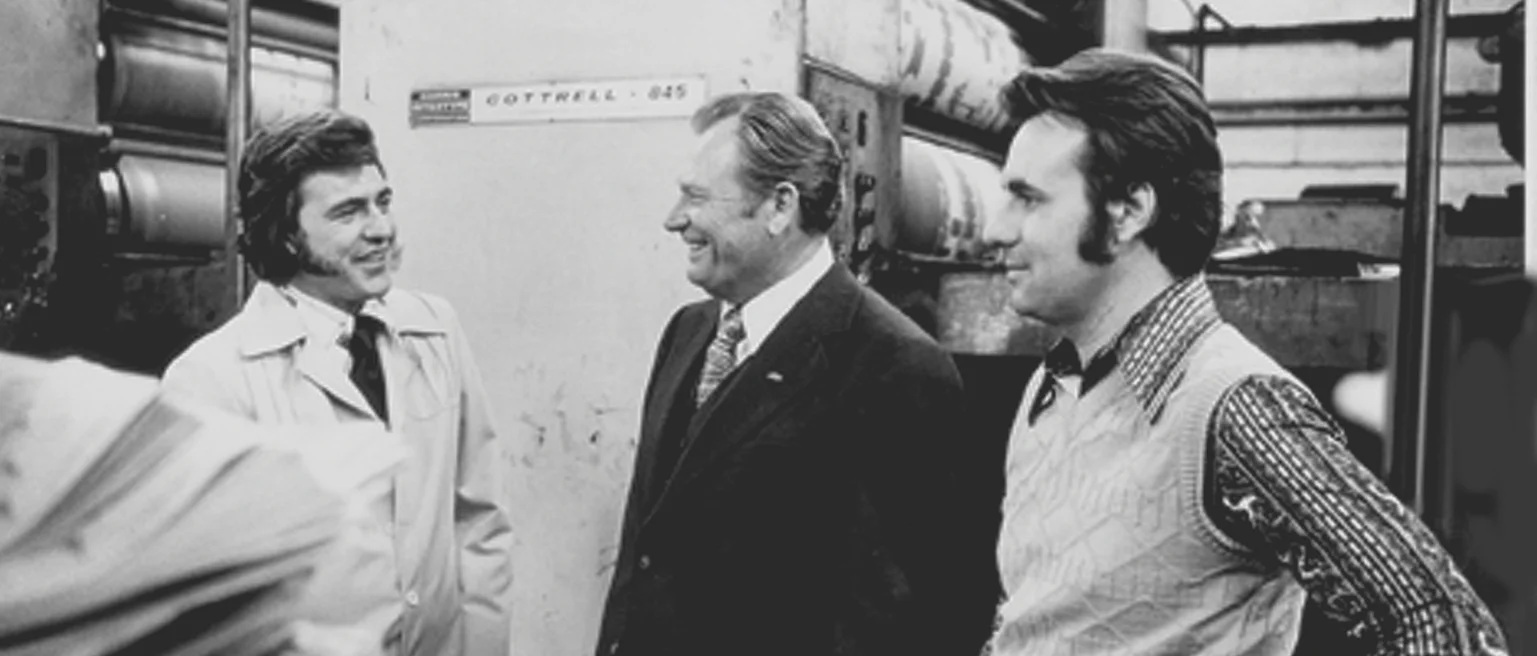
Fisher’s history begins in 1933, when Willard “Pete” Fischer restored a hand-fed press and began printing sales receipts from a garage on Chicago’s South Side. Receipts are an appropriately modest starting point. They belong to the machinery of commerce, alongside price lists and promotional notices. The business grew around making useful things for other businesses.
The family bought its first web offset press in 1945. Fischer’s sons Thomas and Willard J. joined in 1966. A Chicago facility followed in 1971; California expansion came in 1981. These milestones describe a company accumulating physical capability over decades. In 2009, a Digital Print Center added flexible runs and variable data printing. A second Chicago-area location opened in Bedford Park in 2018.
The advantage is in the handoffs
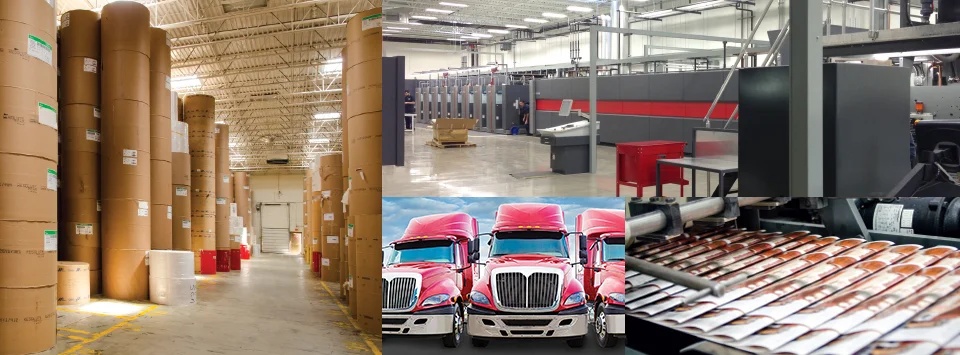
Today Fisher occupies the space between an advertising agency and a commercial printer. It offers concept development, layout, photography, content, print production, and delivery coordination. Its own creative teams work within an operation that also owns printing presses. For a retailer, the proposition is straightforward: fewer separate organizations to coordinate when one promotion needs several kinds of material.
Consider a hypothetical furniture sale. Someone must prepare the circular, keep product information consistent, arrange distribution, and make the digital promotion recognizable as the same event. Buying each task separately leaves the retailer managing the joins. Fisher’s model puts more of that work inside one supplier. Its dedicated Ace retailer site even advertises one invoice alongside integrated advertising and customer service.
high-speed presses across three US locations
Fisher’s print overview; capacity is not a measure of campaign effectiveness.Owning equipment also gives the flexibility claim some substance. In a testimonial Fisher publishes, a marketing specialist credits press ownership with accommodating last-minute orders and added quantities. That is one customer’s account, rather than a service guarantee. Still, it identifies a practical distinction: the organization discussing a change also has a hand in scheduling the machinery that will produce it.
Then there is freight. Fisher says its shipping volume helps it negotiate lower rates and that it can reach 90 percent of the United States within two days. For a sale tied to a particular week, delivery belongs in the advertising discussion from the beginning. A beautifully prepared circular arriving after the promotion has ended has missed the assignment. The logistics team is part of the campaign.
The sale travels further than the paper
Fisher’s digital menu includes email, search advertising, display, social advertising, geofencing, video, and advanced TV. Website development sits alongside those services. The company presents digital work as a companion to print, scaled to the retailer’s needs. That matters because adding channels creates its own administrative burden. Every additional version of an offer needs the right information, timing, and destination.
Its Performance Tracker brings digital campaign results into a dashboard, with a monthly downloadable PDF recap. This gives the buyer a place to inspect activity rather than treating the campaign as a finished delivery. The useful next question is what those numbers represent. Impressions and ad views describe exposure; the retailer still needs to connect the campaign to the business outcome being purchased.
- 01MailboxDiscover the offer
- 02MobileSee it again
- 03StoreFind the product
Illustrative workflow, not a measured conversion funnel.
There is also an ordinary production advantage in reusing good material. Fisher’s creative services include a photography library, plus in-house and on-site photography. A product image can support several pieces of the same campaign, with layouts adapted to the format. The work requires both creative judgment and attention to repetition: the sofa should remain the same sofa when it moves from a printed page to a screen.
For website customers, Fisher says its development team can work with existing environments and legacy code. That offers a more gradual route than replacing everything at once. The practical buying question is which existing systems need to keep working while the retailer changes how it presents the next offer.
Buy the whole job
Fisher names customers including Aldi, Ashley Furniture, La-Z-Boy, and Orgill Hardware. Its stated range runs from 25,000 copies for a single-location retailer to millions for commercial clients. The common thread is repeatable retail communication: offers that need to be produced accurately, distributed to a market, and supported where shoppers encounter them. This is a service and manufacturing business with digital capabilities attached.
The economics depend on the job. Fisher invites buyers to request a quote. A useful comparison therefore starts with a shared specification: quantities, formats, paper, versions, delivery timing, creative work, and digital support. Comparing only the print line leaves out the coordination being sold. Buyers should ask which tasks are included, who approves changes, and how a late revision affects the final price.
“Simplify advertising solutions so clients can focus on their core businesses and customers.”
Fisher’s mission statement
There are boundaries to the argument. A retailer needing only a small sign order may have little use for a large integrated campaign. A business testing an unfamiliar offer should establish whether people want it before paying to distribute it widely. And a campaign dashboard needs agreed success measures. Production control can improve execution; it cannot make an unappealing promotion persuasive by itself.
The transferable lesson is to map the handoffs before buying the channels. Put the circular, email, website, and shelf label beside one another. Check the offer, the dates, and the person responsible for each change. Assign one owner to the final check, too. When a price changes, somebody needs to know which files, pages, and signs must change with it. That small discipline is available to any retailer. Fisher’s history makes that exercise interesting: a business that began printing the record of a sale now helps retailers assemble the communications that come before one.