It's a Tuesday in February 2026, and a Big Four assurance partner is watching an AI agent close out a control test in twelve minutes. The same test used to take an associate two days. The partner is, for the record, still employed.
That is the small, unglamorous miracle Fieldguide has built. The company sells software to the audit profession - a profession that runs on PDFs, deadlines, and a chronic shortage of people willing to do the work. The software, in turn, runs on AI agents that are now confident enough to be trusted with the boring parts of a financial audit. Which is to say: most of it.
Fieldguide just raised $75 million in Series C funding led by Growth Equity at Goldman Sachs Alternatives. The round values the company at $700 million and brings total funding to roughly $122 million. KPMG put money in last October. Bessemer is back. 8VC is back. Thomson Reuters is in. The cap table reads like an attendance roster for an AICPA conference, which is presumably the point.
A profession running on coffee and Ctrl-F
Here is a number that should worry anyone who likes their bank statements to mean something: the U.S. is losing roughly 75,000 accountants a year to retirement and attrition. Far fewer are entering. The work, meanwhile, has gotten more complex. New disclosures, new frameworks, new cybersecurity controls, new climate rules. Same number of weekends in a year.
Most audit firms responded the way you'd expect - by hiring more people, lighter on sleep, heavier on coffee. The software they used was largely unchanged since the early 2000s, which is generous, because some of it was also literally unchanged since the early 2000s. Workpapers in Excel. Requests by email. Status updates by Slack message that ended with "circling back."
Jin Chang spent five years inside this system at EY. He liked the people. He did not like the workflow. After leaving, he ended up at Atrium, the legal-tech startup, where he met a software engineer named Chris Szymansky. The two of them looked at the audit business the way founders are supposed to look at large, slow industries: as a stack of paperwork waiting to be replaced by code.
Vertical AI, before that was a t-shirt
Chang and Szymansky started Fieldguide in 2020 and joined Y Combinator's W21 batch. The original product was workflow software - a cleaner way to manage SOC audits, the cybersecurity attestation reports that mid-market accounting firms churn out for cloud vendors. Useful. Boring. Sellable.
The bet underneath was less boring. Chang and Szymansky believed the audit category would eventually swallow generative AI whole - that the same compliance complexity that made auditors so necessary would make their work an irresistible target for automation. They didn't market it that way at the time. You don't sell a Big Four partner on "agentic AI" in 2021. You sell them on cleaner project trackers and a portal their clients won't curse.
Then came LLMs that could actually read. And summarize. And cross-reference. And Fieldguide had already wedged itself inside dozens of firms, learning - in some cases, painfully - what an audit actually looks like from the inside.
What the thing actually does
Fieldguide is, strictly, a SaaS platform for end-to-end engagement management. Planning, fieldwork, testing, review, reporting, close. That's the whole life of an audit or an advisory project, and Fieldguide tries to own all of it in one tab.
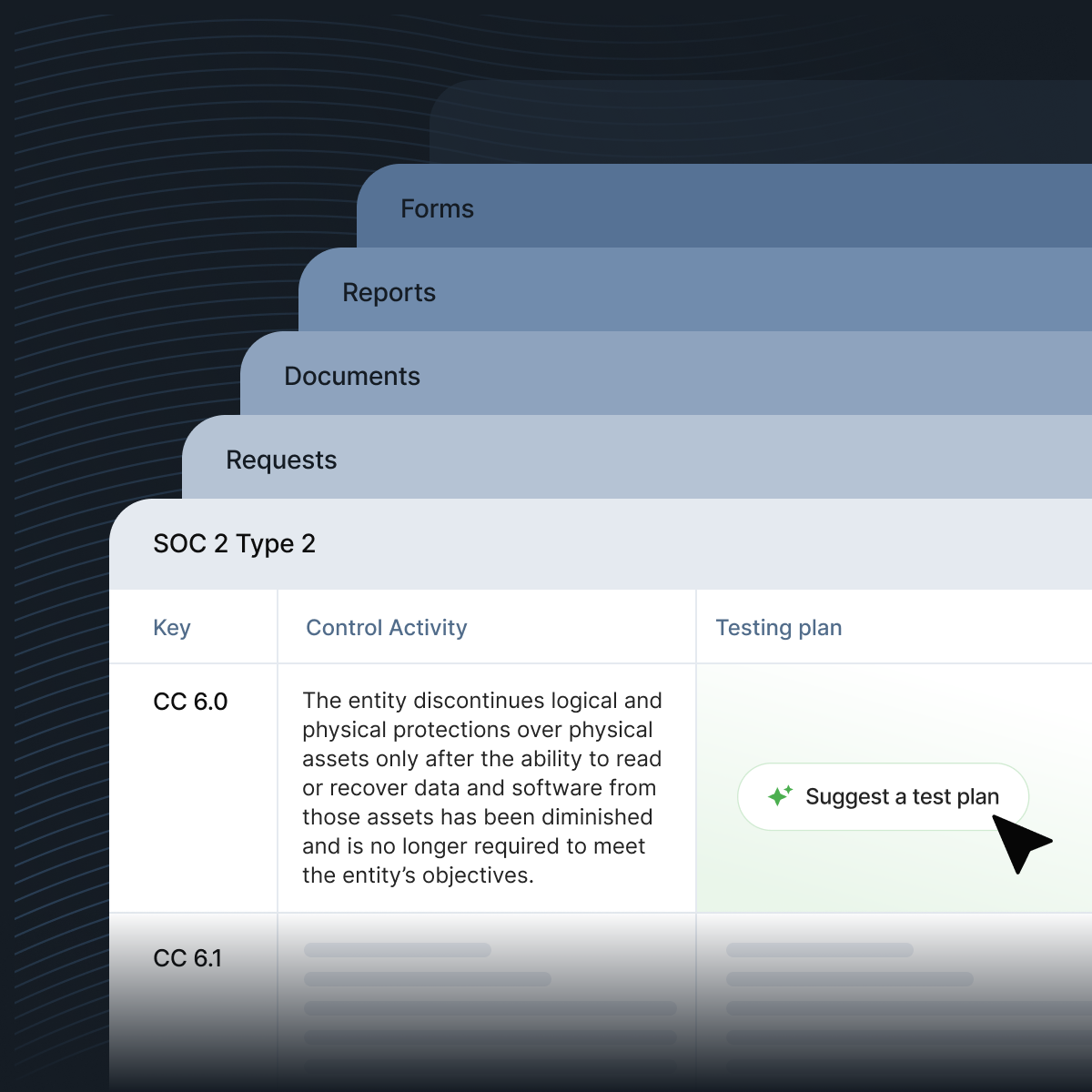
The interesting part is the agents. Fieldguide calls them Field Agents, which is on-brand and slightly cheeky. They do the work that historically required a first-year associate and a lot of patience: validating journal entries, sampling controls, reviewing uploaded client evidence for completeness, drafting first-pass test conclusions, flagging exceptions. The company claims under 1% error rates versus manual baselines. Auditors, who are professionally suspicious, are now using them anyway.
Engagement Hub
Plan, staff, and run an engagement end-to-end - replaces a stack of spreadsheets and PDF binders.
Field Agents
Agentic AI that executes test procedures, reviews evidence, drafts reports, and surfaces exceptions.
Client Hub
The portal clients won't quietly hate. Automated requests, document tracking, real-time status.
Integrations & API
Direct connections to 180+ enterprise applications, including the unglamorous middleware nobody admits to using.
A short company, told in receipts
Jin Chang and Chris Szymansky start the company in San Francisco. Initial focus: SOC and cybersecurity audits.
Joins the YC winter batch. Closes a seed round with 8VC.
Expands beyond SOC into broader audit and advisory workflows.
Bessemer leads. Fieldguide formally launches its AI platform and starts pitching it as the answer to the CPA talent shortage.
October minority investment plus partnership to co-develop AI-enabled assurance applications.
Goldman Sachs Growth Equity leads. CPAmerica names Fieldguide a preferred provider weeks later.
Funding by round - the slope of the conviction
The customer logo wall is doing some work
Fieldguide says half of the top 100 U.S. accounting firms are now on the platform. The named ones include RSM US, Baker Tilly, BDO, Grant Thornton, CBIZ, Forvis Mazars, CLA, CohnReznick, and Wipfli. KPMG, of course, is now also a customer and an investor, which is the sort of arrangement that tends to focus the attention of an enterprise sales team.
Half of one hundred is still fifty firms. In a category where switching costs are measured in partner-years, that number is genuinely large. It is also a number that compounds: every firm that adopts a new audit platform makes the next firm's decision slightly less radical.
Humans for judgment, agents for the rest
Strip away the marketing, and Fieldguide's argument is that the audit profession should not be defined by who has the most analysts willing to skip a holiday. It should be defined by judgment - by the part of the work that requires sitting with a client, asking the awkward question, and writing the careful sentence. Everything else, the company believes, can be done by code.
This is a more humanist pitch than it sounds. Audit firms are losing people because the work is grinding, not because it is unimportant. If software can absorb the grinding part, the firms might keep more of the humans. Whether that is exactly how it plays out is, of course, the open question of the decade.
The boring industry that quietly underwrites everything
Audit and assurance is a $200 billion global market. It is also the system by which capitalism agrees that companies are roughly telling the truth. If the labor pool keeps shrinking and the regulatory load keeps growing, something has to give - either the standards drop, or the workflow modernizes.
Fieldguide is betting on the second outcome, and it has now convinced Goldman Sachs and KPMG to bet alongside it. That is not a guarantee. Vertical AI is a crowded category, every Big Four firm has internal AI projects, and there is always the possibility that a more general-purpose tool eats the niche from above. But the company has logos, revenue, a strategic investor that is also a customer, and a product that audit partners describe in something close to affection. Those are not nothing.
Back to that Tuesday in February. The Big Four partner finishes the control test, signs off, and goes home at six. The associate who used to do that work is now interviewing a client about a fraud risk. Somewhere, an AI agent is quietly walking the next test procedure. The audit ends on time. Nobody mentions the weekend.
That is the scene Fieldguide is selling. It is also, increasingly, the scene auditors are buying.
Where to keep looking
- Websitefieldguide.io
- LinkedInlinkedin.com/company/fieldguide-inc
- Twitter / X@fieldguide
- Instagram@fieldguide.io
- Facebookfacebook.com/fieldguide.io
- Y CombinatorYC company page
- Series C announcementFieldguide blog
- Fortune coverageGoldman Sachs leads $75M round
- KPMG partnershipKPMG press release
- Investor viewBessemer Venture Partners
- Product demosRequest a demo
- Press contactpress@fieldguide.io