A microchip is a peculiar comfort. It can help a stranger return your dog, provided the stranger finds the dog first. It cannot tell you which street to run down. Fi began with that missing piece of information, then discovered a second absence: owners also know surprisingly little about the hours when their dogs are perfectly safe.
- GPS collars and trackers help owners follow pets and receive escape alerts.
- Behavior monitoring gives the subscription a job between emergencies.
- Mini favors small pets; Ultra trades long battery life for satellite fallback.
01 / The collar had to survive being forgotten
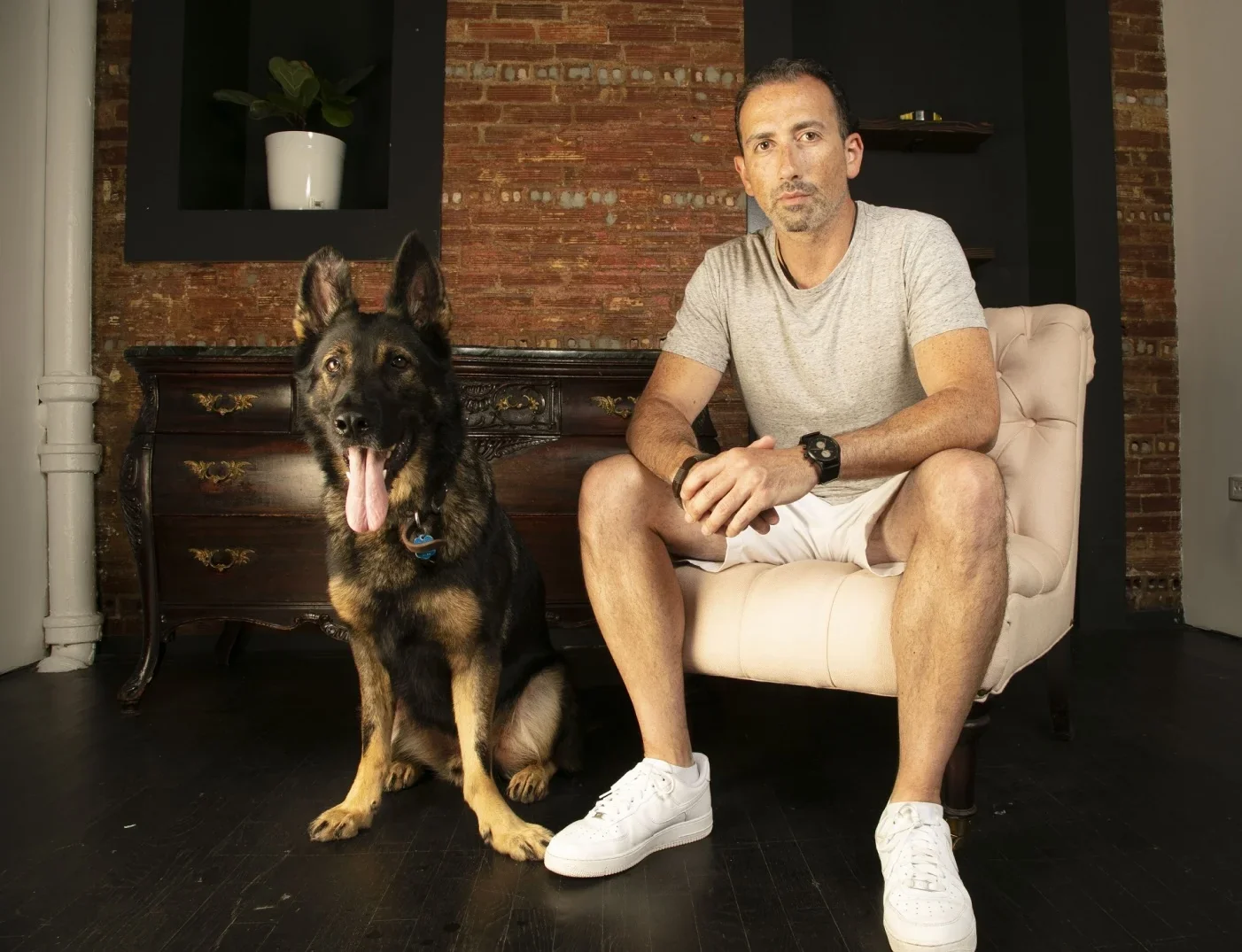
Jonathan Bensamoun had a German shepherd, Thor, and a shopping problem. In a 2021 interview, he said he had been unable to find a tracking product with satisfactory design and battery life. A device meant to calm its owner should not introduce a daily anxiety about whether somebody remembered the charger.
He founded Fi with Loren Kirkby in 2017. Bensamoun brought product experience from Square and Handy; Kirkby had been chief architect at Dropcam, subsequently acquired by Nest. Their first collar reached buyers in March 2019. Industrial designer Fred Bould, whose work included the Nest thermostat, helped shape it. Consumer electronics had acquired a customer who chewed things.
The engineering answer was selective effort. Fi’s connection hierarchy favors lower-power sources: a base, the owner’s phone or Wi-Fi, before GPS and cellular. At home, a collar need not behave as though the dog is crossing a mountain. Saving energy during ordinary life leaves more available when ordinary life ends.
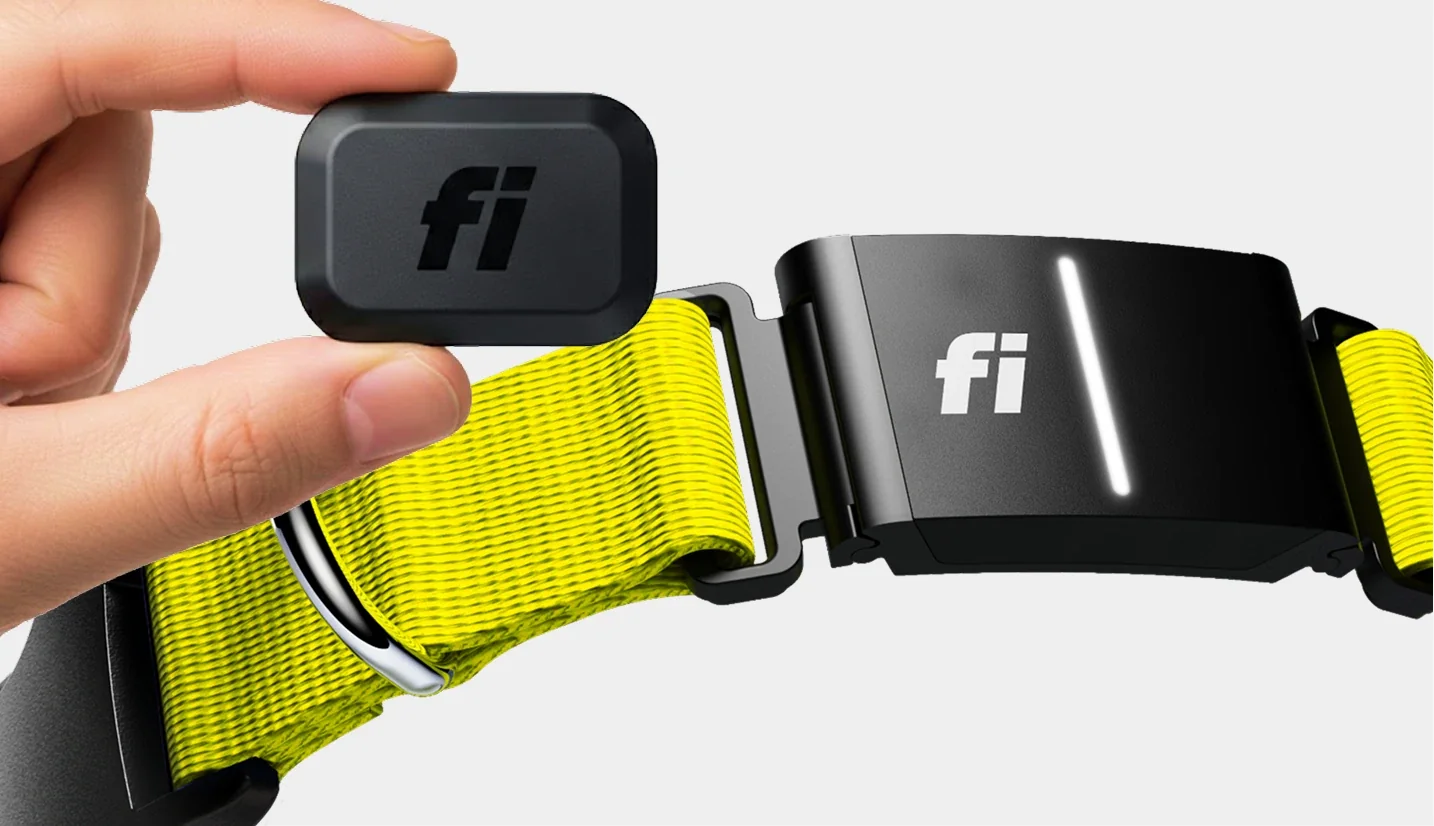
In a 2024 investor interview, Bensamoun said Fi shipped its first product while spending less than $5 million of venture funding. His count of the module’s components was 258, including every board chip. Those are founder-reported figures, but they describe a fairly elaborate object for a customer who cannot read the instructions.
02 / An emergency product needs ordinary Tuesdays
GPS supplies the obvious sales pitch: where is the dog? Safe Zones let owners define boundaries, and escape alerts flag departures. Lost Mode increases tracking intensity. These features serve anxious owners, walkers and households sharing responsibility for a pet. But a recovered dog does not explain why somebody should open the app next Tuesday.
Fi’s answer has become observation. Series 3+, introduced in June 2025, added detection of barking, licking, scratching, eating and drinking alongside activity and sleep. Uploaded veterinary documents supply further context. The company says the models were developed through more than two years of work and field testing. The ambition is to make changes visible while they are still small.
The useful question is whether today looks different from this dog’s usual day. More scratching or a changed drinking pattern can prompt an owner to pay attention and speak to a veterinarian. Fi’s own terms describe the readings as estimates, affected by fit, movement and other conditions. A chart can improve a conversation; it cannot examine the patient.
03 / Sixteen grams opened another door
Mini arrived in August 2025 at about 0.56 ounces, roughly sixteen grams. It attaches to existing collars or harnesses and brought cats into Fi’s audience. Smaller hardware changes who can wear a product. It also changes who can buy one without conducting a small interrogation.
“It’s about accessibility.”
Jonathan Bensamoun on Mini, Retail Brew, 2025
Bensamoun told Retail Brew that earlier collars were awkward gifts: buyers needed the recipient’s dog’s neck size and preferred color. An attachable tracker removed that obstacle. Product differentiation sometimes means a clever sensor. Sometimes it means letting somebody finish their Christmas shopping.
04 / A map dot needs a way home
Location and communication are separate jobs. A GPS receiver can determine coordinates while lacking the connection needed to send them to an owner. For rural owners and hikers, that distinction becomes painfully practical. Bensamoun told Space.com that weak cellular coverage was a leading customer complaint.
Ultra, launched in July 2026, adds T-Mobile’s T-Satellite with Starlink to GPS and LTE. Its satellite fallback addresses terrain beyond terrestrial network coverage. Sound and vibration cues provide a recall training aid. In June, Fi had separately announced a 38-country connectivity footprint for its international expansion, with purchasing in 29 markets. Ultra’s launch was US-focused; these promises should not be conflated.
Bars approximate advertised maximum durations. Ultra needs power-saving mode for five days; Series 3+ needs low-activity conditions for three months. Actual endurance varies.
The tradeoff is charging. Fi’s September guidance puts Ultra at two to three days per charge, compared with weeks for many Series 3+ routines. Satellite service also needs an unobstructed sky view and supported geography. For a suburban dog, longer endurance may matter more. A virtual boundary sends an alert; it does not physically contain an animal.
05 / The collar is the first bill
Fi combines hardware sales with recurring membership. September 2026 US list prices put Mini at $99, Series 3+ at $129 and Ultra at $299. Standard annual renewal is $189; six-month and two-year alternatives are available. Promotions alter checkout totals, and existing members may retain older rates. Adding Ultra to an existing pet setup can use that pet’s current membership.
Illustrative US totals before tax, using list hardware prices plus $189. Promotions and existing memberships differ.
The company announced a $7 million Series A in 2019 and a $30 million Series B in 2021. Yet money does not automatically create awareness. Asked about his biggest challenge in a 2024 investor interview, Bensamoun answered with one word: awareness. A clever collar must first persuade people that collars can be clever.
06 / The dog gets a vote
Tractive competes for everyday GPS buyers; Garmin serves outdoor tracking, while Halo and SpotOn address containment as well. Fi’s place is consumer wearables joined to ongoing pet data. Its rescue program supplies another practical entry point, reporting more than 700 partners and 100,000 donated devices and microchips.
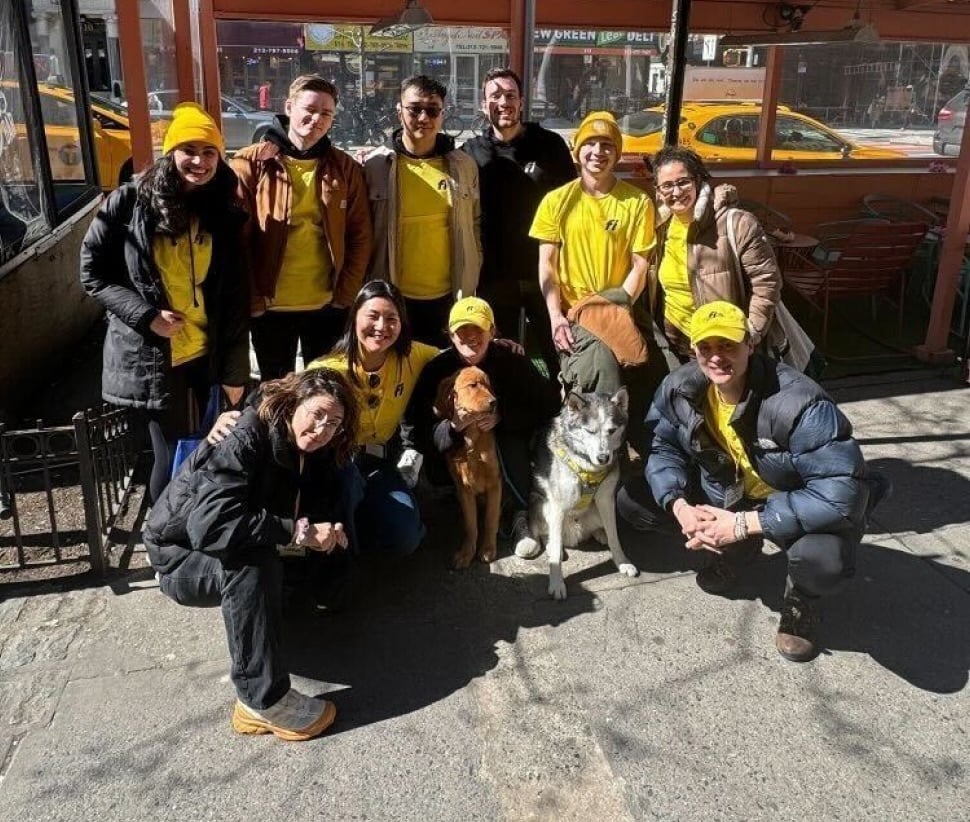
Its public values favor making data understandable and care more proactive. Bensamoun also describes a culture that uses monthly investor reports to revisit priorities. The dog-friendly photograph is charming; the useful management habit is stopping to ask why a project still deserves attention.
The lesson to copy is specific: solve the frightening occasion, then earn attention during the uneventful week. Respect the charging routine, the buying friction and the network boundary. Fi’s promise is most persuasive when it helps an owner notice something worth acting on. Dogs remain rather poor at completing questionnaires.
Take the next walk
Explore Fi · Off Leash blog · Plans and pricing
LinkedIn · X · Instagram · Facebook · TikTok
Watch: Fi Ultra product film ↗
Listen: Jonathan Bensamoun on VentureFizz ↗
Read: the Mini interview ↗