Profile / The Subscription Operator
Paul
Guyardo.
He spent two decades convincing people to subscribe to satellite TV and streaming apps. Now he wants them to subscribe for the dog.
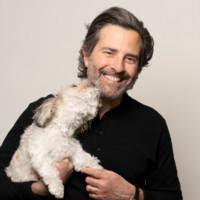
PAUL GUYARDO · PRESIDENT & CEO, FETCH
He spent two decades convincing people to subscribe to satellite TV and streaming apps. Now he wants them to subscribe for the dog.
Paul Guyardo runs Fetch Pet Insurance from a building on Greenwich Street in lower Manhattan, and his job, stripped to the bone, is to get you to pay every month for something you hope you never have to use. He has done this before. He did it with satellite dishes. He did it with streaming apps. He did it, once, with a diet plan. The instinct that ties a career together here is not insurance or television or weight loss. It is the subscription - the quiet, recurring, faintly miraculous transaction where a customer keeps paying because the value keeps showing up.
Fetch was not always Fetch. When Guyardo took the helm in 2019, the company was Petplan, a fifteen-year-old pet insurer with British roots and a name that sounded like a brochure. He rebranded it, tied it to The Dodo - the wildly popular online animal brand whose videos of rescued raccoons and reunited dogs rack up billions of views - and pointed the whole operation at a single idea: that pet insurance had been selling fear when it should have been selling good days. Under his watch the subscriber base roughly tripled, climbing toward half a million pets.
"Pet insurance has traditionally focused on the bad days. Our focus is to ensure that pets and their parents enjoy more good days together."
It is an easy line to dismiss as marketing, except that marketing is precisely the thing Guyardo is best at, and he means it as a product strategy. Reframing a category around the upside instead of the catastrophe is the same move he ran at DIRECTV, where the pitch was never "your cable is bad" but "your Sunday afternoons could be better." Get the emotion right and the spreadsheet follows.
The arc starts in advertising. Long before half a million pets, Guyardo was a young ad man representing the kind of brands that live on supermarket shelves - Noxzema, Procter & Gamble, Frito Lay. He learned the trade selling face wash and corn chips, which is a better education in human desire than most MBA programs. He carries two degrees from Northwestern University, a B.S. in Radio/TV/Film and a master's in advertising, and he would later return to that same School of Communication as a member of its Board of Advisors.
Then came the turnaround years. At HSN he ran television and marketing, owning everything from live broadcast production to the data behind what actually sold at 2 a.m. At Kmart he served as chief marketing officer in the bruised, blinking aftermath of the retailer's bankruptcy. These were not glamorous postings. They were the rooms where you learn whether your ideas survive contact with a profit-and-loss statement. He kept getting hired to fix things, which is a particular kind of reputation to build.
DIRECTV is where the scale arrived. He joined in 2005 as chief marketing officer and by 2007 had absorbed sales, distribution, branding, pricing, sports, premium channels, retention, analytics - the full apparatus that drove the company's revenue. The numbers from that stretch are the ones that follow him around: subscribers from 15 million to 20 million, revenue from $12 billion to $25 billion, and a trophy shelf with a dozen Cannes Lions on it for advertising that people actually enjoyed. In 2012 the company elevated him to chief revenue and marketing officer, and the same year he joined the public board of Nutrisystem, where he would serve for seven years until the company was acquired.
In October 2015 Discovery Communications created a new role - chief commercial officer - and handed it to Guyardo. His mandate was to drag a wholesale television business into the direct-to-consumer era. He launched nine streaming apps that together pulled in over a billion minutes of viewing a month, and grew the Eurosport Player from 250,000 subscribers to a million in a single year. That work became part of the foundation Discovery later built on, the early plumbing of what would eventually surface as MAX. He had, in effect, run the subscription playbook one more time, on a different screen.
"Even wealthy pet owners can save by insuring their pets."
So the move to pet insurance, which looks like a swerve, is really a straight line. The product changed - from channels to coverage - but the engine is identical: acquire a subscriber affordably, keep the value visible, and make the monthly charge feel like a small price for peace of mind. The twist at Fetch is that he is building a media company that happens to sell policies. The Dodo partnership is not a logo swap. It is distribution. It is the reason a pet insurer can talk to you about more good days without sounding like an actuary.
Turnaround executives are not, as a class, beloved. They arrive when things are hard and they make decisions people do not always like. Guyardo carries an 88-out-of-100 employee approval rating at Fetch, which puts him near the top of comparable companies. He has guest-lectured at Washington University in St. Louis and NYU, the kind of thing executives do when they enjoy the teaching part. The portrait that emerges is of an operator who is data-driven without being cold - someone who can read a cohort retention curve and a rescue-dog video with equal fluency.
What he is chasing now is a redefinition. He wants pet insurance to stop being the thing you buy in a panic at the vet and start being the thing you set up the day you bring the puppy home, the same way you would not dream of driving a new car off the lot uninsured. Whether the category bends to that vision is an open question. But if there is one person whose entire resume is a record of getting people to subscribe and stay subscribed, it is the man currently doing it for dogs and cats.
"The pitch never changes. Get the emotion right and the spreadsheet follows."
Grew Fetch's subscriber base roughly threefold to nearly 500,000 pets, while rebranding Petplan into Fetch.
Added to DIRECTV's annual U.S. revenue during his tenure, lifting it from $12B to $25B.
Quadrupled the Eurosport Player at Discovery, from 250,000 subscribers to one million in a year.
Years on the public board of Nutrisystem, serving until its acquisition by Tivity Health.
He owns two Northwestern degrees and later joined its School of Communication Board of Advisors.
His DIRECTV advertising work collected 12 Cannes Lions - the ad world's most coveted hardware.
He helped lay the streaming groundwork at Discovery that fed into what became MAX.
He has guest-lectured at Washington University in St. Louis and NYU.
His first products were Noxzema and Frito Lay. His current ones bark and purr.