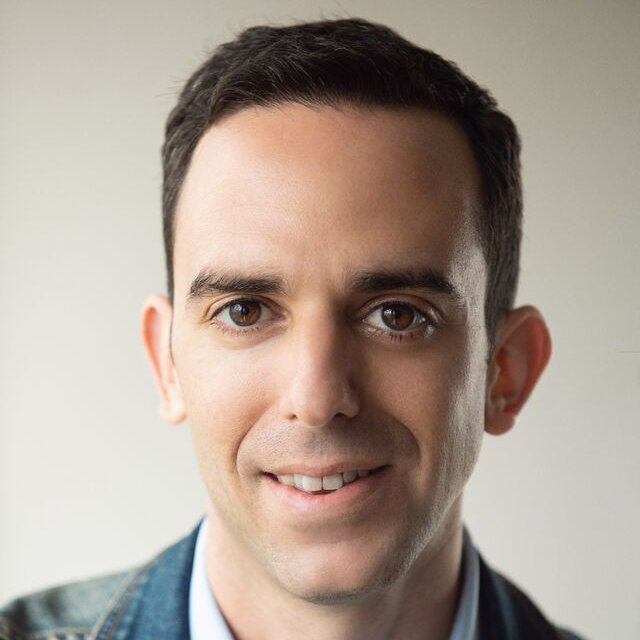
On any given afternoon in New York, Lior Tibon is thinking about a problem that most of the music business would rather ignore: the artist with a few thousand monthly listeners, a catalog that quietly earns royalties every month, and no way to turn that future income into money today. For decades, selling a music catalog was a privilege reserved for a small circle of superstars. Tibon built a company to change that math.
His company, Duetti, is a music financing platform that lets a broad range of artists, songwriters and collaborators sell their catalogs, individual tracks, or even fractions of them, for cash upfront. It is a deceptively simple pitch with a complicated engine underneath: pricing songs, forecasting streaming revenue, and managing rights at a scale that used to require a major label or a hedge fund. Since founding the company in 2022, Tibon has raised more than $623 million to fund the independent music community, with backing from The Raine Group, Flexpoint Ford, Nyca Partners, Viola Ventures and JAY-Z's Roc Nation.
What makes Duetti interesting is not just the capital. It is who the capital is aimed at. Tibon is not chasing the next stadium headliner. He is betting on what he calls the middle class of music, the working artists whose songs generate real, recurring income but who have never had a serious financial partner. In his telling, that group is the single most undervalued asset in the industry.
The core challenge in music today is not creation, but discovery.
Lior TibonTel Aviv, London, and a call from JAY-Z
Tibon did not start in music. He was born and raised in Tel Aviv, served as an officer in the Israel Defense Forces from 2002 to 2006, then moved to London, where he studied at the London School of Economics and graduated in 2009. From there he went straight into finance, spending roughly five years as an analyst and associate in investment banking at Deutsche Bank.
Banking is where the music thread began. While advising companies as a banker, he found himself drawn to clients in the music space, learning the business from the outside before he ever worked in it. That curiosity paid off in late 2014, when he received an offer to join a team JAY-Z was assembling to launch TIDAL, the first global streaming platform owned by artists.
He joined the core group in January 2015 and became chief operating officer. Over the next seven-plus years he led major strategic, revenue and operational efforts as TIDAL grew, weathered public scrutiny, and was ultimately acquired by Block, formerly Square, in 2021. Tibon stayed on for about a year after the acquisition before leaving in May 2022. Almost immediately, he started Duetti.
Where the streams are coming from
Duetti's proprietary research tracked a six-month shift on Spotify: editorial playlist streams falling as recommendation algorithms rose. Directional figures cited by Tibon.
Tibon's read: discovery is fragmenting toward individual listeners, which favors a broader base of artists over a handful of stars.
Why catalogs, and why now
The industry Tibon watched up close at TIDAL was one where a small number of superstars captured a huge share of attention and money, while the platforms sat between fans and artists. Duetti is his answer to a gap he saw and streaming never closed: getting real capital into the hands of the artists in the middle.
The model works because streaming income, while modest per play, is predictable in aggregate. If you can forecast what a track will earn, you can price it, buy it, and give the artist a lump sum now instead of a trickle over years. Duetti will buy a full catalog, a single song, or a slice of one, and then handle the marketing and royalty management that follows. For an independent artist, that can mean funding a new record, clearing debt, or simply having options without signing away their independence to a label.
Tibon has also become a vocal reader of where listening is heading. In his view, the loudest AI debate, machines writing or cloning music, misses the real shift. The bigger story is AI reshaping discovery: personalized recommendation algorithms deciding what millions of people hear next. His argument is that as editorial curation loses ground to algorithms, the winners will be the broad middle of artists, and the skill that matters most will be understanding how those algorithms surface music.
You should always be shipping - add value regularly and put things in the market rapidly.
Lior Tibon, on buildingLead from the front, ship imperfect things
Ask Tibon about leadership and the answers are unglamorous and specific. He believes leaders should lead from the front, that no job is too big or too small, and that he should directly contribute to particular company efforts rather than manage from a distance. He gives teams a lot of autonomy, but inside clear frameworks, and he puts a premium on direct communication and owning mistakes.
His product instincts lean toward speed over polish. He would rather launch an imperfect proof of concept to get real signal than wait for perfection. Innovation, he says, usually happens cross-functionally, by borrowing elements from different disciplines, which is a fair description of a company that fuses finance, music and data. And he carries a banker's caution into deals: never overplay your hand, because going too hard tends to come back to haunt you.
"Leaders should lead from the front. No job is too big or too small."
"It's better to launch an imperfect proof of concept to gain signal."
"Innovation often means you need to 'break things', but you need to do so with care."
"Never overplay your hand. Going too 'hard' will probably come back to haunt you."
A career in four acts
- 2002 - 2006Officer in the Israel Defense Forces.
- 2009Graduates from the London School of Economics; begins a finance career in London.
- 2009 - 2014Analyst and associate in investment banking at Deutsche Bank; starts advising music clients.
- 2015Joins the core team launching TIDAL under JAY-Z's ownership; becomes COO.
- 2021TIDAL is acquired by Block; Tibon keeps leading operations.
- 2022Leaves TIDAL in May; co-founds Duetti and becomes CEO.
- 2026Duetti raises a Series C, part of over $623M committed to independent artists.
A few things worth knowing
Tibon's career reads like several different people stitched together: a soldier, a banker, a streaming executive, a founder. What connects them is a habit of learning an industry from an adjacent seat, then moving in. He picked up music while advising it as a banker. He learned how platforms work by operating one. Duetti is what happens when both educations point at the same problem.
He has lived on three continents: born and raised in Tel Aviv, about ten years in London, and years in New York.
His first brush with the music business came from advising music companies as a banker, not from working in music.
Before finance, he served as an IDF officer from 2002 to 2006.
Duetti will buy a single track, or even a fraction of one, not just full catalogs.
The bet on the middle class of music
Tibon's ambition is larger than any single deal. He wants to build the financial infrastructure that lets ordinary working artists capture the true value of their music, turning catalog liquidity and fair upfront payouts into something as accessible as a bank account rather than a privilege of fame. If he is right about where discovery is heading, the market of artists who deserve that infrastructure is only going to grow.
Whether Duetti becomes a lasting fixture or a moment in the reshaping of music finance, the through-line of Tibon's work is consistent: find the people the system overlooks, price what they own fairly, and pay them for it now. It is a finance problem and a music problem at once, which is exactly the intersection he has spent his whole career walking toward.