Before a restaurant can put a new dish on the menu, somebody has to solve a rather less romantic problem: getting its ingredients through the door. There are suppliers to find, products to buy, warehouses to organize, and customers whose orders matter whether they operate one dining room or several. Felix Lin has built his working life around the machinery behind such promises. For much of that life, the product was a school bus.
Today, Lin is president and chief executive officer of HF Foods Group, the Las Vegas-based distributor of specialty foods and restaurant supplies. His career connects two businesses that seldom share a dinner conversation. Look closer at the work he has done, though, and the connection becomes easier to follow. Finance, operations, supply chains, training: these are the disciplines that turn an attractive plan into something that can leave a building.
An education in things that have to arrive
Lin spent more than a decade at Blue Bird Corporation before leaving in April 2022. His responsibilities ranged across finance and accounting, manufacturing operations, supply chains, and international business development. He eventually served as a vice president and senior strategy officer, with a brief extending to human resources, government relations, compliance, and corporate and operations training.
That is an unusually broad set of windows into one enterprise. Accounting records what happened. Operations has to explain why it happened. Training concerns whether the next person can do the work consistently. Moving among those functions offers a practical education in the distance between a decision taken centrally and a task performed on the floor.
His formal education supplied another set of tools. Lin earned a bachelor’s degree in accounting and finance at Mercer University, a master’s in accountancy at Georgia College and State University, and an MBA at the University of North Carolina at Chapel Hill. Three universities, with accounting appearing twice: even before the food business, the numbers had secured a permanent seat at his table.
Earlier Blue Bird work also placed him on the China and Middle East business development team under Cerberus Capital Management. His professional experience already involved both the movement of physical products and the complications of doing business across markets. Food distribution would give that combination a different destination.
First the boardroom, then the loading dock
Lin’s first HF Foods position was an independent board seat in November 2019. He chaired the Audit Committee and Special Investigation Committee. He therefore encountered the company through oversight before taking responsibility for its daily operations.
In May 2022, he became chief operating officer. The change carried an obvious shift in perspective: a director questions management’s decisions; an operating executive must make decisions that can withstand those questions. His earlier financial experience also proved directly relevant. He served as interim chief financial officer in 2022 and returned to that assignment for part of 2024.
The titles accumulated in stages. President followed in February 2024. In October, Lin became interim CEO, replacing Peter Zhang. The company said the transition involved no disagreement over financial reporting, policies, or practices. In December, the board announced his permanent appointment, effective January 1, 2025. He relinquished the COO title as its responsibilities moved to the senior management team.
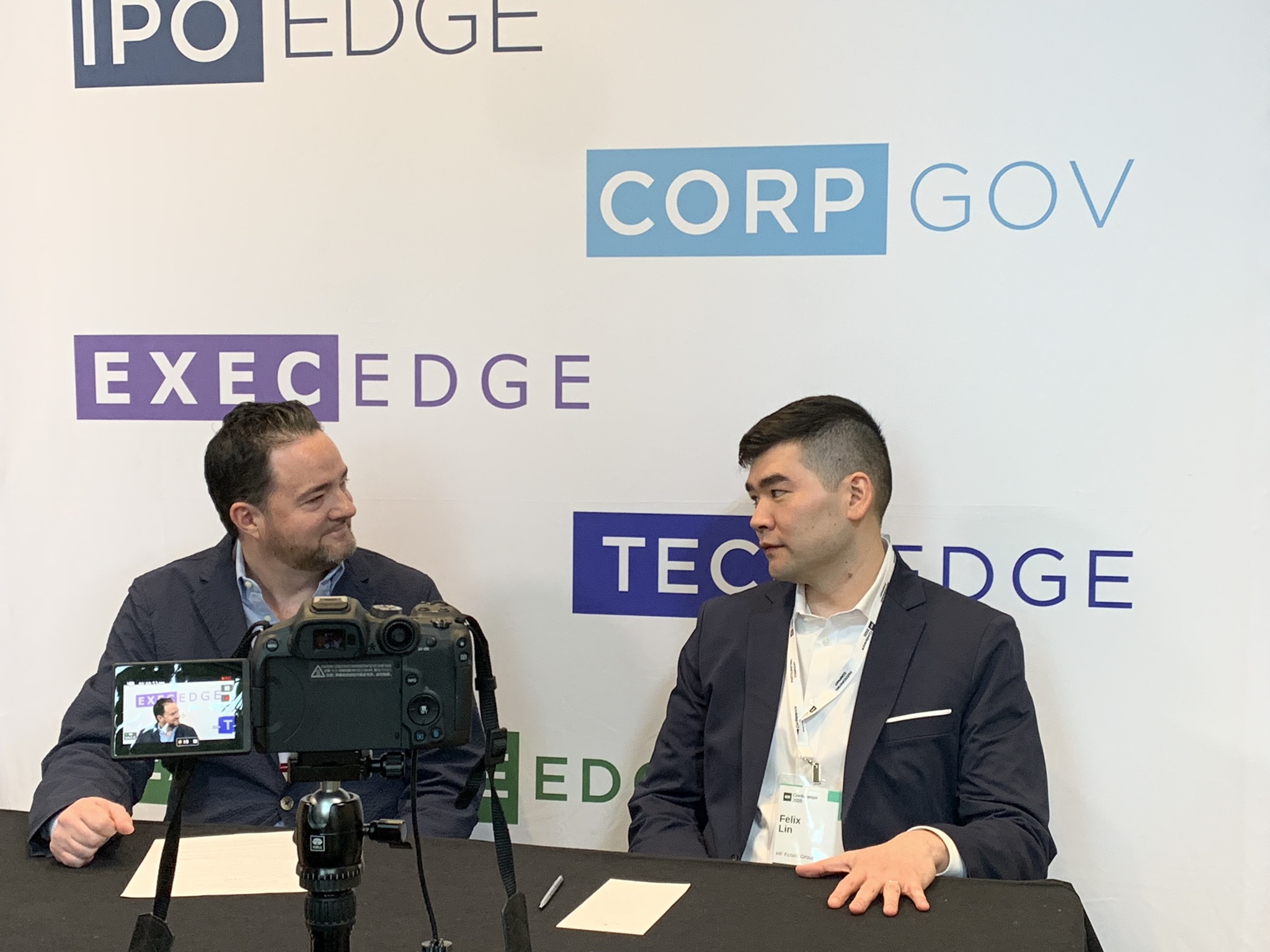
The appointment came with work already in progress. “The HF Foods strategic transformation plan is well underway,” Lin said. His assignment was to carry an existing operating program forward. By then, he had seen the business from enough different seats to understand how many people would have to make that program work.
- 2019Independent director
- 2022Chief operating officer
- 2024President
- 2025Permanent CEO
The menu is wider than the label
Lin’s public comments give the business a purpose beyond the movement of cases. In March 2025, he described eating as a way to bring people together. He described access to international cuisines as personally meaningful, and argued that restaurants needed ingredients that could be difficult to obtain through ordinary channels.
He has also challenged the narrow picture that can accompany the phrase Asian cuisine. In discussing the restaurant market entering 2025, he pointed to cuisines beyond traditional Chinese food and to hybrid or fusion offerings. Smaller fusion chains, including groups with 10 to 20 locations, represented an opportunity he believed larger foodservice businesses had underserved.
“I believe that food, and eating in general, is something that brings everyone together.”
Felix Lin, March 2025
There is a useful commercial distinction here. A broad category makes a market easy to describe. Individual dishes make it harder to supply. A restaurant ordering for a particular cuisine needs the appropriate product, regardless of how conveniently it fits a distributor’s categories. Lin’s argument puts those differences near the center of the business.
His April 2025 appearance on ICR’s Welcome to the Arena podcast explored customer loyalty, product offerings, distribution networks, and acquisitions. The discussion’s setting was a market with many family-owned restaurants and customers spread beyond major population centers. Serving that market asks a distributor to combine geographic reach with relationships specific enough to be useful.
Software before supper
HF Foods describes its model as a combination of local cultural understanding, relationships with domestic and overseas suppliers, and centralized purchasing. Those elements pull in different directions. Purchasing benefits from scale. A restaurant relationship depends on understanding a particular order. Lin’s operating task brings the two together.
One substantial piece of that work was the rollout of an enterprise resource planning system across the distribution network. By August 2025, HF Foods reported that implementation was complete. Such software is unlikely to tempt anyone away from a restaurant’s specials board. It does, however, concern the shared information on which purchasing, inventory, and financial decisions depend.
The company’s 2026 shareholder letter also reported that it had cleared its IT general controls material weakness. That distinction matters: installing a system and establishing confidence in the controls surrounding it are separate achievements. Both formed part of the operating foundation Lin was asking investors to judge.
Physical capacity received attention as well. In December 2025, HF Foods opened a distribution center in Powder Springs, outside Atlanta. The facility included warehouse, freezer, cooler, and office space. It replaced the previous Atlanta location and continued serving more than 1,000 existing customers, with room to pursue additional business across the Southeast.
For Lin, the attraction was practical geography. He pointed to access to transportation corridors and the chance to serve more restaurants. A warehouse is an investment in future orders, but it also creates an obligation: the available space must become useful capacity. The ribbon is cut once. The orders keep coming.
A border crossing, with seafood
The next expansion took HF Foods beyond the United States. On August 31, 2026, it completed the acquisition of Searay Foods and related entities in Canada. Announced as completed on September 3, the transaction established the company’s first international platform.
Searay, headquartered in Richmond, British Columbia, imports and distributes ethnic and specialty frozen seafood. The base purchase price was approximately C$47.9 million, or US$35 million, paid through cash and HF Foods shares, with additional consideration linked to future performance. Its existing management team would continue handling day-to-day operations.
The acquisition added a business with six proprietary brands and a worldwide supplier network. Lin described opportunities to combine that portfolio with HF Foods’ scale. The intended benefits included cross-selling and supply-chain efficiencies. Those were expectations attached to the deal; the completed purchase supplied the starting point for testing them.
The arithmetic keeps its own counsel
Expansion gives a corporate story movement. The accounts provide a necessary check on its direction. In the second quarter of 2026, HF Foods reported net revenue of $323.8 million, up 2.8% from a year earlier, and GAAP net income of $2.6 million. Adjusted EBITDA, a non-GAAP measure, declined 2.0% to $13.6 million.
Gross profit was essentially flat, while gross margin fell from 17.5% to 17.0%. The company identified tariff costs as a pressure. The combination is instructive: selling more does not automatically mean keeping more from each dollar of sales. For an executive trained in both accounting and operations, that gap belongs near the center of the job.
Shareholder accountability supplied another complication in June 2026. Lin did not receive the required majority in the director election. The board subsequently determined that he should continue serving after a governance review. Among its reasons, the company cited his operating experience and a significant shareholder’s report that an administrative error had prevented it from submitting intended favorable votes for approximately 1.4 million shares.
That episode belongs alongside the appointments and expansion plans. Running the company involves answering both the customer placing an order and the investor questioning its stewardship. Neither audience is obliged to be satisfied by a title.
Lin’s route to this point has been a succession of practical responsibilities: count the money, understand the operation, oversee the business, then run it. His next chapter adds another country and another set of products. The test remains close to the restaurant door. A wider menu of possibilities earns its place when the people doing the cooking can actually use it.