FeedHive is for the person who opens a social scheduler on Monday and wants Friday to stop existing. The solo founder with five half-written LinkedIn posts. The marketer copying one launch announcement into four networks. The agency lead waiting for a client to type “looks good” in a scattered email thread. FeedHive puts those little irritations on one calendar, then adds rules so fewer of them require a human hand next week.
That makes its pitch more useful than the familiar promise to have AI “make content.” Every software demo can produce a breezy caption now. FeedHive earns attention when the caption becomes a draft, gets the right channels and labels, lands in an approval queue, publishes at a planned time, and later returns as a recycling suggestion. The interesting unit is the workflow, not the sentence.
Who should put it on the shortlist?
Start with creators and small marketing teams who publish regularly enough to benefit from batching. If you write three posts a month, a spreadsheet and each network’s native scheduler may be perfectly civilized. If you publish across LinkedIn, Instagram, Facebook, YouTube, TikTok, Pinterest, Threads, X, or Google Business profiles, the repeated formatting and scheduling work begins to justify a control room.
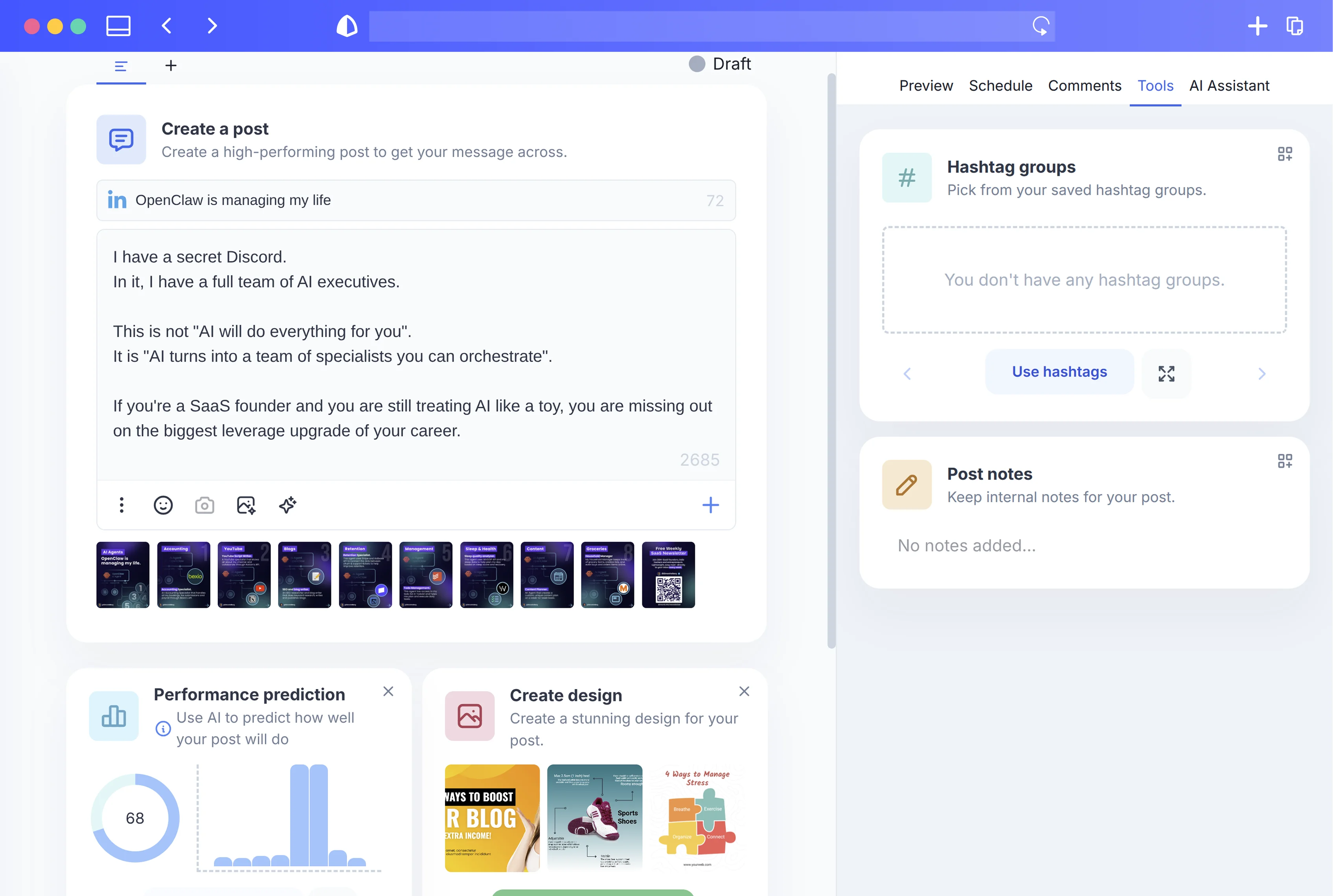
FeedHive also makes sense for a technical founder or operations-minded marketer. Version 2.0 stretches beyond its browser interface with a REST API, command-line tool, official MCP server, Claude Code setup, and OpenClaw skills. That collection lets custom scripts and agents prepare or operate the queue. An OpenClaw agent, for example, can be asked to turn an update into an X thread and schedule it. FeedHive keeps the draft, calendar, and approval machinery visible to the team.
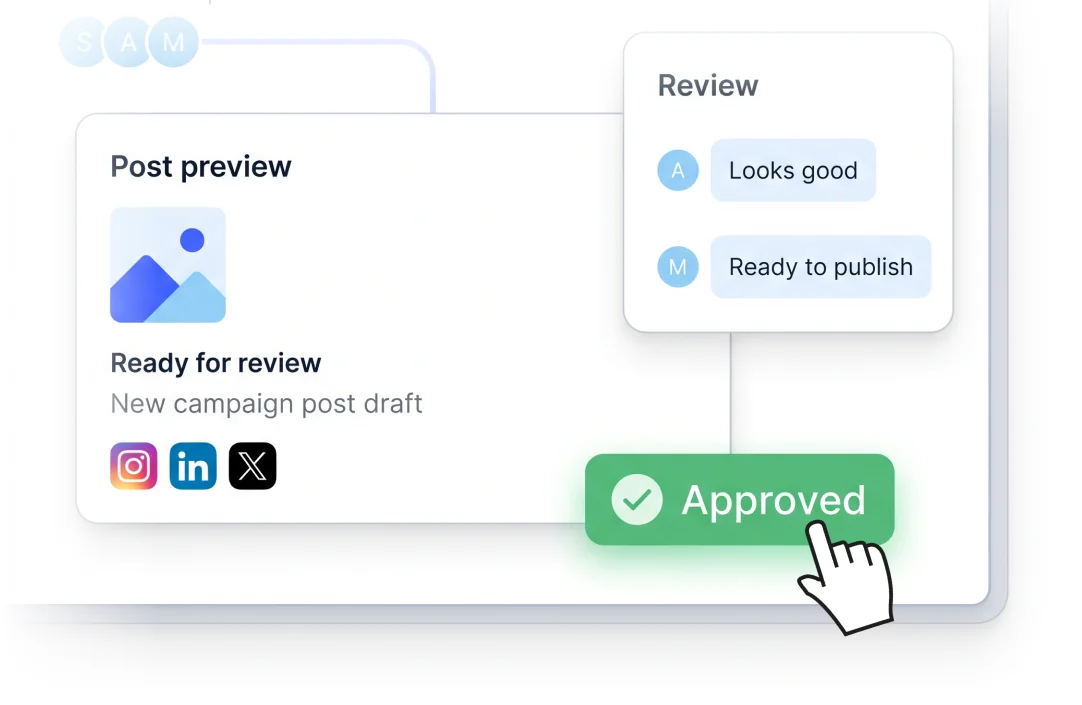
Agencies are a third audience, particularly when their pain is approvals rather than full-scale listening. Shared workspaces, roles, comments, client links, white labeling, and approval flows cover the routine handoff. Large organizations that need deep sentiment analysis, brand monitoring, or heavyweight governance should compare Hootsuite and Sprout Social before settling. FeedHive feels more like a publishing workshop than a corporate radar station.
A scheduler discovers plumbing
The backstory is refreshingly specific. Simon Høiberg began building FeedHive on November 28, 2020 while working as a freelance consultant. Public beta arrived on February 6, 2021, roughly 70 days later. The early wedge was not a moonshot. Creators in Høiberg’s orbit preferred a calendar queue to the list queues offered elsewhere. He developed the product privately with about 30 of them, asking questions daily rather than polling a vague audience.
An audience helped. Høiberg said he already had roughly 30,000 Twitter followers when development began. Nine months after launch, he reported more than 3,000 users, about 600 paid accounts, $8,500 in monthly recurring revenue, and $65,000 in cumulative revenue. Those are founder-reported 2021 numbers, useful as a milestone rather than a current company snapshot. FeedHive has not published a dependable present-day customer count.
“The scheduling was super easy, the learning curve minimal.”A small-business reviewer on G2, March 2025
The product itself grew outward. The composer gained cross-posting, threads, grid previews, first comments, media tools, hashtags, best-time suggestions, analytics, and a unified inbox. Teams got workspaces and approvals. Automation added post conditions, variables, incoming webhooks, and visual flows. In 2025, FeedHive added brand briefs and writing styles under the wonderfully loose label “Vibe Marketing,” plus a Kanban schedule view and newer AI model options.
What the AI does, and what you still do
FeedHive can learn a brand profile, propose ideas, write variants, generate hashtags, predict performance, and make images. The current site names Flux Pro and Nano Banana 2 for image generation. The assistant can help turn a raw thought into a draft in a chosen style. This is practical acceleration when you bring source material and judgment. It is much less persuasive as a substitute for having anything to say.
The performance score deserves similar restraint. FeedHive’s original model was trained on more than 100,000 posts, according to Høiberg in 2021, and evaluated the text rather than audience or posting time. The company does not publicly specify the latest model or current training corpus. Read any score as a second opinion on structure and language, not tomorrow’s weather report for the algorithm.
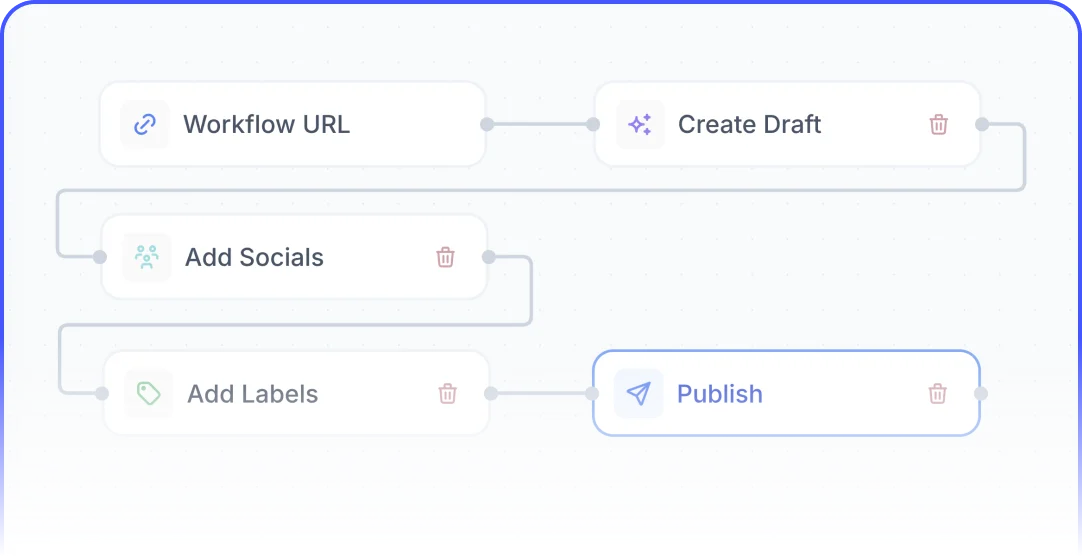
The workflow builder is the sharper tool. A URL can trigger draft creation, attach accounts and labels, then publish or pause for review. Post conditions can change what happens according to performance. Webhooks connect outside systems; Zapier and Make widen the doorway. The API exposes post creation, updates, scheduling, listing, and deletion, while its analytics endpoints normalize results across channels. Developers get leverage, and non-developers can still assemble the common paths visually.
The price is friendly. The caps have teeth.
FeedHive is paid software with a seven-day trial. On annual billing, the current list starts at €15 a month for Creator, €22 for Brand, €69 for Business, and €239 for Agency. Monthly billing costs more. The entry looks inexpensive, but Creator permits four social accounts, 30 scheduled posts, only 14 days of future scheduling, 20 days of history, and 15 templates. Anyone batching a full month can hit that ceiling during the very session FeedHive encourages.
| Annual-billing plan | Best fit | Accounts | Scheduling reality |
|---|---|---|---|
| Creator · €15/mo | Solo, light cadence | 4 | 30 queued posts, 14 days ahead |
| Brand · €22/mo | Small brand or busy creator | 10 | 500 posts, 60 days ahead |
| Business · €69/mo | Growth team | 100 | Unlimited queue, future, history |
| Agency · €239/mo | Multi-client operation | 500 | Unlimited queue plus 100 workspaces |
Brand is the realistic starting point for many weekly publishers because its 500-post queue and 60-day window remove the immediate squeeze. Business and Agency buy much larger account, workspace, automation, and AI-credit allowances. Read the live matrix before buying because features and limits move. Also note the trial mechanics: FeedHive’s terms say a payment method may be required and describe a small card-verification fee, normally €1 or $1, later credited to the first invoice or refunded if it cannot be applied.
What users like, and where they grumble
The broad review signal is favorable. G2 showed 4.6 out of 5 across 172 reviews, while Capterra showed 4.9 across 85 when checked in September 2026. Reviewers repeatedly mention the clean interface, low learning curve, batch scheduling, cross-posting, and quick path to publication. One Capterra reviewer praised being able to “cross-post content on different social media platforms from 1 place.”
The complaints are useful shopping notes. Reviewers have reported slow support, publishing errors, missing native mobile apps, limitations around tagging accounts, and integrations they wanted but could not find. One 2025 G2 reviewer called the tool too expensive for the available services and asked for more integrations. Two Trustpilot reviews in 2026 produced a far weaker score, but a sample of two cannot sensibly outweigh larger sets; their specific complaints about developer orientation and trial expectations are still worth reading.
There is no official native iOS or Android app in current product materials. The company did improve its mobile web experience in 2025, but anyone approving posts from airports should test that path during the trial. Network support can also vary by post type and API policy. A logo on an integration list does not guarantee every native trick, from account tagging to story formats, works exactly as it does inside the social network.
The alternatives test
Choose around the bottleneck. Buffer remains approachable for straightforward publishing and offers native mobile apps plus a free entry tier. SocialBee leans into evergreen category-based scheduling and broad network coverage. Metricool is compelling when reporting, competitor analysis, and brand-level organization lead the brief. Hootsuite brings deeper listening, monitoring, and enterprise operations. Later is strongly associated with visual planning, while Sprout Social targets larger teams that can justify broader customer-care and intelligence tooling.
| Tool | Put it first when… | Watch for… |
|---|---|---|
| FeedHive | Visual workflows, AI agents, and approvals matter | Entry-plan caps; browser-first experience |
| Buffer | You want a simple start and per-channel scaling | Costs change as channels accumulate |
| SocialBee | Evergreen categories and broad publishing coverage matter | Compare its workflow style with FeedHive’s |
| Metricool | Analytics, reports, and competitor tracking come first | Team and API features depend on plan |
| Hootsuite | Listening and enterprise control justify the footprint | Potentially more system than a solo creator needs |
FeedHive’s clearest edge is the bridge between an accessible calendar and programmable execution. Most creators will never call an endpoint. They may still benefit when a teammate, consultant, or agent uses one to turn a product changelog, podcast transcript, or database record into a labeled draft awaiting approval. That is a useful separation of labor: machines move the pieces; people decide what deserves an audience.
The verdict
Buy FeedHive if your social problem is operational repetition: adapting, routing, approving, scheduling, and recycling a steady stream of material. Skip it if you publish occasionally, need a native mobile app, or require enterprise listening more than publishing automation. During the trial, build one real weekly workflow and involve the person who approves it. A blank calendar makes every scheduler look elegant.
A five-step trial that tells the truth
- Connect only two representative accounts, including the network with your fussiest format.
- Import or write one week of genuine posts. Avoid demo copy, which hides editing friction.
- Build one workflow from a real source, such as a webhook, product update, or recurring brief.
- Invite the actual reviewer and complete a comment-to-approval cycle on mobile web and desktop.
- Publish, inspect the result natively, then calculate which paid-plan limits your normal cadence would hit.
One historical footnote: FeedHive’s original 2021 architecture used React with a serverless AWS stack including Lambda, DynamoDB, GraphQL, S3, Amplify, and the Serverless Framework. A June 2025 update explicitly mentioned newer Next.js and React versions. Infrastructure evolves, so treat the older list as the product’s engineering origin story rather than a guaranteed current diagram.