Before Farley Mesko began tracing the companies behind global trade, he ran a small commercial fishing business in Maine. It is an unusually literal beginning for someone whose later work would involve shipping networks, ports, and the question of what, exactly, is moving across the water. The fishing business belongs to his early biography. The much larger business he co-founded, Sayari, concerns the people and paperwork behind the cargo.
Mesko’s career has taken him through journalism in East Africa, national security research in Washington, a congressional hearing, and the management of a software company serving banks and governments. The recurring subject is the commercial network: who owns a company, who controls it, and which other businesses make its activities possible. A company name is a useful introduction. Mesko has spent much of his working life asking for the rest of the introductions.
A boat before a database
He graduated from Bowdoin College in 2008. His subsequent work combined the practical business of running an organization with the investigative business of understanding others. From 2010 to 2015, he served as chief operating officer of C4ADS, the Washington research nonprofit focused on conflict and security. During that period, he also worked as a freelance journalist and as a special correspondent for The East African Magazine.
His research took him into northern Mali and southern Somalia. He speaks Arabic, has consulted for the World Bank, and has briefed senior American officials, military commanders, and ambassadors. Those are different audiences with different uses for information. A journalist needs a defensible account. A policymaker needs an account that can inform a decision. A bank needs to know whether the customer standing in front of it is connected to someone several jurisdictions away.
The overlap would become commercially important. First, it produced research. In September 2013, Mesko and Tom Wallace published The Odessa Network, an examination of the logistics relationships behind Russian and Ukrainian arms transfers. It assembled a picture from companies, ships, personnel, and political connections. The report also made a careful distinction: appearing in a network did not itself establish illegal activity. For an investigator, that distinction is part of the work.
The address that kept turning up
On February 3, 2016, Mesko appeared before the House Financial Services Committee’s task force investigating terrorism financing. By then, he was co-founder and chief executive of Sayari Analytics. His written testimony explained a weakness in the camouflage used by illicit financial networks. To operate inside ordinary trade, they need some of the same mundane infrastructure as ordinary businesses. That infrastructure leaves records.
He described companies associated with an alleged trade-based money-laundering scheme in Benin. Shared addresses, telephone numbers, and shipping documents helped connect businesses across successive enforcement actions. The details were administrative, almost tediously so. That was their usefulness. A new company name could appear while older commercial relationships remained visible underneath.
“nobody has the whole picture”
Farley Mesko, congressional testimony, February 2016
His argument was that investigators should follow the network as it changes. He also pointed to the practical obstacles: records in local languages, material outside search engines, documents that could be difficult to search or available only offline. A public record can be public in principle and still require a considerable expedition to retrieve. The filing cabinet has never promised to be accommodating.
record→Shared
identifier→Connected
company→Review the
documents
A shared address opens a question. The underlying evidence determines the answer.
Turning an investigation into a product
Mesko co-founded Sayari in 2015 with Benjamin Power, who also had a background at C4ADS. Their company brought the network approach to customers who needed to repeat it across many investigations. The work required more than collecting documents. Names, identifiers, ownership details, and relationships had to become usable together across borders and languages.
That is where the founder’s earlier occupations begin to converge. The journalist’s concern with the record, the researcher’s concern with the relationship, and the operator’s concern with doing the job repeatedly all have a place in the product. Sayari Graph became a workspace for investigating corporate ownership and commercial connections. Its customers included institutions trying to enforce rules and companies trying to understand their exposure.
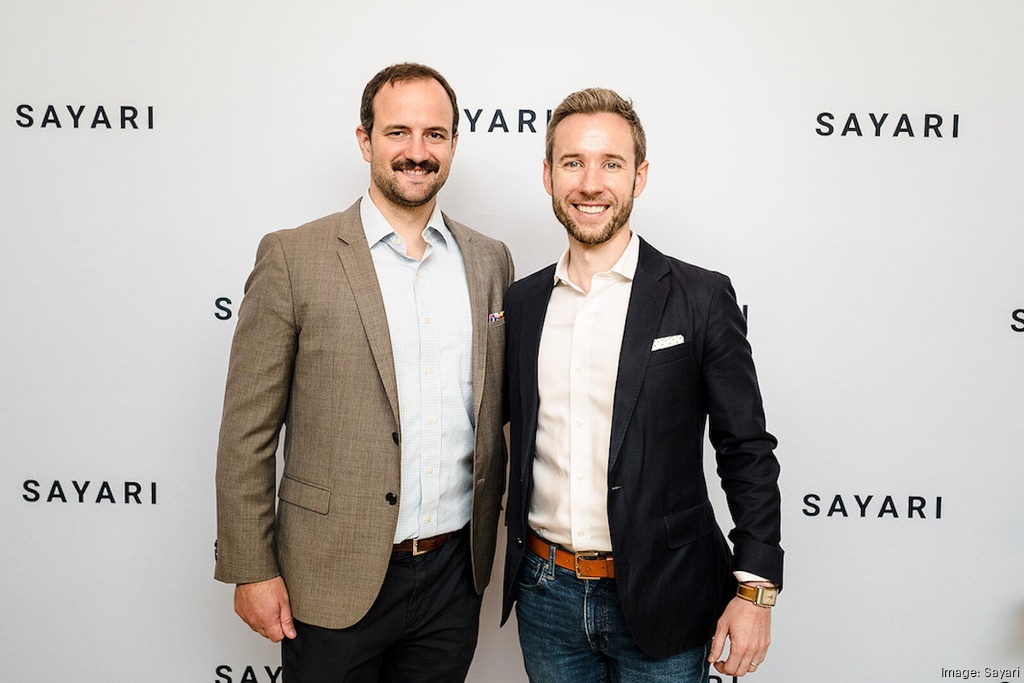
By September 2021, when Sayari announced a $40 million Series C led by Centana Growth Partners, the company reported almost 200 enterprise customers. These included government agencies, financial institutions, and multinational corporations. Its ownership intelligence retained a path back to official documents. The person reviewing a relationship could inspect the evidence behind it, an essential feature when the finding might have consequences beyond the screen.
The useful fact may be filed elsewhere
Mesko’s own writing shows how he thinks about the search. In a 2020 article on beneficial ownership, he described three components of useful connected data: attributes, relationships, and references. Identifying details help establish which entity a record concerns. Ownership and control links connect it to others. References preserve the ability to verify the result.
He also described looking beyond the obvious registry. Government procurement records can contain ownership information. Court proceedings can reveal relationships missing from company filings. The question is where the relevant evidence has actually been disclosed. Bureaucracy, with its many cupboards and inconsistent labels, can be surprisingly informative when someone opens the right door.
In a 2021 interview, Mesko extended the point to the business opportunity. Better information could help financial institutions distinguish legitimate businesses in markets they might otherwise avoid. He wanted scrutiny to consider the effectiveness of risk assessment and engagement with law enforcement. His ambition included making useful commerce easier to recognize, alongside identifying relationships that deserve closer examination.
What $228 million was meant to buy
In January 2024, TPG announced an agreement to make a strategic majority investment of up to $228 million in Sayari. The founders, employees, and existing investors would retain a significant stake. The transaction closed that April. It gave Mesko a growth partner with resources and operating experience as Sayari expanded its supply-chain business.
Equity financing and a majority-investment agreement measure different transactions.
The company had 140 full-time employees at the announcement, with 40 percent based in the Washington region. Mesko described plans to accelerate international expansion and hire across departments. In his public response to the deal, he thanked customers, colleagues, partners, and earlier investors. The celebratory note came with an acknowledgment that substantial work remained.
That April, Sayari launched Map, designed to map and screen suppliers in bulk. Graph supported deeper investigation; Map addressed a broader screening task. Mesko described procurement and compliance teams being held accountable for risks buried within supply chains while working with constrained budgets. The product question had become how to make an investigator’s view practical for people responsible for very large supplier lists.
In an October 2024 video conversation, Mesko discussed the partnership in terms of operational expertise and an investor’s willingness to understand the business. The point fits the stage Sayari had reached: making the investigative approach travel required decisions about the company carrying it. Data coverage, customer work, and product development all needed an organization behind them.
The company behind the questionnaire
Sayari acquired Mirato in July 2025. Mirato brought technology for automating third-party risk assessments, including work around questionnaires and controls. For Mesko, this moved the company toward connecting information with the process of assessing it. A supplier, a vendor, and an asset could be examined as parts of a wider commercial network.
“We believe these entities are the atomic units of risk”
Farley Mesko, announcing the Mirato acquisition, July 2025
The phrase is compact, but its practical implications are untidy. One team may hold the supplier record, another the compliance review, and another the purchasing decision. A connected view has to be useful to all of them. Mirato’s addition expressed a move toward helping customers act on intelligence within their existing assessment work, rather than leaving the discovery stranded in a separate investigation.
His January 2025 conversation with Auren Hoffman ranged across geopolitics, changing financial-crime networks, and building data products for government agencies. Entity resolution was another subject: the task of working out which records refer to the same real-world entity. Even before a network can be interpreted, its individual participants have to be identified correctly.
The archive gets another reading
By September 2026, Sayari’s next chapter involved revisiting the accumulated material itself. The company announced a rebuild of its Commercial World Model on Snowflake, bringing together 12 billion records from 715 sources across 250 jurisdictions. Those are company-reported measures of the archive and its coverage, rather than a count of investigations completed.
Sayari estimated that earlier extraction methods had missed up to 75 percent of the useful information in its documents. The rebuild was intended to make more context and patterns accessible through AI, with findings traceable to their underlying records. It also projected lower infrastructure costs. The promise depended on what the new system could extract and preserve from evidence already collected.
There is a recognizable continuity here with the young company’s earlier problem. The material exists; the challenge is making enough of it legible and connected to support a judgment. Technology changes how much can be read. The professional obligation remains rather stubborn: identify the right company, establish the relationship, and make the reasoning available for inspection.
Mesko’s path from a Maine fishing business to a global intelligence company makes an unusual biography. Its central habit is easier to follow. Look past the first name on the document. Examine the next relationship. Keep the record that lets someone check your work. Somewhere between a cargo movement and a corporate filing, an apparently ordinary detail may turn out to be the detail that matters.
Keep following the connections
- Sayari / official biography
- Farley Mesko on LinkedIn
- The Odessa Network / 2013 report
- February 2016 / congressional testimony
- Mesko on beneficial ownership / 2020 essay
- The case for connected ownership data / 2021 interview
- Centana / September 2021 financing
- TPG / January 2024 investment agreement
- MissionOG / April 2024 transaction close
- TPG / October 2024 video interview
- World of DaaS / January 2025 conversation
- Mirato acquisition / July 2025 announcement
- Snowflake rebuild / September 2026 announcement