Imagine a supplier with an unremarkable name, a proper registration number, and a reassuringly empty result in your screening system. Nothing to see here. Then you open its family tree. The owner has an owner. That owner has another owner. Somewhere up the chain, the comfortable little transaction acquires a less comfortable explanation.
This is an illustrative situation, but it explains Sayari’s business better than a procession of software acronyms. The Washington company sells a way to follow commercial relationships across borders. Corporate filings supply the family tree. Trade records supply the movements. Put them together, and a name becomes a network you can investigate.
- The job: discover who owns, controls, and trades with a business.
- The buyers: banks, multinationals, and government investigators.
- The distinction: connected records with an inspectable evidence trail.
- The next bet: AI that helps finish the investigation, with its reasoning open to review.
The innocent-looking name
Sayari Signal is built around an awkward property of risk: it can travel through relationships. A screening program might find a listed company by name. A different company connected through ownership, management, or shipping history may require further investigation. Signal follows those connections and attaches evidence to the flag.
Its advertised modules cover sanctioned ownership and control, military end users, restricted goods, forced-labor exposure, and cartel affiliates. These are different questions. Collapsing them into one red light would be convenient, and rather unhelpful. The useful output explains which relationship raised which concern.
A family tree with shipping receipts
Graph is the investigator’s workspace. It searches entities, traces ownership, and displays relationships that would be laborious to assemble from separate filings. Sayari’s current Graph page describes more than 500 million resolved companies, 12 billion primary-source records, and 1.8 billion trade records. Records and companies are different units; one company can leave a great many receipts.
Supply Chain Mapping, formerly offered as Map, now sits inside Graph as a premium add-on. The combination lets a user examine who owns a supplier and where goods move. An ownership chain and a shipment chain answer different questions, but an investigation often needs both.
The market already has substantial alternatives. Moody’s Orbis offers company data and ownership hierarchies. LSEG World-Check supplies risk intelligence for screening and onboarding. Sayari’s positioning emphasizes the intersection of corporate relationships, trade activity, and original documents. A sensible comparison starts with the buyer’s actual cases: which countries, which relationships, which evidence, which workflow?
For teams building their own tools, Sayari also offers an API and bulk-data delivery. Its public developer materials include SDKs and examples for entity resolution, screening, and trade searches. The commercial network can therefore reach an analyst through a web application or appear inside a customer’s existing system.
The people paid to ask awkward questions
Founded in 2015, Sayari draws on intelligence, financial-crime investigation, and data engineering. Farley Mesko leads the company as CEO; fellow co-founder Benjamin Power is COO. David Asher, whose congressional biography identifies him as a co-founder, brings a background in illicit-finance and sanctions investigations. The company’s subject matter is paperwork with consequences.
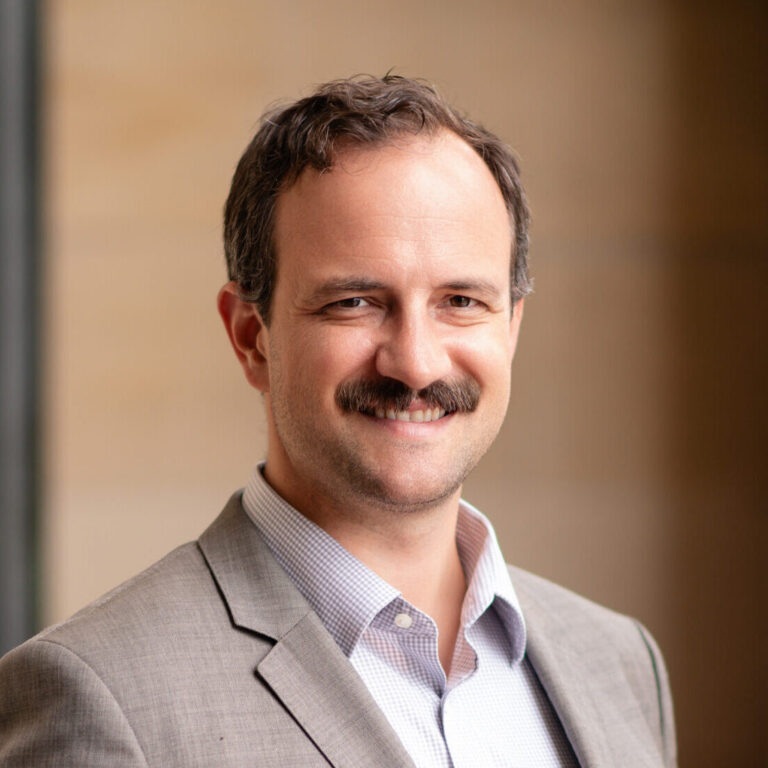 Farley Mesko / CEO
 Benjamin Power / COO
Its buyers include people enforcing rules and people trying to comply with them. U.S. Customs and Border Protection and U.K. HM Revenue & Customs are publicly named users. Banks need to understand counterparties; manufacturers need to understand suppliers. Sayari reports thousands of professionals using its intelligence across more than 35 countries.
That shared demand was visible before the current AI vocabulary arrived. At its September 2021 Series C, Sayari reported almost 200 enterprise customers. TPG’s January 2024 announcement described users at more than 100 large public and private companies, alongside government institutions. Those counts measure different populations, so they do not make an honest growth chart.
“We believe these entities are the atomic units of risk”
Farley Mesko, announcing the Mirato acquisition
The phrase helps explain the 2025 acquisition of Mirato, an AI-based third-party risk management company. Sayari wanted to connect its intelligence to the work of assessing vendors. Finding a relationship is one task. Getting the right people to review it, record a decision, and revisit it later is another.
A second reading of the archive
On September 2, 2026, Sayari announced a rebuild of its Commercial World Model on Snowflake. It estimated that deterministic extraction had missed up to 75% of the useful information in its documents: context and patterns surrounding the structured records. The limitation was in what the machinery could read.
of useful document information beyond earlier deterministic extraction, by Sayari’s estimate.
A company estimate about document information, not a measured error rate.The rebuild aims to bring that material into reach. Sayari also projects a reduction of more than 50% in data infrastructure costs. Both are forward-looking claims. The interesting strategic choice is to revisit an accumulated archive as extraction improves, rather than assume yesterday’s structured fields exhaust today’s evidence.
The product direction reaches beyond better search. Guide coordinates screening, monitoring, decisions, and audit records across procurement and risk teams. Pilot adds AI-assisted document analysis and continuous assessment. Its proposed Superagent features are described as coming next, which matters when evaluating what a customer can use today.
Superconductor is Sayari’s evaluation layer for AI output, intended to score work against investigative standards. The emphasis reflects a particular customer requirement: an answer must survive inspection. Confidence expressed in a fluent paragraph is a poor substitute for a finding whose identity matches, relationships, and documents can be checked.
The price of following the paper
Sayari sells enterprise software and data access. The commercial discussion involves product scope, integration, and deployment; customers are directed to a sales conversation. Its security materials describe SaaS, private-cloud, and air-gapped deployments. An analyst subscription and a sensitive government installation are plainly different purchases.
The financing tells a story of its own. Centana Growth Partners led the $40 million Series C. In 2024, TPG announced an agreement for a strategic majority investment of up to $228 million, with founders, employees, and existing investors retaining a significant stake. CIBC later announced a $40 million undrawn revolving facility. Equity, ownership transactions, and available credit should keep their separate labels.
A customer contract provides a different measure of cost. Sayari announced a $7.8 million CBP enterprise trade analytics contract in 2022. That figure describes a particular agency purchase, not a price per analyst. Sayari now states approximately $100 million in annual recurring revenue on its website; ARR describes recurring business, and should not be mistaken for an independently audited revenue statement.
Keep the receipt
The latest partnerships show where the company wants its intelligence to land. In April 2026, an integration with Source Intelligence connected entity information to product components and materials. In August, DataExpert joined as a channel and knowledge partner for government customers in eight European countries, adding implementation, training, and local support.
There is a method here that a reader can borrow without buying software. Establish the entity’s identity before interpreting the name. Trace the relationships relevant to the question. Preserve the document behind each important connection. Record why the evidence justified escalation, clearance, or further research. A diagram becomes useful when it changes a decision you can explain.
The method depends on what the records disclose, how recently they were published, and whether two entries really describe the same entity. A shared address can invite investigation without proving misconduct. Missing paperwork can leave a question unanswered. Sayari’s value rests on making those questions easier to examine; a careful analyst still has to decide what the evidence supports.
The appealing part of this business is its respect for an unfashionable object: the receipt. Commerce offers plenty of polished introductions. Sayari asks to see the paperwork behind them.