A name can be a remarkably effective disguise. A supplier with an ordinary registration can lead to a holding company, then another, then an investor with a very different set of interests. Each link may sit in a public document. The difficulty is getting the documents into the same room. WireScreen, a New York company founded by journalist David Barboza and financier Lynn Zhang, sells that room.
- What it does: joins corporate, ownership, trade, patent, procurement, and regulatory records into searchable relationship maps.
- Who uses it: government analysts, investors, law firms, corporate risk teams, and researchers examining China-linked entities.
- Why it matters: an apparently clean entity can inherit exposure through owners, subsidiaries, officers, and suppliers.
The company says its platform covers more than 20 million Chinese businesses and 37 million people. Those figures make an impressive poster, but the product is really in the joins. A database of names can tell you whether the company in front of you has been flagged. A network can ask who controls it, where its money goes, and what a supplier's supplier has been selling. That is a much more interesting question - and a less comfortable one for the person hoping you will stop at the first page.
The investigation that became an interface
WireScreen's origin story starts with Barboza's Pulitzer-winning investigation into the wealth of China's then-premier. The records were not classified. They were dispersed through registrations, filings, and disclosures, demanding the sort of patient assembly that a reporter can perform once and an organization cannot afford to repeat for every decision. Zhang brought a decade of experience analyzing corporate data, including work in private equity. Together, they founded WireScreen in 2019 within The Wire Digital, whose other business is the magazine The Wire China.
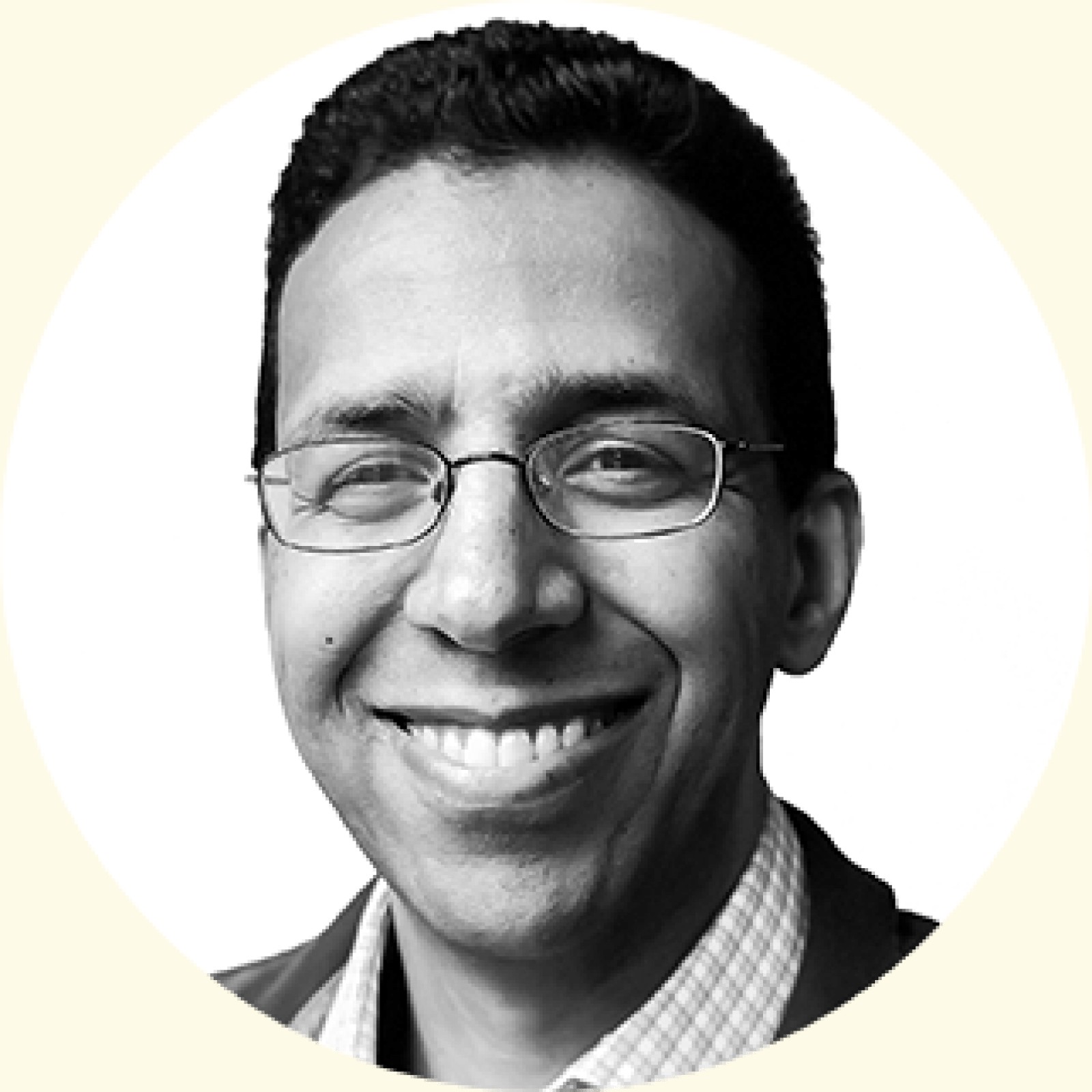
David Barboza spent years following the paper trail. The product is what happens when that habit gets an interface.
Their change of mind was practical: a breakthrough could not depend on one investigator's stamina. WireScreen collects Chinese-language primary records, resolves entities across them, and attaches each relationship to its underlying document. The company describes the mission as a living map of global corporate power, beginning with China. It is a grand phrase for an unglamorous task: making sure that two versions of a name refer to the same business, and that an apparent shareholder is followed through the next layer.
“The sources are public. Assembling them is the work.”WireScreen, on its approach to corporate records
A list ends. A relationship keeps going.
Here is the conventional first pass at due diligence: search the counterparty, check sanctions and export-control lists, read a corporate profile, and move on. It is necessary. It can also fail first at the point where a direct hit becomes an indirect connection. The supplier may be absent from a list while an owner, controlling shareholder, or related entity is present. Transliteration and name changes add another trap: a record can be visible and still escape a simple match.
WireScreen's answer is graphing. Its platform lets users start with a company or person, follow shareholders and investments, inspect officers and suppliers, and surface risk indicators through the network. The company advertises more than 100 risk flags, including military, sanctions, and forced-labor signals. Search can begin in English or Chinese; analysts can bulk-upload names, save lists for monitoring, and export evidence. The web platform handles exploratory work. A REST API and curated feeds put the same data into an organization's own systems. Sales are demo-led, and public subscription prices are not listed.
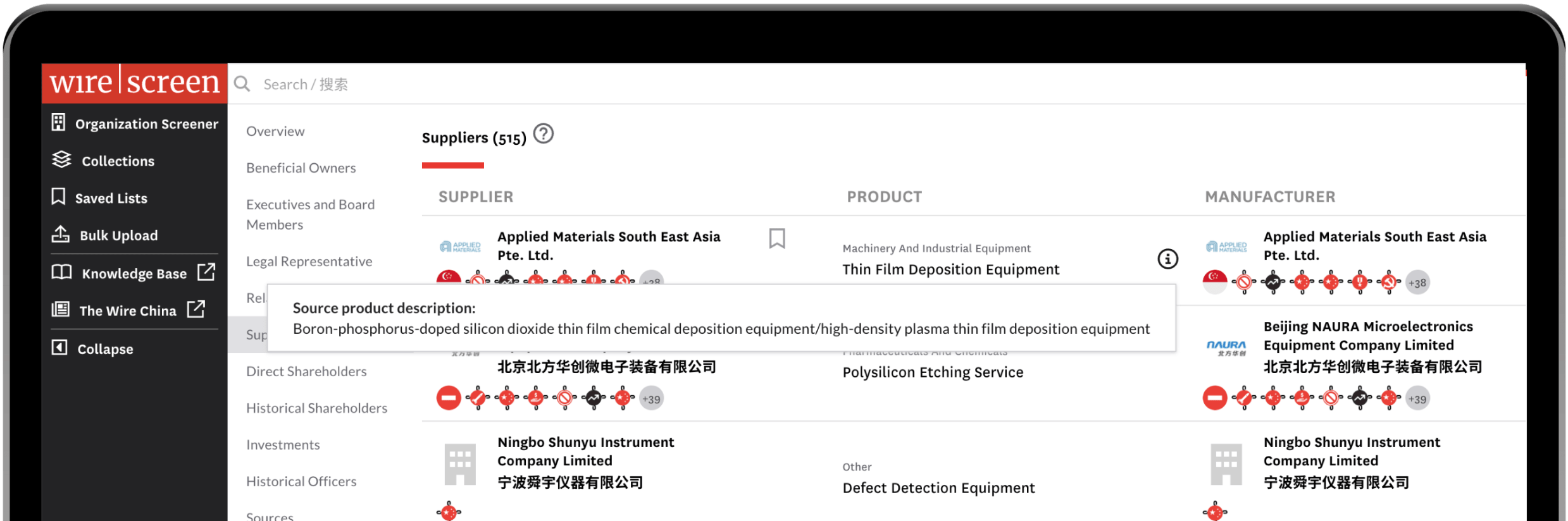
This is where WireScreen differs from a generic company directory. It was designed for opaque, cross-border networks and for analysts who need to explain their conclusion to someone else. The underlying records matter as much as the red flags. A suspicious connection is an investigative lead; the original filing or procurement notice is the evidence that lets a human test it. WireScreen is a tool for making that test faster, not a substitute for it.
The cost of reading everything
The company raised a reported $14 million Series A in 2022, with Sequoia Capital and Harpoon Ventures among its backers. That is capital raised, not the cost of building a single report. Its customers face a different bill: analyst time. WireScreen's own product page contrasts tasks that traditionally take hours with platform workflows measured in minutes, but those are company illustrations, not independently measured savings. The more defensible claim is simpler: repeating a Chinese-language ownership investigation by hand for thousands of entities is expensive.
In 2026 the company extended the graph in two revealing ways. A new Controlled Capital measure looks through layers of subsidiaries and investments to estimate the financial reach of an entity; SmartCard compresses key ownership and risk signals into a first look. A Chinese patent dataset added 37 million records tied to roughly one million organizations. Patent databases are plentiful. The more pointed question is who controls the filing company, and whether its research connects to a sanctioned institution, a university, or a state-backed investor.
A procurement notice is only the opening scene
WireScreen's published investigations show why that question sells. In a 2026 report on advanced AI chips, its researchers reviewed more than 3,800 Chinese military and government procurement records and mapped a 374-company commercial ecosystem behind selected transactions. Another analysis used 54 procurement records tied to Tsinghua University, then expanded outward through owners, managers, and shared identifiers to locate firms absent from the original purchase notices. A buyer, a seller, and a product are the visible transaction; the surrounding firms explain how the transaction becomes possible.
The audience is correspondingly varied. A defense analyst can test a supplier for military ties. A compliance team can investigate indirect export-control exposure. An investor can examine state influence before a deal. A reporter can find the next person to call. WireScreen also distributes through government partner Carahsoft and announced a 2026 partnership with Senzing to improve entity matching across inconsistent records and languages. Its advisory board now includes former leaders from U.S. defense, cybersecurity, and intelligence work, a clue to the decisions the company hopes to support.
There are limits to any map made from records. A relationship can be stale; a filing can be incomplete; a risk flag may point to something that needs interpretation rather than a verdict. WireScreen's model works best when the question leaves a documentary trail and the user has a reason to follow it. It is less decisive where the relevant behavior is entirely off-record. Its most useful habit is therefore portable: after checking a name, ask what is one link away, then one more. The company behind the company may be where the story begins.