A business can spend all day trying to be noticed and still be difficult for a government to see. It can advertise, attract customers and leave traces across the internet. The traces exist. Connecting them to a person, a company or a tax obligation takes another kind of attention. Matan Fattal has made that gap the subject of his second company.
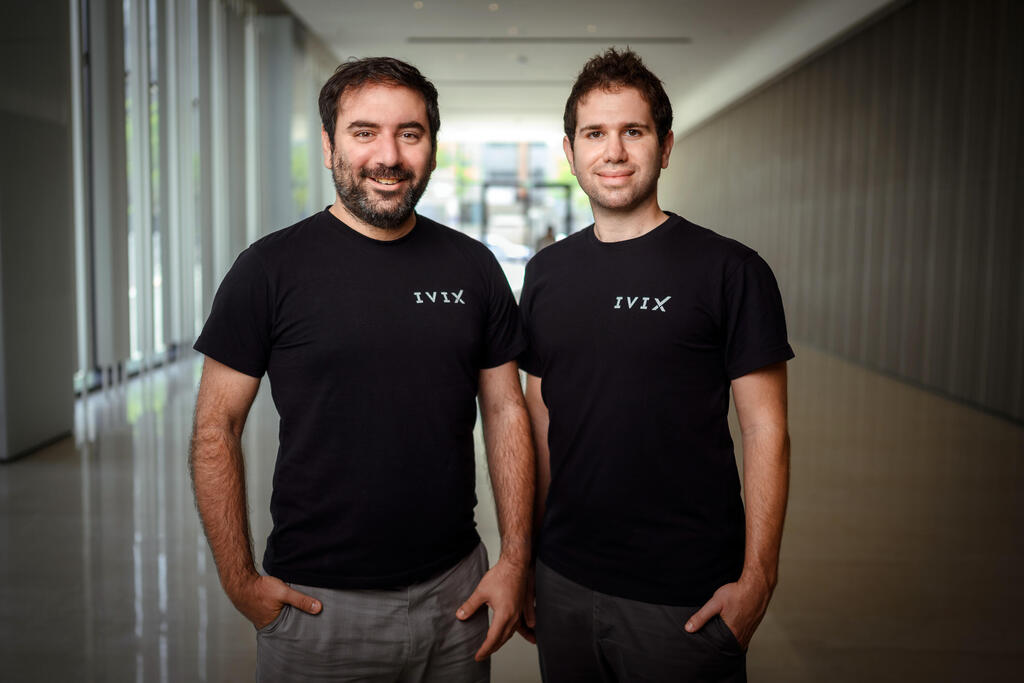
Fattal co-founded IVIX with Doron Passov in 2020, after helping build the cybersecurity company Silverfort. The new venture put him in conversation with tax authorities and, later, a wider range of enforcement agencies. His customers needed to understand economic activity that their existing tools struggled to bring into view. Somewhere between a public clue and a useful investigation, a business opportunity had appeared.
There is a pleasing awkwardness to the premise. The internet is an enormous publicity machine. Governments still need help reading what it gives away. Fattal’s work occupies that space: turning scattered information into something an investigator can act upon, without pretending that a collection of clues has already finished the investigation.
Before the tax authorities, the password problem
His route into this work began with mathematics and algorithms. Fattal studied abstract mathematics at Bar-Ilan University and completed studies toward a mathematics master’s degree. His early career included algorithmic research in the Israel Defense Forces, software engineering at Intel and research at Intucell. These were jobs concerned with making complicated systems yield usable answers.
At Intucell, he helped build products that worked in real time and at scale. Cisco acquired the company for $500 million. For someone whose next roles would involve founding companies, the experience placed technical work inside a business whose output had to function beyond a research setting. The mathematics came with customers somewhere downstream.
Silverfort brought those customers much closer. Fattal co-founded it with Hed Kovetz and Yaron Kassner, and served as CEO and then president. The company addressed identity security: the problem of protecting access across the many systems an organization uses. A valid-looking identity can still be in the wrong hands. Knowing that a login exists only begins the work.
Fattal’s responsibilities stretched from defining the product and its route to market to building the sales organization and closing enterprise deals. That is a considerable change of vocabulary for an algorithm researcher. A mathematical argument can be complete on its own terms. A sales conversation ends with somebody else deciding whether the thing is useful enough to buy.
In Kovetz’s account of Silverfort’s beginnings, the founders spoke with security executives about the gaps between existing tools. Different products protected different parts of the enterprise. Seeing across those divisions was difficult. That offers a way to read Fattal’s subsequent move: a new customer, a different set of records, and another problem involving information that resists being joined together.
The clue is public. The connection takes work.
IVIX began with tax authorities. By July 2021, when it announced a $13 million seed round, it had 12 employees, most of them in Israel, and deployments in several OECD countries. Team8 led the financing, with Citi Ventures and Cardumen Capital participating. An idea about public information had become a company with institutions already using its product.
Passov brought his own intelligence and product background, including service in Unit 81 and work at Gita Technologies. Their partnership paired two founders with experience of technical systems and the work of turning them into products. Today IVIX lists Fattal as chief executive and Passov as chief operations officer.
The basic approach draws on open-source intelligence, usually shortened to OSINT. Business websites, public registries, social platforms and digital advertising can contain fragments of economic activity. Matching those fragments to an entity, and comparing the resulting picture with an authority’s own information, can help identify questions worth investigating.
Consider the distinction between noticing an advertisement and understanding the business behind it. A name may be partial. An operation may appear in more than one place. An investigator needs connections that make sense together. This is an illustration of the problem IVIX addresses, rather than a claim about a particular investigation or customer.
- 01Public cluesBusiness information across digital sources
- 02ConnectionsAI and graph analysis help connect entities
- 03Agency reviewInvestigators examine leads in context
Conceptual sequence, not a depiction of a specific case.
Fattal describes the work in terms of indexing the internet through a financial lens. By August 2025, he said IVIX had expanded beyond its tax starting point into criminal, security and civil enforcement work, including money laundering and sanctions enforcement. The underlying technical demand had grown with the range of questions customers wanted to ask.
“This is the most complex technology I've ever worked on.”
Matan Fattal · August 2025
That remark says something about what attracts him to the task. His stated priorities for new funding were development and the intensive algorithmic work the product requires. Large language models and graph analytics form part of IVIX’s approach. The practical test is whether their combination helps an authority connect activity it would otherwise struggle to understand.
An agency has to use it on Monday
A government customer brings habits, procedures and existing systems. IVIX describes its platform as developed with authorities and designed to fit their workflows. For Fattal, that means the product has to survive contact with the ordinary working day of an investigator. A compelling demonstration still has to become a usable tool.
The people around him reflect that requirement. Don Fort, formerly chief of IRS Criminal Investigation, is IVIX’s chief business officer. In September 2025, former IRS Commissioner Charles Rettig became chairman of its advisory board. Their experience concerns the institutions at the receiving end of the technology, including how people choose and pursue cases.
Rettig described his intended role as hands-on. In a joint interview with Fort, the discussion included the relationship between technology and government employees, and the support less experienced auditors might need when deciding which leads deserve attention. That is the customer’s problem expressed in working terms: a person has limited time and consequential choices to make.
Fattal also takes the product into those professional settings himself. At the Federation of Tax Administrators’ December 2024 Compliance Workshop in San Antonio, he presented on eCommerce compliance. Fort moderated a session on cryptocurrency and other digital assets. The two subjects show how much of the company’s job involves helping established institutions respond to changing forms of business.
Expansion has required local knowledge as well. In February 2025, IVIX announced Pamela Clegg’s appointment to lead its Latin American efforts. Fattal emphasized partnerships and the particular needs of clients in the region. An international business is built through specific relationships, even when its underlying software operates across borders.
Two very different numbers
On August 18, 2025, IVIX announced a $60 million Series B led by O.G. Venture Partners, bringing its reported total funding to $85 million. The money was intended to support research and wider adoption. Existing investors including Insight Partners, Team8 and Citi Ventures participated. Fattal now had a larger budget attached to the technical problem he had chosen.
He also set out an expansion target: from about 60 employees at the time of the announcement to 150 by mid-2026. That was a plan. It explains the intended scale of the work without turning a hiring ambition into a completed milestone. More researchers and developers were part of the direction he described, rather than decoration around the financing.
Another number makes the business unusually concrete. A Michigan procurement notice lists an initial IVIX AI tax-compliance software pilot, effective March 1, 2026, with an estimated contract value of $10,000. The notice calls it a pilot with the option to extend into a longer agreement. It is a small, defined engagement beside the venture-capital figures.
Reading the two together is instructive. Investment funds a company’s capacity to build. A pilot gives an institution a bounded way to begin. Between those commitments sit product decisions, procurement processes and the work of earning continued use. Fattal’s role spans that distance, from explaining a technical ambition to delivering something a particular customer can evaluate.
A conversation beyond the spreadsheet
There is a quieter detail in Fattal’s Founders Village profile. Asked what topic he would like to prompt a thoughtful conversation about, he names culinary arts. It gives the reader another subject to bring to the table. Financial networks and tax compliance can occupy a professional life; dinner need not become a supplementary audit.
His public response to IVIX’s Series B offers another glimpse of his emphasis. He thanked the team and acknowledged that he and Passov receive much of the credit as founders. The gesture matters in a story that could otherwise become a list of rounds and executive titles. The people doing the research and building the product were part of the announcement.
By September 2026, Fort was still articulating the company’s central problem: economic activity leaves public traces across many digital locations, while investigators face the difficulty of connecting them. Fattal’s chosen task remains recognizable through the growth around it. Help an institution see enough of the picture to decide what deserves its attention. Then make the software useful when somebody sits down to work.