Anand Naik had reached the part of a technology career where the company name could do some of the introducing. At Symantec, he was managing director for India and SAARC. Before that came IBM and Sun Microsystems. He knew the customers, the architecture, the sales conversation. He also knew an awkward question that could survive the purchase of a great deal of software: was the business actually secure?
In July 2012, speaking about protecting information, he brought the discussion back to that question. There was plenty to discuss: expanding volumes of data, cloud computing, records that needed to remain available for decades. Yet his concern was wonderfully plain. A business could possess a cupboard full of security products and still struggle to explain what was happening inside its own systems.
Naik would eventually make that gap his business. In 2013, he co-founded Sequretek with Pankit Desai. Their proposition carried an unusual ambition for the technology industry: make the customer's life less complicated. In a trade with an apparently inexhaustible supply of acronyms, this qualified as a small act of rebellion.
The question before the company
Look back at Naik's public writing before he became a founder and the continuity is striking. In a July 2012 article about insider threats, he described information as a business asset and considered the damage an employee could cause with legitimate access. The danger could arrive through familiar channels: email, removable storage, a laptop, a file transfer. No cinematic villain was required.
His argument joined people, processes and technology. Classify the information. Teach employees how to handle it. Make protection part of how the business operates. It was a practical understanding of security, concerned with everyday decisions as much as technical defences. The person already inside the building mattered as much as the stranger trying the lock.
His professional background helps explain that perspective. At IBM, he held leadership responsibilities involving solution architects; at Sun Microsystems, his work included enterprise architecture and data centres. A 2017 speaker biography also records earlier roles at Siemens Nixdorf and Bradma. These were jobs in which technology had to function within an organisation, with its existing equipment, business requirements and financial constraints.
“The question that we all need to ask ourselves is, is my data protected?”
Anand Naik · 2012
There is a useful distinction between explaining a product and answering that question. A product can have a perfectly respectable list of features. Answering requires knowing where the information lives, who can reach it and what happens when something goes wrong. Naik's later work keeps returning to the distance between those two conversations.
A co-founder already in the family
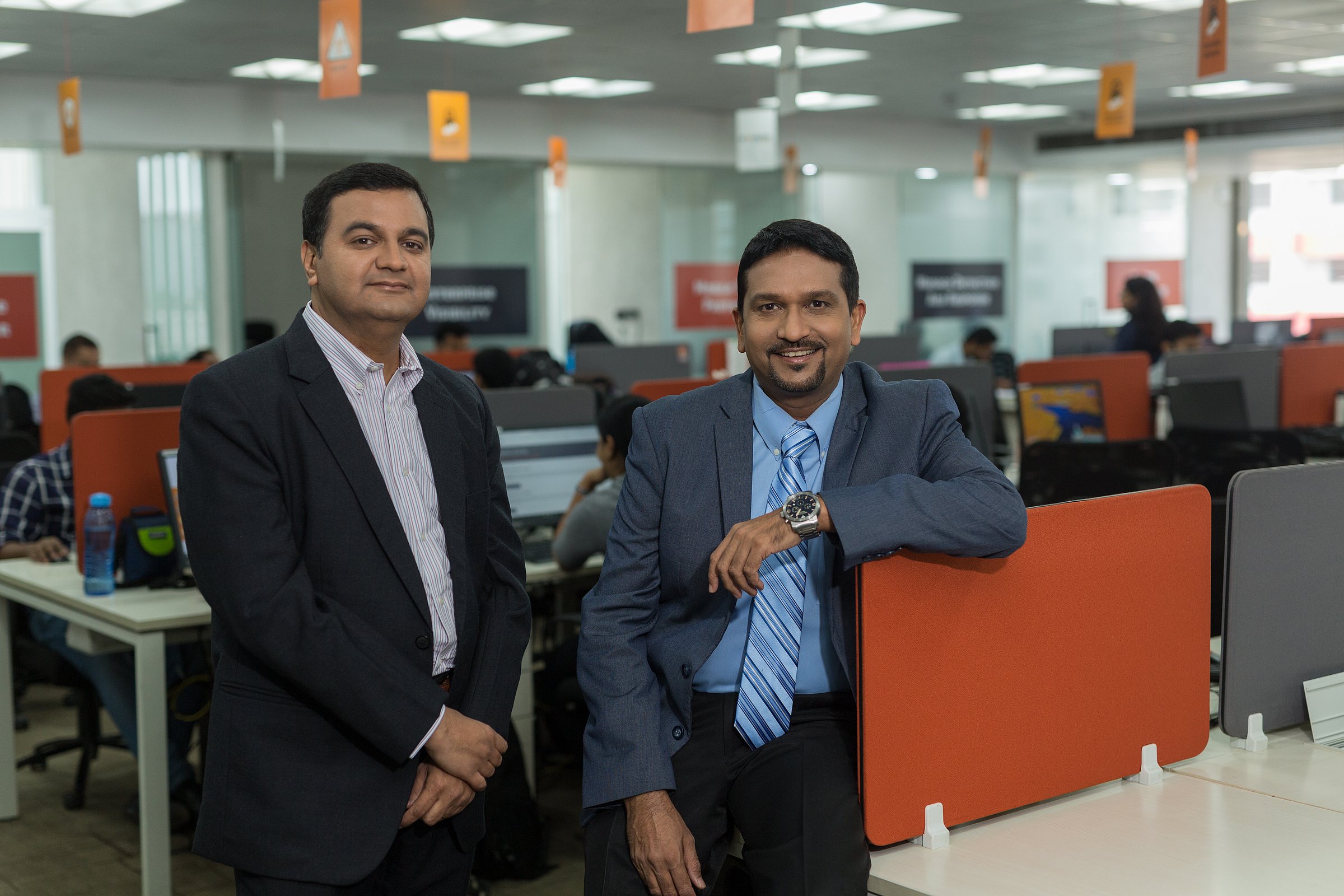
Desai was a familiar partner well before Sequretek existed. The two are brothers-in-law, and they had also worked together at IBM. Their connection crossed both the family table and the workplace. Desai described Naik as a “thorough technology buff,” someone who had spent years designing and implementing complex technology systems.
That account gives the partnership a more human starting point than the usual photograph of two executives in matching conviction. They already had experience of one another. Desai brought his own history in technology sales and leadership. Naik brought a close view of the security business and its customers. They had something specific to discuss when they considered building a company together.
Naik's dissatisfaction was with a pattern he had seen from inside the industry. New threats produced new technologies. Customers acquired more things to install, understand and operate. Joining those things together became another job. For a smaller company, the expertise required to use the protection could become part of the obstacle to buying it.
In an interview about Sequretek's origins, he framed the market in terms of unequal access. Organisations with substantial resources could obtain expertise and attention. Others faced a crowded catalogue and a shortage of people to interpret it. His stated vision was “to simplify security by consolidating the technology landscape.” That wording makes the intended customer experience unusually clear: fewer puzzles left on the buyer's desk.
Three questions, one working day
On a January 2025 podcast, Naik explained the opportunity through three customer concerns: understanding security, understanding compliance and identifying and resolving a breach quickly. The complaint beneath his account was about unfinished work. Suppliers could deliver technologies while leaving the customer responsible for assembling a coherent answer.
He described an approach built around a shared view of the environment, machine learning and an architecture that could work with equipment customers already owned. That last detail is especially revealing. A buyer who has paid for a system is unlikely to celebrate a proposal that begins by asking them to throw it away. Software has purchase costs; changing it has consequences of its own.
Three concerns Naik discussed in his January 2025 conversation.
This is where his experience inside large companies becomes useful to the founder's story. He had watched technology change around customers. In his account, a startup offered room to reconsider how protection was designed and delivered. He could carry the knowledge into a smaller organisation and take responsibility for the product decisions himself.
Sequretek's Percept platform joined endpoint protection, identity governance and threat detection. Its inclusion in NASSCOM's Emerge 50 Awards 2021 publication placed the platform alongside other Indian software products. The entry described a dashboard bringing together visibility, device protection and access governance. Beneath those product categories sits a recognisable working problem: the computer, the person using it and the activity around them need to be understood together.
A suitcase enters the business plan
Building the company also altered Naik's geography. He moved to the United States in 2019 as the founders pursued international expansion. He returned during the pandemic and relocated again in June 2022. By May 2024, his American team numbered 18.
The move adds a concrete detail to a phrase like global expansion. Someone has to change countries. Someone has to spend their working day building the next set of relationships. For Naik, this became part of the job alongside the product vision and operations responsibilities recorded in his professional biographies.
- 2012Managing director for India and SAARC at Symantec
- 2013Co-founds Sequretek with Pankit Desai
- 2019Moves to the US for international expansion
- 2022Relocates to the US again in June
- 2025Speaks about leadership, AI and learning from failure
In November 2023, Sequretek announced an $8 million Series A round led by Omidyar Network India, with participation from the Narotam Sekhsaria Family Office and Alteria Capital. The stated plans included global operations and greater adoption among small and medium businesses. Money gave the company room to pursue its proposition; it also made the size of that undertaking visible.
For this profile, the telling detail is the intended customer. After a decade, the funding announcement still pointed towards businesses that could lack dedicated information security resources. Naik's founding complaint had acquired products, employees and an international operation. The question of access remained part of the work.
The reader behind the dashboard
There are quieter details too. A published founder profile describes Naik as an avid reader who follows contemporary topics and values family life. They sit comfortably beside Desai's description of a technology enthusiast. Reading offers a rather different image of the executive from the stock photograph of someone urgently pointing at a screen.
His own writing is another way to follow his thinking. In June 2024, he considered how artificial intelligence could help security teams manage the flood of alerts. He assigned machines work involving large volumes of data and routine responses, while reserving consequential responsibilities for human analysts: checking results, investigating difficult incidents and guiding strategy.
The distinction matters when discussing a founder whose company sells AI-based products. Naik's argument gave human judgement a continuing place in the system. A fast response still has to be appropriate. An alert still needs context. More automated activity creates work that someone must understand and oversee.
By August 2025, he was writing about different jobs for small and large language models. His account favoured more specialised models for particular detection tasks, with larger models contributing to analysis and search. He also discussed structured responses to incidents. The useful question running through the article was which technique belonged in which part of the job.
Earning the next introduction
In his July 2025 Humans & AI conversation, Naik returned to the transition from corporate leadership to entrepreneurship. The episode explored earning trust beyond an established brand, learning from failures and retaining integrity as a company grows. These are subjects that put the founder back among people: colleagues deciding how to behave and customers deciding whom to believe.
For someone who once represented Symantec, the shift carries a particular weight. An established name brings a history into the room before the meeting starts. A younger business accumulates that history through its own decisions. Every explanation, implementation and response contributes to the next customer's judgement.
Naik's story is therefore held together by a fairly stubborn concern. He has spent years around complicated systems, then built a company that promises to reduce the burden of operating them. Simplicity, in this account, is work the supplier agrees to take on. It has to survive contact with the customer's budget, staff and existing technology.
The test is still the question he was asking in 2012. A customer should be able to understand whether the information that keeps the business running is protected. After the presentation ends and the software is installed, an answer would be a useful thing to leave behind.
Continue the conversation
Interviews, writing and places to follow his work.