Before Sergiy Milman built a company that helps people investigate other companies, he had to live with the consequences of trusting them. In logistics and distribution, unreliable partners left debts behind. Goods went out; the expected payments failed to arrive. The problem was familiar enough to become an annual burden. Milman wanted a way to examine a business before its promises became someone else’s losses.
There is an unglamorous beginning for a technology company: accounts receivable. It supplies neither a garage nor a suitably cinematic flash of inspiration. It does, however, provide an excellent reason to care about information. A supplier cannot pay its own bills with a customer’s charming manner. Milman’s eventual answer, YouControl, would organise public records so that businesspeople could see more of the company on the other side of a deal.
Long before those invoices, he had been playing economic games. He says he began at seven, receiving more of them as birthday presents. The childhood interest survived into a working life spent organising and growing businesses. The attraction was practical: how things work, how decisions connect, and what happens when someone has failed to read the rules.
A career change with the savings attached
Milman studied at Kyiv National Economic University named after Vadym Hetman between 1997 and 2002. His professional route ran through food distribution and logistics, including work at LKO and SKS. He rose from office work into executive responsibilities and a stake in a business. By the time he considered technology, he had experience of operations, sales and expansion, along with a close acquaintance with their less attractive companion, unpaid debt.
He also wanted a different kind of working life. Technology had interested him for years. Continuing to earn money in a familiar industry no longer supplied enough satisfaction. He left to start an IT business, bringing the experience of his previous work into a problem he understood from the inside. His description of the underlying restlessness is wonderfully plain: “It’s boring just to earn money.”
The first development attempt, in 2013, failed to produce what the team had expected. Milman later described an ambitious idea and a development team that could not deliver it. A second attempt followed with a different group. The legal company was founded on 22 September 2014. Those two dates belong together: one marks the unsuccessful beginning, the other the company that endured.
He financed the early work with his own savings. By 2019, he described a self-financing business with around 50 employees, rather than a company continually raising outside capital. YouScore, a related project, had won $10,000 through the Open Banking Lab programme involving OTP Bank and the 1991 incubator. He could point to progress, but the route there had included work that needed doing twice.
Public records acquire an audience
YouControl’s raw material was information that already existed. Ukraine’s opening of public registers made it possible to bring scattered records together and analyse them. A company’s registration, financial position, court history and ownership connections could become parts of a readable dossier. Milman had encountered the difficulty of checking numerous counterparties; the product addressed the labour hidden inside that task.
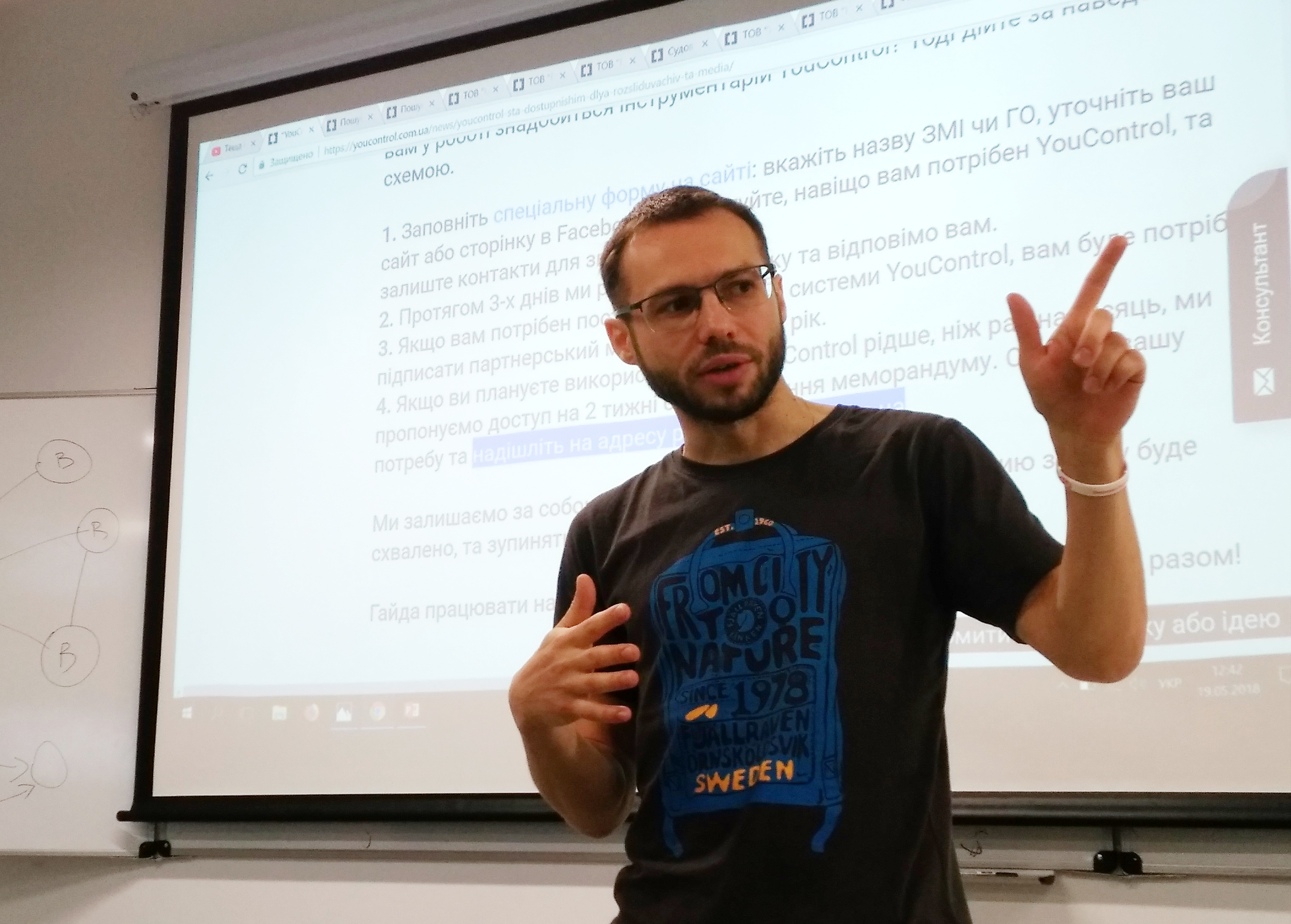
Its audience widened beyond the businesses paying to avoid expensive surprises. Journalists and civic activists could use the same information to examine relationships between companies and public officials. YouControl gave them free access. Commercial customers helped finance a resource whose public usefulness extended beyond the customer list. Milman saw a connection between more transparent competition and a better business environment.
That arrangement also required teaching. A useful database does little for someone who has never thought to check a partner, or who cannot interpret the result. Milman and his colleagues conducted training and workshops, helping people use open data in business and investigations. The work included explaining why a record mattered, rather than merely producing another record.
The present YouControl service lists more than seven million dossiers on Ukrainian companies and individual entrepreneurs, over 220 official sources and 16 analytical tools. Those are product figures, rather than a count of active businesses. They describe the accumulated material a user can consult. The individual problem remains small enough to fit in a sentence: who, exactly, am I about to trust?
When visibility becomes inconvenient
Making information convenient can make its subjects uncomfortable. Milman has described requests from companies wanting unfavourable information hidden. He refused them. Removing a troublesome record at the subject’s request would damage the reason customers used the service in the first place. His argument was commercial as well as ethical: a database that could be negotiated into silence would lose the trust on which its business depended.
In March 2017, Ukraine’s Security Service searched YouControl’s office and employees’ homes. The agency alleged unlawful collection and sale of restricted information; the company contested the allegations. Milman publicly defended the use of open records. The dispute exposed a question running underneath his product: who gets to assemble information that citizens and companies are already entitled to see?
He discussed that pressure in public interviews and at the Lviv Media Forum. Journalists and civil society organisations supported the company. He also spoke about cooperation with ProZorro, Ukraine’s public procurement initiative. The commercial service sat among people using information to examine public spending, rather than operating only as a private tool for private transactions.
War changes the question
Russia’s full-scale invasion in 2022 disrupted both the company’s business and the availability of the records it used. Public registers closed, complicating the work of a product built around access. Milman recalled revenue falling to zero in the early months. A licence order from the Zhytomyr armoured plant, in the last days of February, became a modest but concrete sign that the service was still needed.
The team applied its existing skills to new demands. Milman’s public account of the response included tools for checking companies and individuals, a volunteer coordination platform called People for Ukraine, and work identifying business connections to Russia. These were extensions of the competence the company had already developed: collecting information, checking it and making relationships visible.
In April 2022, YouControl launched RuAssets to help uncover Russian and Belarusian assets and connections. The platform later became YC World. The geographical boundary of the original business no longer matched the problem. A relationship relevant to Ukraine might lead through several companies, several countries and several versions of a person’s name before reaching its useful conclusion.
A connection can cross a border faster than a question
YC World developed into a platform for searching and visualising links between people and businesses internationally. Its purpose includes examining beneficial ownership, politically exposed persons and sanctions connections. Milman described a distinction between the products: YouControl provides an initial check of a business, while YC World supports deeper examination of relationships and influence across jurisdictions.
By January 2025, the platform was reported to contain information on more than 76 million people and 85 million companies from 74 countries, drawing on almost 300 data sources. It had 3,000 active users. Its stated targets for 2025 included a larger customer base and more international sales. A target describes the work someone hopes to accomplish; it deserves its own place beside the figures already reached.
Chief product officer Mykhailo Horobtsov has worked alongside Milman on the platform. In May 2025, he described financing from parent company YouControl and more than $1 million in grants from organisations including Google and the European Commission. Milman discussed its use by Ukrainian law enforcement and border officials, as well as free access for journalists and civic activists conducting investigations.
As of October 2026, YC World reports coverage of 85 countries and 373 data sources, with more than 264 million connections. Its tools include relationship graphs, translation and transliteration, and extraction of information from documents and other material. The figures describe the company’s published coverage in October 2026. The graph still has to serve a person trying to understand a particular relationship, usually with something more consequential than curiosity at stake.
Tea needs leaves, a company needs people
Milman’s account of entrepreneurship makes frequent room for the people doing the work. In 2018, he credited 99 percent of the company’s success to the team. He describes flexibility as his strength and a focus on results as his working style. His stated principles include openness, creativity, initiative and responsibility. These are his stated preferences, made concrete by the kinds of colleagues and products he has chosen to build.
His favourite explanation of teamwork is less corporate. A startup without a team, he said in 2025, is “like tea without tea leaves.” The comparison is useful partly because it refuses to make a company sound mysterious. Water provides a beginning. Something else has to give it substance. His emphasis falls on developing the people who fill a project with values and meaning.
He also told a story about his daughter. When she was little and struggled with something, he encouraged her to believe in herself. Eventually she began saying the same thing back to him. The advice came home, in the voice of someone who had first needed it from him. He described that exchange as a source of his own motto.
Away from work, he has talked about travelling, mountains and games. In a 2019 conversation, he named Civilization as a favourite computer game and described watching for inexpensive flights that would allow a few days exploring somewhere new. The seven-year-old collector of economic games had acquired responsibilities, but retained an appetite for maps and decisions.
“Like tea without tea leaves.”Milman on a startup without its team · 2025 · translated
The next deal is still the point
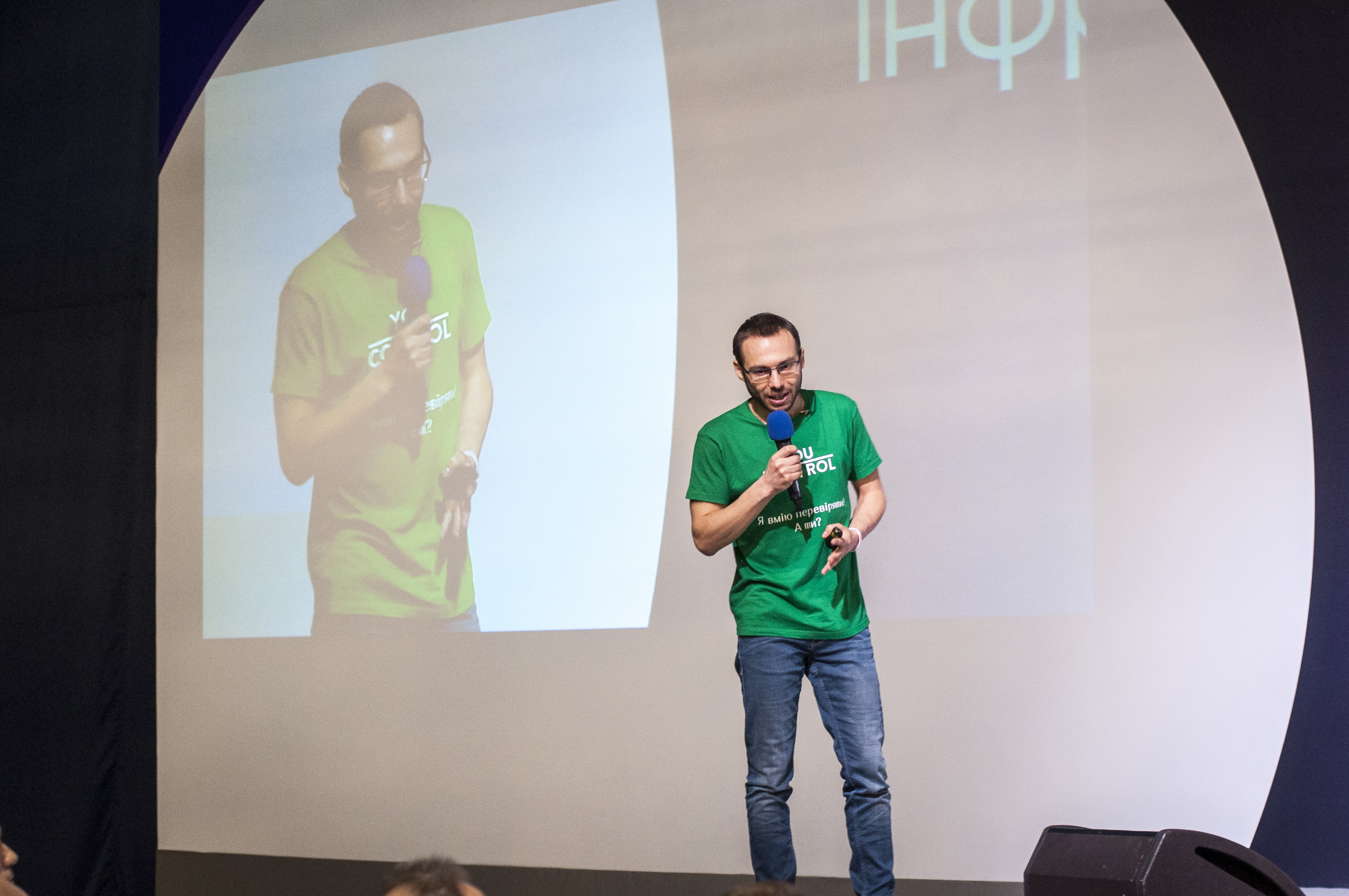
In April 2025, Milman won the Transparency Impact category in EY’s Entrepreneur of the Year competition in Ukraine. The recognition gave a name to work that had joined a commercial problem to a civic one. A business checking its partners and an investigator examining a public official’s interests could benefit from the same effort to make records usable.
By July 2026, he was discussing plans for a European security tool in the United Kingdom, including sanctions screening and the tracing of connections to risky jurisdictions. The ambition drew on the team’s experience with Ukraine and the wider post-Soviet region. International expansion meant following relationships that a single country’s records could leave incomplete.
His work had already brought him into international conversations. At an Italian-Ukrainian chamber event in 2023, he discussed how open data could help Italian and Ukrainian companies find reliable partners. The setting changed, but the concern sounded familiar: an agreement is easier to make when each side can understand the business it is meeting.
Milman began with partners whose unpaid bills made better information worth pursuing. The company now follows a much wider network, but that first practical concern gives the story its shape. Somewhere, a person is about to approve a shipment, choose a supplier or sign a contract. A useful answer, delivered before the decision, is still the product he is trying to build.
Follow the questions further
Meet the products, hear Milman in conversation and explore his public writing.
- YC World - international connection research
- YouControl - company intelligence in Ukraine
- Sergiy Milman on LinkedIn
- Sergiy Milman on Facebook
- Milman’s articles at Delo
- Watch: Milman in FEDORIV VLOG on YouTube
- The 2019 Productive Roman conversation
- EY’s 2025 Transparency Impact announcement
- YC World’s January 2025 profile