When F. William Grube bought into Calumet in 1990, the deal acquired a second audience at home. His daughter Jennifer was 16. Years later, she recalled her father arriving on the night of the closing with a succession plan already in mind. “It’s up to you and your brother to take this over someday.” Most teenagers receive advice about their future. Jennifer received a refinery-shaped assignment.
It is a revealing opening to a business career usually measured in plants, products and acquisitions. Grube saw a company he intended to build, and a family he expected to help build it. The purchase would eventually connect an Indianapolis household to a public company serving customers around the world. In the meantime, there was work to do, and apparently no shortage of homework.
Grube co-founded the modern Calumet with Fred M. Fehsenfeld Jr. in 1990 and ran it as CEO until 2015. The business began with one specialty refinery. By the time he moved into the executive vice chairman’s role, it had 14 manufacturing facilities and annual sales above $5 billion. Those figures describe the distance travelled. The more interesting question is what he kept looking for along the route.
1990-2015
facilities in 2015
in March 2015
A specialist before the stock ticker
Born in Indianapolis on November 20, 1947, Bill Grube grew up on the city’s south side, the son of German gardeners. His education took him into chemical engineering at Rose-Hulman Institute of Technology and then to an MBA at Harvard. Soil, chemistry and business made an unusual set of coordinates for a future refining executive. They also put practical materials near the beginning of his story.
Before Calumet, he worked at Rock Island Refining Corporation. His experience there gave him an industrial career before he became a founder: he had already spent years inside the business of refining. The Calumet venture arrived in 1990, when the company’s headquarters moved to Indianapolis. The operating starting point was the refinery in Princeton, Louisiana, a facility whose history stretched back well before the new ownership.
That distinction matters. Grube helped found the modern enterprise, while the refinery itself belonged to an older industrial story. Entrepreneurship here involved taking responsibility for an existing operation, its products and its employees. The opportunity lay in what those pieces could become together. Calumet’s later history of acquisitions grew out of that very physical beginning: a working plant, rather than an idea waiting for its first customer.

Small enough to be interesting
Grube’s explanation of the strategy was wonderfully economical. He and Fehsenfeld sought specialty businesses with high margins and low volumes, businesses that larger integrated energy companies could regard as too small or too complicated. He called them “diamonds in the rough that were small but diamonds nonetheless.” Size was a filter. Complexity could be an invitation to look again.
The phrasing gives the story its shape. A large oil company and a specialist can inspect the same operation and ask different questions. One must consider whether the business is large enough to matter across a vast organization. The other can concentrate on a particular product, customer requirement or production capability. Grube chose a field in which knowing the details could make an apparently modest asset worth pursuing.
Calumet’s output helps explain the appeal. Its specialty business made customized lubricating oils, solvents and waxes for consumer, automotive and industrial uses. These are materials that tend to disappear into other people’s products. Their names seldom arrive on a shopping list. Their specifications still matter to the companies that buy them. There is a certain freedom in building a business around things most people never think to applaud.
The company added Shreveport in 2001, went public in 2006 and acquired Penreco in 2008. Each step enlarged the operating base. The public listing also brought a new constituency into the founder’s working life: investors who expected a financial explanation for the industrial choices. A good eye for an asset had to coexist with the obligations of a listed partnership.
“diamonds in the rough that were small but diamonds nonetheless.”
F. William Grube · 2014
- 1990The modern Calumet is founded.
- 2001Shreveport joins the business.
- 2006A Nasdaq listing: CLMT.
- 2012Royal Purple and Montana Refining.
- 2015Grube becomes executive vice chairman.
A purple bottle enters the picture
Royal Purple made the acquisition strategy easier to recognize from a shop shelf. The Texas business manufactured high-performance lubricants for automotive, industrial, marine, motorcycle and racing applications. In June 2012, Calumet agreed to buy it for approximately $335 million. When the deal closed on July 3, the announced consideration was approximately $333 million, subject to customary adjustments.
Here was a branded product business joining a company with deep experience in the materials behind such products. Grube spoke about adding Royal Purple’s people as well as its product line. The distinction is useful: an acquisition transfers equipment and ownership, but the knowledge of how a product is made and sold remains with people. The announcement made room for both.
The financing was equally concrete. About $262 million came from net proceeds of a senior unsecured notes issue, with roughly $71 million of cash on hand. There was debt behind the purple bottles. The transaction illustrates the practical obligations that sit beside an acquisition thesis: attractive products still require funding, and funding brings commitments that outlast the announcement.
Royal Purple was one piece of a busy period. Calumet also bought the Montana Refining business in Great Falls in 2012 and a San Antonio refinery in 2013. Its expansion mixed specialty products with fuels operations. That breadth made the company more substantial, while giving its leadership a wider set of operating conditions to manage. Growth had acquired geography, machinery and a larger maintenance bill.
The family business gets bigger
Jennifer Straumins did join the company. She studied chemistry at Vanderbilt and earned an MBA at the University of Kansas, later serving as Calumet’s president and chief operating officer from 2011 to 2015. Her account of entering the business included the difficulty of winning colleagues’ respect in an industry where she was often younger than the other people in the room.
She also described a company where employees from the earliest years still remembered a small private business. Her father’s 1990 announcement had become an organization with layers of experience and competing expectations. Family ownership could supply continuity; the work of earning authority remained personal. A surname opened one part of the story. Daily decisions had to carry the rest.
Fehsenfeld’s description of Grube in 2015 emphasized hard work, humility, inventive thinking and teamwork. He credited his partner with developing leaders and spotting undervalued acquisitions. That is a colleague’s assessment, shaped by 25 years in business together. It puts people alongside assets in the account of how Calumet grew, rather than treating every purchase as a triumph of the buyer’s eyesight alone.
The growing company also had to contend with commodity prices. In 2013, it returned more than $200 million in distributions to unitholders, while its performance was affected by planned maintenance and other factors. By 2014, major expansion projects were under way. The founder’s niche strategy operated inside an industry where feedstock costs, plant availability and capital spending could alter the arithmetic.
Twenty-five years, then another chair
On April 1, 2015, Grube became executive vice chairman and Bill Hatch took over as interim CEO. The board began a formal search for a permanent successor. It was a change in responsibility after a quarter-century, with Grube remaining an executive officer and director. Timothy Go became CEO on January 1, 2016.
The handover coincided with a difficult setting for energy businesses. During 2015, crude oil prices fell from more than $100 a barrel in mid-2014 to less than $40 at the end of 2015. In his letter to investors, Grube explained how lower feedstock costs could benefit specialty products. A falling commodity price had different consequences in different corners of the same enterprise.
His writing returned to the people who would manage the next stage. He expressed confidence in Go and in the broader team, and described a continuing focus on specialty products. Calumet’s first 25 years had included more than a dozen acquisitions, a Nasdaq listing and entry into the Fortune 500 in 2014. Passing on the CEO’s responsibilities meant handing over an organization much larger than the one he had started with.
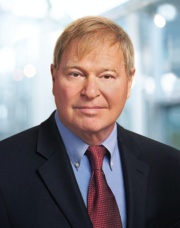
What remains in the field
Away from the company, Grube enjoyed farming, fishing and horse racing. He liked walking cornfields in search of arrowheads. That last detail supplies a pleasing companion to his business metaphor: the industrial buyer who wrote about rough diamonds also spent leisure time looking for small objects other walkers might miss. His interests extended from the products of modern chemistry to traces left by people who had worked the land long before.
Grube died on November 24, 2020, aged 73. In February 2021, Straumins joined Calumet’s board in his place as the Grube family representative. Five years later, when she announced that she would not seek re-election, she spoke about having worked with and learned from her father. Calumet, she said, had been part of her family since she was 16.
The story had returned to the teenager who heard about a purchase at home. Between those two moments lay a public listing, a network of facilities, a generation of colleagues and a business that had carried on after its founder. Grube’s contribution is visible in those particulars. He gave years of attention to specialized operations that could be easy to overlook. Small diamonds, in his telling, were still worth the trouble of picking up.