The buyer preferred to arrive before the gossip. In 2007, when Delek US was preparing to buy 107 Favorite Markets convenience stores for $65 million, the surprise was part of the appeal. Competitors had barely registered that the stores were available. Uzi Yemin, then the company’s president and chief executive, was perfectly comfortable with their surprise. Publicity could wait until after the paperwork.
“I enjoy the fact nobody mentions our name before a purchase,” he said. It is a revealing preference for someone whose work would eventually involve a publicly traded refiner, pipelines and a fusion company. Yemin’s early American career was built around assets that had become unfashionable. Other people’s eagerness to leave gave him somewhere to begin. A convenience store is a modest stage for a corporate origin story, but the customer does at least turn up every day.
A financial education, then a different country
Ezra Uzi Yemin was born in Jerusalem in 1968, into a family with roots in Iraq. He attended the Hebrew University of Jerusalem. Before American refineries entered his working life, insurance and finance occupied it: two years in the Israeli Ministry of Finance’s Insurance Commissioner’s Office, followed by two years at Clal Insurance. From 2000 to 2001, he was chief financial officer of Delek’s Israeli fuel business.
That background matters to the story. His route into energy leadership passed through financial institutions and regulation. Assessing a business, its obligations and its price came before overseeing the industrial machinery. When Delek Group wanted to diversify outside Israel, it sent him to the United States. The assignment was geographic expansion. The opportunity he found was a business many American owners were trying to escape.
In 2001, Delek US bought 198 MAPCO Express convenience stores from Williams. The acquisition gave the new operation a foothold around Nashville, Memphis and Little Rock. Yemin became president and a director that April; he would become chief executive in June 2004. The company’s starting point was therefore unusually tangible: forecourts, shop counters and the daily business of selling fuel to people with somewhere else to be.
The arithmetic of an unpopular business
Buying stores was only the opening transaction. Yemin described installing information technology, marketing, accounting and operating practices across the acquired business. The work behind the acquisition was decidedly less theatrical than the announcement. A store still needed to function the morning after its owner changed. Any financial thesis would eventually have to survive an actual customer, a delivery schedule and a cash register.
Then the company moved further along the fuel chain. It bought the Tyler refinery in Texas in April 2005 and went public in May 2006. A retailer was acquiring the means to make the products it sold. Refineries brought a different set of demands: large facilities, maintenance, feedstock decisions and exposure to the gap between crude costs and finished-fuel prices. The business had acquired considerably more plumbing.
Yemin’s account of acquisition discipline became especially clear in 2008. Speaking at an investor conference, he argued for buying at lower earnings multiples and against paying a peak price for peak earnings. He linked the company’s stronger years in 2006 and 2007 to purchases made during the less inviting years from 2001 through 2005. In his telling, the opportunity and the reward arrived on different calendars.
The distinction is useful because contrarian buying can sound suspiciously effortless in retrospect. Yemin’s explanation involved the balance sheet as well as temperament. Cash and financing capacity made it possible to act while others hesitated. Disliking a crowd does little good if a company cannot fund a purchase. The practical question was whether Delek could afford an asset, operate it and wait for a better market.
“We need to change our culture.”
Uzi Yemin, Nashville Business Breakfast, 2008
Keeping the pumps running, looking beyond them
That same year, Nashville businesspeople heard a broader argument from the fuel executive. At Lipscomb University’s business breakfast in September 2008, Yemin discussed the forces behind rising gasoline prices: demand, instability in producing regions, the dollar and commodity trading. He also urged exploration of nuclear power and electric cars. A business built around gasoline had given him reasons to think about what might follow it.
There is a long interval between that breakfast and his present involvement in fusion, but the connection is interesting. Alternative energy was already part of his public argument while he was building a conventional fuel company. He was describing a problem in consumption and supply, with consequences for what drivers paid. His audience had arrived for breakfast; it received a discussion of America’s energy habits along with it.
The founder sells the starting point
In November 2016, Delek sold its MAPCO retail assets to a US subsidiary of Chile’s COPEC for $535 million in cash consideration, before the additional cash and working-capital adjustment. After debt repayment, fees and related costs, net proceeds before taxes were $377.3 million. The distinction between those figures matters. A sale price is the number that travels; the cash remaining is the number a company can use.
For Yemin, selling MAPCO offered greater financial flexibility and a continuing commercial relationship. Delek agreed to supply certain locations with fuel for 18 months. Ownership ended while part of the trading relationship continued. The company was willing to part with the retail business that had established its American presence. Founders are often described through what they keep. This chapter is better understood through what Yemin agreed to sell.
The next major change came with Alon USA. Delek had acquired a substantial stake in 2015; the purchase of the remaining outstanding shares became effective on July 1, 2017. The combination brought together refineries in Tyler and Big Spring, Texas; El Dorado, Arkansas; and Krotz Springs, Louisiana. Their combined nameplate crude throughput capacity was 302,000 barrels a day. The map had become a network.
The acquisition also included logistics, asphalt, renewable fuels and retail operations. Those were businesses with different customers and operating requirements, attached to a common energy system. Describing the deal simply as getting bigger misses some of its character. Delek was changing the relationships between its assets: where crude could come from, where products could go and which infrastructure might support the movement between them.
A refinery has neighbours
In May 2019, Yemin and Louisiana governor John Bel Edwards announced a planned $150 million investment in the Krotz Springs refinery over five years. The announcement included 30 new direct jobs and retention of 200 existing positions. Edwards had met Yemin during an economic-development mission to Israel the previous October. An international business relationship was becoming a local proposition about investment and employment.
Plans and completed results deserve separate columns in any ledger. These were announced commitments, rather than a retrospective count of everything delivered. Even so, the episode shows another part of Yemin’s working world. Refinery ownership involves conversations with elected officials and communities as well as shareholders. Industrial assets occupy places where people live, and their future is a matter of local interest long before it becomes a line in an investor presentation.
His Nashville connections also extended beyond Delek. As board president of Akiva School, he approached longtime Delek executive Tony McLarty about taking a role at the Jewish day school. McLarty became executive director in 2016, bringing experience in budgeting, administration, fundraising and community relations. It is a smaller episode than a refinery acquisition, and a more personal one: Yemin knew someone whose experience could be useful to another institution.
A different chair, a longer horizon
Yemin’s executive tenure at Delek US ended in June 2022, when Avigal Soreq succeeded him as chief executive. Soreq had previously worked at Delek and returned after leading El Al. Yemin moved into the executive chairman position, which he held through December 2024. He remains chairman of Delek US. In February 2026, he became vice chairman of the board of Delek Logistics’ general partner, with Soreq taking the chair.
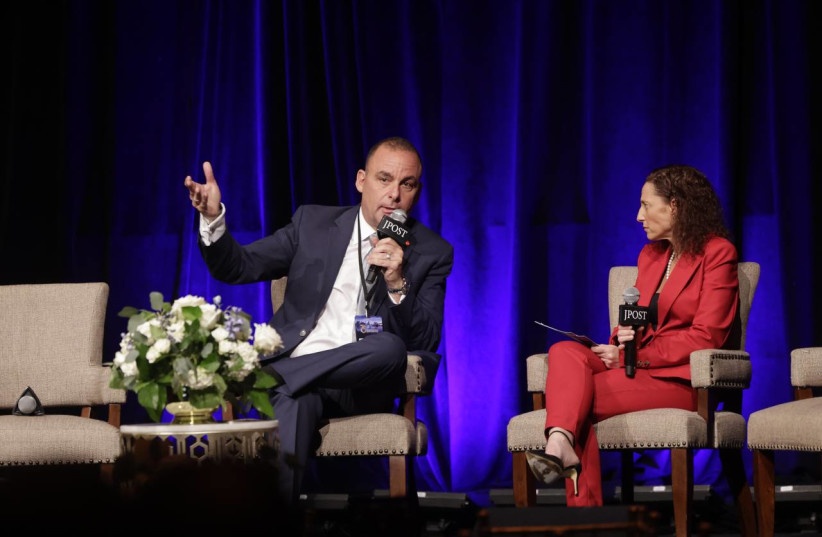
In New York in 2023, Yemin discussed the difficult overlap between present fuel demand and future energy sources. He argued that insufficient investment in conventional energy contributed to higher prices, while the alternatives would take time. His description of Delek’s approach was incremental: “We are shifting a piece at a time, to try to match what the world will need.” It was an argument for managing the interval between technologies.
Today, nT-Tao lists him as chairman of its board. The company is developing compact fusion power, placing him alongside physicists and engineers trying to commercialize a different form of energy infrastructure. Its ambitions remain development goals. His presence there connects the experience of operating large, regulated energy businesses with the questions facing a technology still seeking a commercial future.
The distance from a MAPCO forecourt to a fusion laboratory is considerable. Across that distance, Yemin’s career keeps returning to practical questions about price, timing and what a business might become under different conditions. The stores came first. Refineries followed. Now there is another energy proposition to examine, with a different set of uncertainties. The paperwork, one suspects, will still deserve a careful read.