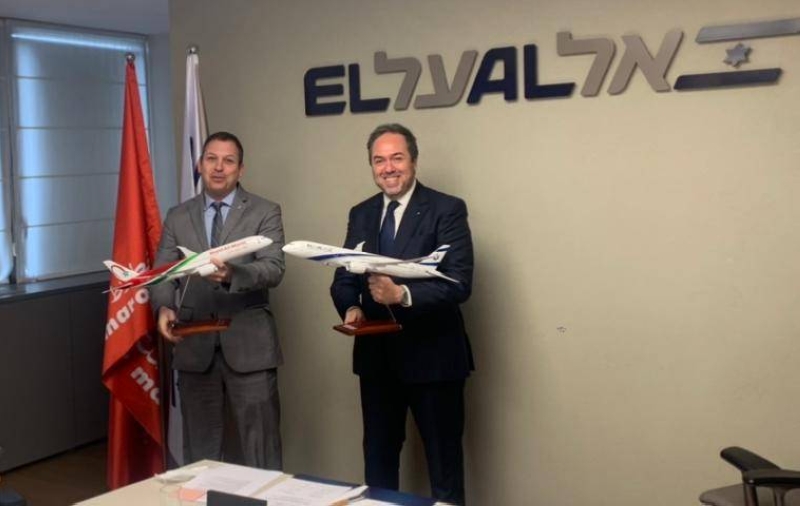
In March 2022, Avigal Soreq stood beside Royal Air Maroc chief Hamid Addou in Tel Aviv, the two executives holding model aircraft. Their airlines had signed a codeshare agreement. Here was the pleasing miniature version of international business: two planes, two smiles, an arrangement to help passengers get somewhere. Within weeks, Soreq had announced that he was leaving El Al. His next destination was a company he had already left.
Delek US brought him back as president and chief executive in June. Before the airline job, he had worked his way through its commercial and operating leadership. Now he was returning to run the business. The detour had lasted little more than a year. For a career that had already passed through military aviation, corporate finance and solar energy, it was another unexpected connection on the itinerary.
The temptation is to make all this sound inevitable. A former pilot takes charge of an airline, then returns to the fuel business: someone ought to have supplied a departure board. Yet the interesting part of Soreq’s career is the variety of work beneath those titles. He has had to think about moving people, moving petroleum, paying for assets and deciding which assets a company ought to own.
A pilot with an accountant’s qualification
Soreq was born and raised in Israel. From 1996 to 2004, he served in the Israeli Air Force, reaching the rank of major. He was a pilot. His later professional qualification, certified public accountant in Israel, adds a rather different instrument panel to the picture. Flight plans and financial statements both punish loose assumptions, although that observation tells us more about the jobs than about the person holding them.
His civilian career included the corporate finance department of KPMG’s Tel Aviv office and senior finance and business consulting at Trabelsy & Co. He also worked at SunPower. That solar connection is a useful interruption to the easy description of him as an oil executive. His experience in energy began before he joined a petroleum refiner, and included a company operating in a different part of the energy market.
Tel Aviv University counts him among its alumni, naming its Gordon Faculty of Social Sciences and Coller School of Management. Alongside the accounting qualification, those affiliations give his biography a business and finance thread. The route to the refinery did not begin with a lifetime spent inside one. It came through understanding companies, their finances and the practical work of running them.
Reached major
Vice president
Chief executive
President & CEO
The long apprenticeship before the short detour
Soreq joined Delek in December 2012. He became an executive vice president in 2015, chief commercial officer in 2016 and chief operating officer in 2020. He also served on Alon USA Energy’s board from 2015 to 2017. That sequence matters because the familiar shorthand, former airline boss becomes oil boss, conceals almost a decade of relevant work.
A commercial role asks what a business can buy and sell, and on what terms. An operating role asks whether it can deliver. Soreq had held both before becoming chief executive. At Delek Logistics, he had also served as vice president and executive vice president. He knew the related businesses from inside, including the infrastructure that carries products between the places where they are made and the places where they are needed.
In November 2020, El Al announced his appointment to succeed Gonen Usishkin. He took up the chief executive role in January 2021. The appointment combined an aviation background with the experience of a senior energy executive. It also moved him from a company where he had accumulated years of knowledge to a national airline with its own obligations, relationships and financial demands.
By March 2022, he was preparing to leave. The brevity of his tenure belongs in the story as plainly as the appointment does. He offered to help with the handover. Delek, meanwhile, was arranging a succession of its own: Ezra Uzi Yemin would move from chief executive to executive chairman, and Soreq would return to take charge.
Coming back, and asking to listen
On his return, Soreq publicly thanked Yemin for his mentorship. He invoked Isaac Newton’s image of standing on the shoulders of giants, an unusually scholarly way to announce a job in petroleum. More concretely, he said he would visit Delek’s locations, meet employees and hear from them. An El Dorado town hall was on the agenda.
“My immediate focus is to meet with our Delek team members who make this company successful.”
Avigal Soreq · June 2022
The details of that announcement are more useful than a string of leadership adjectives. He was returning with considerable institutional knowledge, yet his first stated task was to listen. He wanted Delek to be a place where people worked together and contributed to its future. He also set out a community ambition, saying he wanted to build on the past and make the company a steward of the community.
There is a human scale to that promise even when the business has an industrial one. Delek’s four refineries are in Tyler and Big Spring, Texas; El Dorado, Arkansas; and Krotz Springs, Louisiana. Their combined nameplate crude throughput capacity is 302,000 barrels a day. Those names give the abstract word operations a geography. A chief executive’s decisions eventually arrive at particular sites, among particular teams.
What he chose to sell
One revealing decision arrived in 2024. Delek agreed to sell its retail business to a FEMSA subsidiary for announced cash consideration of $385 million, including inventories and subject to adjustments. The business comprised 249 convenience stores, primarily in the southwestern United States. The transaction closed on September 30.
Convenience stores are the part of a fuel company most people can picture without assistance. They have doors, counters and customers deciding whether the journey merits another coffee. Refinery economics tend to require more explanation. Selling the visible part of the business was therefore a useful clue to the work Soreq was doing: reconsidering how Delek’s different activities fitted together.
Delek also signed a ten-year fuel supply agreement with FEMSA. The distinction is practical. Ownership of the stores changed, while a commercial relationship continued. A sale could release capital and change the company’s responsibilities without ending its role in supplying fuel. The transaction was part of the company’s sum-of-the-parts strategy, a phrase whose everyday translation is to examine the businesses separately and ask how each can produce value.
For Soreq, that meant exercising a different kind of authority from the one implied by an operating title. Running an asset well and deciding to keep owning it are separate questions. His tenure has involved both. The retail sale offers a concrete way to understand his job beyond the usual photograph of an executive standing beside an impressive piece of equipment.
Crude, gas and water belong in the same conversation
At Delek Logistics, the developing picture has involved three streams: crude oil, natural gas and water. In December 2024, Soreq highlighted the planned Gravity Water Midstream acquisition, additional crude acreage dedication and acid gas injection capabilities at the Libby 2 gas plant. He presented these as related opportunities around existing assets in the Permian Basin.
The following year, Delek Logistics completed the Gravity acquisition. Alongside the earlier H2O Midstream transaction, it expanded the water side of the business. The ambition was to offer producers a broader set of services. Oil production involves more than the oil that eventually reaches a refinery; gas and produced water create infrastructure requirements of their own.
There was also a financial purpose. Soreq repeatedly discussed increasing Delek Logistics’ business with third parties, reducing its economic dependence on its sponsor, Delek US. By February 2026, he had become chairman of the board of Delek Logistics’ general partner, alongside his presidency. The relationship between the two public companies remained central to his work, even as management sought greater economic separation.
That is an intricate assignment for someone who leads across the relationship. Refining and logistics can serve one another while still requiring separate judgments about investment and returns. The useful question is where customers, contracts and capital make each business stronger. Soreq’s public explanations have returned to that question through acquisitions, processing projects and the changing sources of logistics earnings.
The numbers need their small print
Delek’s second-quarter 2026 results showed the importance of keeping different measures distinct. It reported $169.5 million in net income and $638.7 million in adjusted EBITDA. Excluding a renewable volume obligation adjustment, adjusted EBITDA was $490.1 million. The adjusted measure is a different lens on performance; it should not be mistaken for net income.
Soreq emphasized Big Spring’s performance after its first-quarter turnaround, reliability and the Enterprise Optimization Plan. Earlier in 2026, Delek had reported approximately $200 million in annual run-rate cash flow improvements from that plan. A run rate describes an annualized pace, rather than cash already collected over a full year. The distinction matters when judging how a program is progressing.
His comments on shareholder returns have sometimes been refreshingly resistant to tidy promises. During a February 2024 earnings call, he declined to commit to a market-dependent number. “I don’t want to predict market condition,” he said. For an executive asked to make the future sound manageable, acknowledging the market’s independence is a useful habit.
The people behind the operating plan
Soreq’s public interests extend beyond the transactions. He has welcomed Women Leaders in Data & AI to Delek’s headquarters and expressed support for women in technology leadership. In a Father’s Day message, he described himself as a father and CEO. These are modest glimpses, but they give the corporate biography some ordinary proportions.
At Delek’s third annual Safety Day in 2025, he singled out preparation, accountability and discipline. Those words are familiar in both aviation and industry. His emphasis was on employees looking out for one another and aiming for zero incidents. It is a stated expectation, with consequences that reach well beyond an earnings presentation.
The model aircraft in Tel Aviv now look like a compact reminder of the range of his career. Soreq has occupied several seats around the same broad problem: how to keep complicated businesses moving, and how to pay for the next leg. Back at Delek, the work has taken the form of stores sold, services added, refineries maintained and employees asked to contribute. The itinerary has been unusual. The daily tasks are wonderfully specific.
Follow the itinerary
- Delek US leadership biography His current role and career record
- Avigal Soreq on LinkedIn Personal posts and company updates
- The return announcement His June 2022 message to Delek employees
- The FEMSA retail agreement The stores, the price and the commercial relationship
- Second-quarter 2026 results The earnings measures and their adjustments
- Earnings webcasts and presentations Hear the company discuss its operating priorities
- Delek US on X Company account
- Delek US on Facebook Company account