The revealing object in Evita’s story is an invoice. An invoice ought to answer a few dull questions: who is buying, who is selling, what is changing hands. Evita advertised a way to make international trade less cumbersome. Yet in the federal case against its founder, prosecutors described invoices with Russian customers’ names and addresses digitally whited out. The money could keep moving while the explanation for the money became harder to see.
- Evita marketed large international payments and a community of trusted trade partners.
- Its offer connected stablecoins with familiar bank transfers and currency conversion.
- Founder Iurii Gugnin pleaded guilty to four federal counts in April 2026.
The attraction of a smaller number
Consider the customer Evita wanted: a business buying vehicles, industrial equipment or technology across borders. Its export-import page put a typical transaction between $100,000 and $1 million. At that scale, the exchange rate deserves its own meeting. A percentage point on $1 million is $10,000. The attraction of shopping around hardly needs explaining.
Evita’s account-opening page advertised FX fees of 0.19%-3%, depending on the corridor, transaction size and volume. Applied to a hypothetical $100,000 conversion, that range produces $190-$3,000. Those are arithmetic illustrations of the advertised FX charge, not verified all-in invoices. They explain the sales proposition: make a large, awkward payment feel more manageable.
Published FX range. Corridor, size and volume mattered.
The offering joined two financial worlds. Customers could convert stablecoins into conventional currencies and back, while the company advertised named USD accounts supporting FedWire, ACH and SWIFT. Third-party collections, payouts and large wires completed the pitch. A business could, in principle, deal with an intermediary across several steps rather than assemble every connection itself.
That positioned Evita between international bank payments, specialist currency providers and crypto conversion services. Its distinction was the bundle: payments attached to a proposed trading community, with vendor trust, agreements and invoice factoring in the same commercial story. The published promise was broader than a currency exchange.
The currencies were part of that breadth. The account page listed conversion into euros, pounds, Chinese yuan, Canadian dollars and Mexican pesos. For a buyer with suppliers in several markets, that suggested one commercial relationship spanning several destinations. It also meant that a useful quote had to identify the particular route; the bottom of a published price range could not describe every transfer.
An introduction is not an investigation
Evita called itself a safe marketplace for cross-border trade
. Its private-beta trade page said new customers needed a personal referral from an existing client. The referral mechanism also had an economic engine: ambassadors were offered up to half of gross profits from clients they introduced. That made relationships part of customer acquisition.
There was an earlier version of this community idea. In August 2022, an Evita announcement described a learn2earn university where students received tokens while learning web3 skills. The courses covered onboarding, product-market fit and Solidity. Short daily lessons, peer groups and practical projects supplied the structure. The company reported a 55% completion rate, a promotional claim rather than an independently audited result.
The common thread was participation: join a group, learn from its members, benefit from the network. By 2024, a photograph from SiGMA Eurasia in Dubai showed Evita promoting large crypto and fiat payments. The commercial subject had changed; the appeal of a helpful intermediary remained.
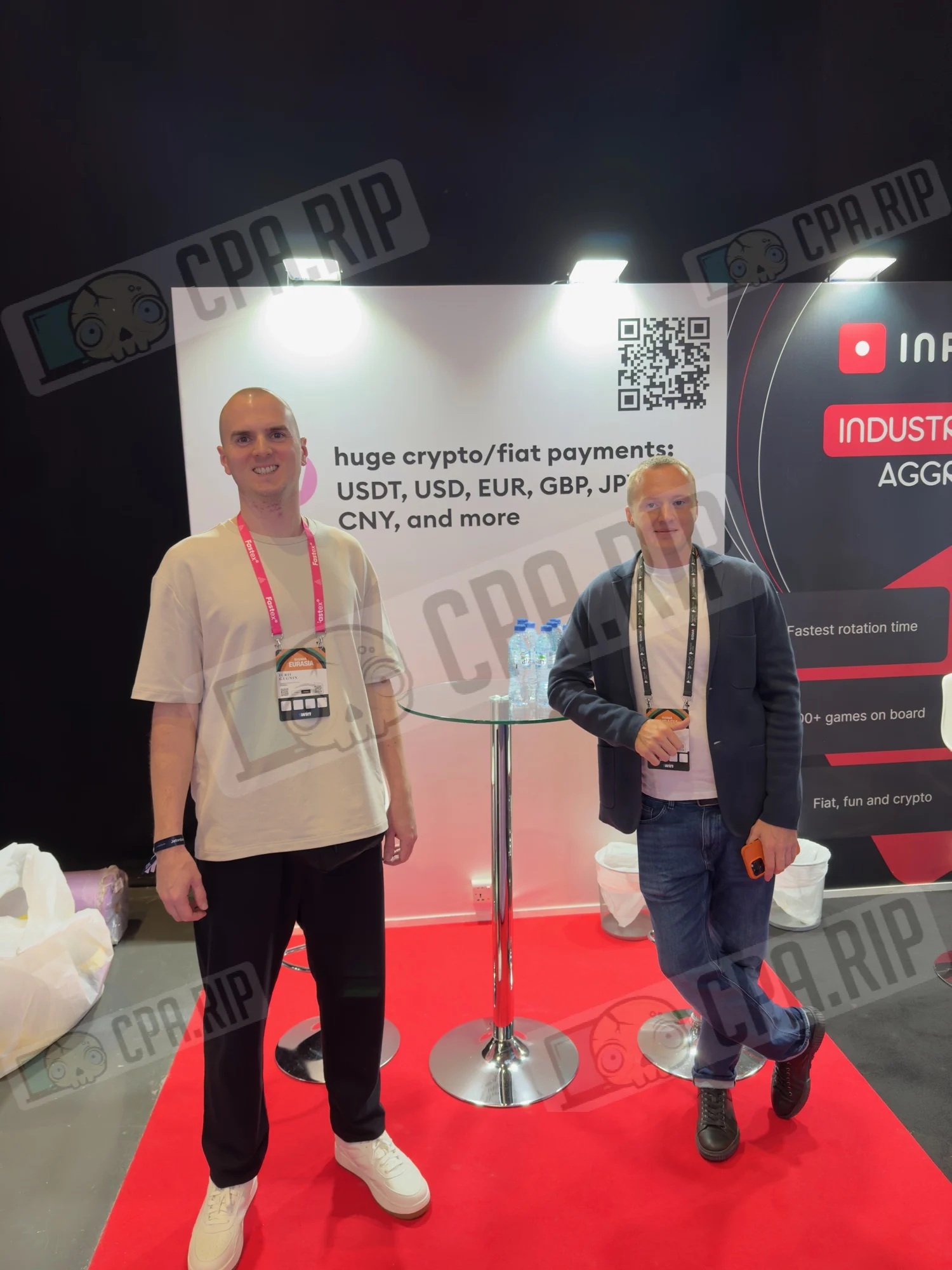
The corporate history adds a useful distinction. Evita Investments was incorporated in Delaware in November 2021. Evita Pay followed as a Florida corporation in June 2023. The brand could appear to be one business, while the legal responsibilities attached to particular entities. For a customer signing an agreement, the company named on the document mattered as much as the blossom on its website.
The information that disappeared
The federal account of Evita’s operations was far less reassuring. In June 2025, the Justice Department announced a 22-count indictment against Gugnin, also known publicly as George Goognin. Prosecutors alleged that approximately $530 million passed through the U.S. financial system between June 2023 and January 2025. That figure described payment volume, not company revenue or funding.
According to prosecutors, foreign clients supplied cryptocurrency, mostly Tether’s USDT. Gugnin converted funds into dollars or other conventional currencies and made payments through Manhattan bank accounts. Many clients, they alleged, held funds at sanctioned Russian banks. Banks and exchanges were told Evita did not transact with Russian or sanctioned entities.
- 01Client cryptocurrency
Often USDT - 02Conversion and bank accounts
Into conventional currencies - 03Payments to recipients
Origin allegedly concealed
The invoice allegations make the problem tangible. A payment’s legitimacy depends on details that cannot be read from the amount alone. A domestic account and a successfully completed transfer do not explain the underlying customer or destination of the goods. In the government’s account, misleading paperwork helped separate those facts from the transaction.
What the plea changed
On April 1, 2026, Gugnin pleaded guilty to four counts: wire fraud conspiracy, conspiracy to defraud the United States, money laundering conspiracy and a violation of the International Emergency Economic Powers Act. The district judge accepted the plea on April 30. The four-count admission should be distinguished from the wider set of allegations in the original indictment.
A May 8 government filing recorded his consent to a $1,261,500 forfeiture money judgment. It also identified cryptocurrency and funds in accounts associated with Evita. The proposed order specified that forfeited assets would count toward the outstanding judgment. Treating the amounts as automatically additive would overstate the documented financial consequence.
In cross-border payments, the explanation has to arrive with the money.Editorial observation
The part worth copying
For a business choosing a provider, Evita’s history suggests a practical discipline: evaluate the explanation alongside the exchange rate. Ask who the underlying parties are, what documentation survives each conversion and what makes the proposed route permissible. A referral can start a relationship. It cannot supply those answers.
The useful commercial instinct was to address a whole trade problem rather than one isolated transfer. Vendor discovery, agreements and payment handling do belong in the same conversation. But the convenience depends on truthful records and genuine checks throughout. When either disappears, a smooth-looking payment can leave the buyer with a much rougher problem.