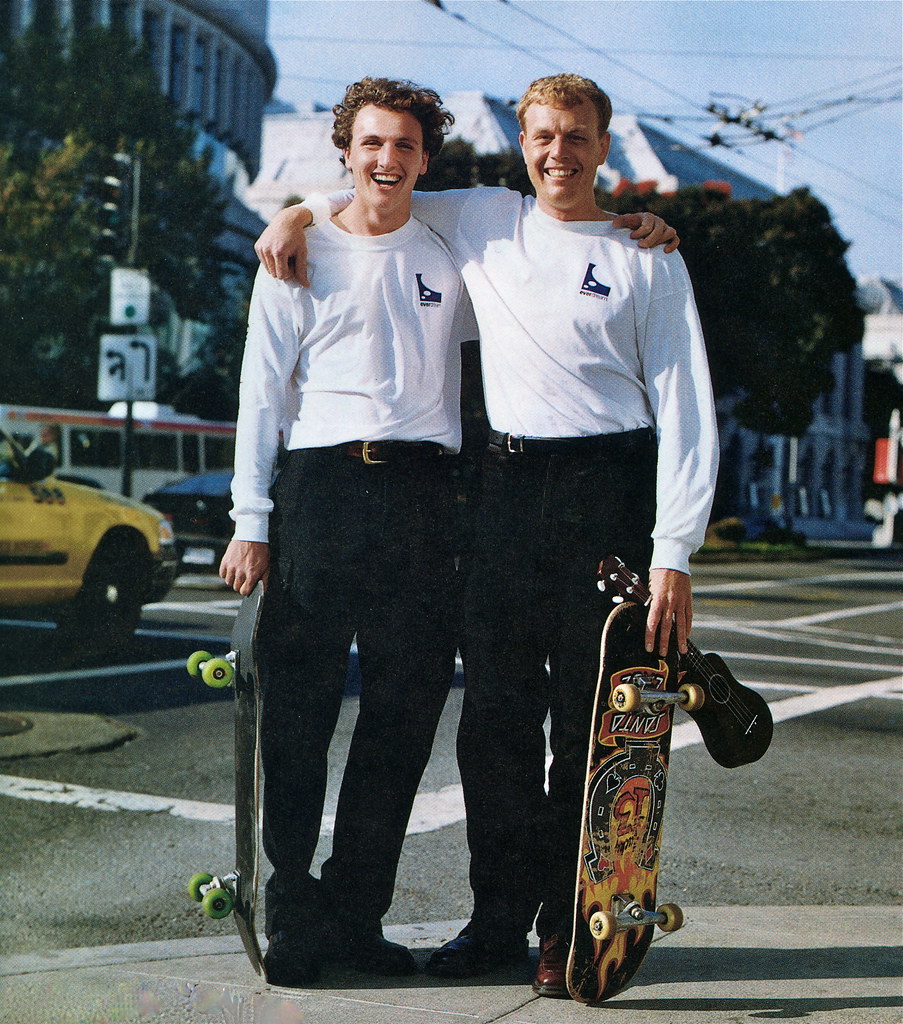
The founders arrived at some of their first customers on skateboards. This sounds like a startup anecdote polished by years of retelling, except Steve Jurvetson, who invested in Everdream in 1999, remembered the brothers going door to door in Santa Cruz that way. They were selling an unlikely commodity: relief from the office computer. A PC was expensive, yes. But the purchase price was the tidy part. Somebody still had to install it, update it, rescue its files and answer the phone when it stopped cooperating.
- Founded in 1998 by Lyndon, Peter and Russell Rive.
- Started with fully supported, monthly PC subscriptions for small businesses.
- Moved into hosted software that managed other companies' desktops and laptops.
- Sold to Dell in 2007; the purchase price was not disclosed.
Their first answer was to bundle the whole nuisance. A small company could pay a monthly fee for a preconfigured machine, software, internet access, backup and around-the-clock support. A historical case study listed an early package at about $150 per computer each month, with a 30-month commitment after a trial. It was a neat offer for a firm without an IT department: one bill, one number to call, one company to blame.
But that neatness had a physical cost. The service depended on Everdream's own hardware, prepared and shipped with a protected software environment. Customers already had computers. They did not necessarily want to replace them to get decent help. In 2001 Everdream Direct opened its management service to PCs made by other vendors. The center of the business moved from the machine to the work of keeping it useful.
A control center for the mess underneath
The later Everdream offered a small agent installed on each managed PC and a browser-based control center. The agent reported what hardware and software a company owned, helped distribute updates, and gave technicians a way to diagnose problems remotely. The surrounding service could add backup, antivirus, license tracking and a help desk. An IT manager at headquarters could see the fleet without driving to every branch.
That distinction mattered at places such as Sonic Automotive. By 2004, the car dealer had Everdream managing roughly 3,500 computers across about 100 dealerships. When Sonic added a dealership, Everdream could source a PC, load the right applications, send it to the right department and support it after installation. The showroom machine was tied to sales; the service department's machine had a different job. Central IT needed both to behave consistently.
The public price was not Sonic's actual contract. Everdream said a comparable service ran about $55 per seat per month, while Sonic signed three-year subscriptions for managed PCs. The company argued that doing comparable work internally for a similarly spread customer could cost about $125 per seat each month. That second figure was Everdream's estimate, not an audited saving. Sonic's IT executive said his first goal was control and better support, and he had not calculated realized savings.
Contemporary reporting; figures describe one historical deployment, not current operations.
Mail Boxes Etc. had a different version of the same headache. Franchisees could be diligent about serving customers and indifferent to software patches. The company had considered shipping replacement hard drives to update store systems. Everdream's agent offered a gentler route: a computer could contact the control center when it connected to the internet, even from a location outside the corporate network. Updates no longer depended on every store owner becoming a part-time system administrator.
The clever sale was not the computer. It was the promise that someone else would notice when the computer needed attention.What the product changed
The price of someone picking up
A 2003 independent lab review put a sharper outline around the business. Core Everdream management, including inventory, software distribution, licensing and remote control, was listed at $22 per seat each month. Unlimited help-desk support was another $28; online backup and antivirus, $21. A full bundle cost $69. These were published list prices from that year, not a universal tariff. The patch-management service later advertised a starting price of $5 per managed computer per month for a 1,000-node network.
Published by eWEEK Labs in 2003. The bundle price differs slightly from the sum of its listed parts.
The menu shows why Everdream was more than a remote-access tool. It sold repeatable jobs that many IT departments were already doing in fragments. An independent lab liked the way Everdream's Control Center let customers route basic requests to Everdream while keeping specialized ones in-house. A company could buy help where it was scarce without surrendering every decision about its desktops.
The same lab found a real limit: the service supported Windows desktops, while alternatives such as LANDesk and Novell ZENworks reached other devices and operating systems. It also wanted data centers in more locations. That mattered to a company with mixed machines, strict resilience needs or an IT staff already equipped to do the work more cheaply. Everdream's advantage was strongest when the PCs were numerous, scattered and fairly standard.
The experiment inside the experiment
There had been smaller lessons before the business-model change. Early Everdream machines separated protected company software from programs a customer could install. That made support easier, but switching sides required a reboot. Customers complained, and the design changed. An elegant protection scheme had collided with a minute and a half of someone's working day. It is an almost comic detail, until one remembers that a service promising fewer annoyances cannot afford to manufacture new ones.
Russell Rive's patents show how seriously the company took this engineering problem: protecting a known-good environment reduced the number of ways a PC could break. Later, the control center took that instinct online. It asked a more scalable question: what can be observed, updated or repaired from afar before a technician travels or a customer loses an afternoon?
Everdream kept widening that answer. In 2006 it announced a managed service for stolen laptops that could help protect or erase data if a missing computer came online. It also worked with WebEx on a browser-based systems-management product. The strategic pattern was consistent: put a small piece of software on the endpoint, use the network to learn its condition, and sell an organization the ability to act on that knowledge.
Why Dell wanted the afterlife of a PC
Dell could sell a computer better than almost anyone, but it was trying to sell more of what happened after the box arrived. In 2007 it bought SilverBack Technologies for remote infrastructure monitoring and then agreed to acquire Everdream for desktop and notebook management. Everdream had also learned to sell through service providers and resellers - useful knowledge as Dell widened its partner channel. The deal closed that December. Neither company disclosed a purchase price.
Dell said Everdream's products would continue through channel partners and form a basis for future services. In 2008 it described a managed-service-provider certification track using Everdream's technology for software distribution, patching, asset discovery, encryption, backup and remote administration. The platform had crossed the line from startup product to component in a much larger service machine.
What can a reader borrow from a company whose old desktop product no longer sits on a sales page? Start with the work around the product. Everdream began by controlling the whole computer because that made support possible. Customers then revealed the part they valued: a reliable way to manage the machine they already had. The company kept the difficult operational promise, moved the delivery point and charged for the repeated job. That is a useful test for any bundled business: remove the box from the offer and see what customers still pay to have done.