The revealing detail in Eshan Dosani's startup story is not artificial intelligence. It is donuts. In the summer of 2025, when he announced that Perspectives Health had joined Y Combinator, Dosani described an early customer-research routine with almost comic modesty: the team shadowed clinicians, rewrote forms by hand and drove around the country to pilot its software in clinics. They brought donuts. A lesser founder might have led with the model architecture. Dosani led with the miles and the pastry.
That detail contains his method. Before a workflow can be automated, somebody has to sit beside it. Before software can become useful, its builders have to learn the peculiar vocabulary of the people who will use it. And before a founder can claim proximity to a problem, it helps to arrive in person, carrying something edible.
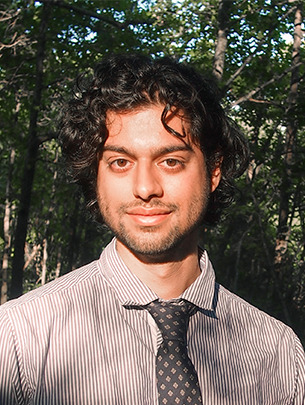
Perspectives Health now builds administrative AI for behavioral health programs. Its software writes documentation, reviews charts and supports the insurance work that consumes staff time. The company belongs to Y Combinator's Summer 2025 batch and describes its mission in operational terms: reduce the burden, catch errors early, return time to the people doing the work. Dosani is its co-founder and CEO. The title sounds like a destination. His public record makes it look more like the latest expression of a longstanding habit.
A student of systems
Dosani arrived at the University of Chicago as a first-generation college student and a QuestBridge Match Scholar. He studied economics and political science, a pairing well suited to anyone curious about the difference between how institutions are designed and how they behave on a Tuesday afternoon. His interests ranged across urban policy, housing and public administration. As a third-year student, he served on the board of the university's International Development Society, where his short biography emphasized poverty, inequality and practical work in Chicago.
The academic thread was not ornamental. In 2022 and 2023 he was a Summer Quad Research Scholar, working with professor Harold Pollack on a project called “Investigating Deaths of Despair.” He later co-authored policy commentary with Pollack and spent time at the White House Office of National Drug Control Policy. The sequence suggests a young operator learning to read institutions from several angles: the dataset, the memo, the government office and the street-level program.
He also wrote for a public audience. Two Chicago Tribune opinion essays tackled the economics of housing. One argued against single-family zoning in Illinois. Another examined the pressure Wall Street ownership can place on mobile-home affordability. Zoning codes and clinical forms do not seem like siblings, but they share a family resemblance. Both are rules that become landscapes. They determine what can happen, who must wait and how much ordinary life will cost.
“I've tried to use UChicago's resources to figure out what actually helps and to push those ideas forward.”Eshan Dosani, on graduating in 2025
The grant before the platform
Dosani's most instructive pre-startup project may be the Appalseed Fund. It grew out of relationships in Berea, Kentucky, where families facing housing insecurity could be kept from a stable home by a security deposit. This is the sort of obstacle bureaucracy excels at making look small. On a spreadsheet, it is one line. For a family paying night by night at a motel, it can govern the entire horizon.
The response was deliberately concrete: raise money for housing grants and work with local partners who understood the place. By June 2025, the University of Chicago reported that the initiative had helped more than 30 people move into stable homes. Its meaning lies partly in its scale. It did not promise to solve housing. It identified a hinge in the system and put weight on the right side.
That is also a useful description of startup strategy. A good wedge is a narrow intervention with disproportionate leverage. The founder does not begin by rebuilding the whole institution. The founder finds the small requirement that blocks the larger outcome: a deposit, a signature, a missing note, an audit item nobody noticed last night.
Four friends and a pile of forms
Perspectives Health began in late 2024 with Dosani and three partners. Before the polished company language came the unpolished work: watching clinicians navigate documentation, manually reproducing the forms and testing a tool inside real workflows. In the team's YC announcement, Dosani wrote that counselors could spend as much time documenting and completing paperwork as doing the work for which they trained. The observation defined the product more clearly than any trend report could.
The company was piloting in three clinics across three states by the time Dosani graduated. It had also received early support through the University of Chicago's LTF program, which helped the founders refine their pitch and connect with other funders and incubators. Then came YC S25, the familiar accelerator shorthand that can make a messy young company sound suddenly laminated.
What followed was a product narrowing. Perspectives Health's public material now emphasizes tools that review charts, prepare administrative packets and surface documentation problems before they become expensive. Its Reclaim product reads large volumes of records overnight, flags issues and follows up with the responsible staff. The software is more specific than the original ambition, and therefore more legible. It does not announce that AI will transform an industry. It gives the morning team a list.
The form is never merely a form. It is a tiny constitution for how an institution behaves.
The organizer's advantage
Founders like to speak of customer obsession, a phrase rubbed smooth by repetition. Organizing offers a sterner version. You go where people are. You listen before asking. You discover that the problem described in the meeting is not always the problem visible in the room. You learn which inconvenience is annoying and which one quietly changes an outcome.
Dosani's campus years supplied practice. He founded a student organization in fall 2022 by putting flyers around campus. The group grew to roughly two dozen members working across several projects. Whether coordinating volunteers, writing an opinion essay or refining an enterprise workflow, the underlying skill is translation. A large problem must become a next action that a particular person can understand and complete.
His personality in public is correspondingly practical. He thanks helpers by name. He describes manual work without embarrassment. He asks directly for clinic introductions, engineers and investors. Even the donut aside matters because it punctures the solemnity that often settles around mission-driven technology. Serious work can survive a joke. Often it works better after one.
The company is also a team story. Public launch material names Kyle Hyun Woo Jung, Nicholas Kovalsky and Jesse Tabak alongside Dosani as founders. That matters because the leap from policy observation to production software requires several kinds of fluency at once: institutional context, technical judgment, sales patience and the humility to revise a workflow after a user touches it. Dosani is the public-facing CEO, but his own announcement called the builders his friends before it called them anything grander. The phrasing fits the enterprise at that moment - four people, an unfinished tool and enough trust to spend months learning an industry together.
A company learns to read the room
The next chapter is less romantic than the origin story, which is usually a sign of progress. Perspectives Health must earn trust inside regulated organizations, integrate with systems people already use and prove that its automation catches the details it promises to catch. A demo can be charming. An overnight audit has to be correct at 8:12 in the morning.
Dosani's route into software gives him a particular advantage and a particular obligation. He understands that administrative systems are not background scenery. They allocate time, money and attention. They also resist outsiders who underestimate why the odd steps exist. His team's early practice of rewriting forms by hand was therefore more than scrappy customer research. It was respect for the workflow before attempting to replace it.
The founder's aspiration is visible across projects: move resources back toward the work that matters. In housing, that meant helping a family cross the threshold from a motel to a lease. In clinic operations, it means shrinking the hours consumed by documentation and payer requirements. In both cases, the villain is not a dramatic machine. It is accumulated friction, perfectly ordinary and therefore easy to ignore.
There is no guarantee that a neat founder pattern produces a durable company. Patterns are retrospective luxuries; companies are daily negotiations with reality. But Dosani has chosen a useful way to negotiate. Get close. Watch carefully. Name the bottleneck. Build the narrow intervention. Bring donuts. The last instruction may be optional, though one suspects it improves the data.