The modern doctor's office has a peculiar talent: it can perform robotic surgery, sequence a genome and still ask a patient to wait on hold to move a Tuesday appointment. Guillaume de Zwirek met that contradiction during a health scare in 2015. The care was good. Coordinating it was not. Every exchange required a call, a phone tree, a voicemail or a callback from a number he did not recognize. With Joe Tischler, he started WELL Health to make one small part less ridiculous: let medical practices and patients text each other securely.
That unglamorous wedge became Artera, a Santa Barbara enterprise-software company that says more than 1,000 healthcare organizations now use its technology. Its systems support roughly 2 billion patient-provider communications each year across text, phone and web, in 109 languages. By the end of 2025, the company reported $100 million in contracted annual recurring revenue, then announced a $65 million growth investment led by existing investor Lead Edge Capital.
All four figures are company-reported. Contracted annual recurring revenue is a bookings-style operating metric, not recognized GAAP revenue.
The first thing that failed was the phone

The original failure was not clinical. It was logistical. Phone calls demand that two busy people become free at the same moment. One-way reminders improved reach but preserved the deeper problem: a patient could read “Appointment tomorrow” and still need to call to cancel. A portal added another login. A scheduling vendor, billing vendor and wayfinding app each added another sender.
WELL's first answer was conversational messaging. Patients could reply; staff could answer asynchronously; the exchange could stay attached to a practice and patient record. Then customers revealed the larger market. Hospitals did not suffer from too few messaging tools. They suffered because those tools had no traffic controller.
That changed the product. Between 2022 and 2024, WELL became Artera and its software became Artera Harmony - an orchestration layer across EHRs, departments, digital-health vendors and channels. The rebrand was unusually literal: “Artera” comes from artery, and the rotated “a” resembles a heart. The metaphor works because Harmony is supposed to manage flow, not replace every organ.
texting
Harmony layer
co-pilots
AI agents
What Artera actually sells
Harmony is the base: a staff inbox, patient channels, campaigns, analytics, preference management, integrations and controls for communications across an organization. It connects with major systems including Epic, Oracle Health, Athena, NextGen, MEDITECH and eClinicalWorks. Its marketplace had grown to more than 60 vendor partners by the end of 2024. In plain English, a hospital can keep its EHR and specialist tools while letting Artera coordinate what reaches the patient.
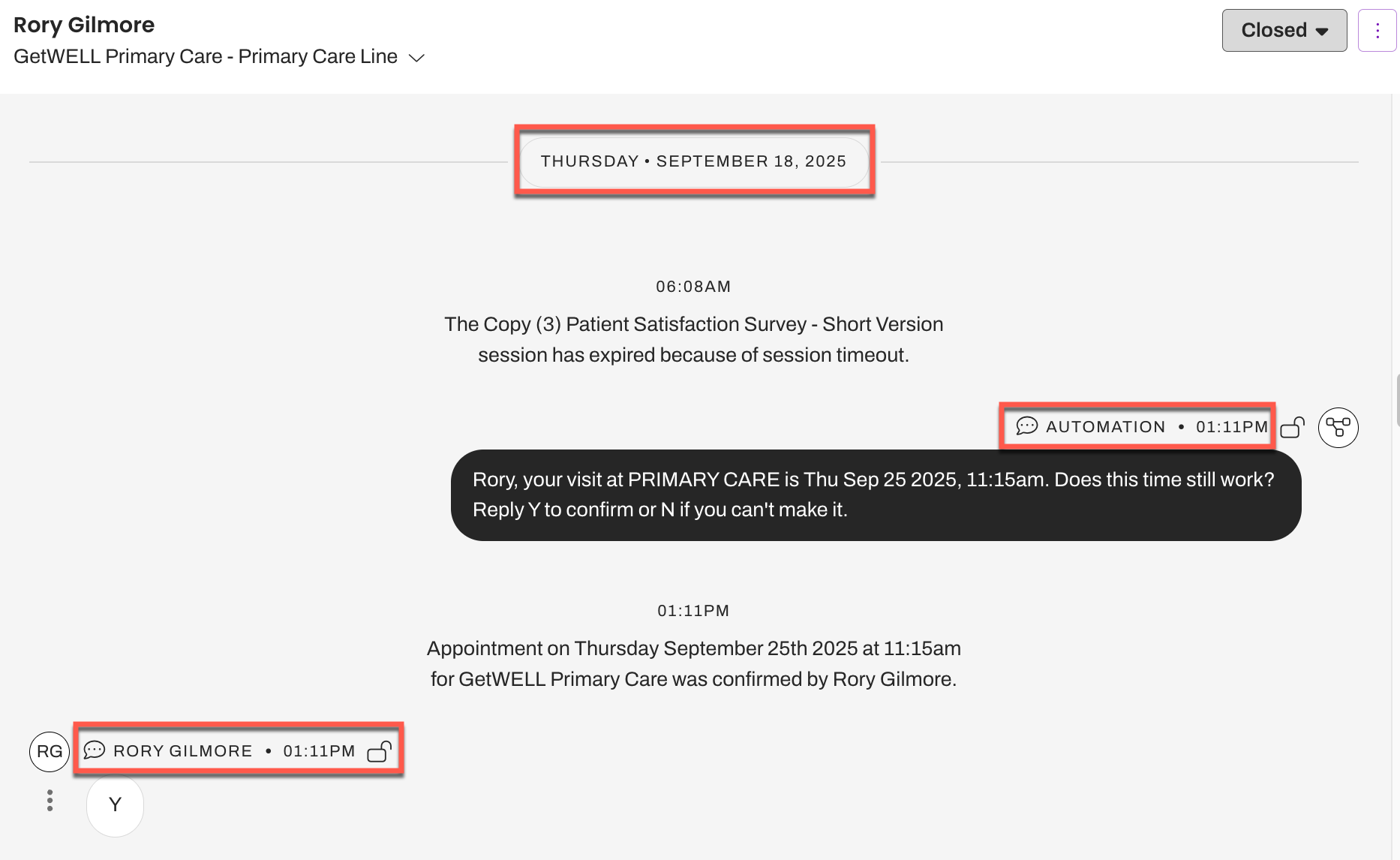
Around that core sit Call-to-Text, bulk outreach, scheduling, intake, referrals, forms, payment workflows and three levels of automation. Flows Agents follow configured conversational paths. Staff co-pilots summarize threads and help shape responses. AI Agents handle more autonomous voice and text exchanges while escalating exceptions to people. A federal edition serves agencies including the Department of Veterans Affairs, Department of Defense and Indian Health Service sites.
This is B2B SaaS, sold through custom enterprise contracts. Artera does not publish a price card. The bill depends on organization size, channels, volume, products, integrations and services. What did building the broader bet cost? The company said it put $32 million into research and development in 2022. Investors supplied $45 million in a 2020 Series C and another $65 million in 2025. Customer implementation prices remain private.
The scorecard is labor, access and empty chairs
Artera's buyers are usually not hunting for delightful chat bubbles. They are trying to reduce abandoned calls, no-shows, staff hours and uncollected balances. Jefferson Healthcare reported a 25 percent reduction in call volume, a 40 percent drop in no-shows at its largest primary-care clinic and a 10 to 15 percent increase in bill payments. Deborah Heart and Lung Center reported an 83 percent response rate, 1,600 staff hours saved and a 50 percent reduction in no-shows.
These are case-study outcomes reported by individual customers under their own operating conditions. They are neither controlled comparisons nor promised results.
Central Florida Health Care offers the more revealing operational story. Its call abandonment rate had climbed above 16 percent, its no-show rate was 22 percent, and clinical teams followed a policy of three call attempts across three days. After using campaigns and Flows, the FQHC reported a 32 percent reduction in its no-show rate, 6,250 staff hours saved and 120,000 appointments booked through campaigns. It then moved toward more autonomous agents. The sequence matters: automate the visible, repetitive work first; earn confidence; expand.
The customer mix gives Artera room to repeat that sequence at different scales. A large integrated health system may need governance across hundreds of locations. A specialty group may care most about referrals and prior authorization. An FQHC may serve patients whose phone numbers, transportation and working hours change frequently, making asynchronous multilingual outreach especially useful. Federal agencies bring another layer of procurement and security. Artera says nearly 300 FQHCs and community health centers use its products; named customers across the wider base include Cedars-Sinai, Houston Methodist, UNC Health and Vanderbilt University Medical Center. The buyer changes, but the economic unit stays recognizable: a conversation that reaches the right person and ends in an action.

The AI model is not the moat
The competitive field is crowded. Epic and Oracle Health offer native messaging. Luma Health, CipherHealth and Get Well sell patient-engagement software. Tebra serves independent practices. Twilio provides communications infrastructure for teams that want to build. A new AI receptionist seems to appear between every two booths at a health-tech conference.
De Zwirek's answer is refreshingly impolite to AI theater: building an agent is becoming commoditized. Artera's defense is the less cinematic bundle of distribution, integrations, production history, healthcare workflow knowledge and compliance. Its AI tools operate where conversations already arrive, and the company says it does not use identifiable patient information to train its models. Its public trust materials list HITRUST, SOC 2 Type 2, ISO 27001 and ISO 27701 certifications; the federal product achieved FedRAMP Class D certification in 2026.
That position also explains Artera's latest change of mind. Software alone is not always enough. In May 2026 the company introduced AI Service Squads - teams assigned to provider segments such as specialty practices and FQHCs to build workflows with customers. It is an admission hidden inside a product launch: healthcare operations are too specific for every useful agent to arrive shrink-wrapped.
The part worth stealing
Artera offers a better founder lesson than “build in healthcare” or “add agents.” It shows how a narrow behavior can become an enterprise layer if each expansion follows the work.
Choose a routine exchange people already hate. Phone-tag was frequent, legible and expensive enough to measure.
Do not count a sent reminder as success. Count the confirmation, cancellation, filled slot or resolved request.
Become the useful layer across systems customers already own. Rip-and-replace is a poor opening joke in a hospital.
Begin with deterministic flows and obvious handoffs. Move toward autonomous agents only after workflows and exceptions are understood.
The copyable metric is “work that disappeared.” Wheeler Health reported 2,400 staff hours and about $60,000 in costs saved over 12 months as monthly calls fell from 15,000 to 12,000. Prisma Health reported clearing more than 1,000 backlogged specialty referrals in under two weeks. Neither number needs an AI adjective. Both make a budget conversation easier.
When this playbook does not work
Automation cannot rescue stale phone numbers, shallow EHR integrations, confusing consent rules or a team with no owner for escalations. It also disappoints when leaders automate a broken workflow unchanged. Artera is best suited to organizations with meaningful communication volume, integration capacity, security discipline and staff ready to redesign the handoff between machine and human.
A switchboard, not a robot doctor
Artera fits between the clinical system of record and the patient's everyday channels. It is not diagnosing disease, and its strongest pitch is not replacing people. It is deciding which system or person should handle the next administrative turn, then preserving enough context that the patient does not have to begin again.
That may sound modest beside the grandest promises of healthcare AI. It is also why the business has traction. An empty appointment slot, an unanswered call and an intake form trapped in the wrong queue are small failures with cumulative cost. Artera spent a decade turning those failures into workflows, the workflows into a platform, and the platform into a place where agents can plausibly work. The robot can wait. First, somebody should answer the message.