A hospital monitor is very good at telling you what is happening now. The awkward question is what happened before. Before a patient changed rooms. Before the latest alarm. Before a clinician arrived and began trying to reconstruct the trouble. Medical Informatics Corp., the Houston company behind Sickbay, has built its business around that missing history. In a room full of sophisticated machines, memory can still be the scarce commodity.
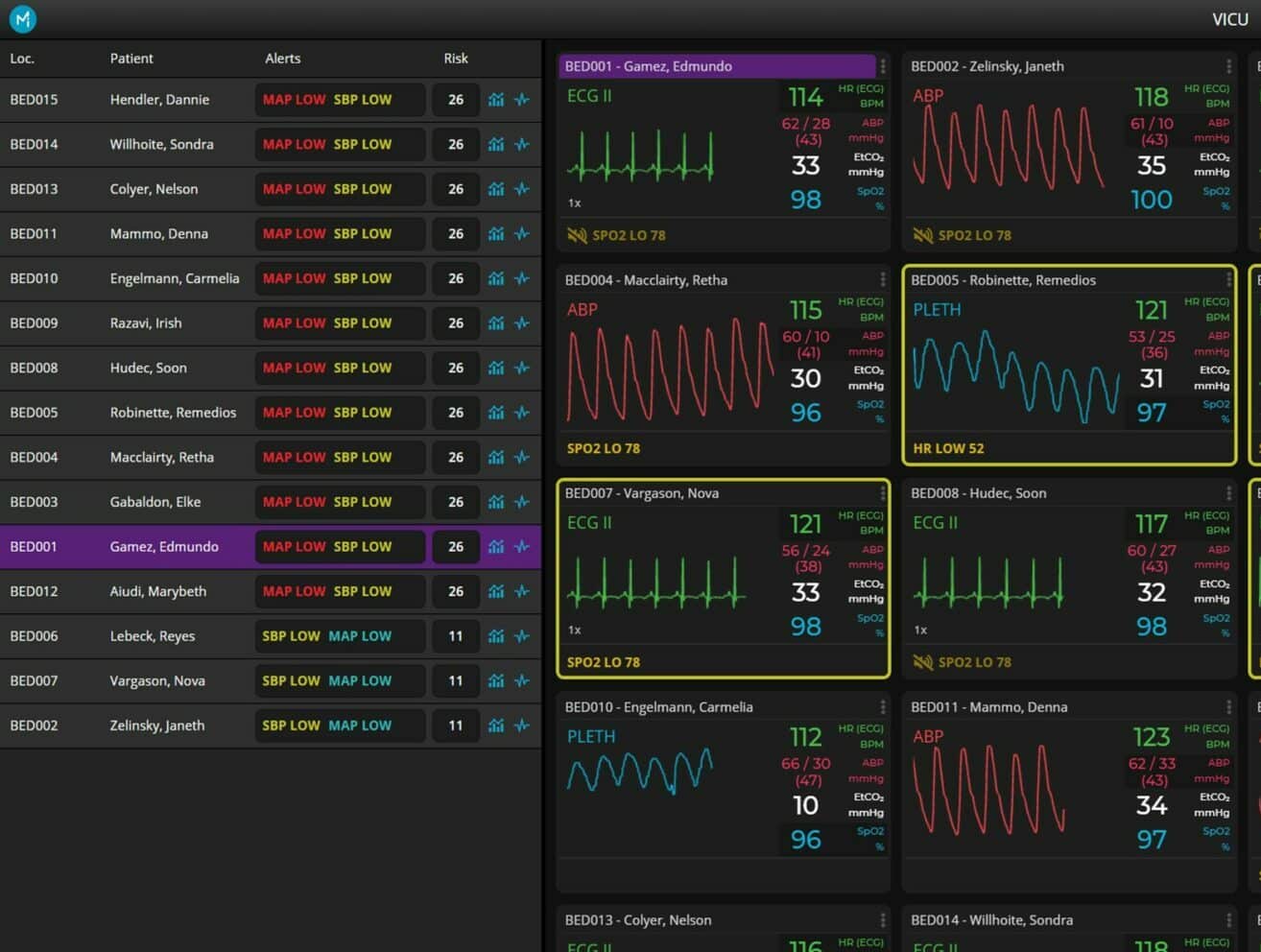
- Sickbay brings bedside waveforms, vital signs and electronic health record information into a shared view.
- Hospitals use that foundation for remote monitoring, telemetry, research and documentation.
- The commercial bet: make existing devices work together, then sell the software that makes their data useful.
The machines were talking. Who was listening?
Think of a waveform as the moving trace behind a number. A heart rate gives you a count; an ECG waveform gives you a pattern. Sickbay gathers these detailed signals from connected bedside equipment, synchronizes them and keeps them available for review. Its vendor-neutral approach matters because a hospital’s equipment rarely belongs to one tidy family. Different manufacturers, different departments and different purchasing decisions must somehow describe the same patient.
The platform combines monitoring data with medication and laboratory information from the EHR. Clinicians can consult near real-time signals and historical trends through a shared interface. MIC calls this a single point of integration. The attraction is practical: fewer separate views to reconcile when someone needs to understand a changing condition.
A hospital’s memory, rented as software
MIC occupies the space between medical equipment and the people trying to use its output. It sells enterprise software to hospitals and health systems, with subscription licensing and implementation work. The users extend well beyond an intensivist: nurses, telemetry technicians, researchers, quality teams and administrators all have reasons to revisit the same record.
Its product family makes those differences explicit. Sickbay Core supplies integrated monitoring and reporting. Telemetry supports centralized monitoring, waveform annotation, rhythm review and shift communication. Virtual Ops adds configurable risk indicators for remote surveillance. Analytics gives clinical and research teams access to stored monitoring data for investigations and application development. A saved signal can become tomorrow’s research material without first requiring another collection exercise.
The emergency that shortened the timetable
In March 2020, Houston Methodist deployed Sickbay for a virtual ICU. Intel’s account says COVID-19 patients arrived within a day of go-live. The hospital could activate monitoring for additional COVID-19 ICU beds in minutes, and staff could remotely watch up to 180 patients from its command center, conference rooms and offices. Those were monitoring capabilities, rather than a promise that software could supply the people or equipment every bed required.
The economics were unusually concrete. Under the April 2020 Scale to Serve program, Intel agreed to fund implementation fees for the first 100 qualifying hospitals; MIC waived their first 90 days of subscription licensing. That offer removed an immediate purchasing obstacle. It also made the underlying business model plain: deployment first, recurring software fees thereafter.
In a later account, Houston Methodist innovation executive Michelle Stansbury described the pandemic accelerating a two-year virtual ICU project into six months. The plan already existed. The crisis changed its urgency. Other organizations can copy the sequencing: connect the data, establish the remote workflow, then expand coverage as the operational need grows.
The unglamorous work pays the bills
Some of Sickbay’s appeal involves less cinematic work than a virtual ICU. ECG strips have to be recorded, measured and placed in the medical record. MIC’s own assessment estimated that an average 150-bed hospital could spend more than 12,000 labor hours and $400,000 annually on manual strip handling. Treat that as a vendor estimate, not a universal hospital benchmark. It explains why documentation automation belongs in the pitch alongside clinical surveillance.
Investors have financed that expansion. DCVC led an $11.9 million Series A in 2019, with Intel Capital and the Texas Medical Center Venture Fund participating. In November 2022, MIC announced $17 million in Series B equity plus $10 million in debt. Catalio and Intel Capital co-led the equity; Catalio supplied the debt financing. The announced purpose included expanding product specialists and client engagement, the people needed to make hospital installations useful.
A platform is only as useful as the response
There is an important boundary around the sales story. The FDA cleared the Sickbay Clinical Platform in May 2015 under a physiological-monitor classification without arrhythmia detection or alarms. Clearance establishes a regulatory footing for the device; it does not certify every subsequent prediction or prove a particular reduction in mortality.
Additional analytics can arrive through partners. In May 2023, Fifth Eye announced that its Analytic for Hemodynamic Instability was available through Sickbay. The partner describes software that detects, trends and predicts instability from physiological data. This illustrates MIC’s market position: an integration and distribution foundation on which other specialists can put their tools.
The obvious alternatives are manufacturer-specific monitoring environments, separate virtual care systems and custom hospital integrations. MIC’s argument is that one shared data foundation can serve several jobs. Whether that works locally depends on connected equipment, reliable data access, usable workflows and staff who can act on what they see. A remote view cannot perform an intervention.

Keep the signal. Make the next question cheaper.
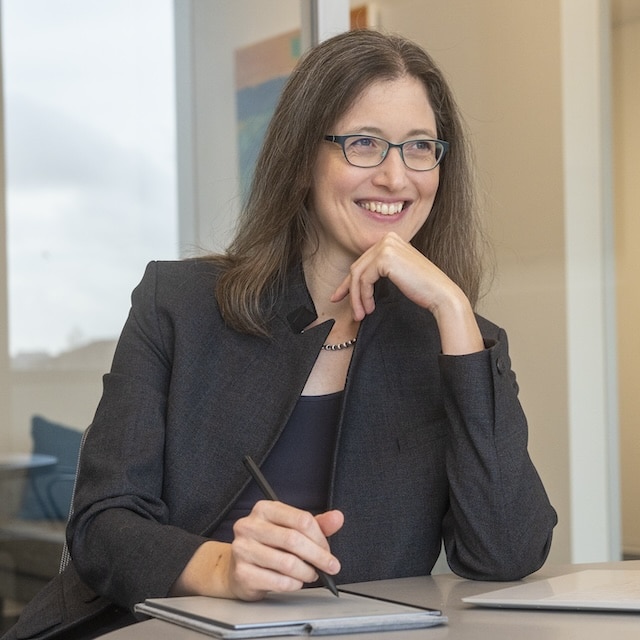
Co-founders Emma Fauss and Craig Rusin established MIC in 2010. Their engineering and physiological research backgrounds help explain the emphasis on detailed data. Investor DCVC described new-employee training in 2019 as beginning with understanding the human roles inside an ICU. The machinery needed a human introduction.
“Some people’s noise can be some people’s signals.”Emma Fauss, Sickbay Sessions, April 2025
That principle supplies a useful lesson beyond hospitals: preserve information before deciding all the questions it should answer. MIC’s recent writing extends the argument to cardiac research, neonatal care and earlier recognition of deterioration. The company’s most interesting promise remains modest enough to examine: when the next question arrives, the patient’s history should still be there.