Erik Huberman entered commercial real estate in 2008, about a week before Lehman Brothers collapsed. He remembers earning $350 in his first year. As introductions to capitalism go, it had the virtue of brevity: a degree, a job, and an economy that had apparently made other arrangements.
Years later, the Hawke Media co-founder would sell growing businesses something he had once needed himself: a practical way to move forward when the available options were awkward. His agency offered marketing capabilities a company could buy separately, rather than assembling an entire department before it could afford one. The proposition was plain enough to survive a sales meeting.
Huberman’s route there ran through music, subscription clothing, consulting and a childhood ambition to own a guitar. It is a career with several changes of costume. The recurring character is a salesman trying to work out what somebody needs, what they will pay for it, and who will actually do the work.
A guitar, then a very small balance sheet
The guitar story begins with a child’s desire and a father’s refusal to finance it. Huberman gathered items he considered unused from around the house, put them in a garbage bag, and went selling around the neighborhood. His parents supplied the inventory, if not necessarily the purchasing authorization. The distinction would interest any finance department.
He also bought and sold Beanie Babies. Childhood enterprise gave him an early encounter with margins and demand, without requiring anyone to say “customer acquisition” at the dinner table. Music remained part of the picture. Selling things was initially a means of getting closer to an instrument, rather than a grand declaration of a future in commerce.
He graduated from Oak Grove School in Ojai in 2004. His affectionate memories of the place include concerts and student performances at the Pavilion, where making something was an occasion for collective encouragement. He later recalled the freedom classmates seemed to feel about pursuing different kinds of lives. Ambition could mean building a business; it could also mean travel or returning to work at the school.
That makes a useful companion to the sales stories. A supportive audience mattered, too. Before he had clients, he had seen a community gather to celebrate somebody having a go.
A terrible week to enter real estate
At the University of Arizona, Huberman’s business education extended beyond classes. He sold kitchen knives and worked with a partner on storm-drain filtration. The latter offered a real commercial possibility, but he chose to return to college rather than make it his permanent occupation. He could recognize an opportunity without wishing to spend his life inside it.
Graduation came in 2008. Commercial real estate followed, with the timing of a dinner reservation made aboard a sinking ship. The $350 year supplied an unusually clear signal to reconsider. His next move took him toward an online music venture, Fame Wizard, bringing an old interest into a new line of work.
E-commerce followed. Swag of the Month sold a recurring delivery of apparel, turning an ordinary purchase into a subscription. A later chapter brought him into the startup incubator Science and work with businesses including Ellie.com. These were experiences in selling actual products, where a campaign eventually had to answer to an order.
The practical education accumulated: finding customers, getting their attention, asking them to buy again. Eventually he began advising other brands. Consulting made his experience portable. It also exposed a frustrating gap between giving a company a sensible plan and finding the people who could put that plan to work.
Graduation, real estate and a market crash.
Hawke Media begins with a flexible offer.
The Hawke Method puts the framework in print.
Advice needed a pair of hands
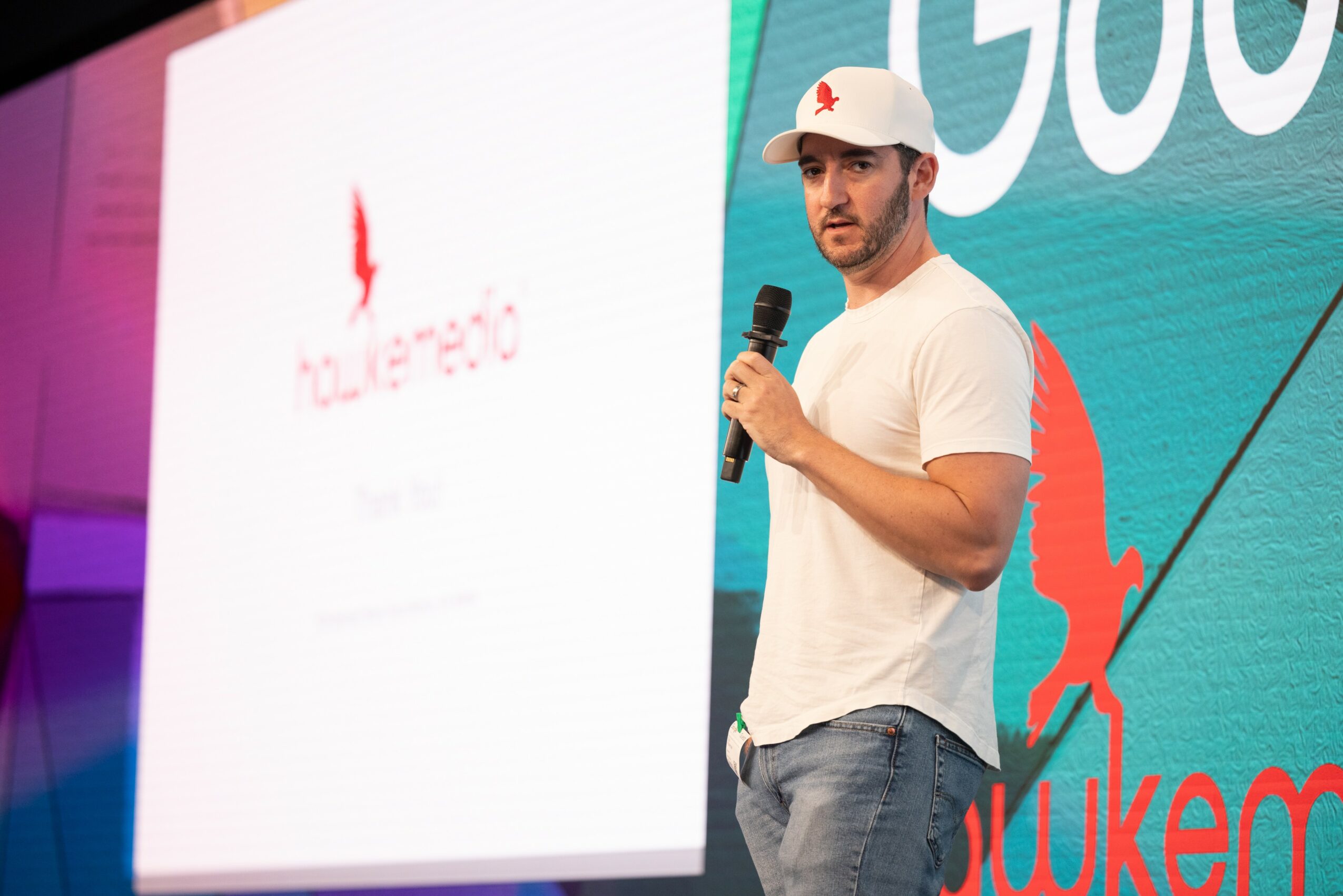
Hawke Media, co-founded with Tony Delmercado in 2014, grew from that gap. A business could need an email specialist, paid advertising help or marketing leadership without being ready to employ every one of those people. Huberman assembled specialists and offered clients a way to use the capabilities their circumstances required.
The arrangement carried a particular view of the customer. A growing business has changing needs, limited cash and very little appetite for managing an unwieldy roster of suppliers. Long commitments can make an otherwise sensible purchase difficult. Hawke’s early pitch made the terms part of the service: selectable work, flexible capacity and month-to-month relationships.
In January 2016, when he announced his inclusion in Forbes 30 Under 30, Huberman said the company had reached 44 people in less than two years. He credited the team. The short announcement also emphasized the absence of outside funding and long-term customer contracts. Even in a celebratory moment, he was explaining how the business worked.
He has continued to describe the agency as built without outside capital or debt. That makes expansion a series of decisions about what current operations can support. New hires and investments have to justify themselves. A company selling access to expertise must first decide how much expertise it can afford to put on its own payroll.
Three words to keep the work honest
In 2022, he published The Hawke Method with Morgan James. Its organizing ideas are awareness, nurturing and trust. The attraction of the framework is that each word describes a different obligation. Being noticed gives a business an opening. Continuing the relationship and earning confidence require more work.
Think of the familiar experience of seeing a product advertised, leaving without buying, and encountering it again later. The second meeting is part of the commercial story. So is the moment someone looks for a review or asks a friend. Huberman’s framework gives those encounters places in the plan, instead of letting the advertisement take all the credit.
It also makes the conversation less dependent on a particular platform. Advertising tools change. A customer still needs an introduction, a reason to remain interested and grounds for believing the promise. For a founder who has worked through several generations of online selling, there is practical value in language that will outlive a dashboard redesign.
Awareness
Give a potential customer a first encounter.
Nurturing
Keep the relationship useful over time.
Trust
Give the customer reasons to believe.
The data side developed alongside the teaching. In 2022, Huberman described Hawke AI as a way to compare a company’s marketing performance with its industry. Benchmarking addressed an ordinary managerial problem: a number has limited meaning until somebody supplies context. A tool that helps locate the problem can make the next conversation more productive.
By September 2026, his attention included the way AI-generated answers affect brand discovery. He argued for a wider presence across the places where customers form opinions, alongside content that has something to say. The technology could accelerate production. The responsibility for an interesting position still belonged to the people using it.
“AI can make content creation faster, but it can’t replace having a point of view.”Erik Huberman, September 2026
The company gets bigger. The promise stays personal.
The agency also opened a route into investing. Hawke Ventures launched in 2018, extending Huberman’s work into the tools and companies around marketing and commerce. For an operator, the attraction is understandable: a new product can benefit from access to people who have immediate uses for it. Distribution and feedback become part of the relationship.
Acquisitions brought another form of expansion. During the year preceding his June 2025 LA500 profile, Hawke had added half a dozen agencies, including Irvine’s Blue Light Media. Geography and specialist knowledge could arrive together. Each purchase also brought established relationships that needed looking after.
On October 13, 2026, Hawke announced the acquisition of Minneapolis-based Rocket55, calling it the company’s largest deal to date and its 26th acquisition. Rocket55 added capabilities including search, paid media, web development and revenue operations, along with a base in the Midwest. The announcement described Hawke as having worked with more than 6,000 brands.
Scale introduces a demanding test of the original offer. Buying marketing help should remain comprehensible even as the organization providing it becomes more complicated. A founder can announce the addition of a whole agency in a sentence. Making its people and expertise useful to an individual customer requires considerably more patient work.
Still asking for the next audience
Huberman’s public working life includes another role: interviewer. He launched HawkeTalk in 2020, and its guest list has included Rachel Zoe, Toni Ko, Daymond John, Gary Vaynerchuk and Rob Dyrdek. Conversations about how people built their careers sit naturally beside his own habit of changing direction.
There are glimpses of a life beyond the agency, too. He identifies Ojai as his hometown and Santa Monica as his residence. He enjoys travel, with a particular affection for Mexico. The child who wanted to make music has become comfortable speaking to an audience, even if the subject has shifted toward customers and companies.
His next ambition is to make Hawke Media a household name. It is a curious aspiration for someone whose daily work helps other names become familiar. He now gets to apply the same questions to his own company: who needs to hear about it, what will keep them interested, and what will persuade them to trust it?
The guitar, at least, required a simpler sales plan. Find something to offer. Knock on a door. See whether anybody answers.
More from Erik’s working life
Read, watch and follow.