A designer finishes a page. The photographs are right. The type is right. The campaign is ready. Then the page joins a queue. Someone must translate the design into a working website, fit it to the store, check it on a phone, and publish it. The creative work has finished; the waiting has begun. Maker has built a business around shortening that uncelebrated interval.
- Make and improve pages on the website you already run.
- Bring a prompt, a URL, a screenshot or a Figma design.
- Keep brand rules close, edit directly, then test the result.
- Monthly plans start at $30; the current trial lasts 14 days.
The queue was the problem
Consider Good Earth, the Indian lifestyle retailer whose collections require their own visual treatment. In Maker’s account, the design team had ideas and assets, but each landing page still needed a developer. Campaign deadlines kept arriving. A reusable template could speed things up, but the collections were supposed to look different. Uniformity would have solved the wrong problem.
Good Earth adopted Maker Pages. A designer could arrange the layout, imagery and typography, then take the page live. Maker reports more than 1,000 custom pages over a seven-year relationship, with a single designer handling the work. The useful number is the one. The same person could carry an idea across a boundary that previously required a handoff.
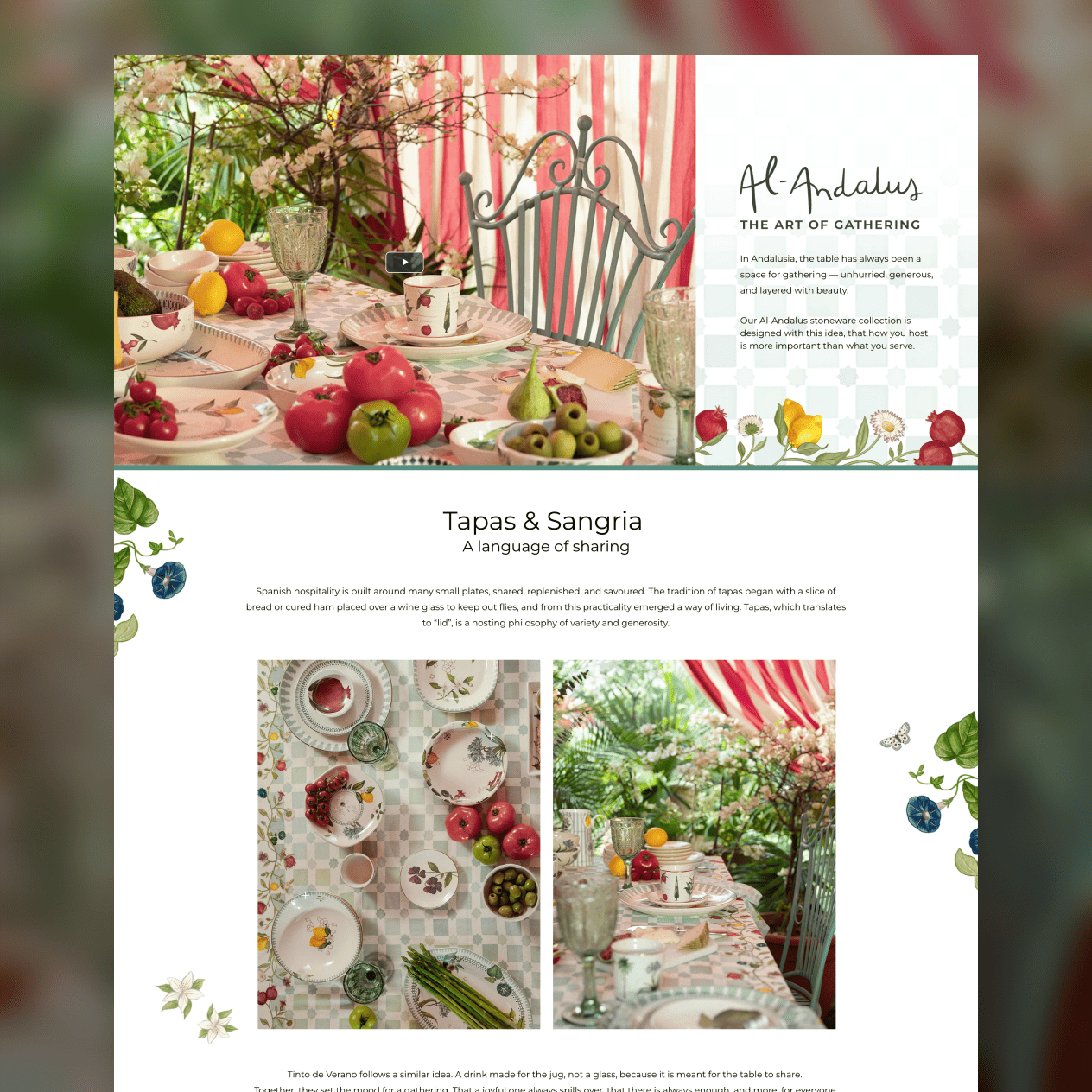
This is a more practical way to understand no-code software than counting how much code disappears. A business is buying the ability to change something when the change matters. A seasonal collection does not become more timely while it waits for an engineering slot.
Keep the site. Change the work.
Founded in 2011 by Bhanu Sharma, Maker now describes itself as an experience agent for an existing website. Sharma previously held product roles at Adobe and Macromedia, according to his founder profile. That history puts design tools and publishing workflows in the same frame. Maker’s current proposition brings generation, editing and deployment into one browser-based environment.
There is a revealing explanation on its SiteAgent page. After helping launch thousands of pages, the company says it learned that much of the work begins with improving what is already live. Its compact statement of the problem: “A site is never done.” An established retailer has a catalog, a checkout, campaigns and customers. Asking it to begin again is a substantial demand.
“A site is never done.”Maker / SiteAgent
Maker works around that existing investment. Its advertised compatibility includes Shopify, WordPress, Magento and other content and commerce systems. Teams can create pages, add sections or build interactive components. A product comparison, an FAQ or a calculator can become a discrete project. The whole store need not become the project.
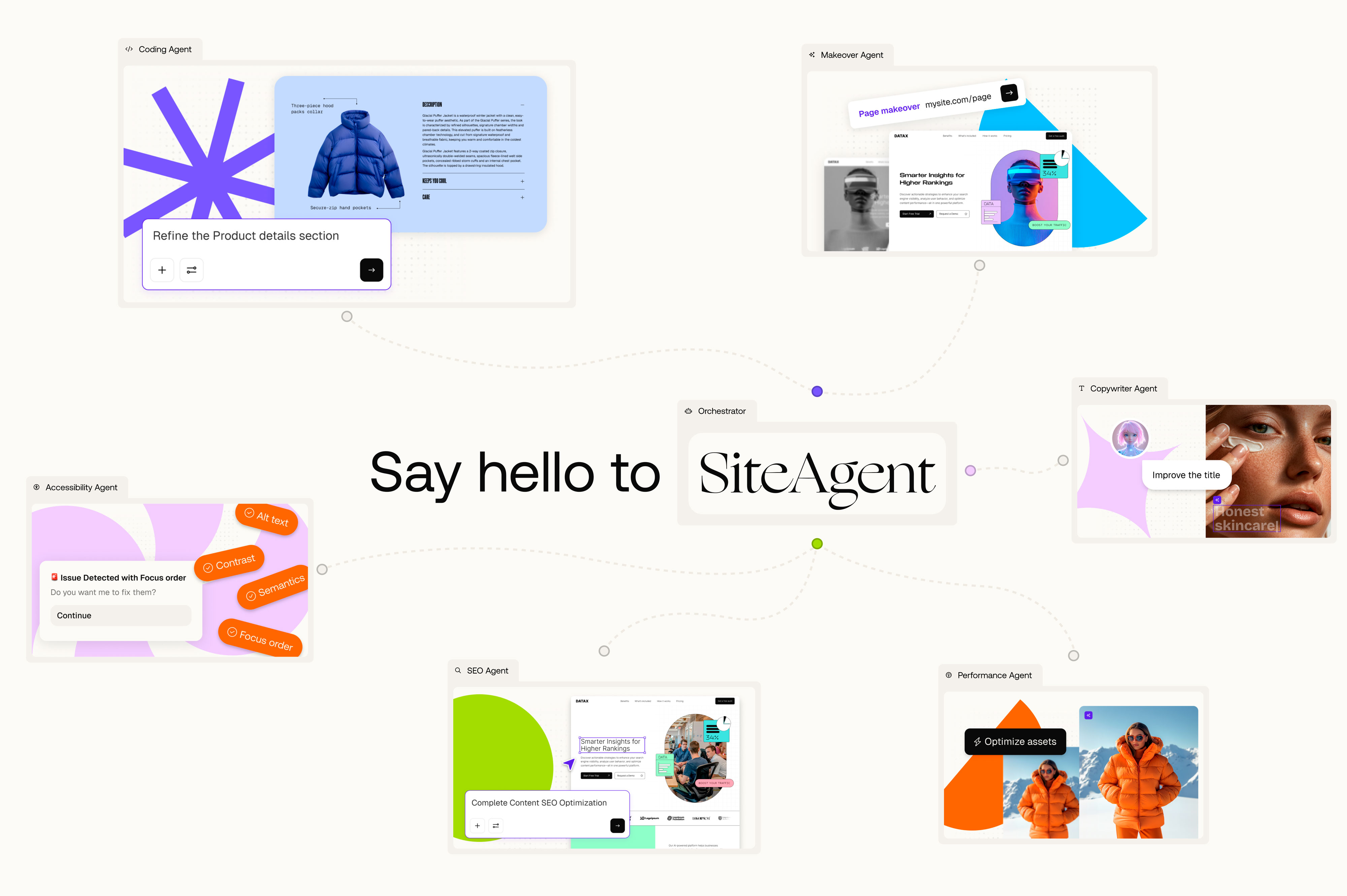
The starting material can be a plain-language request, a page URL or a Figma design. Style Guides capture colors, typography and other brand rules for reuse. Makeover audits a supplied page and generates a revised version for review. The current media tools also offer product imagery and short videos. This is a collection of production tasks assembled around the website.
There are useful seams in the machinery. Figma imports are static by default; interactions must be added afterward. Maker also retains a visual editor. Moving an image or fixing a link does not always deserve a conversation with an AI. Direct editing and generation serve different moments in the same job.
The page has to earn its keep
For commerce teams, publication is only the halfway mark. Speedway Motors wanted to know whether richer product content changed buying behavior. Maker’s case study describes a 50/50 traffic split across product pages, comparing enhanced content with standard versions. Results were tracked in Maker Optimize and Google Analytics.
What changed after richer content?
Indexed comparison, not dollar values. Customer-specific results reported by Maker.
The headline results were a 51% lift in revenue per user and a 15% lift in conversion rate. Those are Maker-published, customer-specific findings. They establish a reason to investigate richer content in that setting, rather than a promised return for every store. A different audience, product or baseline could produce a different answer.
The experiment is the part another team can copy. Keep a standard version. Give the alternative a defined share of visitors. Connect the measurement before launch. Maker’s testing product supports variants, traffic allocation and revenue reporting through GA4. That makes the creative decision answerable to customer behavior.
Yogasleep illustrates another use. Already a Maker customer, it used the AI tools for a rebrand spanning its homepage, landing pages and product content. Maker reports more than 50 AI-powered pages managed by one team member. Ecommerce specialist Sally Sloan puts the benefit plainly: “Maker has made it so much easier to improve our website pages.”
Thirty dollars buys a starting point
Maker sells subscriptions with credit allowances. Its current monthly list prices are $30 for Pro, $40 for Teams and $200 for Max; enterprise pricing is custom. Pro and Teams list 10,000 monthly credits, while Max lists 50,000. The 14-day trial includes 3,000 credits. Human design, development and QA help is available through its Humans&Agents service.
That places Maker between page-production tools, AI builders, experimentation software and agency work. Its distinguishing argument is the combination: improve the existing site, preserve brand context and measure the change. A sensible trial would choose one troublesome page and one outcome. Check the mobile experience. Review the generated content. Publish a controlled test.
A store with little traffic will wait longer for a useful experimental answer. More variants divide that traffic further. A team needing complex application behavior must also evaluate beyond an attractive front end. Maker’s strongest use case begins with a bounded website job and someone prepared to judge it. The software shortens the distance from idea to live page. The customer still decides whether the page deserves to stay.