Erik A. Kaiser has a favorite blue. During a demonstration of CRUSH the Memory, the voice recorder he developed, he lifted the device hanging around his neck and explained that this was the color he had originally wanted for the brand. The regular range had gone in a more conventional direction. He had been outvoted, or, as he put it, voted off the island. The blue stayed with him.
It is a pleasing complication in the life of a founder: you can organize the factory, lead the product development and make the presentation, yet still fail to get your preferred color past your colleagues. Kaiser calls his version “the founder’s blue.” Every company should perhaps allow its founder one small consolation prize.
Behind that recorder is a career spent moving between the object and the organization required to make it. Kaiser is the founder and CEO of GLAMCOR GLOBAL LLC, known for lighting equipment and illuminated mirrors. He also writes, invests and works on other products. The range makes more sense when you look at what he keeps carrying from one project to the next.
The useful thing in the wrong business plan
In 2009, Kaiser lost his construction company during the recession. His next move took him away from a business tied to a local market and toward something he hoped could sell internationally. On January 1, 2010, he moved to China to learn the LED supply chain. The first products reached the market in February 2011.
The original offering included cosmetics and a makeup kit with professional lighting. At an early makeup show, the light drew the interest. Cosmetics had competition. The supporting equipment had an audience of its own. GLAMCOR followed the demand toward lighting.
The episode has the awkwardness of a useful customer encounter. A founder arrives with an answer that has consumed time and money; the customers become enthusiastic about a different part of it. Taking that response seriously means giving up some ownership of the original idea. It also means leaving with a clearer idea of what someone might buy.
+ lighting
the light
The people using GLAMCOR eventually extended beyond makeup artists to other beauty professionals, tattoo artists and people making videos. A portable light can travel further than the category printed on its box. Kaiser’s working life began acquiring a similar portability.
A building is a product, too
The distance between construction and electronics seems considerable until Kaiser describes his old work. He had managed mid-rise residential and mixed-use construction, coordinating trades and a dense succession of details. He regarded that work as a form of manufacturing. A building simply makes an unusually inconvenient prototype.
That background gave him a way to think about production when he arrived in China. It did not supply every technical answer. It did supply an appreciation for dependencies: one decision constrains another, a detail missed early becomes expensive later, and the finished object is only as reliable as the work behind its surface.
GLAMCOR’s official description of its business places manufacturing in Shenzhen, within the LED supply chain. It reports distribution in 85 countries. Those are two different kinds of reach: proximity to the people and parts needed to make the product, and access to the people who will use it.

The factory behind the next idea
Kaiser describes an operation that began in 1,000 square feet in Humen Town, Dongguan, and developed into 60,000 square feet across Shenzhen and Dongguan. He says the ventures share a management structure, with much of their work handled internally. A new brand can draw on an existing organization rather than beginning every function again.
His inventory of capabilities has the unromantic specificity of someone expecting to use them: plastic injection molding, circuit-board assembly, engineering, programming, printing, assembly and testing. The exceptions are equally informative. He leaves paper packaging production, sewing and certain extrusion work to outside specialists.
There is judgment in deciding what to own and what to buy. A factory does not become more useful merely by insisting on doing every task. The point is to have enough control over the important work while recognizing where another operation can do something better.
- 01DesignProblem, shape, use
- 02EngineerHardware + software
- 03MakeAssembly + testing
- 04DeliverPackaging + distribution
This helps explain the movement from beauty lighting to CRUSH. The customers and the use cases differ, but parts of the practical machinery can carry over. An idea for a recorder enters a workplace already familiar with turning drawings into manufactured objects.
The pallet belongs in the design meeting
Kaiser’s account of product development includes a question that rarely makes the advertisement: can a different shape fit more units on a pallet? The answer affects shipping costs and margins. It belongs to the same design process as the experience of holding the object.
He also describes working on packaging artwork and instruction manuals. These are the points where a private idea becomes someone else’s possession. The package must travel; the instructions must make sense; the device must behave without its inventor standing nearby to explain what he intended.
A light and a voice recorder both invite the user to concentrate elsewhere. The artist wants to see the work. The person with a thought wants to preserve it and continue the day. Equipment earns its place when operating it requires less attention than the problem it is meant to solve.
Two and a half years for a quick thought
By March 2024, Kaiser was preparing CRUSH for its public introduction. He wrote that development had taken two and a half years from concept to prelaunch, considerably longer than the year or less he had anticipated. Prior experience had given him resources. The calendar still had its own opinion.
His explanation of that development is unexpectedly literary. He imagines the experience behind a product as a library, a room containing the accumulated material that a casual visitor never sees. A finished object reveals little of the decisions, revisions and old lessons that helped create it.
“CRUSH was never an epiphany.”
Erik A. Kaiser
The metaphor suits a career that keeps changing its apparent subject. Construction, lighting and recording devices can look like separate stories from the outside. For the person doing the work, yesterday’s project becomes part of the material available for tomorrow’s decision. The library keeps acquiring shelves.
By September 2024, Kaiser was demonstrating CRUSH again, discussing the app and the final stages of hardware manufacturing. The product combined a recording device with software intended to transcribe and organize what people said. The simple action at the front depended on a longer chain behind it.
The launch needed its own machinery
Making the product left another problem: explaining it. Kaiser’s April 2024 account of promoting CRUSH describes putting up a landing page the previous month and introducing the idea through his audience on X. He showed uses for the recorder and discussed why he had spent years developing it.
He credited Ross Simmonds’ book Create Once, Distribute Forever with helping him rethink the work. A longer video could become shorter clips, a discussion of the book or material for a written post. Distribution required choosing places where the intended audience already spent time.
The approach resembles his manufacturing structure. Build something useful, then find sensible ways to reuse the work. A video does not need to be discarded after one appearance any more than an operating team needs to be rebuilt for every brand.
Learning the job behind the title
Kaiser has also turned his attention to the language founders use about themselves. He writes candidly about adopting the CEO title before he had accumulated the experience he now associates with it. In his telling, hiring, managing and organizing the business gradually supplied the substance.
That concern appears in For Office Use Only, his book about the different perspectives employers and employees bring to the same workplace. He announced a second edition in 2023. The subject sits naturally beside product development: people need a working arrangement around them if the work is to keep moving.
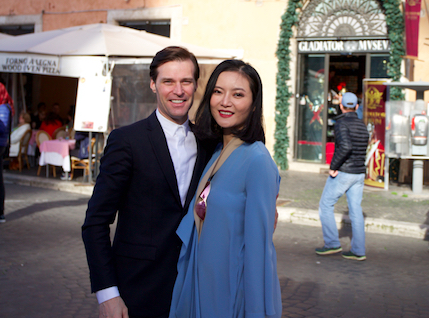
Wanchen is part of that arrangement and of his life outside it. They met in China in 2010 and became spouses and GLAMCOR co-owners. A business partnership and a marriage share a calendar, while making rather different claims on the people inside them.
His ventures now offer advice to other founders, including those facing manufacturing trouble, difficult partnerships or marketing that consumes money without resolving the underlying problem. His stated investment interests include businesses where the existing operation can help develop and manufacture a product.
There is a recognizable ambition in that offer: to make the experience transferable. Kaiser moved countries to learn how to build one kind of business. The factory, the team, the book and the next device all suggest a continuing interest in what can be carried forward. Sometimes it is a production process. Sometimes it is a lesson in management. And sometimes, when the regular colors have been chosen, it is a blue recorder kept for himself.