Twenty-five years is a leisurely interval between joining a company and becoming its chief executive. It is longer than many cars survive. For Eric Sills, who joined Standard Motor Products full-time in 1991 and became CEO in 2016, it was also time to accumulate an unusually practical education: quality assurance, ignition coils, oxygen sensors, product management and global operations. The family name was already on the organizational chart. He still had a considerable amount of organization to learn.
Sills is the great-grandson of Elias Fife, who founded the automotive parts business with Ralph Van Allen in New York in 1919. His father, Lawrence, known as Larry, preceded him as CEO. Eric eventually became the fourth chief executive in the company’s history. That is a small cast for a business that had already outlived several generations of automotive technology.
The interesting question is what such continuity is good for. A replacement-parts company cannot preserve its inheritance by continuing to make precisely what its founder made. Cars change. The parts that fail change with them. Sills’s career has been spent inside that awkward bargain: keep the institution recognizable while changing what it knows how to do. A family photograph can stay in its frame. A product catalogue requires rather more attention.
An education with a factory attached
His academic qualifications are straightforward: a BA from Bowdoin College in 1990, an MBA from Columbia University in 1998, and, later, Harvard Business School’s Advanced Management Program. The operating education is more geographically adventurous. In 1993 he worked at three suppliers in Japan, studying manufacturing techniques. He subsequently held an industrial engineering role and managed the coils business.
From 1996 into early 1998, his work took him to Puerto Rico, first managing the ignition business unit and then working on an implementation project. Next came oxygen sensors. He moved a product line from AlliedSignal’s Ohio operation to a facility in Wilson, with responsibility for staffing it and bringing it into operation. These were assignments with tangible results to deliver: a working facility, a functioning product line, a team capable of running it.
By 2004, he was leading the BWD integration team following Standard’s purchase of Dana’s engine management business. His responsibilities had already crossed manufacturing, distribution, marketing and quality. The route helps explain why later biographies devote so much space to operations. Before Sills was responsible for the whole business, he had repeatedly been responsible for making particular pieces of it work.
- 1991Joins full-time
- 2006VP, Engine Management
- 2013VP, Global Operations
- 2015President
- 2016Chief executive
- 2023Board chairman
The troublesome advantage of a familiar surname
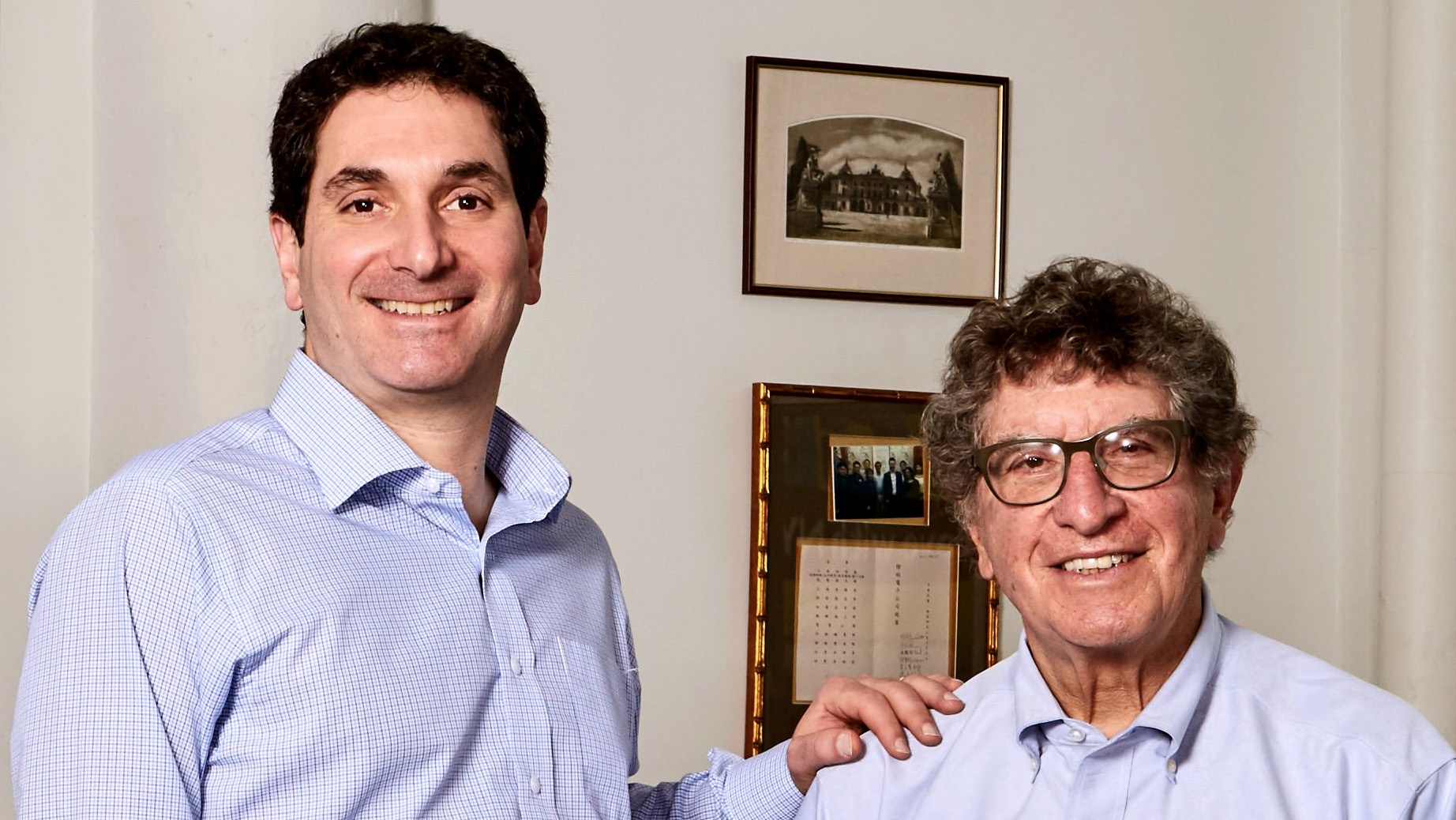
Family succession supplies an introduction and an audience. Some of that audience may have decided what it thinks before the successor opens his mouth. Sills has spoken candidly about the problem. He described supporters, skeptics and colleagues willing to assess him on his own merits, and the work of bringing the first two groups toward the third.
His description of himself was a “hands-on factory guy.” Larry, in his telling, brought the salesman’s skills. Their shared principles allowed different temperaments to coexist. Eric also described the transfer of authority as gradual, with overlapping responsibilities and continued discussion, rather than a single decisive weekend.
There is a pleasing restraint in his account of the next generation. Speaking in 2020, he said his two sons had done summer internships, but faced no pressure to join. He said the same had been true for him. For all the weight attached to succession, he left room for his children to choose something else.
A very short instruction for a very long business
When he became president in February 2015, the board was appointing someone already responsible for manufacturing, distribution, engineering and supply chain management worldwide. Its announcement credited his leadership with integrating eight acquisitions over the previous three years, expanding capacity and strengthening the supply chain. The promotion widened his exposure to sales, marketing and finance.
He became CEO in March 2016 and chairman in May 2023. The dates matter because the succession occurred in stages. His experience broadened before his authority did. There was room to learn additional parts of the business before becoming responsible for all of them.
One lesson he attributed to his father was compact enough to put above a factory clock: “Always take the long view.” He also emphasized respect for employees and avoiding shortcuts. These principles are easy to applaud and harder to translate into decisions. In a public company, the long view has to survive regular encounters with quarterly results.
For Sills, the practical test is whether patience produces useful capabilities. A manufacturing business needs equipment, engineering knowledge, distribution and people who understand the products. Those commitments extend beyond a reporting period. His career offers a fairly literal example of how much time the people part can require.
“Always take the long view.”
Eric Sills, on a lesson from his father, 2016
The customer is waiting for a working car
The automotive aftermarket begins with a familiar inconvenience: something on an existing vehicle needs attention. Standard supplies replacement components through retailers and distributors, while its Engineered Solutions business serves vehicle and equipment manufacturers. The work is less photogenic than launching a new car. It is also closely connected to whether an older one can leave the repair bay.
Sills’s public conversations return to the knowledge surrounding a component. On Remarkable Results Radio, his discussion with Carm Capriotto covered electric and hybrid vehicles, research and development, specialized knowledge, technician education and driver-assistance calibration. These subjects belong together. As vehicle systems become more complicated, supplying the physical part leaves a substantial amount of work still to do.
Standard’s training effort has acquired its own audience. In May 2026, the company announced that its Standard Brand YouTube channel had passed 100,000 subscribers and received a Silver Creator Award. For a parts manufacturer, that is a useful reminder that a camera can belong in the service toolkit. The person fitting a component may need an explanation as much as a delivery.
That gives Sills’s operations background a customer-facing consequence. The chain extends from product development through manufacturing and inventory to the person doing the repair. Each handoff has to work. The driver at the end of it is unlikely to be impressed by a beautifully executed handoff anywhere else.
Subscribers to the Standard Brand YouTube channel when SMP announced its Silver Creator Award in May 2026.
When the supply chain reached Washington
On October 14, 2021, Sills testified before a House Energy and Commerce subcommittee considering American manufacturing and competitiveness. He brought the experience of a company navigating shortages and delays. The subject was national policy, but the underlying problems were stubbornly physical: materials, components, workers and transportation.
In written answers, he described shortages of resins, silicone, metals and semiconductor chips. Longer lead times collided with shipping delays and labor constraints. Standard sought substitute materials, rerouted shipments away from congested ports and sometimes paid for airfreight. It increased wages, used overtime and continued training employees. Such decisions make an abstract term like resilience look distinctly like a purchasing and logistics problem.
His advocacy extended to repair policy. MEMA recognized him with the 2022 AASA Member Advocacy Award, citing both his congressional testimony and his efforts to mobilize employees in support of the REPAIR Act. The issue concerned competition and consumers’ choice of repair providers and parts. His case linked the supplier’s commercial interests to the continued viability of independent repair.
The following year brought a more personal industry distinction. His induction into the Federated Hall of Fame made him and Larry its first father-and-son inductees. A shared surname had become a shared line in the record book, with separate careers behind it.
The family business acquires a European chapter
On November 1, 2024, Standard completed its acquisition of Nissens Automotive, adding a European supplier of engine cooling, air conditioning and engine-efficiency products. The closing announcement put the transaction at approximately $390 million, net of cash and assumed debt and subject to adjustments. For Sills, the geographic ambition had become a substantial commitment of capital.
Nissens added another operating segment alongside Vehicle Control, Temperature Control and Engineered Solutions. It also made the old questions larger. Which products travel well between markets? Where can existing manufacturing support a broader offering? How do two organizations combine without losing the knowledge that made each useful? An acquisition supplies the opportunity to answer those questions. Integration supplies the work.
The supply chain continued to evolve in 2026. In July, Standard announced a 50/50 joint venture with Techstrong in Thailand, investing in an established supplier to expand sensor manufacturing. The company connected the decision to greater control over development, quality and delivery, and to reducing reliance on China. This was another concrete choice about where the business should make things and how much of that process it should control.
The next handover is already on the calendar
By August 2026, Sills was reporting second-quarter net sales of $501.6 million. The company also reported adjusted net sales of $526.7 million, a separate measure excluding an accounting adjustment for tariff refunds. Keeping those figures distinct matters: one describes the reported result, the other management’s adjusted comparison. The business he leads now requires attention to currency, tariffs, seasonal demand and multiple operating segments.
Leadership changes provide another test of continuity. Sunil Bhandari became chief operations officer in June 2026, succeeding Jim Burke in that responsibility. Then, on October 9, Standard announced that finance chief Nathan Iles would leave later that month. Burke was appointed interim CFO effective October 30 while a permanent successor was sought. Sills emphasized that the transition would leave strategic priorities in place.
These are the less theatrical duties of a chief executive: preserve experience, bring in new experience and keep the work moving between the two. Sills spent a quarter-century preparing for his own handover. Now he manages other people’s. The family inheritance remains present, but its value depends on what happens next in the factories, in the distribution network and, eventually, in somebody’s repair bay.
Continue the conversation
Watch Eric Sills with Carm CapriottoRemarkable Results Radio · Episode 1018- Eric Sills on LinkedIn
- Standard Motor Products · Company LinkedIn · Company X · Company Facebook
- His early operating career, in 2004
- The 2020 conversation about family business (PDF, page 16)
- The 2016 succession interview
- His written congressional testimony
- The Nissens acquisition
- October 2026 leadership update