The first clue was not hiding in a laboratory or a boardroom. It was sitting impatiently in a waiting room. In 2010, when Eric Schweiger opened a dermatology practice on East 55th Street in Manhattan, he began noticing a plain mismatch. Patients lived in a world of evening errands, weekend plans and websites that stayed open after five. Many professional practices still kept bankers’ hours and communicated as though the fax machine had recently won the future.
Schweiger had one office manager and six exam rooms, rather more real estate than a new solo operation strictly needed. He had finished residency only two years earlier. He had worked hard, saved what he could and stepped out on his own after beginning his career in a New York group practice. The six-room lease was an act of nerve disguised as floor planning. Soon, it also became capacity.
What followed looks tidy when compressed into a company biography. A second office opened in the Flatiron district in 2012. By 2013 there were four. By 2017, there were 24 practices across New York and New Jersey. In 2022, the count had crossed 90. Today the group reports more than 160 offices across eight states. But the sequence makes more sense when viewed as a collection of small operational observations, each one asking the same question: where does the experience create unnecessary drag?
An education in two kinds of looking
Schweiger grew up as the son of a physician and knew early that medicine interested him. At the University of Michigan he completed his bachelor’s degree, then earned his medical degree at Albert Einstein College of Medicine in New York. During medical school, he briefly considered psychiatry. Dermatology won because it offered variety: people of different ages, a mix of procedures and decisions, and days that did not repeat themselves too neatly.
His post-doctoral training took him through New York University and the University of Kansas Medical Center, where he served as chief dermatology resident. Yet a revealing line on his résumé may be the apparent detour. Between internship and residency, Schweiger spent a gap year working on Wall Street for a biotech investment company. He later said the experience helped shape his business sense, though he credits instinct and learning along the way too.
The combination is useful. Clinical training rewards close observation of the individual case. Investing rewards a view of the system around it. Building an organization demands both lenses, sometimes before breakfast. Schweiger could see the appointment in front of him and the scheduling machinery behind it. He could also see that many doctors loved their clinical work but had acquired a second, less welcome profession in billing, staffing, marketing and office administration.
“I realized that I really like building something; I really like interacting with other doctors a lot.”Eric Schweiger, on shaping his career
The wrapper is part of the product
Founders are often told to protect the core product. Schweiger’s story suggests that the wrapper deserves equal suspicion. Expertise can be excellent while the route to it remains baffling. A service can work while access to it feels inconsiderate. His early patients wanted shorter waits, online booking, email access and appointments at times that respected the rest of their lives. Those requests were not ornamental. They were the market speaking in complete sentences.
The practice responded with evening and weekend availability and a broader approach to scheduling. Schweiger also accepted a wide range of insurance plans and, in the early years, wrote website copy himself. These choices were not especially glamorous, which may be why they mattered. The company was treating convenience as an operating discipline rather than a decorative promise.
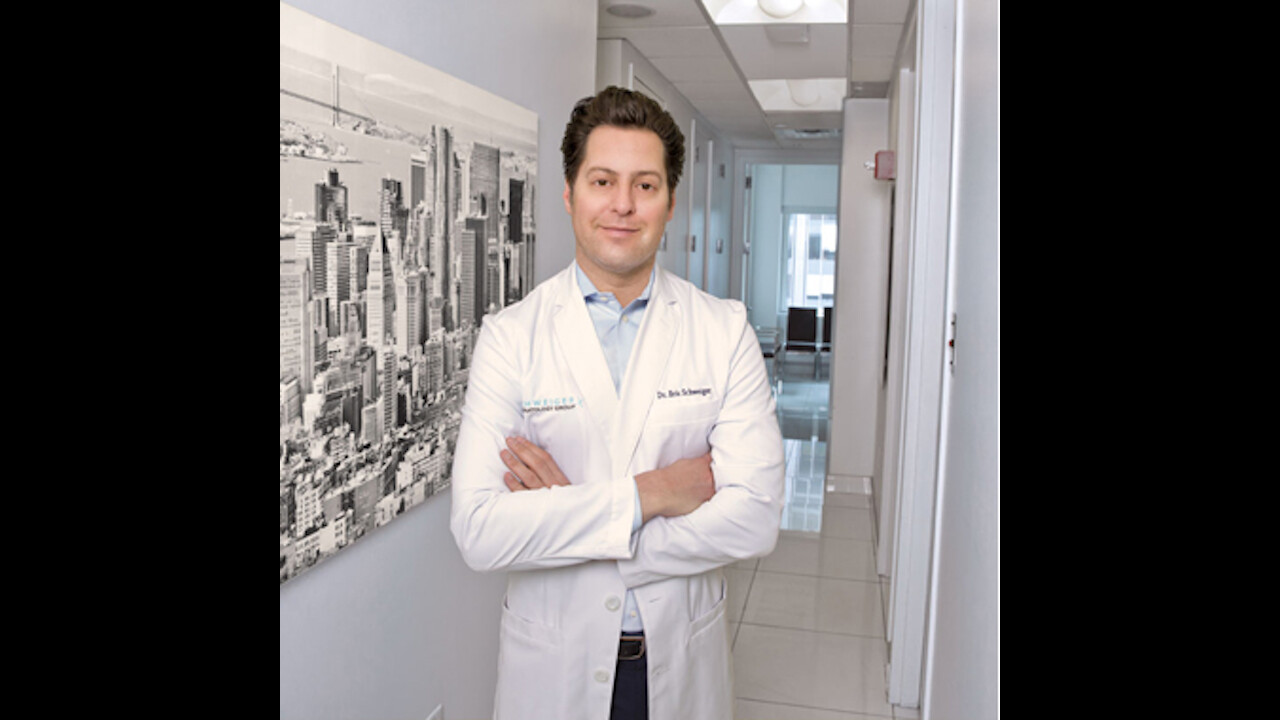
Schweiger has described the expansion as incremental rather than preordained: make the next move, recruit well and adjust with experience. That is less cinematic than a napkin sketch of an empire. It is also more recognizably how durable organizations are assembled. A second location tests whether the idea travels. A fourth tests whether the founder can stop being the only answer. An acquisition tests whether a shared logo can survive different habits.
Selected office-count milestones
A company built between two frustrations
The organization grew through new offices and by acquiring existing practices. The proposition worked on two sides. Patients gained a larger network, common systems and a recognizable approach to access. Doctors who no longer wanted to oversee every administrative detail could keep practicing while a central team handled more of the machinery. Schweiger found a company in the space between what patients wanted more of and what many specialists wanted less of.
His own calendar gradually changed. As the practice matured, leadership and administration claimed most of his time. He worked with executives on finance, marketing and operations and interacted regularly with physicians across the clinics. Yet he continued seeing patients on a limited basis. His explanation was practical: he wanted to remain connected to the work. A dashboard can reveal a trend; a day inside the system reveals where the trend came from.
There is a quiet honesty in Schweiger’s advice to other physicians. If someone enjoys seeing patients, he says, that is where the person should spend time. If someone enjoys administration, that is where the person should spend time. Career design rarely arrives with such uncluttered furniture. The trick is admitting which room you actually prefer.
The untidy apprenticeship of acquisition
Growth by acquisition introduces a different craft. A practice is not merely a collection of leases and equipment. It has rituals, loyalties, local knowledge and colleagues who remember why the printer sits in that peculiar corner. Schweiger has said the group’s first half-dozen integrations did not go as smoothly as hoped. The team learned to communicate more, set expectations and anticipate surprises.
His test for a prospective practice begins with culture. The exact service mix can differ. The physicians need to share a commitment to the patient experience, work well with colleagues and align with the broader vision. This is not soft decoration around the transaction. Culture is what operates the business when the integration checklist runs out of boxes.
“We are not perfect but have learned how to communicate throughout the process and how to anticipate unexpected challenges.”Eric Schweiger, on early integrations
The later expansion has carried the group far beyond its New York base. A 2024 acquisition brought United Skin Specialists into the organization, adding ten offices and 35 providers in Illinois, Minnesota and Missouri. The official footprint now includes New York, New Jersey, Pennsylvania, Connecticut, Florida and those three Midwestern states. In 2026, Inc. listed the company for a tenth consecutive year, a run that began in 2017.
How a short idea crosses a long map
At more than 160 offices, a founder’s personality cannot be the operating system. It does not fit through that many doors. The organization instead needs language that can survive repetition. Schweiger’s central standard emphasizes accessible service and looking at decisions from the patient’s perspective. The phrase is broad enough to travel, but its value depends on whether each office can turn it into observable behavior.
Schweiger’s ongoing faculty role at Mount Sinai and his limited clinical schedule keep one part of his career anchored in medicine. His chief-resident years and research record show the traditional physician’s path. The Wall Street gap year, self-written web copy, oversized lease and appetite for administration reveal the operator beside it. He did not abandon one identity for the other. He built a job in which they could argue productively.
The useful lesson reaches well beyond a doctor’s office. Every expert business has a layer of friction that insiders learn to tolerate and customers never volunteered to endure. Every founder eventually faces the choice between being the craftsperson, building the environment for craftspeople, or designing some honest combination of both. And every growing organization discovers that culture is easiest to discuss before it is tested.
Schweiger began by listening to what people wanted from an appointment. Sixteen years later, the map is bigger, the calendar is fuller and the administrative machinery has many more gears. The original observation still does the interesting work: respect the person’s time before asking for it. Sometimes the route from one office to 160 starts with making the front door less annoying.