The trouble with an orthopedic injury is that it arrives without regard for the architecture of American medicine. The body has one event. The system answers with a scavenger hunt: find the right clinic, wait for the right specialist, repeat the story, move the images, discover which door comes next. Ephraim Dickinson looked at that sequence and saw more than a scheduling nuisance. He saw a design flaw.
Dickinson is an orthopedic surgeon in San Francisco, trained in sports medicine and the intricate mechanics of shoulders, knees, hips, and elbows. He is also a founder. Urgently Ortho, the practice he co-founded, put specialist care nearer to the first anxious hours after an acute injury. The premise was wonderfully unornamented: when someone needs an orthopedist, let them see an orthopedist.
That sentence is easier to print than to operationalize. It asks a practice to coordinate access, imaging, diagnosis, treatment, and follow-up while preserving a clinician's time for careful decisions. It also asks the founder to think in two anatomies at once: the anatomy of a joint and the anatomy of an organization. Dickinson's career has been an education in both.
A liberal arts route to the operating room
At Williams College, Dickinson studied biology and political science. The combination now looks almost suspiciously apt. Biology concerns the mechanisms inside the body. Political science concerns people, institutions, incentives, and the mechanisms that make a system behave as it does. Years later, his work would sit exactly at that intersection.
There was sport, too, and plenty of it. His public biography places him on soccer and lacrosse fields, teaching skiing, and playing on the Williams bike polo team. Another list names rock climbing, alpine and Nordic skiing, mountain biking, CrossFit, and mixed martial arts among his interests. The collection has the appealing chaos of someone who regards gravity as a negotiable opening offer.
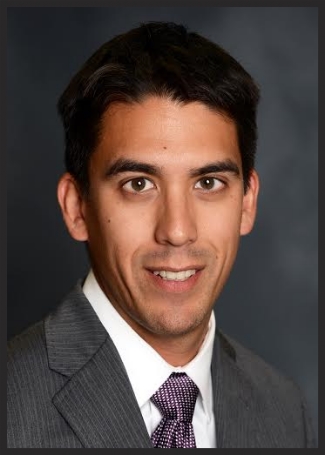
After Williams came Columbia University College of Physicians and Surgeons, where he earned his MD in 2010. He then moved west for the San Francisco Orthopedic Residency Program at St. Mary's Hospital. Residency gave him five years in the city that would later become the setting for his company. In 2015 he went to Charlotte for an OrthoCarolina fellowship in sports medicine and shoulder and elbow surgery.
The fellowship also placed him close to professional sport. Dickinson served as an assistant team physician to the Carolina Panthers and the Charlotte Knights. Football and baseball produce different rhythms, different demands, and different definitions of ready. The common discipline is specificity: an athlete does not merely want to feel better. An athlete wants to cut, throw, lift, sprint, or swing again.
“Above all else, I strive to help my patients return to their pre-injury activities and lifestyle as quickly as possible.”Ephraim Dickinson, on his approach to care
That emphasis on the life outside the clinic is the thread through Dickinson's clinical work. His listed specialties include minimally invasive arthroscopic surgery of the knee, shoulder, and hip; complex ligament reconstruction; shoulder replacement; and cartilage restoration and transplantation for the knee. These are technically demanding fields, but his public description begins with an ordinary human objective: return.
The gap between urgent and expert
When Dickinson returned to Northern California, he practiced at Tahoe Forest Health System and later Adventist Health. By 2017, he had begun leading Urgently Ortho as CEO and co-founder. His partner in the venture was Liu Cheng, identified publicly as its COO and co-founder.
The name did most of the explaining. Urgently Ortho offered a specialist destination for musculoskeletal injuries that did not politely wait for a conventional appointment. Its model brought immediate assessment closer to definitive orthopedic care. The value was partly speed, but speed alone is a courier service. Clinical judgment is the parcel that matters.
The continuity thesis
Here is the founder's insight inside the medical one: customers experience a sequence, while organizations often manage departments. Every seam between departments is a chance for context to leak out. A person repeats a history. A scan travels late. A recommendation lands without the reasoning that produced it. Each small break imposes a tax in time and confidence.
Urgently Ortho addressed the first seam, the gap between the moment of need and orthopedic expertise. But the patient's journey does not end with rapid access. Some people need monitoring. Some need physical therapy. Some need an operation. Everyone needs to know what happens next. The more complete business would have to connect the fast front door to the rooms beyond it.
An operator's question
Where in your service does a person have to begin again? The answer often identifies the handoff worth redesigning first.
One practice, fewer seams
In May 2024, Urgently Ortho and the Institute for Arthroscopy & Sports Medicine announced that they were combining as Pacific Crest Orthopedics. The new practice joined immediate care, ongoing treatment, and surgery under a shared banner. Dickinson was introduced as its CEO; his current provider biography lists him as orthopedic surgeon and medical director.
A merger can be a financial event, a branding exercise, or an attempt to make the experience on the outside match the structure on the inside. Pacific Crest presented this one as the third kind. Same-day appointments and telemedicine handled access. Multiple San Francisco locations widened the door. The clinical group extended from urgent injuries to complex procedures and recovery.
“Our integrated practice is designed to offer a continuum of care that evolves with your needs.”Ephraim Dickinson, announcing Pacific Crest Orthopedics
Continuum is a slightly starched word for a humane idea: do not make a person reconstruct the map while already carrying the problem. In software, we celebrate a smooth onboarding flow. In hospitality, we notice when the handoff from reservation to room feels effortless. Medicine has higher stakes and more necessary complexity, but the service principle survives. Preserve context. Clarify the next step. Keep responsibility visible.
Biology and political science at Williams College.
Medical degree at Columbia University.
Orthopedic residency at St. Mary's in San Francisco.
Sports medicine and shoulder-elbow fellowship at OrthoCarolina.
Founder and CEO of Urgently Ortho.
Pacific Crest Orthopedics brings immediate, ongoing, and surgical care together.
The surgeon as system designer
Dickinson's work away from San Francisco adds another dimension. His professional biographies describe medical work with Health Volunteers Overseas in Tanzania, a period focused on orthopedic trauma and surgery. They also describe work with pediatric patients in Cape Town and international projects in China, India, and Greece. Different clinical environments expose different constraints. They make assumptions visible, especially assumptions about what equipment, specialists, and follow-up will be available.
Back home, the constraints are different but no less operational. The Bay Area patient may have advanced hospitals nearby and still struggle to locate the right entry point at the right time. Access is not measured only in miles. It is measured in open appointment slots, answered questions, transferred records, and the number of people required to say yes.
Dickinson's public comments are notably practical. He speaks about personalized plans, current surgical techniques, collaboration, and returning people to activity. There is no grand theory of disruption attached to the practice. The ambition lives in the plumbing. Take a fragmented sequence and join it. Make the front door obvious. Make the next door easier to find.
That may explain why his dual identity as surgeon and operator feels coherent. Surgery rewards preparation, coordination, and a precise understanding of sequence. Operating a practice demands much the same, though the instruments are calendars, teams, locations, and protocols. One discipline repairs movement. The other removes the organizational friction around it.
A life measured in verbs
The outdoor hobbies on Dickinson's profile read like a compact manifesto: through-hiking, backpacking, mountaineering, cycling, back-country skiing, traveling. They are all verbs in disguise. They require a body to cooperate with a plan.
This is why “return to activity” is more revealing than it first appears. Medicine can count visits, images, procedures, and range of motion. The patient keeps a different ledger. Can I carry the pack? Can I take the stairs? Can I play the season? Can I work a full day? The useful outcome is specific and personal, often mundane enough to escape a spreadsheet.
A good operating model respects both ledgers. It gives the clinician room to practice medicine and gives the patient a legible path. Dickinson's arc from Williams to Columbia, from San Francisco to Charlotte and back, and from Urgently Ortho to Pacific Crest is the story of making that path shorter and more connected.
There is a lesson here for founders far beyond healthcare. Look for the moment when your customer has to become the project manager of your industry. Notice the repeated explanation, the lost context, the mysterious next step. Then build the bridge that lets them keep moving. The most persuasive innovation often feels, in retrospect, like a door that should have been there all along.