The shared inbox is an innocent-looking machine for dissolving responsibility. A request arrives. Six people see it. Everyone assumes someone else owns it. By the time the customer asks again, the message has become archaeology. Add a spreadsheet, three countries, a robotic process automation bot and a service-level agreement, and you have the sort of office puzzle Enate was built to solve.
Enate is enterprise software for orchestrating service work. It takes requests from places such as email and portals, turns them into trackable cases or tickets, routes each task according to skills, capacity and deadlines, and records the result. Managers get dashboards instead of anecdotes. Automation tools can do their piece without pretending to own the entire process. Newer AI agents classify mail, extract information from documents, connect systems and draft responses, while people remain in the approval loop.
That distinction matters. Automation completes a task; orchestration decides how tasks, systems and workers fit together. Enate is less robotic arm than factory floor manager. Its natural habitat is the unglamorous but expensive middle of a global service operation: tax, accounting, fund administration, insurance, legal work, HR, finance and business-process outsourcing. The customer is usually large enough to have queues, jurisdictions, handoffs and audit requirements - and frustrated enough to know that another spreadsheet is not a strategy.
One queue, several kinds of worker
Portal
Business system
Rules · context · SLA
audit trail
RPA bot
AI agent
01 / The originA manufacturing brain for office work
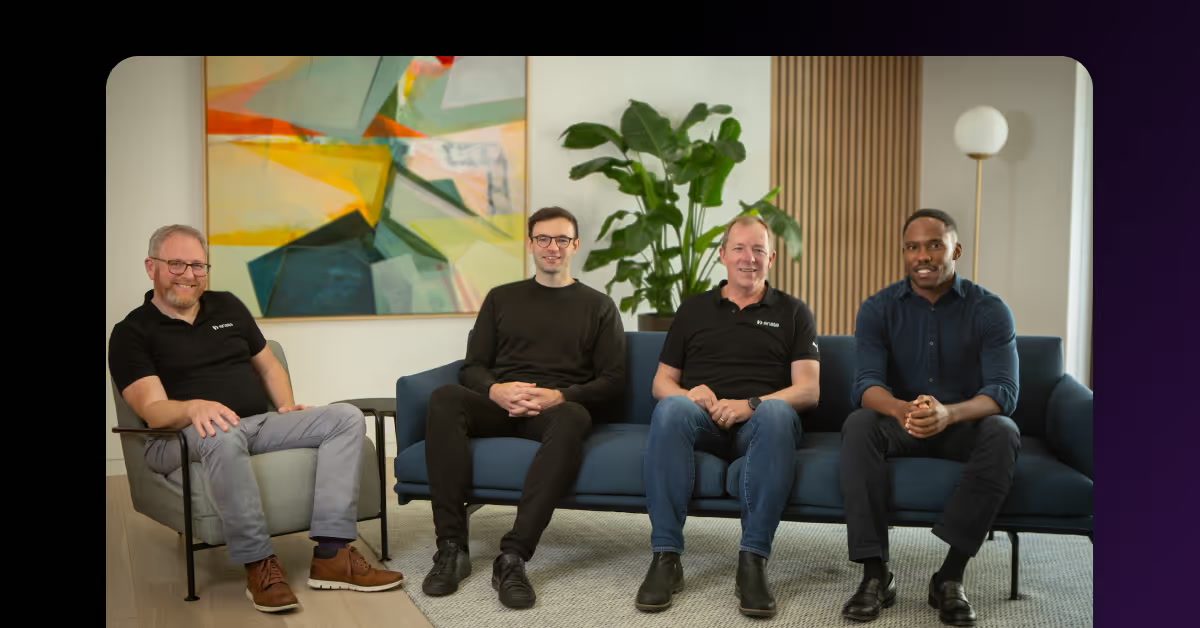
Founder Kit Cox began coding at 10, trained as a manufacturing engineer and worked at PA Consulting before building Enate. The company was incorporated in 2000, though its current account of the business points to 2013 as the start of its service-operations work and 2017 as the platform launch. That chronology is less tidy than a startup myth. The useful part is the change in Cox's thinking.
He first created the system to help businesses manage outsourcing. Then RPA grew up. According to investor Mercia, Cox saw that companies no longer needed only to coordinate people in distant offices; they needed to coordinate people and digital workers together. Enate moved toward what it called robotic service orchestration. The latest version widens the cast again: people, conventional bots, business applications and generative AI agents.
The product does not demand that a company discard its existing stack. It wraps around systems and offers APIs, webhooks and documented connections to UiPath, Blue Prism, Automation Anywhere, Power Automate and ABBYY. That neutrality is part of the pitch. A UiPath bot may copy data. A person may handle the exception. Enate is meant to remember that both steps belong to the same customer promise.
02 / EvidenceThe numbers are better than the metaphor
The strongest case for Enate is not “agentic transformation.” It is what happened when very large service organizations put ordinary work into one visible system. EY says an initial six-month deployment reached more than 500 back-office hybrid workers, delivered 75 percent faster report generation, eliminated missed emails and produced a 15 percent overall efficiency saving. The footprint later grew to 1,500 users across tax, finance and accounting, risk, conflicts and digital services.
TMF Group, which provides accounting, corporate-secretarial, HR and capital services in more than 50 countries, is the billboard result. Requests had been arriving through email, self-service and call-center tickets, leaving managers without a reliable whole. TMF consolidated those requests in Enate, connected its customer platform and UiPath robots, and let 700 citizen developers roll the system out. Enate says 4,500 people now use it; TMF reports a £32 million margin improvement associated with the program.
“Enate's orchestration solution can be likened to having x-ray vision into your operations.”Felipe Araya, TMF Group
Vistra offers the more copyable sequence. It began in entity-management operations across India, Hong Kong and Singapore. Enate spent two weeks mapping workflows and looking for manual handoff bottlenecks. More than 100 users were live after 10 weeks. Vistra started with teams handling high transactional volume but lower rollout risk, adjusted the workflows with real data, then expanded to 500 users by the end of 2025. Its published outcomes include 15 percent operational savings, 25 percent faster client onboarding and 500 percent return on investment within nine months. These are vendor case-study figures, but they are specific enough to interrogate.
03 / The productAI with a chaperone
EnateAI packages four ideas: an Email Agent to classify, analyze and respond; a Document Agent to turn unstructured files into usable data; an Integration Agent to connect systems; and a Bring Your Own Agent route for customers with another preferred model. They can work separately or inside the same workflow. The selling point is governance and context, not a digital employee costume. Enate records the case, controls the handoffs and keeps a person available where judgment matters.
That gives Enate a useful position in a crowded market. Appian, Pega and ServiceNow sell broad workflow and process platforms. UiPath, Automation Anywhere and Microsoft Power Automate increasingly orchestrate agents and robots of their own. Enate's narrower claim is that service providers need an operating layer designed around cases, SLAs, queues and global variation, deployable by operational staff without custom code. Its pricing page promises unlimited workflow management and cloud storage, AI agents as standard, citizen development and go-live in roughly six weeks.
The public price is no price. Enate quotes according to the number of people who need access, the service lines being run and the AI agents required. Consulting and AI credits add to the package. Buyers can procure it through Microsoft Azure Marketplace, potentially using committed Azure spend. Anyone comparing it with a point solution must ask for total implementation, integration, training and ongoing AI-usage costs - not merely a per-seat figure.
The business itself has been financed in stages. Northern VCT funds managed by Mercia invested £2.2 million in 2020 to develop the platform and expand distribution. Enate later described a £2 million Mercia round in 2022. In June 2025, Scottish Equity Partners made a “significant” growth investment; the amount was not disclosed. The company said it had grown more than 30 percent on an annualized basis over the preceding three years and would spend on AI, orchestration R&D and expansion in Europe, North America and Asia-Pacific.
04 / The awkward bitThe first thing AI broke was the habit of fixing it
Enate has begun applying the agent argument to itself. Cox says the ambition is a software factory where nobody writes code by hand. The revealing part is his list of what has gone wrong. Agents produce buggy code. Engineers instinctively debug the output instead of improving the system that generated it. Handoffs between an agent choosing what to build and the development pipeline can yield features nobody requested. When employees “vibe code” independently, interface consistency wanders off.
That experience sharpened the company's position: placing agents on top of an old operating model imports the old friction and adds a new layer. Enate now describes three necessary pieces - a system of record, systems of action and an orchestrator between them. This is both product doctrine and a candid admission. The software can expose a confused process; it cannot make confusion wise.
The practical lesson is pleasingly small. Start with one high-value workflow. Map how work really moves, including exceptions. Pick a lower-risk slice with enough volume to reveal patterns. Train people on what changes in their day, not on a catalog of features. Measure the result, fix the workflow and only then expand. Vistra followed that pattern. Capgemini used two rounds of testing before migration and built training from both Enate material and what the implementation taught it.
There are conditions. Enate makes more sense when work crosses teams, systems or countries; deadlines matter; volume is high; and the organization can name an owner for the process. A small team with a handful of simple requests may be buying a control tower for a quiet lane. A company with rotten source data, undefined decisions or no appetite for operational change will merely obtain a clearer picture of its disorder. Human-in-the-loop also has to be a real assignment of authority, not a phrase tucked into a slide.
05 / The companyBusy, lazy people welcome
Enate employs roughly 110 people according to supplied company data; LinkedIn places it in the 51-to-200 bracket. It is headquartered in Cheltenham, with a significant Bangalore operation and a remote-first team spread across three continents. Its published values are brisk: be simple, be open, be part of a team, be a self-starter and be a superhero in your own way.
Cox's favorite hiring type is more memorable: “busy lazy people.” Busy people take on things; lazy people hunt for the shortest sensible route. The phrase risks sounding glib until it is connected to the product. Enate is built for organizations with plenty to do and little desire to perform the same clerical shuffle forever. The company says it shares financial and investment updates internally, rewards peer-nominated employees each quarter and judges output rather than hours. Its benefits include remote work, 25 days of holiday plus public holidays and internal career development.
The market is moving toward Enate's vocabulary. RPA vendors now talk about orchestration; workflow platforms now talk about agents; AI startups now discover governance. That is validation and pressure at once. Enate's defense is operational memory: years spent modeling regulated services, a partner ecosystem, customer proof at scale and a product that does not require every old system to disappear.
Its danger is the same one facing every orchestration company: the platform must stay easier to operate than the mess it replaces. For now, Enate has chosen a wonderfully concrete enemy. Somewhere tonight, a global operations manager will open a shared mailbox, stare at 4,000 unread messages and wonder who owns Tuesday. Enate would like to sell them an answer.