Lily was a cat in Chagrin Falls, Ohio. On October 10, 2006, she became the first pet insured by Embrace. There is something wonderfully unceremonious about that beginning. A company conceived at Wharton, built around the mathematics of risk, finally had a customer who would never read the contract.
- The product: customizable accident and illness insurance for dogs and cats.
- The wrinkle: certain curable pre-existing conditions can become eligible again.
- The trade-off: you generally pay the vet first, then claim reimbursement.
For the person buying the policy, however, the contract is the point. Embrace occupies the space between an animal’s unpredictable medical needs and a household’s very predictable bank balance. Its appeal depends on making that space easier to understand.
01 Before Lily, an underwriter
Co-founders Laura Bennett and Alex Krooglik won Wharton’s business-plan competition in 2003. Bennett brought actuarial expertise. But a promising idea still needed insurance capacity. Early funding arrived in installments; the first $80,000 had to stretch across two years. Securing an underwriting partner was the bottleneck. Hiring waited.
“Without Jumpstart, there would be no Embrace.”
Laura Bennett, speaking to Entrepreneur, 2014
That long runway explains something about the business. Embrace Pet Insurance Agency administers policies; licensed insurers in the American Modern group underwrite them. The friendly consumer brand and the institution carrying the insurance risk perform different jobs. A founder copying this story should map that dependency before spending money acquiring customers.
02 The twelve-month distinction
Consider two medical histories: an infection that clears completely, and diabetes that requires continuing management. Calling both “pre-existing” may be administratively convenient. It is less useful to the owner trying to understand future coverage.
Embrace distinguishes between curable and incurable conditions. Certain resolved conditions may become eligible if the pet stays symptom-free and treatment-free for twelve consecutive months. Chronic pre-existing conditions remain excluded. Symptoms noticed before coverage or during waiting periods can count even without a formal diagnosis. The twelve months are therefore a conditional route to reconsideration, rather than a universal countdown to coverage.
Without symptoms or treatment may permit reconsideration.
A new policy does not erase an existing chronic illness.
One particularly useful service is quieter than the sales pitch. After enrolling, policyholders can request a free medical history review to learn which conditions may be excluded. It is optional, so the customer must ask. Requesting clarity before the first claim is a habit worth borrowing from this product, whatever insurance company you choose.

03 Three dials. One real bill.
The core accident and illness policy serves owners seeking help with eligible injuries, illnesses, diagnostic work, surgery and hospitalization. Hereditary conditions can qualify when they are not excluded as pre-existing. Coverage also extends into areas such as rehabilitation and veterinary behavioral treatment, subject to the contract. Owners can use licensed veterinarians without a restricted provider network.
Three choices shape the policy: the annual deductible, the reimbursement percentage and the annual payout limit. A cheaper premium can mean accepting more of the bill yourself. Rates also depend on the pet and location, and may rise at renewal. The company’s purchasing guide lists a $25 activation fee; a personalized quote supplies the premium.
Illustration only. Assumes all charges qualify, the full deductible remains, and sufficient annual coverage is available. Premiums are additional.
The sequence matters. You generally settle the clinic’s invoice, upload it through MyEmbrace or the mobile app, and receive the eligible reimbursement. Insurance reduces the eventual expense; it does not automatically supply money at the reception desk. A household unable to bridge that payment gap needs to account for it before purchasing.
04 The spreadsheet had to go
The first operational weakness documented in an early vendor case study was mundane: prior-paid claims calculations ran through Excel, with manual work causing errors. Embrace moved invoice information and calculations into a CRM-based rules system. InRule reported that adjudication time fell from over five minutes to under one, with $6,000 in monthly savings.
Those are historical vendor-reported results, not today’s reimbursement promise. Their lesson remains useful: encode repeatable calculations, identify missing information and preserve human attention for exceptions. Customers experience those back-office choices as fewer confusing steps. Missing medical records can still delay a claim, especially the first one.
05 Grooming belongs in a different pot
Wellness Rewards handles predictable spending: vaccinations, routine examinations, grooming and eligible training. Embrace explicitly identifies it as a non-insurance membership. Advertised annual allowances are $300, $500 or $700, available from the start and paid for over the membership term.
The restraint matters more than the name. Unused benefits do not roll over and are non-refundable. Cancelling after spending more than you have paid can leave an outstanding balance. This suits an owner with planned eligible expenses; buying a larger allowance on the vague hope of using it is poor arithmetic. Included PawSupport guidance offers another kind of help, around the clock, but cannot diagnose or prescribe.
06 A familiar name in a bigger family
Embrace competes for attention with Trupanion, Nationwide, Lemonade, Fetch and others. Its case rests on configurable coverage, the curable-condition distinction and services around the policy. These features merit comparison against actual state contracts, rather than a universal winner’s medal.
Ownership makes the shopping exercise more interesting. Independence Pet Holdings acquired Embrace in 2023. In 2026, IPH and Pinnacle Pet Group united as Doubtless, whose portfolio also includes Pets Best, Spot and Pumpkin. Different brands on a shopper’s shortlist can share a corporate parent.
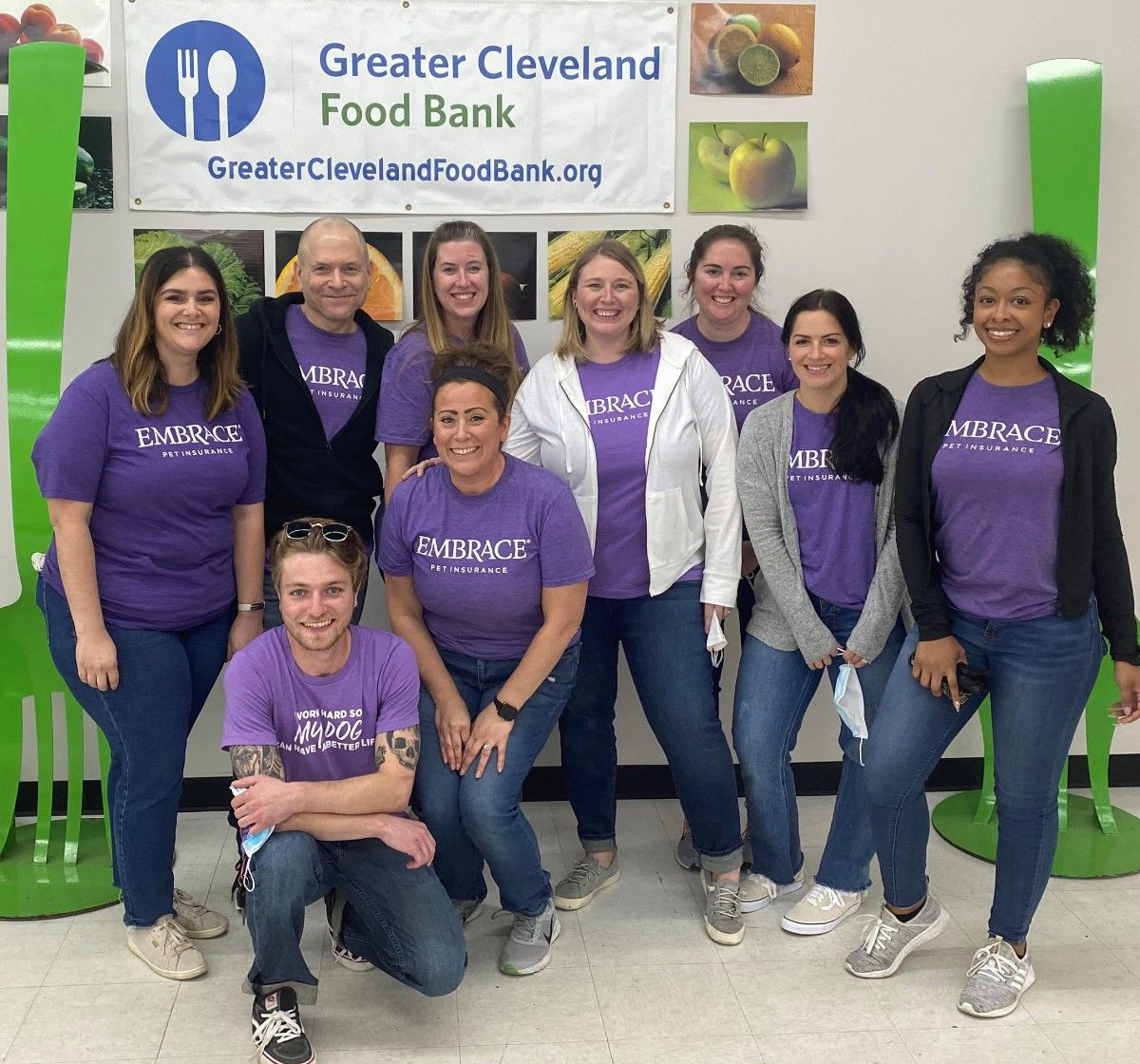
Embrace also reaches beyond policy sales. An August 2026 initiative committed $60,000 to service-dog support through Dogs Inc and Healing 4 Heroes. The allocation supports continuing care and assistance after dogs join veterans. It is a fitting detail for a company whose product concerns what happens after the happy beginning. Lily’s first policy was a start. The consequential work comes when somebody needs to use one.
Keep your curiosity on a leash. Or don’t.
Explore Embrace’s website, coverage details, Wellness Rewards terms and The Water Bowl blog.
Go deeper: listen to the founders on Lay of the Land, watch Embrace’s 15-second introduction, or browse company news.