The smartest thing Embark sells is not an investment. It is the permission to stop thinking about an investment. A parent opens a registered education savings plan, chooses a contribution rhythm, and lets the system pursue the applicable government grants while the portfolio grows more conservative as a child gets closer to school. The pitch is a small miracle of domestic administration: remember the kid, not the paperwork.
That proposition has heft because Embark Student Corp. is not a purple-logo startup learning Canadian regulation in real time. The operating business traces its education-savings work to 1965. It is registered across Canada as a scholarship plan dealer and investment fund manager, manages almost 600,000 RESPs and has more than C$6 billion under management. Its owner, the Embark Student Foundation, is a not-for-profit. The contemporary wrapper is digital; the machinery underneath is old, licensed and unusually specialized.
01 / The actual job
Turn eighteen years of good intentions into a default
An RESP is a Canadian tax-advantaged account for education. Contributions are not deductible, but investments can grow tax-deferred. The federal Canada Education Savings Grant generally adds 20 percent to eligible annual contributions, up to C$500 in a year and C$7,200 over a beneficiary’s lifetime. Lower-income families may qualify for additional incentives, including the Canada Learning Bond, and some provinces add benefits of their own. The account is attractive. The choreography is not.
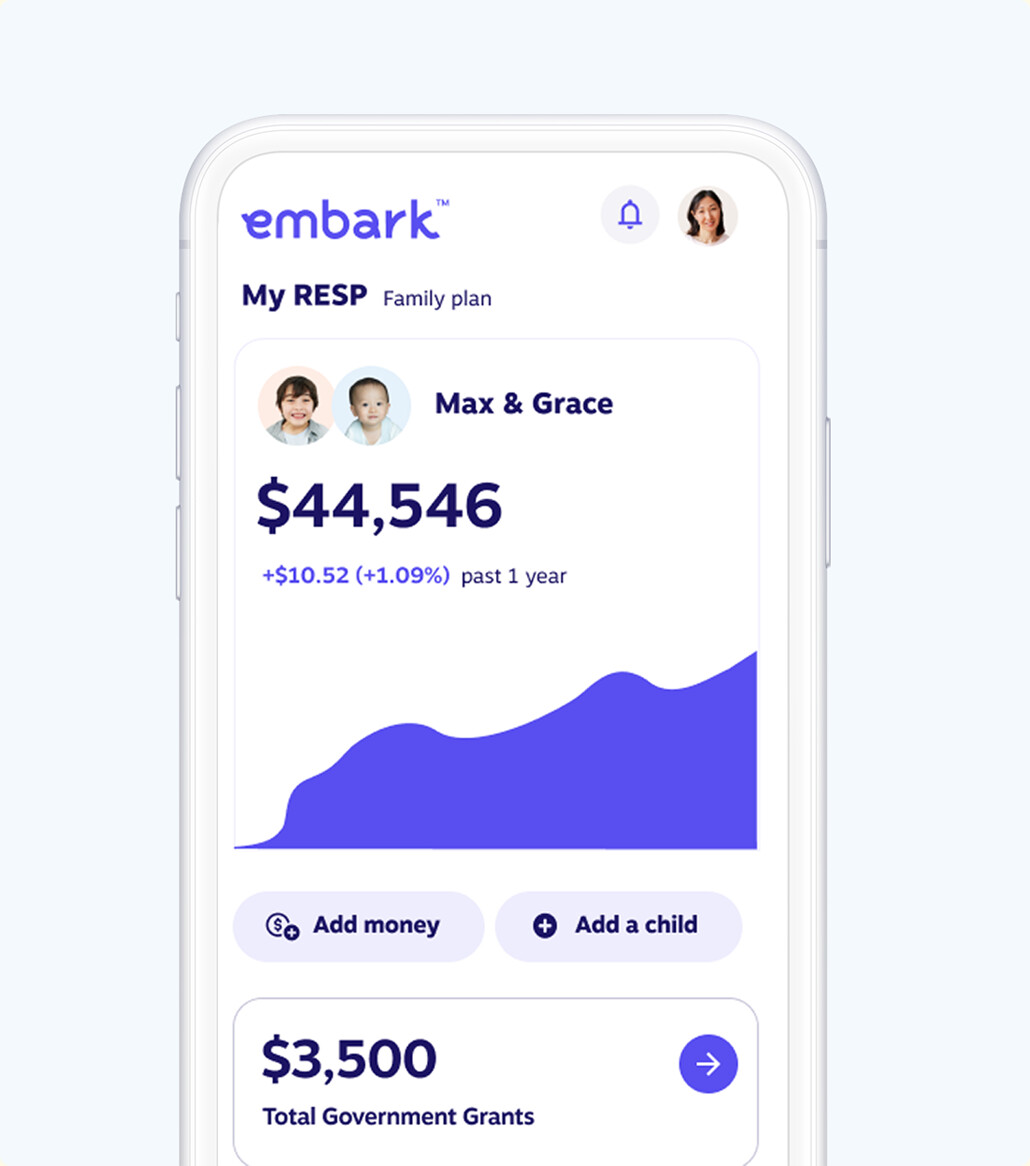
Embark takes on that choreography. It opens individual and family plans, applies for eligible grants, processes contributions, keeps beneficiary records, issues statements and handles withdrawals. Friends and relatives can gift into a plan. Parents can change a deposit schedule online. When post-secondary begins, the company separates subscriber contributions from educational assistance payments, where grants and investment earnings carry different tax treatment. This is less “stock-picking app” than regulated household utility.
02 / The product decision
Let the child’s age move the risk dial
The central product is the Embark Student Plan, a trust established in 2022 and managed by Embark with BMO Global Asset Management as portfolio adviser. Its glidepath gives younger beneficiaries more equity exposure for growth, then gradually favours fixed income and cash as the expected enrolment date approaches. At the end of the year a beneficiary turns 17, the assets move toward capital preservation. It is target-date investing with a school calendar.
This solves a specific behavioural problem. A diligent do-it-yourself investor can rebalance a cheaper portfolio, apply for grants and navigate withdrawals. Many people will not do all three reliably for eighteen years. Embark converts a chain of recurring decisions into one managed service. It also offers a conservative plan for customers who want less market exposure, plus calculators, education-cost material and the Money Major podcast and newsletter.
Our mission is to make education savings accessible to every parent in Canada.Embark’s stated mission
03 / The price
Convenience is not the same thing as cheap
The current Student Plan has no upfront opening sales fee and no fee for an education withdrawal. It charges a 1.65 percent annual management fee plus applicable tax, deducted from plan assets. That is C$16.50 a year for each C$1,000 invested before tax, rising in dollars as the account grows. A transfer to another RESP provider costs C$200 plus tax. Investment-management, administration and representative compensation come out of the management fee.
The comparison that matters is not “fee or no fee.” Every route has costs, even if they are buried in fund expenses, advice or the account holder’s time. The useful comparison is Embark against a low-cost brokerage or bank RESP that supports the same grants. If a family will make contributions, rebalance sensibly, avoid panic trades and manage every form, 1.65 percent is a meaningful drag. If the alternative is delay, missed grants or money left in the wrong risk mix a year before tuition, administration has measurable value.
Embark fits when...
- You want grant applications handled.
- You value automatic age-based rebalancing.
- Your family needs flexible deposits and gifting.
- You prefer specialist support at withdrawal time.
It fits less well when...
- You confidently run a low-cost portfolio.
- You will manage grants and records yourself.
- Minimizing annual fees is the first priority.
- You want broad investment choice or active control.
04 / The reset
A new name had to carry an old filing cabinet
Embark’s story is more instructive than the clean interface suggests. Its predecessor Knowledge First Financial acquired Heritage Education Funds in 2018, combining two long-running scholarship-plan businesses. In February 2023, Knowledge First Financial and its foundation took the Embark names. Andrew Lo, an executive with digital financial-services experience, became chief executive with a mandate to expand digitally enabled products and services.
The first thing that had failed in the old scholarship-plan category was product fit. Legacy group plans could be rigid and difficult to explain, with enrolment charges and rules that customers did not always understand at the moment of sale. Regulators pushed the sector toward clearer disclosure and away from upfront sales commissions. Embark’s own current prospectus also recounts compliance conditions imposed on its predecessor after a 2012 Ontario Securities Commission review; those conditions were removed in 2013, with later reporting confirming the improvements. A Quebec class proceeding over historical enrolment fees ended in a court-approved settlement in December 2025 involving Embark entities and other defendants.
What changed management’s mind was not one dramatic epiphany publicly pinned to a whiteboard. The evidence is in the product: Embark says it no longer sells or manages group RESPs. The current plans are individual or family accounts, with no upfront sales charge, adjustable contributions, online access and a glidepath tied to each beneficiary. A rebrand can rename a problem. Different mechanics can actually answer it.
05 / The wider machine
The customer is a family. The market is an ecosystem.
Embark sits between three alternatives. Banks offer familiarity and branch access. Self-directed brokerages offer more control and potentially lower cost. Other scholarship-plan specialists offer similarly focused administration. Embark differentiates with its combination of scale, grant handling, age-based investing and a consumer interface built only around education. The not-for-profit owner adds another dimension: profits can support programs beyond the account.
Since 2023, the Embark Student Foundation’s Major Grant Program has awarded C$7.4 million to universities, colleges and trade schools. The 2026 class included open educational resources at Conestoga, an online architecture studio at Athabasca, mentorship at Simon Fraser, AI learning at Waterloo and a C$500,000 career accelerator with Toronto Metropolitan University’s DMZ. That 14-week program mixes business training, AI fluency, project work and paid support for selected participants.
Commercial partnerships extend the funnel in more cheerful directions. A multi-year Canadian Football League deal places education-saving messages beside touchdowns. JUMP Math gives Embark families discounted practice books and planned learning events. Tangerine, insurance companies and student-housing providers appear in a customer offers directory. None changes the RESP’s economics. Together they make Embark feel less like an account visited at tax time and more like a long-running family membership.
What another company can copy
- Make the default follow the customer’s clock. Embark uses the child’s age to automate the most important portfolio change.
- Turn compliance into a feature. “We apply for the grants” is much more legible than a tour of government forms.
- Invite the extended buyer. Gifting lets grandparents and friends participate without adding account ownership complexity.
- Show the fee next to the avoided work. The honest sales case is delegation, not magic returns.
06 / The verdict
Boring is a feature, but only at the right price
Embark works best for the parent who wants a specialist to keep an education plan moving while life supplies louder emergencies. The product can collect eligible grants, adjust risk, accept family gifts and make the eventual withdrawal less mysterious. Its scale and regulatory history make it hard to mistake for a weekend app. Its fee makes it equally hard to mistake for a bargain-bin index portfolio.
It will not work as well for disciplined, fee-sensitive investors who already know how to run an RESP at a low-cost provider. It also cannot rescue an unaffordable contribution schedule, guarantee returns or turn every program into an eligible withdrawal. The glidepath manages one risk - arriving at school with too much exposure to a falling market - while government rules still govern grants and payments.
The company’s most credible achievement is therefore not making education finance exciting. It is making a regulated, multigenerational obligation feel ordinary enough to continue. Parents are busy. Children age on schedule. A product that quietly notices both has a reason to exist.
Keep exploring
The useful doors
Plan fees, incentives and eligibility rules can change. Investment returns are not guaranteed, and historical results do not predict future performance. Families should compare current prospectuses, supported grants and total costs before choosing an RESP provider.