Daniel Eberhard wanted to work in the kitchen at Dairy Queen. His friends were there. Management, impressed by his people skills, put him on the cash register instead. Years later, as a founder explaining himself to investors and customers, he would recognize the continuity. The boy who wanted to be in the back kept finding himself out front. There are more glamorous origin stories in finance. Few begin with such an efficient allocation of labour.
His eventual occupation has an equally modest qualification attached. Eberhard calls himself a reluctant banker. He founded KOHO in 2014 and remains its CEO, but banking was a route to a problem he wanted to solve. He objected to a familiar arrangement: people with substantial assets could avoid account fees, while people with little money paid to participate. Ordinary customers were being charged for the privilege of remaining ordinary.
By September 2026, his official award biography described a company serving more than 2.5 million Canadians. He had been named a Canada’s Top 40 Under 40 honouree. Those are milestones, with photographs and congratulatory messages attached. The question running beneath his career is quieter: how much of an established industry’s inconvenience is necessary, and how much survives because customers have learned to tolerate it?
A school project with a very large footprint
Before the app, there was wind. While studying business, Eberhard and a friend developed a venture around small turbines for farmers. Financing got in the way. Their proposed leasing arrangement tried to make future revenue useful in the present. The venture eventually shifted toward a larger Saskatchewan wind project. Kineticor Renewables, co-founded in 2010, was acquired by Algonquin Power in 2011.
He had started business studies at Mount Royal University in Calgary. The move from a classroom problem to renewable-energy development supplies a useful clue about his working style. He looks for a point of friction, then asks whether changing the arrangement around it would make something possible. The turbine matters. So does the way someone can afford to buy it.
The progression also made big markets less mysterious. Wind development meant dealing with capital requirements and government processes. In his account of the transition into technology, he wanted a business that could expand more readily and move faster. He carried that appetite into finance, another industry with formidable gatekeepers. There is a certain comic consistency in leaving one regulated industry and selecting another for speed.
The business he chose to stop
Between wind energy and KOHO came an e-commerce logistics venture. Eberhard has said it grossed about $300,000 in its first year. Group buying was fashionable, and the business appeared to have a commercial future. He disliked the incentives: inflated reference prices, impressive discounts and cheap goods he suspected would soon become waste. He and his colleagues shut it down after a year.
That decision complicates the usual founder story. Revenue had arrived. The work still failed his test. He wanted the business to be useful and wanted to feel proud of the people doing it. A functioning sales engine could not supply those things automatically. Walking away was an admission that making a business work and wanting to keep working on it were separate questions.
The experience helps explain why the banking complaint lasted. A fee is a small event, easily dismissed on its own. Repeated across customers and years, it becomes an operating model. Eberhard had already learned that the operating model can shape what a company encourages people to do. At KOHO, that became an explicit design concern.
Eight months, then a thousand dollars
In June 2015, Eberhard published an unusually practical account of early fundraising. Before announcing KOHO, the team spent eight months examining whether its intended product could be built and whether regulation would permit it. Customer demand was the next uncertainty. Rather than arrive at an investor meeting carrying enthusiasm alone, they spent $1,000 testing Facebook advertisements.
The exercise began with 20 small tests costing $20 each. Three promising advertisements then received $200 apiece. The goal was to learn what it might cost to bring people into the product, with a clearer account of the uncertainty around that estimate. He described the work as instrumental in raising the first million dollars. The arithmetic had a purpose beyond looking tidy in a spreadsheet.
This was persuasion through preparation. A click and a committed customer are different events; an encouraging small sample still leaves room for unpleasant surprises. Eberhard’s method gave investors something they could question. It also showed them how the team would answer. He was selling a willingness to investigate the awkward parts of a business, before those parts acquired salaries and office leases.
A bank small enough to hear the room
In December 2015, KOHO had six employees and had moved into a larger Gastown office. Its early partners included Peoples Trust, Galileo Processing and Visa. Eberhard talked about reaching 150,000 to 200,000 users over the following three to five years. Banking without branches still needed institutions willing to make the machinery behind the screen work.
There was experience around the young founder, too. Early advisers included former Coast Capital CEO Lloyd Craig, former Assante Wealth Management CEO Joe Canavan and former Wikia CEO Gil Penchina. His travels had taken him to 35 countries by the time of that interview. Different places offered different assumptions about how daily life could be organized. Canada’s banking arrangements could be examined as arrangements, rather than accepted as geography.
The company later moved its headquarters to Toronto. Eberhard’s public LinkedIn profile places him in Vancouver. That distinction fits a career built across locations: studying in Calgary, developing in Saskatchewan and seeking banking talent and connections farther east. The customer problem was Canadian, even when the work of assembling a company sent him across the country.
What transparency looks like on a Monday
Eberhard’s description of transparency in 2019 went further than customer-facing language. He said employees could see the company’s financial position and its latest board presentation. Weekly stand-ups included discussion of real customers and how they were using KOHO. The reasoning was straightforward: people building a financial product should remember the lives on the other side of each transaction.
His approach to spending was similarly concrete. He encouraged people to think of money as a resource and to consider what a purchase actually added to their lives. Time belonged in the calculation, too. A cheaper home could bring a costly commute. The sticker price was an incomplete description of a decision. For someone running a personal-finance company, that is a useful resistance to treating every expense as a moral failure.
Outside the spreadsheet, his reading has included Rohinton Mistry’s A Fine Balance and Creativity, Inc. His professional habits have included reserving Tuesdays and Thursdays for work without meetings. These details give the finance executive recognizable edges: a reader, a calendar defender, someone who sees that usefulness can disappear beneath the performance of being busy.
Trust has to survive the pricing page
In 2024, Eberhard explained a change that let customers earn access to KOHO’s paid Essential account through qualifying activity, including direct deposit. The company estimated that three-quarters of existing paying Essential users would no longer need to pay. It was a specific attempt to make the commercial arrangement reward a customer for using the service.
The logic depended on lower costs and longer relationships. Eberhard argued that a company spending less to acquire and serve customers would face less pressure to sell products they did not need. Trust could bring referrals; referrals could help control acquisition costs. The appealing part of that argument is its alignment. Its demanding part is that customers can test it every time a charge appears.
These were the company’s expectations and explanations in 2024, rather than a promise about every account today. What endures in the story is the decision to expose the reasoning behind a price. A founder can announce that customers matter with very little effort. Changing who pays, and explaining why, gives the announcement something measurable to live up to.
A larger table, and the same questions
Eberhard joined Endeavor’s entrepreneur network in April 2024. During selection, he received input from founders and investors including Paul Desmarais III, Matt Harris and Jason Wenk. The network gave him access to people who had confronted versions of the problems he was facing. It also offered a place to pass experience along.
Endeavor Catalyst invested in KOHO in late 2024, and its Canadian office later described Eberhard sharing lessons at CEO gatherings in Toronto and Vancouver. After selling his renewable-energy venture, he had spent time investing in early companies and mentoring founders. The recurring connection is practical: someone has already encountered part of the difficulty, and a conversation can save the next person some expensive discovery.
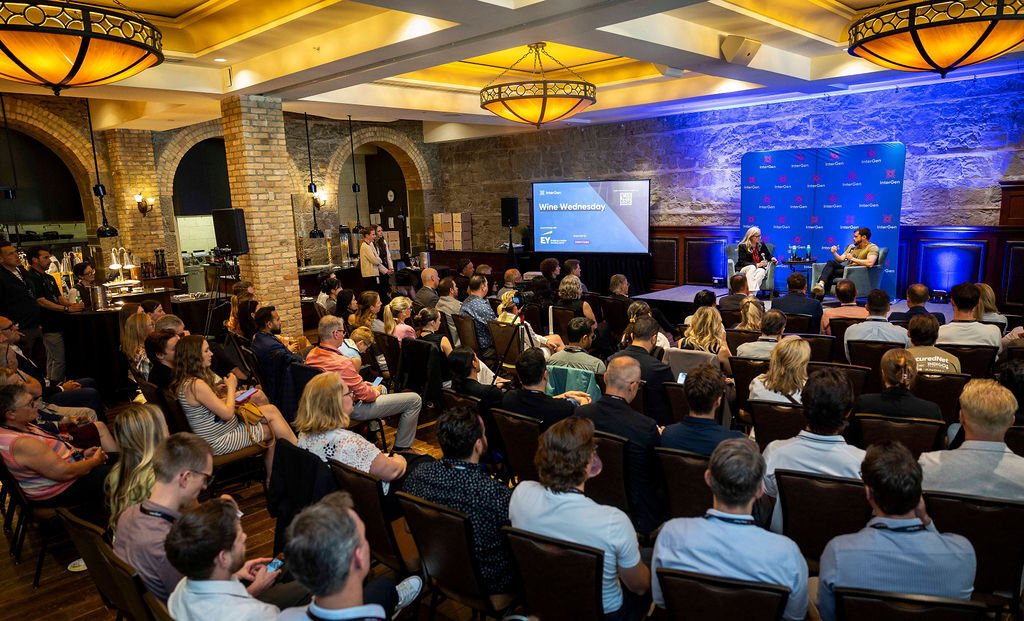
At InterGen’s Wine Wednesday in Calgary in June 2026, the new funding round supplied an obvious talking point. The event account emphasized leadership, customer choice and long-term thinking. Eberhard was back out front, explaining a complicated business to a room. The Dairy Queen manager’s assessment had enjoyed a remarkably long shelf life.
“We have to out-build.”Daniel Eberhard / June 2026
The reluctant banker gets closer to the bank
In May 2026, Interac announced KOHO’s direct participation in its e-Transfer service after access broadened for qualified payment service providers. Greater control over that connection meant more room to build the experience customers actually used. It was a piece of infrastructure, with consequences reaching all the way to the phone screen.
Then came the June announcement: C$130 million in new capital at a C$1.33 billion valuation. New backers included Mubadala and Savano Capital, alongside Shopify founder Tobi Lütke and Affirm executive Michael Linford. Eberhard gave the scale of the task a short expression: “We have to out-build.” Money provided room to keep working; the customers would still have to choose the result.
The banking ambition remained a separate process. A March 2026 Canada Gazette notice set out a KOHO subsidiary’s intention to apply for continuance as a Schedule I bank. Publication did not establish approval. September’s award biography still described pursuit of a licence. The distinction matters to this story: a valuation can arrive on a funding announcement, while permission to become a bank must travel its own road.
Eberhard’s career keeps returning to the same troublesome little gap between an accepted arrangement and a better one. Farmers needed financing. Customers needed reasons to trust a different account. Investors needed evidence. None of those gaps closed because the founder found an impressive adjective. Each required work that someone else could inspect. For a reluctant banker who began at the cash register, being accountable to the people across the counter is a familiar place to stand.