- Apply for US banking and credit before travelling, subject to approval and activation requirements.
- Use home-country evidence to help bridge a missing US credit history.
- Read the terms: no annual fee does not mean inexpensive borrowing.
A passport remembers where you have been. A credit file is considerably less well travelled. Cross a border and years of borrowing and repayment can become practically invisible to the institutions deciding whether to lend you money. The person has not changed. The available evidence has. For an international student or a professional moving to America, that distinction can be expensive.
Zolve was built around this peculiar reset. Founded by Raghunandan G, the entrepreneur behind TaxiForSure, it offers a digital route into US checking accounts and credit cards for people whose American financial lives are just beginning. Customers can apply before travelling. A US credit history need not be their admission ticket. Approval, documentation and activation requirements still apply.
The September 2021 launch followed an August beta. More than 40,000 people had signed up, the company said, with interest reaching beyond India to Australia, Canada, Germany and Britain. Zolve meets customers while their American lives are still a collection of forms.
A better question than “What is your US score?”
In a 2022 interview, Raghunandan described assessing applicants through credit, education and employment histories from home. The proposition was to make evidence available across borders. A missing US file could then be examined alongside other information, rather than treated as the whole story.
That places Zolve between conventional banking and the businesses helping newcomers establish a financial identity. A secured card asks the customer to supply collateral. A branch account offers a different service and may still suit the customer perfectly well. Zolve combines a checking relationship with unsecured credit access designed around relocation. Its expertise lies in onboarding, underwriting and coordinating the institutions behind the app.
There is a useful limit to the promise. Zolve does not transplant an Indian score into an American credit report. It helps eligible applicants obtain products through which they can establish a US history. The card agreement provides for reporting account performance to credit agencies. Responsible use may help; missed payments can do the opposite. A new card is a beginning, not a certificate of financial virtue.
“The financial system isn’t designed for mobility.”Raghunandan G · March 2025
The app has a bank behind it
Zolve calls itself a financial technology company. Its US checking disclosures identify Continental Bank in Salt Lake City as the banking provider. The launch partner was Community Federal Savings Bank. Those dates matter: a familiar app can sit above a banking arrangement that changes over time.
The division of labour is straightforward. Zolve supplies the customer experience and technology; regulated partners supply financial products. Eligible deposits carry FDIC coverage through the bank, subject to the usual limits and ownership categories. The app itself is not an insured bank. The current checking product advertises no minimum balance and no monthly maintenance fee.
The money-making machinery sits behind that friendly front door. Raghunandan described sharing card interchange, interest and late-fee revenue with the banking partner, while Zolve took credit risk under the arrangement discussed in 2022. The economics reward acquiring customers who use the product and repay. They also make underwriting a central skill. An attractive interface cannot rescue a poor lending decision.
The small print deserves a seat on the plane
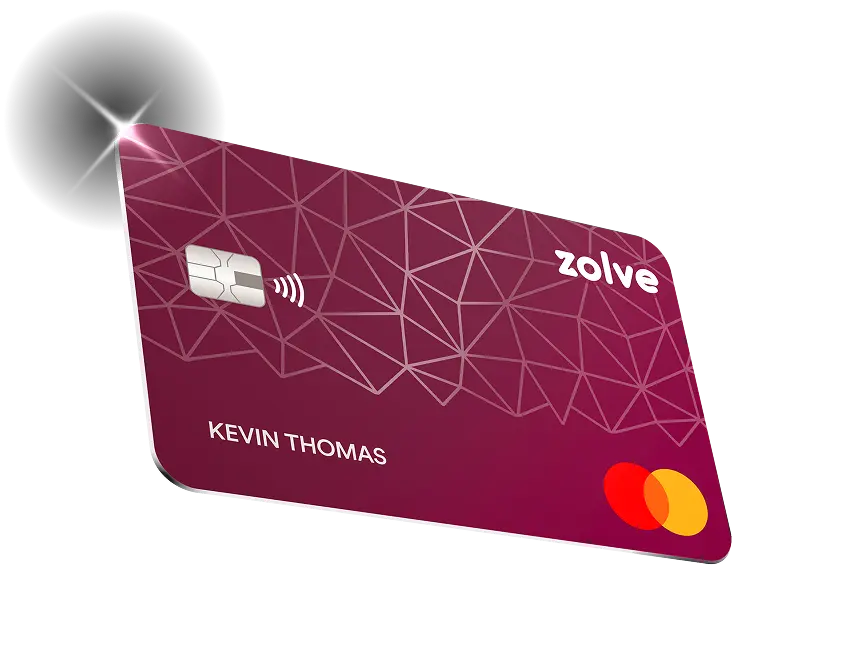
The card page advertises limits up to $15,000, subject to individual approval. Its rewards disclosure says “cashback” comes as ZPoints, with earn rates and redemption options governed by additional terms. A ceiling is not a typical outcome; a reward label is not the entire reward scheme.
The published Classic card agreement, dated February 18, 2025, lists no annual fee, a 3% foreign transaction fee and a variable purchase APR of 35.50%. It provides a way to avoid purchase interest by paying the full balance by the due date. Those are that agreement’s published terms, not a promise about every offer. Access has value; carrying an expensive balance can consume it.
Checking has its own distinction. The advertised maximum APY depends on qualifying activity, and the disclosure requires a valid SSN or ITIN to earn interest. Applying without an SSN and qualifying for interest are different questions. For a newcomer, reading those two sentences together is more useful than memorising the biggest number on the page.
Why a credit company sells a phone plan
Once a company serves someone moving countries, the next problem is rarely far away. Zolve’s student-loan service lets applicants approach more than 15 providers through one application. Third-party lenders supply the loans. Insurance, transfers, scholarships and visa-related tools broaden the surrounding offer, with separate terms and eligibility.
The phone plan makes the logic especially plain. In its partner case study, Gigs says Zolve wanted branded wireless service without prolonged carrier negotiations and integrations. Gigs supplied the subscription infrastructure, including activation and billing. It reports that Zolve launched without additional hires and that customers could purchase and activate service in under three minutes.
Here is a decision another operator can copy: follow the customer’s next immediate problem, then find a partner already equipped to solve it. Zolve recognised that obtaining a phone connection belonged beside banking in a newcomer’s first-week checklist. That observation widened the proposition. It also introduced recurring subscription revenue beyond card spending. The connection between products is the move itself.
$251 million, with two very different jobs
Building the service required capital; financing customers required another kind. Zolve announced $15 million in seed funding and $40 million in Series A funding in 2021. In October 2023, it secured a warehouse debt facility of up to $100 million from Community Investment Management to support immigrant credit products.
The March 2025 financing combined $51 million in Series B equity with a $200 million credit warehouse. Creaegis led the equity round, joined by investors including HSBC and SBI Investment. The distinction matters: equity finances a company; a credit facility supports lending capacity. Neither figure tells you how much operating cash the company spent.
At that announcement, Zolve reported 750,000 customers and more than $1.2 billion moved. Its current pages use several differently defined audience counts, so those dated figures are a clearer snapshot than a stitched-together growth curve. The ambition is larger than one corridor, but each country brings its own partners and rules.
The conditions for success are quite concrete: usable evidence, eligible borrowers, dependable banking partners and repayments that justify the risk. People already well served by US lenders may find less reason to switch. For the newcomer standing between a completed past and an unrecorded future, however, Zolve offers a practical place to begin.
$51MSeries B equity
$200MCredit warehouse