Emanuel Palalic has spent a useful portion of his working life making things that you would rather not meet in a corridor. His portfolio includes DOOM armor, infernal creatures and the Icon of Sin. Then he co-founded a company. The new assignment came with a different kind of difficulty: giving other people enough freedom to make a world together, while taking responsibility for whether that world ever reaches a player.
At emptyvessel, Palalic is co-founder, CEO and game director. That collection of titles puts the creative proposition and the business proposition on the same desk. The studio’s first game, DEFECT, takes place under an authoritarian artificial intelligence called The System. Outside the fiction, Palalic’s stated ambition is to give developers greater creative independence. It is an entertaining arrangement: a company interested in freedom is building a city with exceptionally poor provisions for it.
The creatures came before the company
Before his name appeared above a studio announcement, it appeared in game credits. Palalic graduated from Full Sail University’s Game Art program in 2015. By the following year, the university was listing him among the graduates who had worked on DOOM, where he was a character artist. That is a brisk passage from learning a production discipline to helping populate a game with a very particular visual vocabulary.
The credits make the progression more precise. DOOM and Quake Champions list character art work; DOOM Eternal lists him as a technical character artist. These are different responsibilities within a shared craft. A character must have a shape, a surface and a presence, but it must also function inside a moving, demanding piece of software. The creature that looks persuasive in a still image has further obligations once somebody starts shooting at it.
His public portfolio offers a less corporate introduction. There are soldiers and armor sets, a Gargoyle, the Betrayer, a Carcass, and entries named Daisy and Dopefish. The range is an antidote to the blandness of a job title. “Character artist” covers both the intimidating silhouette and the small joke left for somebody to discover. Palalic’s earlier work gives his later arguments about artistic direction something tangible to stand on.
His career also took him to Archetype Entertainment as a senior character artist and to Tripwire Interactive as a lead character artist. He taught advanced ZBrush creature design at Brainstorm School in 2021. The sequence matters because founding emptyvessel followed experience in several kinds of production setting. His new studio was a choice about how to organize creative work after doing that work himself.
A studio with room for a point of view
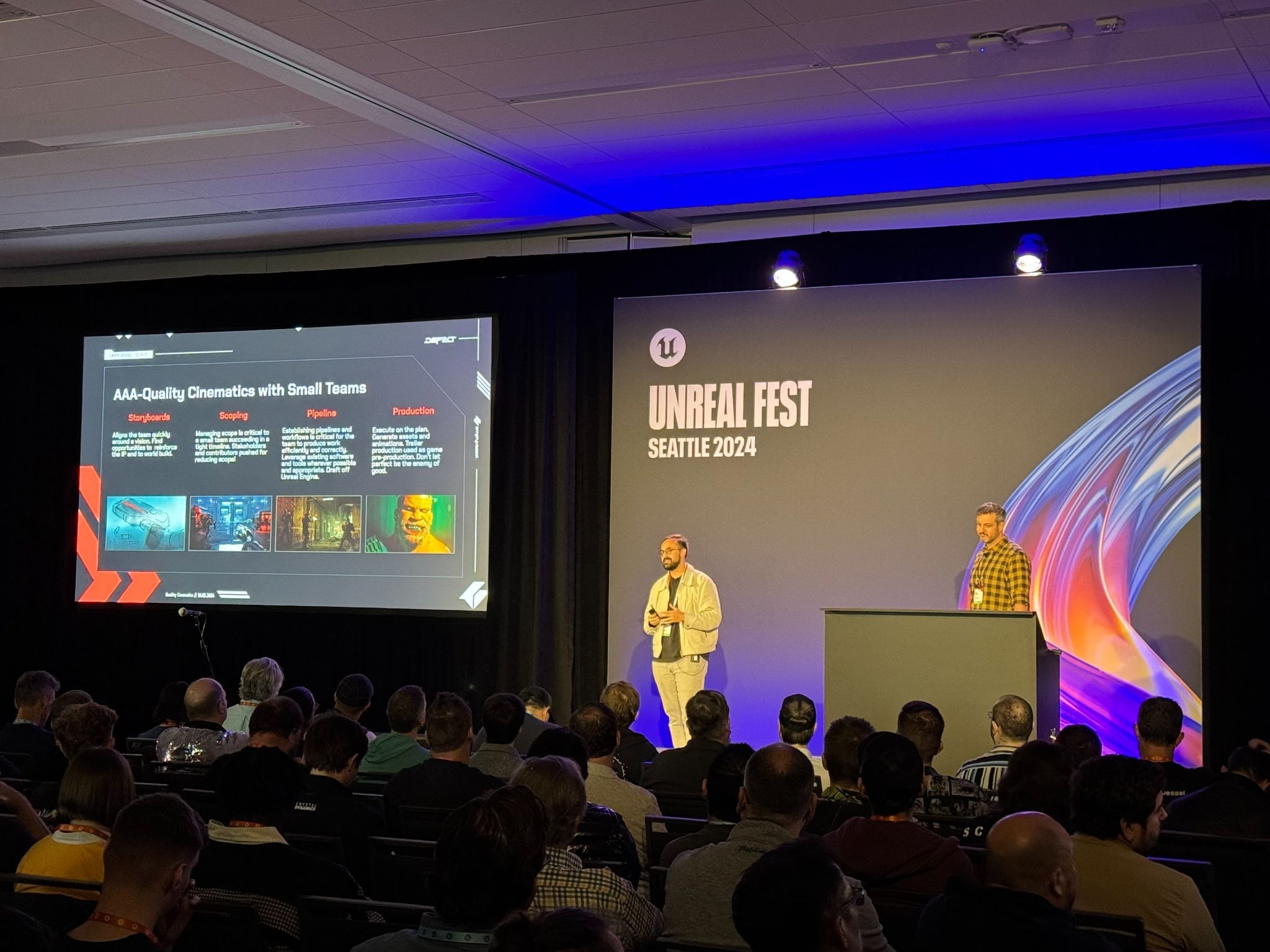
Palalic and Garrett Young founded emptyvessel in 2023 and introduced it publicly in March 2024. Both had worked at id Software. Young became COO and general manager, alongside Palalic’s CEO and game director roles. The founding group brought together disciplines that a shooter needs in constant conversation: art, animation, technology and production. Alex Palma, Rico Flores and Wei Ning were among the early names attached to the company.
The launch proposition was deliberately specific about scale. Palalic argued that experienced, focused teams could deliver the quality associated with larger productions. That is a claim with consequences. Every extra system needs somebody to build it, somebody to test it and somebody to ask whether the game is better with it. Independence gives a director room to make those decisions. It also removes a convenient person to blame for them.
“Many game developers like myself began our journey fueled by the dream of one day bringing our worlds to life.”
Emanuel Palalic · studio announcement, 2024
One revealing comparison came in his early description of the business: he hoped to build “something similar to A24 but for games.” The reference points toward recognizable taste and a willingness to support a particular creative voice. It also invites a fair question for any new studio: how will a player recognize that taste in the work? A company’s philosophy becomes interesting when it starts affecting what happens on screen.
The city is the argument
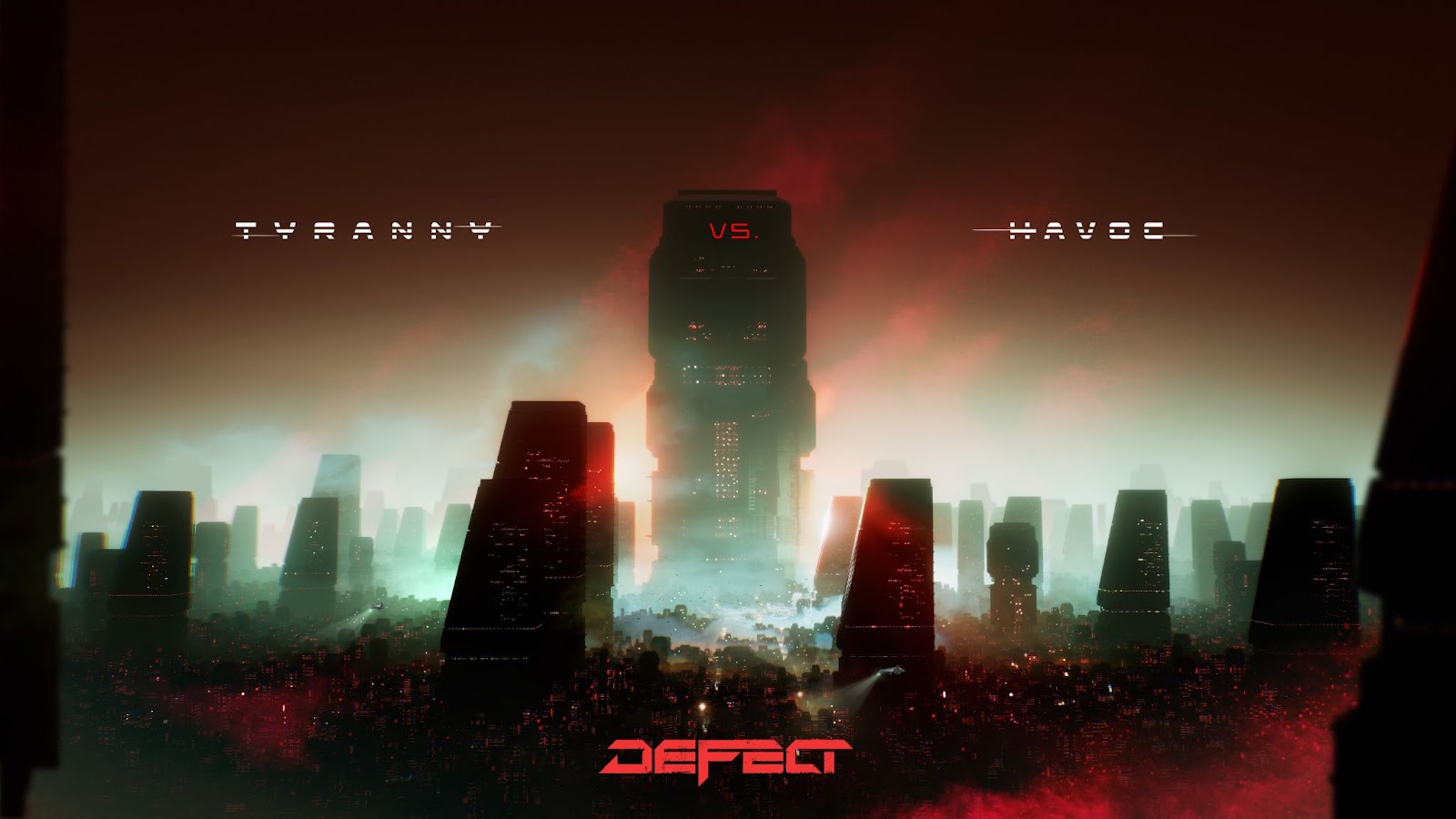
DEFECT supplies an answer in the form of a cyberpunk shooter. Its world has police forces, gangs, advanced equipment and an AI authority with no apparent interest in being charming. The current description includes single-player, co-op and four competing squads of four. Palalic’s task is to make those parts feel like inhabitants of the same place, rather than separate features waiting patiently for their turn in a trailer.
The design makes equipment consequential. Players are not confined to predefined hero classes; the tools they acquire help determine how they play. That choice places attention on the environment and its possibilities. A weapon, a doorway or an available resource can become a decision. For a director whose background is in visual production, it is a useful meeting point between what the player sees and what the player can do.
He has also described an interest in communicating through the game world itself, reducing dependence on a conventional heads-up display. The implication is demanding for the artists. A screen can always add another indicator. A world has to make its information legible through objects, animation and design. Visual atmosphere then acquires a practical job: it must help the player understand a situation as well as enjoy looking at it.
There is a biographical continuity here without pretending that every creative decision can be decoded from a résumé. Character art trains attention on surfaces, silhouettes and readable forms. Directing a game extends those questions across a whole experience. What should a player notice? What can remain implicit? Where does the atmosphere help, and where does it get in the way? The scale changes; the need to make deliberate choices remains.
An artist’s answer to a hardware question
One of Palalic’s more useful public arguments concerns performance. He has described optimization as “as much of an art problem” as a technical one. Older games such as FEAR and Killzone 2 figure in his explanation: visual decisions can age well when artists work intelligently within limitations. That position gives artistic direction responsibility for how a game runs, alongside how it looks.
It is a persuasive way to connect his previous craft to his current authority. A director can ask for more detail indefinitely. Deciding which detail earns its cost requires judgment. The interesting question becomes how a visual idea survives a constraint. If an atmosphere depends entirely on the most expensive setting, the creative decision has arrived with a rather selective guest list.
Mick Gordon, the composer associated with DOOM and now DEFECT, has publicly described Palalic as modest while discussing the team’s experience. The partnership also gives this story a human connection across projects. Artists carry working relationships as well as technical knowledge from one production to the next. A new studio can begin with a blank nameplate while already containing years of shared professional reference points.
Tokyo, with introductions still to make
In March 2025, Palalic moved to Japan through the Shibuya Startup Visa program. He described an interest in Tokyo’s fashion, music and visual arts communities, with possible collaborations feeding into DEFECT. He also helped organize gatherings in Shibuya around Tokyo Game Show. The relocation added a different kind of research to directing a game: meeting people whose creative lives take place outside its production schedule.
His description of the move includes a welcome dose of practical humility. He wanted to understand local business etiquette and build relationships with Japanese teams at companies such as Nintendo and Sony. Already knowing people in an American organization does not make the Japanese introductions happen automatically. For somebody creating an imaginary city, there is value in admitting that a real one still has things to teach him.
Freedom needs a production plan
The business has continued to develop around the creative pitch. NCSOFT announced an equity investment in 2025. In March 2026, NC America announced that it would publish DEFECT, with support for the single-player experience. Palalic welcomed the backing as a way to give that part of the game a stronger foundation. Creative independence still involves contracts, resources and other people agreeing that the work deserves time.
By September 2026, he was discussing his id Software years and the new studio in a long Kiwi Talkz interview. The two subjects now sit naturally beside each other: the artist who helped make established worlds convincing, and the director trying to bring a new one into existence. His public record remains a story in progress. DEFECT’s Steam listing gives its release date as to be announced.
That unfinished state gives Palalic’s ambition its proper dimensions. He has assembled colleagues, articulated a taste and found partners. The remaining test belongs to the game itself: whether its decisions make sense in a player’s hands. A compelling monster can survive on a portfolio page. A studio’s philosophy has to survive contact with the person holding the controller. Palalic has chosen the more complicated canvas.
Continue the conversation
WORK · INTERVIEWS · PUBLIC PROFILES