The first problem was that his friends ate the evidence. Danny Taing had brought Japanese snacks back to New York, the kind he had discovered while living and working in Japan. He shared them. People wanted more. Replenishing the supply proved considerably harder than emptying it. For all the things New York could put on a doorstep, these particular regional treats were elusive.
One snack that had caught his attention was Jaga Pokkuru, crisp potato sticks made with Hokkaido potatoes. The appeal was almost embarrassingly straightforward: a familiar food, done with care, could taste unexpectedly good. There was a whole geography inside this category. A snack could tell you where it came from, what grew there, and what a family had spent years learning to make.
Taing eventually built Bokksu to carry those discoveries overseas. But the suitcase makes a tidier origin story than the career that preceded it. There were university degrees, a job at Google, Japanese lessons, a stint at Rakuten, computer science studies, and several business ideas that failed to settle into a business. The snack box arrived after all that. His route to becoming a founder included quite a lot of trying to become something else.
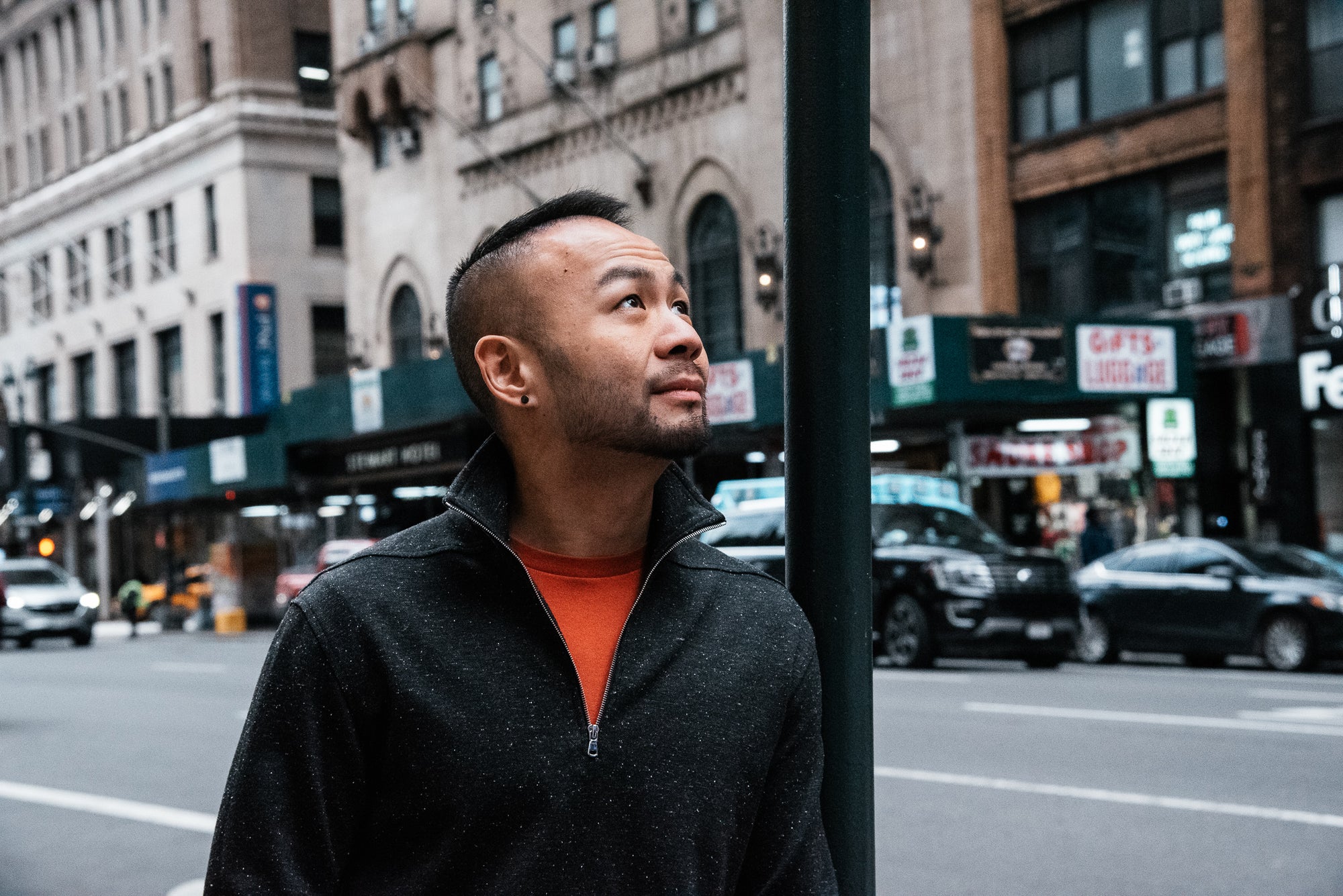
A family business was hardly a fantasy
Born in New York City and raised in New Jersey, Taing is the son of Cambodian-Chinese refugees who came to America in 1979. His father washed dishes; his mother worked as a seamstress. They went on to open a retail business. Entrepreneurship was visible at home, with its hours attached. He had seen the work behind the word before anyone tried selling him its glamour.
At Stanford, he studied psychology and communication, then earned a master's in sociology in 2008. His next stop was digital marketing at Google in Mountain View. That would have made a perfectly legible career. It lasted about a year. He wanted another challenge and left for Japan to study Japanese at Waseda University.
Language study became a way into ordinary life. Taing went on to work in business development at Rakuten in Tokyo, learning how Japanese commerce operated from inside a Japanese company. Years later, that experience would be useful when a snack maker needed to hear more than an American sales pitch. He could have the conversation in Japanese. He also knew that speaking the language and understanding the business relationship were separate accomplishments.
The fourth idea came with something to eat
Back in New York, Taing completed Columbia's postbaccalaureate computer science program in 2014. He joined the Columbia Startup Lab in 2015. At first, he had a co-founder and was pursuing other ideas. There were pivots, and the co-founder left. Bokksu emerged from that untidy period of experimentation, rather than from a lifelong plan to sell confectionery.
He founded the company in 2015; the snack subscription launched in 2016. In the early days, Taing packed boxes in his living room, with help from his mother. Handwritten thank-you notes accompanied the snacks. A company built to introduce other people's family businesses to the world was getting some fairly direct assistance from its own family.
For the May 2016 launch, he later recalled having 40 subscribers, most of them supportive friends. By the end of 2017, the number had passed 1,000. His reported revenue moved from roughly $40,000 in the first partial year to $300,000 in 2017. Those were small-business numbers with real customers attached. They gave him something more useful than an encouraging response to an idea: people who had paid, eaten, and decided whether to come back.
Forty subscribers. Then the word got out.
The interesting part was inside the wrapper
A Japanese snack subscription was already a recognizable business. Taing's distinction was in the selection. He wanted regional specialties and family makers to carry the story. Japanese culture offered considerably more material than a shelf of familiar export sweets could suggest.
Bokksu paired its snacks with tea and a guide explaining what customers were eating. The guide made unfamiliar packaging approachable. It also supplied context that a shipping label could not: an ingredient's local significance, a maker's history, the reason a seasonal flavor belonged in that month's box. The reader could open a packet and a small piece of the country together.
Early boxes were organized around specific ideas. A January 2017 selection took its theme from maru, the Japanese word for circle. Roundness became an organizing principle for a delivery of snacks. This is a pleasantly literal way to give an editorial meeting something edible to argue about.
Taing has remained involved in tasting. The team's process includes trying samples before they enter a box. His own enduring favorite is the White Strawberry from Nagano, a dried strawberry infused with white chocolate. He likes its combination of crunch, tartness, and restrained sweetness. After tasting more than a thousand snacks, he still has a favorite. Professional curiosity, apparently, need not prevent loyalty.
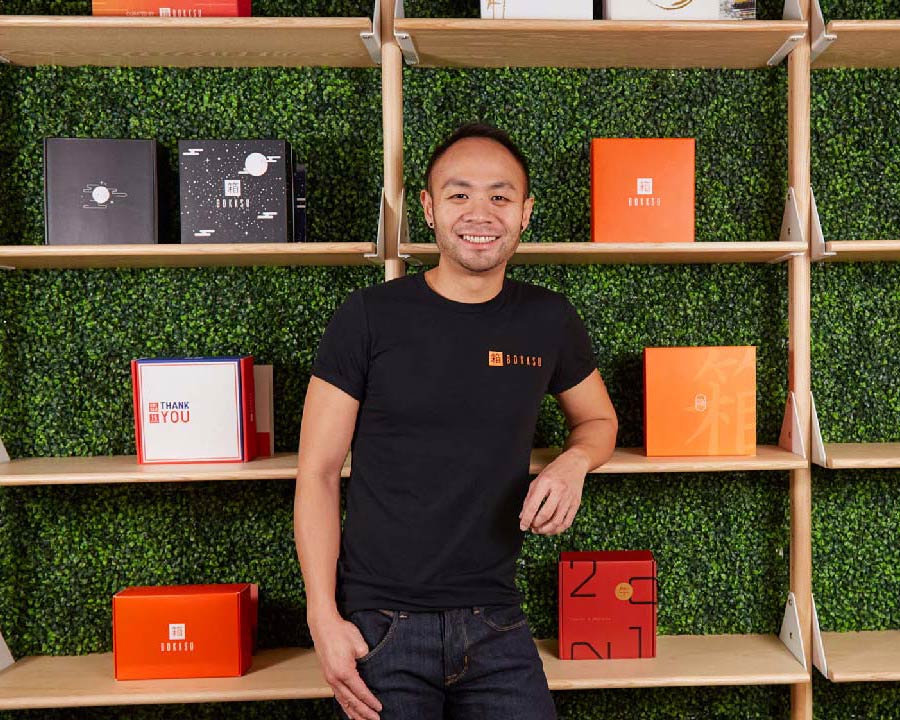
A candy shop offered a different definition of success
The makers also complicated the usual founder vocabulary. For the Snack Bites documentary series, produced by filmmaker Bon Duke, Bokksu turned its attention toward the people making the food. Packaged goods can conceal the distinction between a factory product and a family craft. Film could show the hands, decisions, and working lives that the wrapper left out.
Taing described visiting Daimonji Ame Honpo, a Kyoto candy business founded in 1921. He asked why it had stayed at a team of ten. The answer emphasized maintaining handmade quality and continuing the family legacy rather than expanding quickly. For a startup founder, that is a useful conversation to have before growth becomes the only available verb.
Bokksu's proposition requires both sides of that exchange to work. Customers need something worth opening every month. Makers need a route to overseas demand that they can realistically supply. The cultural story depends on the commercial relationship underneath it. Taing's job includes understanding why a producer might reasonably want more customers without wanting an entirely different company.
“We’ve never stopped reiterating and improving the Bokksu snack box.”
Danny Taing, 2023
When the audience arrived faster than the boxes
In early 2018, a Facebook campaign helped take Bokksu from about 1,000 subscribers to more than 3,000 in one month. The warehouse in Japan could not comfortably absorb the tripling of orders. Taing was still operating without the logistics leadership a larger company would take for granted. Demand had arrived with an assignment attached.
The broader growth continued. By the end of 2018, he reported more than 10,000 subscribers and $2.8 million in revenue. The following year, the figures exceeded 16,000 subscribers and reached $4.8 million. He described the experience as “very exciting and stressful.” An admirably economical description of finding a market and then having to serve it.
By September 2019, Columbia was reporting a 15-person worldwide team and a first fundraising round of $1 million. The founder who had packed the product himself now had to organize the people and systems around it. Customers' reviews and photographs became part of how Bokksu explained itself to prospective subscribers, giving existing buyers a visible role in bringing the next buyers in.
A larger company, with the same appetite for detail
Bokksu Boutique followed the original subscription in 2018, opening an on-demand route to Japanese snacks, gifts, and lifestyle products. Bokksu Market launched in 2021 with everyday Asian grocery essentials. These additions gave customers more ways to buy than waiting for the next curated box. They also widened the practical meaning of Taing's ambition to connect cultures through food.
In January 2022, Bokksu announced a $22 million Series A at a $100 million valuation. That valuation belongs to that fundraising moment. The round was led by Valor Siren Ventures, with participants including Company Ventures, St. Cousair, World Innovation Lab, Headline Asia, and Gaingels. It supplied resources for hiring and expansion after years of building with much less room to spend.
The next major move came in September 2023, when Bokksu announced its acquisition of Japan Crate. The deal expanded its reach into retail distribution as well as subscriptions. Taing talked about related brands and channels working together, with a membership model among the directions he wanted to pursue. The company had moved well beyond a single box, and its founder's work had moved with it.
In a January 2025 regulatory filing, Bokksu said it had shipped more than two million boxes worldwide. Each successive stage brought a different problem to solve: earning a customer's first purchase, getting the order out, retaining the subscriber, working across channels. Taing has said that the changing nature of the job is part of its appeal.
- 2015 / 2016Company founded, then the subscription launches.
- 2018Boutique adds on-demand shopping.
- 2021Market adds Asian grocery essentials.
- 2022$22M Series A; $100M valuation at the time.
- 2023Japan Crate acquisition announced.
Room to be himself
The workplace mattered personally, too. Taing has spoken about concealing his sexuality while working in Japan, and about wanting Bokksu to be a place where employees could be themselves. He is openly gay and has connected that experience to the kind of company he wanted to build. His stated values include empathy, curiosity, humility, and a willingness to learn.
He has also looked for community beyond the company. In 2023, he co-organized the inaugural Asian Founders Summit. He participated in the US-Japan Leadership Program as a delegate in 2023 and 2024, joining people whose work crossed sectors as well as national borders. Outside work, his interests include rock climbing, modern anime, and board games. His account of the last of these suggests the competition can become spirited.
His current LinkedIn profile places him in Tokyo. Bokksu's autumn 2026 blog still carries his byline on pieces about Japanese food and seasonal customs. The original interest remains visible amid the additional brands and distribution channels: there is another flavor to explain, another local habit to make intelligible to someone far away.
Taing's advice has a practical test built into it: “You have to like what you do.” The work, he adds, has to justify the drudgery. That is a fitting standard for a business that began with packing boxes. Curiosity got him to the snacks. Building the company required staying interested after the snacks needed labels, suppliers, customers, and somewhere other than the living room to go.