The journey can begin on a Saturday afternoon and end on Sunday, without a departure gate. A Japanese student spends a day with an international family living in Japan. There is food to encounter, conversation to attempt, and the ordinary awkwardness of being a guest. HelloWorld calls this Machinaka Ryugaku: study abroad in town. The interesting word is “town.”
- The idea: meet another culture through people already nearby.
- The school version: WorldClassroom combines English practice with exchanges overseas.
- The access question: family fees sit alongside institutionally funded opportunities.
Two people who could not meet
HelloWorld’s origin contains a useful mismatch. Hikari Nonaka heard international residents in Okinawa describe how difficult it was to make local friends. Meanwhile, some local children wanted an overseas experience that money or circumstance put beyond reach. The people who could supply an encounter and the people who wanted one were already living within the same community.
Nonaka and Keisuke Tomida established the company in October 2020. Nonaka brought experience supporting entrepreneurs; Tomida brought a legal background. Their proposition gave international residents a role as hosts and cultural guides. It also gave families a manageable first experiment: try an exchange nearby before contemplating a much larger journey.
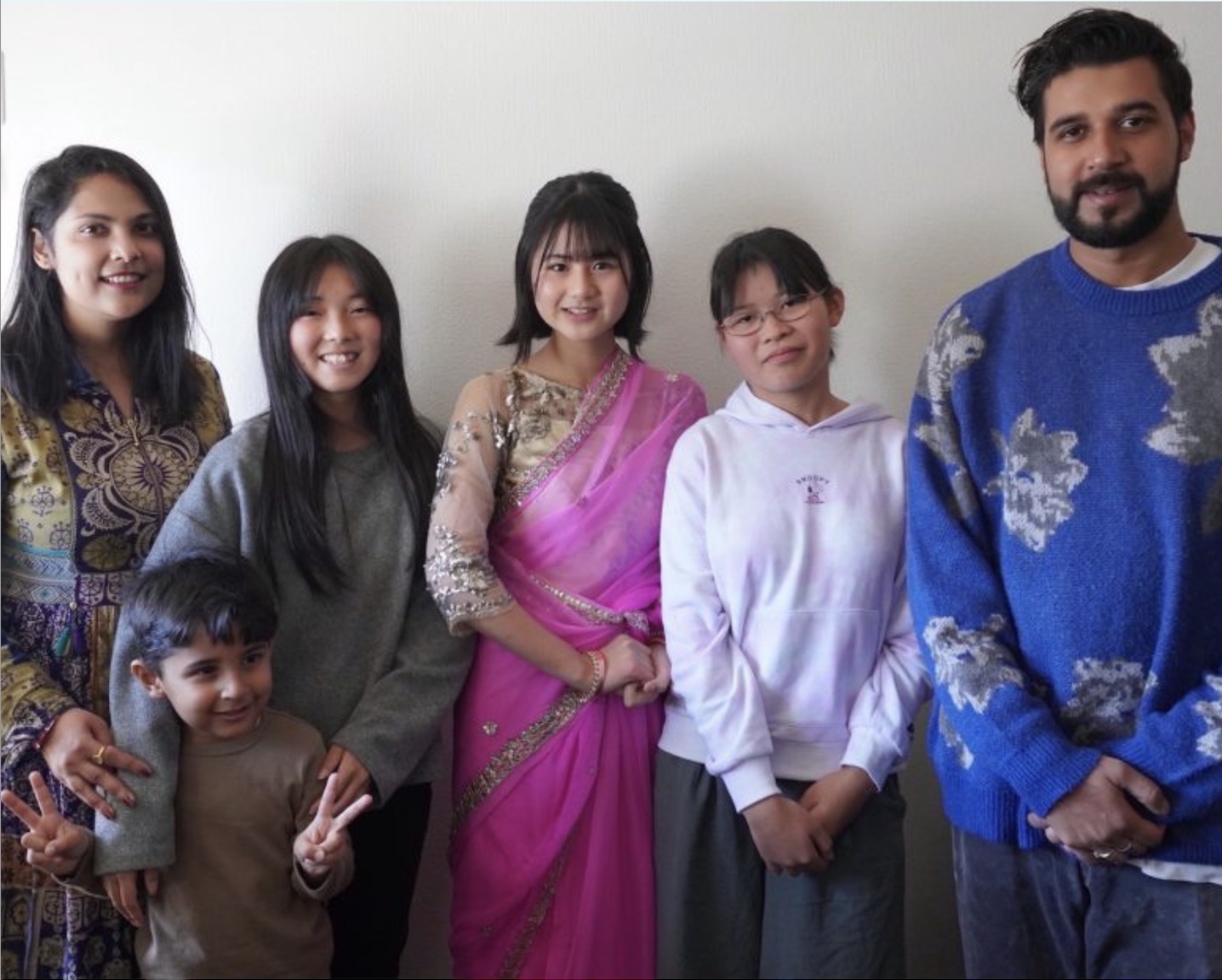
The domestic format removes the international flight from the equation. It still requires an unfamiliar household, a willingness to communicate and a host prepared to welcome someone. The company describes the fee as payment for cultural and cooking experiences. That distinction matters: a family home supplies the texture of the encounter, and each home will be different.
For readers designing services, the move is worth studying. HelloWorld took two unmet needs and arranged an exchange between them. The transferable question is concrete: which people in your neighborhood possess something others are traveling far to find?
A classroom needs someone on the other end
A host-family weekend has an obvious constraint. Each encounter needs people, a place and an agreed date. HelloWorld’s other route runs through schools. WorldClassroom combines speaking and presentation practice with international exchanges between classrooms. Students can rehearse before addressing peers overseas, then put their English to work with an audience outside the examination system.
The current platform includes AI conversation practice and tools that help teachers review student work. Exchanges can happen live or through recorded videos. These are different ways into the same problem: a student may know a sentence yet hesitate to use it when another person is listening.
“Even children who are not confident in English begin to engage when communication has a purpose.”Takahashi Yu, Business Alliance Division, speaking to Tokyo Updates
The audience supplies a reason to prepare. An introduction becomes something a contemporary in another country will hear. A presentation about local culture has a recipient. This helps explain why HelloWorld fits between language-learning software and the machinery of school exchange. Its offer includes the relationship at the other end of the connection.
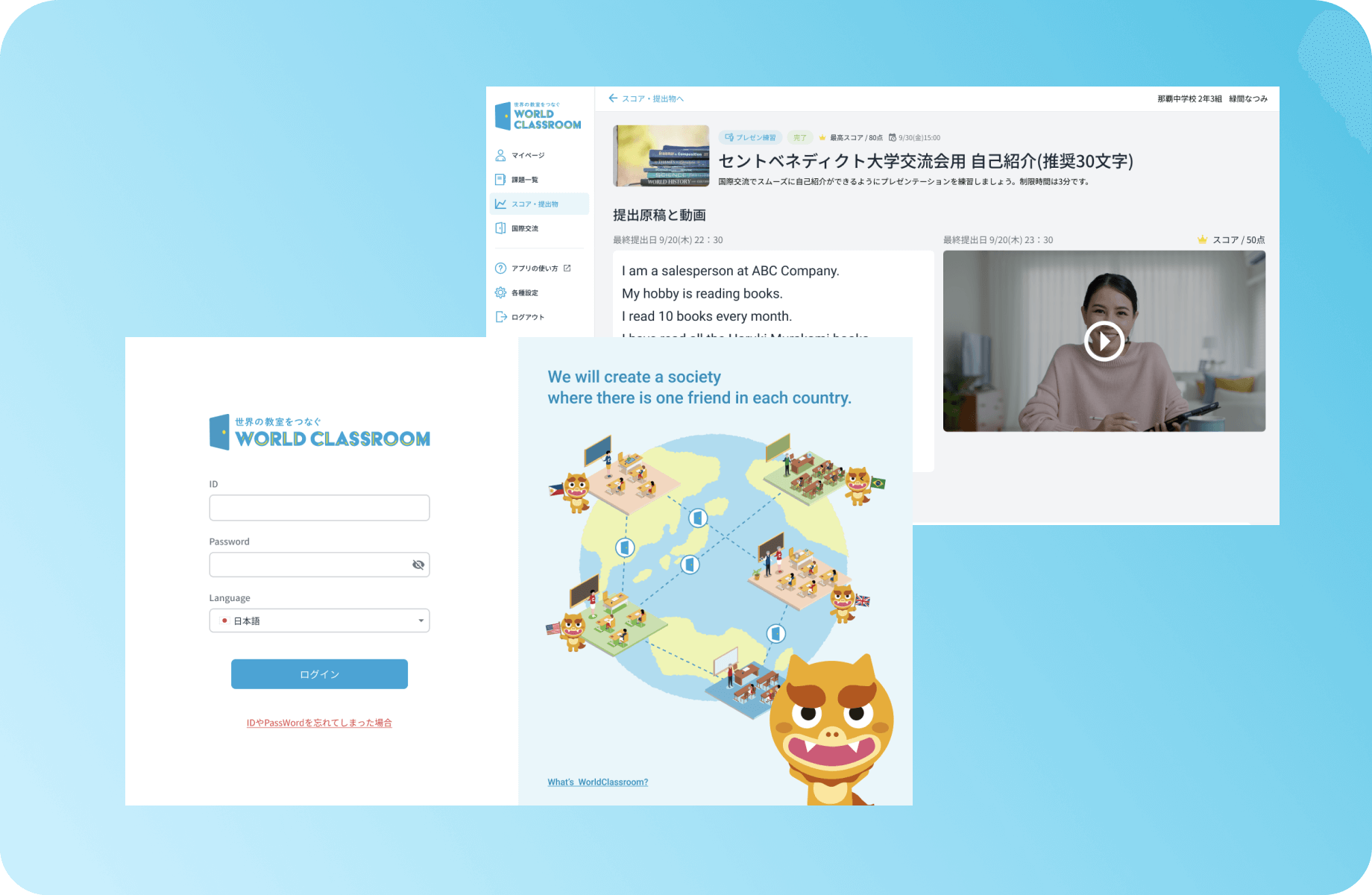
That machinery has several customers: families purchasing an experience, schools planning lessons, municipalities seeking broader participation, and overseas schools seeking exchange partners. Alternatives range from overseas trips and English camps to online tutoring and sister-school arrangements. HelloWorld’s distinguishing combination is local, in-person contact alongside a school platform built around international peers.
A lower price still has a gate
Nearby does not automatically mean affordable. The public Machinaka Ryugaku site lists a solo, 24-hour trial at ¥29,700 including tax. Multi-visit and shared-participation plans have different prices. The practical consequence is plain: removing airfare leaves a participation fee that some households will still struggle to pay.
Solo 24-hour trial, tax included.
Publicly listed price checked October 2026.
Conversations with Ashinaga Foundation exposed that remaining barrier. In January 2023, HelloWorld provided a free three-day program for 13 students supported by the foundation, with Odakyu Electric Railway’s assistance. The schedule combined a city activity with domestic homestays. The company also developed the Machinaka Fund to support children unable to participate at their own expense.
The financing is equally revealing. In August 2024, HelloWorld announced ¥184 million in borrowing from the Bank of Okinawa, MUFG Bank and Okinawa Development Finance Corporation. It reported no collateral, guarantees or equity dilution. The founders described a preference for generating sales and profits while pursuing long-term impact. Revenue, institutional cooperation and funded access all belong in this business.
The difficult part is arranging hello
Institutional adoption offers one measure of that plan’s progress. Naha selected WorldClassroom for all public junior high schools in April 2024, covering approximately 8,700 students. Yokosuka began using it across all 23 municipal junior high schools in September 2026, serving about 8,000. These are deployments with a defined public-school population.
Students covered by each city rollout. Different dates; separate school populations.
There are limits to what those numbers tell us. Deployment establishes availability, while lasting friendships and improved fluency require more evidence. A weekend cannot reproduce months of life overseas. A classroom exchange needs working technology, preparation and a partner whose schedule fits. Staff support for setup and connection tests addresses part of that practical burden.
The organizing work is also the lesson for a school considering the service. Start with the exchange you want students to have, then plan the practice that makes it possible. A recorded introduction may suit one group; a live discussion may suit another. The platform offers both. Teachers still have to decide what students should learn from meeting, rather than treating the connection itself as the whole lesson.
By July 2026, HelloWorld had announced a third consecutive EDU-Port Japan supported-project selection. Expansion still rests on a small unit of delivery: people successfully meeting. A teacher needs the lesson to happen; a family needs the arrangement to make sense. The company’s broader ambition depends on getting those ordinary details right, again and again.
Take the next step
Explore the programs, meet the company, or watch an exchange in action.