Paul Sage has a carefully unhelpful answer for people who ask how to break into the games industry. “How the hell should I know? I did it 30 years ago.” The joke comes with a practical follow-through. In the same public post, he directs people toward environment artist Liz Metzger, who has entered the business much more recently. Let her answer. Let people watch her work. The veteran is happy to surrender the microphone.
It is a small exchange, but a useful introduction to the CEO and game director of Ruckus Games. Sage has enough history to fill an evening: Ultima Online, Tabula Rasa, The Elder Scrolls Online, Borderlands 3. He could turn every question into a trip through his own credits. Instead, here he is pointing across the room. Someone else has something you should hear.
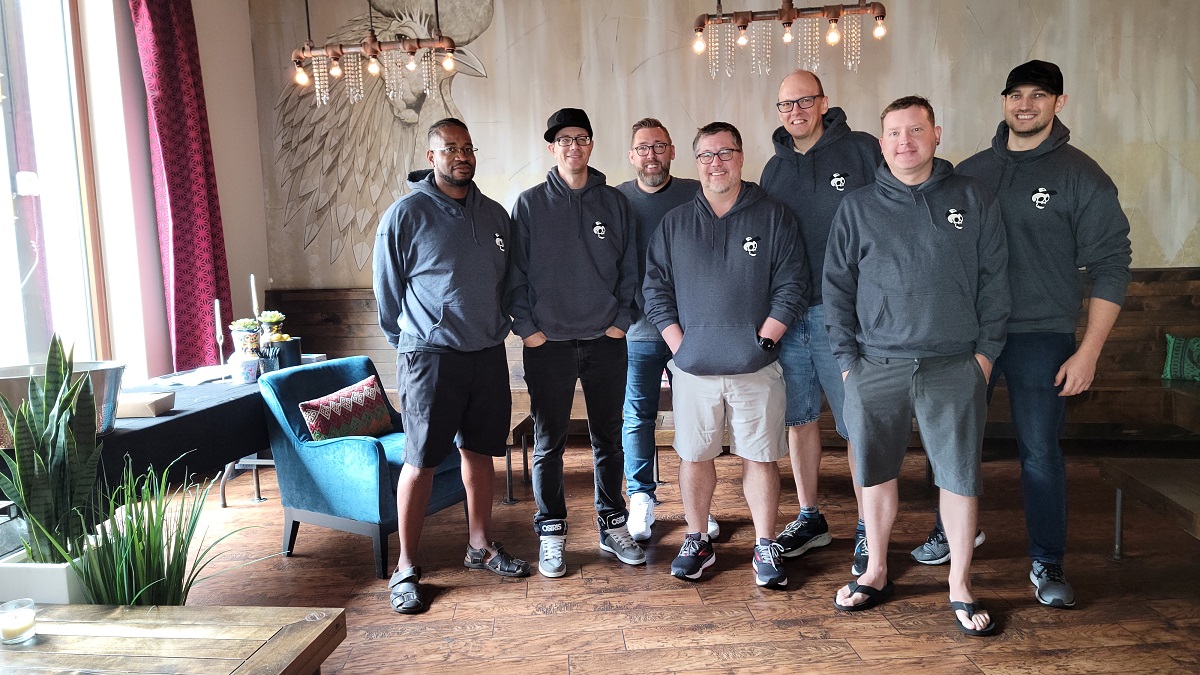
That habit matters because his current undertaking involves two kinds of construction. Ruckus is making The Holdouts, a cooperative shooter about ordinary people defending their town with improbable equipment. It is also making a workplace. Both projects depend on what happens when several people have an idea at once.
Sixteen kilobytes of ambition
Sage grew up in Dallas, attended public school and found his way through a succession of electronic temptations: a Merlin handheld, an Atari 2600, a Commodore VIC-20. On the VIC-20, he began writing games in BASIC. When he filled its memory, he bought a 16K expansion. Looking back, he is quite willing to blame the programmer.
Ultima III made the ambition more specific. He wanted to make games, and later studied computer science at the University of Texas at Austin. The professional entry came in 1995 through customer service and quality assurance. At Origin Systems, he went on to become a lead designer on Ultima Online. A player had found his way into the workshop.
The sequence is appealing because it contains actual work between the fascination and the title. Playing a game can make its creation feel inevitable in retrospect. Answering customers and testing software is a less cinematic beginning. It also puts a future designer unusually close to the people who discover what a game really does.
The joke has a job to do
By 2019, Sage was discussing a different sort of customer experience: a character trapped in a portable toilet by a rogue artificial intelligence. He was creative director of Borderlands 3, and this was legitimate work conversation. Some professions offer better interview anecdotes than others.
His explanation of the game’s comedy was practical. Combat creates tension. Humor lets some of it escape. The characters need recognizable feelings even when their surroundings have become absurd; otherwise there is nobody for the player to care about. A joke can change the rhythm of play as surely as a new enemy can.
That helps explain why Sage talks about fun in such ordinary language. He is interested in the person holding the controller: whether they are smiling, whether they want to continue, whether the fictional people feel sufficiently human to follow into another ridiculous situation. The elaborate machinery has to produce a simple response.
Even the weapons could supply their own little comedies. During development, the team tried sticky projectiles for the Torgue weapons despite initial doubts. Sage remembered the result as a roomful of people giggling at the explosions. An idea that sounds questionable in a discussion can become persuasive once somebody builds it.
His own favored equipment included a beam weapon whose beams produced further beams. Asked why a character had the surname Strongfork, he replied that Witherspoon was taken. There is a consistent pleasure here in taking an already silly proposition one step further. The explanation should fit in a sentence; the consequences can occupy the screen.
The people behind the billboard
A franchise sequel also comes with a quieter design problem. The people making it have to remain interested. Before Borderlands 3’s release, Sage described the danger of creative boredom during a long production: developers can begin changing things because they have spent too long with them. A schedule has to accommodate invention without becoming a permanent invitation to reconsider every decision.
Then there are the billboards, the expectations and the money already spent telling the world to pay attention. Sage’s stated responsibility was to make the game and represent the people making it. The second obligation weighed on him particularly heavily.
“I feel more pressure representing the team than I worry about marketing spend.”
Paul Sage, 2019
That is a revealing measure of the job. A creative director becomes a public face for work performed by many people. The interview is brief; their effort stretches over years. His answer suggests he feels that imbalance, and wants the people back at their desks to recognize themselves in what he says.
Former colleague Edward Knapp’s public recommendation adds another perspective. He describes a director who trusted designers to explore, then understood when to provide guidance. That combination is harder than merely announcing an open door. Someone must notice when an experiment needs time and when it needs an ending.
- 1995Customer service & QA
- 2014The Elder Scrolls Online launches
- 2019Borderlands 3 launches
- 2021Co-founds Ruckus Games
- 2025The Holdouts gets its public name
A new studio, a different bargain
Ruckus began in 2021. Sage arrived with experience of leading within large companies, then had to learn the work of running a company himself. He has discussed that transition as a learning process, including the unfamiliar business of venture financing. Having directed a game does not make a fundraising conversation another design meeting. The vocabulary changes. So do the questions.
What the founders could bring was something playable. Within four months, Sage said, they had a working prototype. In September 2022, Ruckus announced $5.5 million in seed funding led by Transcend Fund, with BITKRAFT Ventures and 1Up Ventures participating. The studio was fully remote and deliberately organized around developers having a voice.
The early premise already contained the neighborhood and the resourcefulness. Sage described a cooperative suburban shooter, with crafting and humor among its ingredients. He wanted room for player experiences to differ. That requires enough structure for people to understand the game and enough freedom for them to surprise one another inside it.
The next disclosed round was a $19 million Series A, announced in November 2024 and led by Krafton. The group included Hypergryph, BITKRAFT and Transcend. The investors were backing a team that had turned the concept into a more substantial demonstration: fourteen people had worked for twelve months on the prototype presented for that round.
Two disclosed rounds. Funding for the company’s next chapter.
The money buys the opportunity to continue. The interesting part for Sage remains what the team does with that opportunity: how an idea behaves when players arrive, how much can be made with a focused group, how familiar collaborators adapt to a world they are building themselves.
The neighborhood fights back
That world now has a name. The Holdouts became publicly available to wishlist on Steam in October 2025. Its inhabitants are everyday people caught in a strange attack on their town. Players can go alone or bring up to three friends. Kitchen equipment, lawn tools and musical instruments acquire careers their manufacturers presumably did not anticipate.
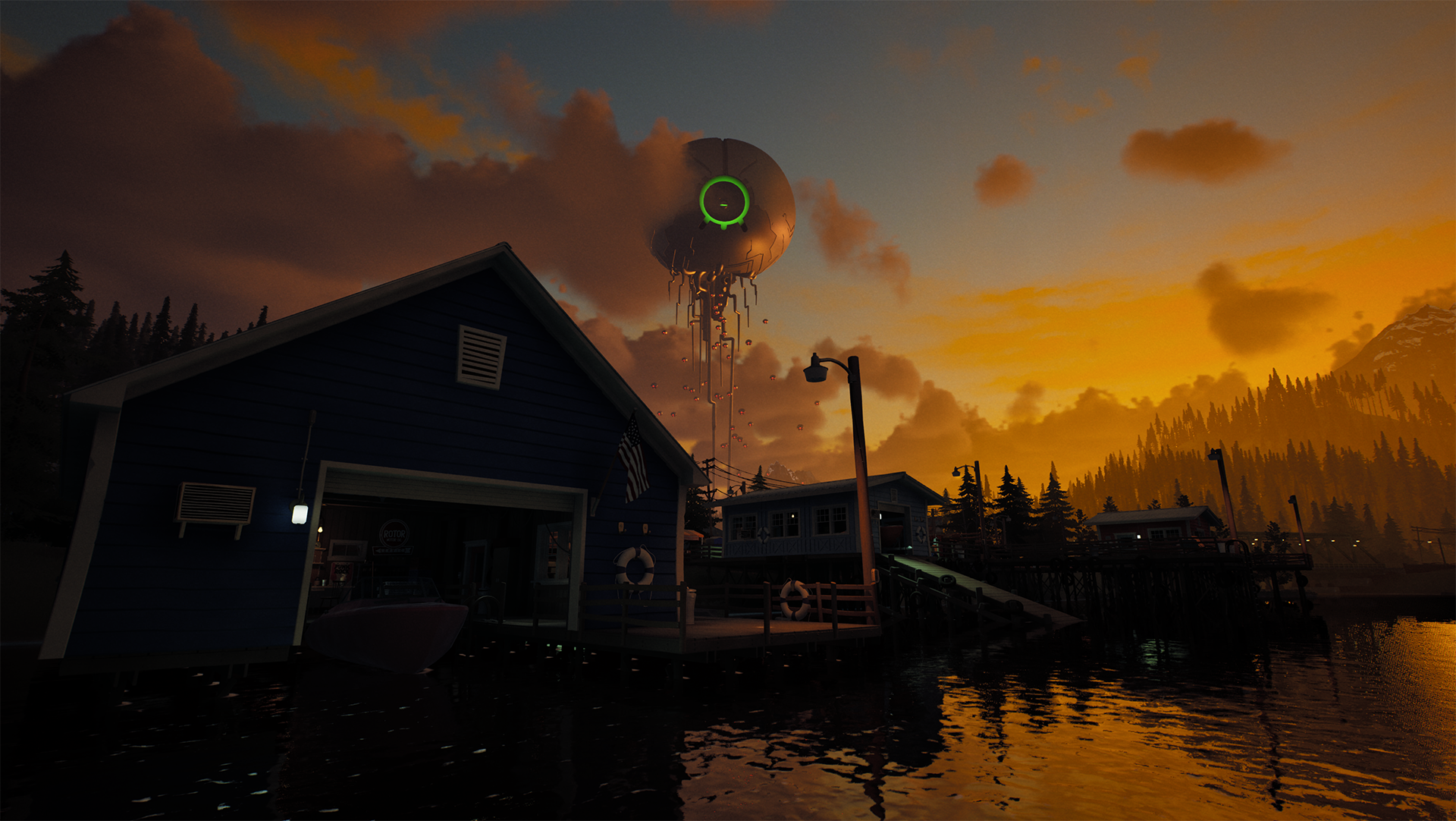
A toaster can fire saw blades. A modified power washer can become a flamethrower. The domestic joke is easy to grasp, but the hometown gives the fighting somewhere to lead. Players gather resources, rescue people and return to a central place they can improve. The outing leaves a trace.
The art direction belongs to Scott Kester, whose history includes helping establish the graphic novel appearance of Borderlands. Shared history gives the team a common working language. A new setting gives it new decisions. Here the familiar lawn, street and household object can become the raw material for an adventure.
The game remains in development, with its Steam release date listed as to be announced. Prospective players can join a playtest waitlist. For Sage, that means another round of the exchange that has run through his career: build something, let people touch it, pay attention to what happens.
Passing the tools along
His advice to aspiring developers makes the exchange concrete. In a lengthy hiring guide, Sage asks applicants to choose a specific role and demonstrate the skills it requires. A promise of enthusiasm gives a hiring manager little to examine. A portfolio gives them work they can discuss. He also treats quality assurance as a worthwhile career in its own right, while acknowledging that it was his route in.
There is a particular seriousness beneath that advice. Hiring changes an existing team. A newcomer’s hopes meet the responsibility a manager already has to colleagues. Seen that way, his insistence on evidence is understandable: people will have to work together long after the interview ends.
When he announced Ruckus, Sage described a further ambition: to inspire another generation to make games. It is an aspiration with a recognizable beginning in his own story. Somewhere, somebody plays a game and starts wondering how it was made. Years later, they may be the one making it. Sage is still arranging the conditions for that possibility, leaving room in the plan for another person’s idea.
Step into the workshop
- Ruckus Games · Paul Sage on LinkedIn
- Watch: Paul Sage on The Fourth Curtain
- Listen: the move from director to founder
- Read Sage’s guide to entering game development
- The 2019 conversation about teams, pressure and comedy
- Watch The Holdouts gameplay · Steam · Playtest signup
- Follow the studio: X · Instagram · YouTube · LinkedIn