Gabriel Leydon spent his late teens getting very good at San Francisco Rush. He could put sixteen hours into a day of the Atari racing game. This was an unusual apprenticeship for a future chief executive, although considerably more relevant than learning to make a convincing slide deck. In an arcade, the scoreboard supplies its own performance review.
He had played games as a boy to find a way into the company of other people. Being good at something gave him standing. Later, after hacking into the racing game and getting caught, he was recruited by Atari as a testing lead. The player had crossed to the other side of the cabinet.
That early experience gives his subsequent career a useful shape. Leydon became interested in the things people could gain from one another inside a game: recognition, influence, loyalty, a reason to be missed. Those are awkward things to put on a balance sheet. They can nevertheless help build a business.
His arcade years included work at Atari, Tsunami Visual Technologies and Global VR. In 2006 and 2007, he designed the America’s Army arcade game. The work combined game development with a public-facing recruiting campaign for the U.S. Army. Long before his mobile companies hired celebrities, he was already working where entertainment met persuasion.
A crowd before a kingdom
In 2008, Leydon co-founded Addmired, the business that became Machine Zone, with Halbert Nakagawa and Michael Sherrill. An early product, Addable, let MySpace users share photographs, gather comments and compete for visibility. The product taught a lesson that would survive the social network beneath it: an audience could become part of the game.
The move to iPhone games brought iMob and a practical problem. The team arrived before Apple provided the familiar machinery for purchases inside free games. It sold separate paid applications that supplied benefits to players. The arrangement sounds ungainly now. At the time, it let a young company learn how a free community might support itself.
By 2012, Addmired had become Machine Zone and raised an $8 million funding round led by Menlo Ventures. Shervin Pishevar joined the board. Leydon described a company concerned with communities that might endure for years. Chat histories, private messages and relationships were infrastructure worth investing in, even when they produced nothing particularly photogenic for a screenshot.
He was also arguing against the idea that a phone game ought to fill two spare minutes. People carried phones all day. A persistent world could therefore accompany them all day. The proposition was commercially ambitious and socially demanding: once a game contains other people, leaving it can feel like leaving a room in mid-conversation.
An editorial illustration of Leydon’s community-first approach to mobile games.
The expensive business of making allies
Game of War: Fire Age arrived in 2013. Leydon had committed a team of 80 to a single project for well over a year. Alongside the strategy game, they built messaging and translation technology so players in different countries could form alliances. The undertaking put much of the company’s effort behind one world.
The bet was on complexity. While much of mobile design prized immediate simplicity, Game of War gave players elaborate systems to learn and social structures to navigate. A kingdom required attention; an alliance required people. A phone became a place where someone might need you, which is a more durable invitation than a cheerful notification.
In the game’s early testing, Leydon said players averaged two hours a day across roughly ten sessions. He treated that time as the essential material of the business. A player who had invested hours in a community approached a purchase differently from someone who had only just opened an app. His reasoning began with the relationship.
“I want players’ time,” he said in 2013. The sentence is admirably unvarnished. It also places a substantial burden on the designer. If time is the asset being requested, the game must keep furnishing reasons to return. New features alone cannot carry all that weight. Other players can help, bringing rivalries, obligations and the occasional diplomatic incident.
“I want players’ time.”
Gabriel Leydon · 2013
A television budget with a calculator attached
By 2015, Game of War had reached the top of the grossing charts, and Machine Zone had grown to more than 550 employees. The public face of that growth was spectacularly easy to recognize: Kate Upton in Game of War advertisements, followed by Mariah Carey. Mobile Strike would put Arnold Schwarzenegger to work. Subtlety had not been retained as an adviser.
There was an argument behind the casting. Leydon expected the migration of advertising money to smaller mobile screens to make attention more expensive. In his account, fewer available impressions would face more bidders. A developer needed an enduring game and enough understanding of its economics to compete for the people who might play it.
His appearances discussing media made the commercial temperament plain. He wanted advertising judged by measurable outcomes. A famous face was useful only within an acquisition system that could justify what it spent. The romance of the entertainment business had been invited to dinner; the spreadsheet would still be choosing the restaurant.
This combination helps explain why his career resists a neat division between designer and marketer. The mechanics of a game shape how long someone stays. The cost of finding that person shapes what the business can afford to build. Leydon kept treating those decisions as connected, even when the resulting product looked less tidy than prevailing design taste preferred.
When the machinery became the attraction
The technology underneath the games also began to interest him as a business of its own. Machine Zone developed Satori around real-time data infrastructure. In 2018, Leydon left the chief executive role to concentrate on that undertaking, while Kristen Dumont took over MZ. The person associated with mobile armies was turning toward the pipes that moved information.
“My passion has always been in the real-time technology,” he said when announcing the move. That explains a recurring feature of his working life: the game is often an entrance to a larger systems question. How do messages move? How do groups coordinate? Who controls an economy once other people begin making decisions inside it?
The departure also separates two chapters that are easy to collapse. AppLovin acquired Machine Zone in 2020, after Leydon had left its leadership. His next company would be another venture, with another set of risks. A successful earlier game could establish credibility. It could not supply a finished answer to every market he entered.
Give away the first piece
In August 2021, Leydon reunited with Nakagawa to establish Limit Break. The company disclosed $200 million in funding in August 2022. Its backers included Buckley Ventures, Paradigm and Standard Crypto. The two founders brought a shared operating history to an industry in which new economic models were arriving faster than finished games.
Leydon’s proposal was called free-to-own. Limit Break gave away the initial DigiDaigaku collection, comprising 2,022 anime-style character NFTs. Early recipients could hold or sell the digital items. The company retained some assets itself. The intended business depended on building a community and a market around something people first received without paying for the mint.
For Leydon, this was also a distribution idea. People with a stake in a project might introduce it to others. Ownership could change the relationship between an entertainment company and its audience. That was the thesis; a free starting price did not establish what a collectible ought to be worth later.
His 2021 conversation with Patrick O’Shaughnessy had already ranged through digital economies, group spending and the possibilities of NFTs. By 2022, those subjects had become an operating plan. His curiosity had moved from selling advantages inside a world to asking what happens when the audience can own and exchange pieces of it.
August 2022
DigiDaigaku collection
Thirty seconds, several different experiences
Limit Break returned Leydon to the Super Bowl in February 2023. The company had bought a 30-second advertisement for $6.5 million, promoting a digital collectible through a QR code. He had used the broadcast for mobile games before. This time, the viewer was being asked to participate in a mint rather than simply download a game.
The promotion exposed the distance between an arresting invitation and an easy arrival. Only 4,000 Dragon Eggs were allocated to the commercial’s QR-code mint. People arriving after that allocation was exhausted were redirected to Leydon’s Twitter page. Viewers also needed a suitable digital wallet. An offer on national television had encountered the more particular customs of crypto.
The response included complaints and confusion. His follower count passed 900,000 shortly after the spot aired, but a follower gained and a satisfied new player are different measurements. The episode put a familiar question to an unfamiliar product: after paying to assemble a crowd, what experience do you give the people who actually show up?
The rules travel with the token
Limit Break’s subsequent work reached beyond its own characters. In April 2024, OpenSea introduced compatibility with the company’s ERC721-C standard, allowing creators to enforce earnings on eligible secondary sales. The mechanism brought a business concern into the transfer rules of the asset itself. Creators could make payment a condition rather than a request.
There was a trade-off. Enforced collections could be sold through compatible marketplaces, which constrained where they traded. This was a particularly revealing turn for Leydon: ownership was part of the pitch, and so was a creator’s ability to define the conditions under which that ownership moved. The rules were becoming part of the product.
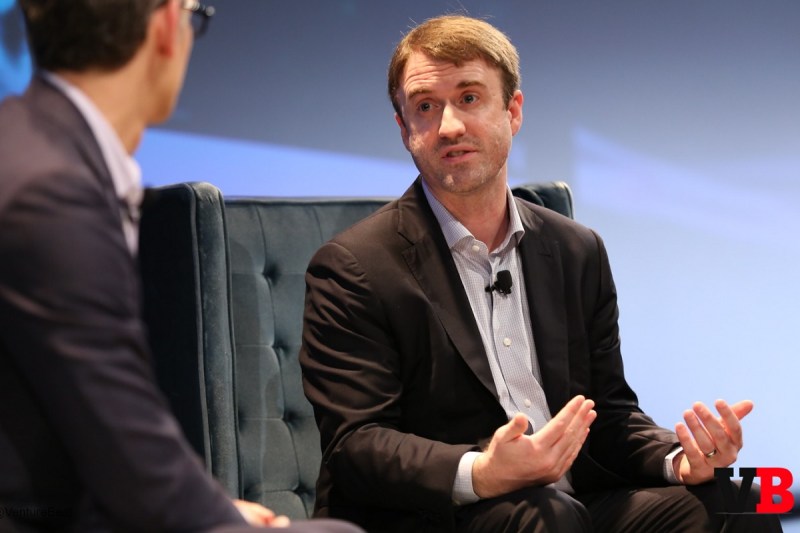
At GDC in March 2025, in a conversation with Yield Guild Games co-founder Gabby Dizon, he advocated Apptokens and more control for developers. The tools permit rules around token transfers and use. His complaint was that exchanges and traders could capture value while the people building applications were left with a weaker position.
Compatible venues connect the two. Transfer restrictions can narrow the places an asset trades.
Back to the player’s hands
In April 2026, Limit Break announced a limited test of Puzzle Panic on iOS in New Zealand, Australia and Singapore. Leydon said this build focused on gameplay and did not include Web3 features. The distinction mattered. After years of discussion about ownership and infrastructure, people could try a game and decide whether they wanted another turn.
The App Store description offers puzzles, bosses, clubs and collectible stickers to trade with friends. Its New Zealand listing recorded another update on October 15, 2026. Alongside it, Apptokens continued presenting tools for programmable digital assets. The two lines of work make a practical pair: rules for an economy, and entertainment that might give people a reason to enter one.
Across the arcade, the alliance and the collectible, Leydon keeps returning to participation. He learned early that a score meant more with someone there to see it. His companies have spent years designing versions of that encounter. The latest test remains wonderfully ordinary for such elaborate machinery: will somebody enjoy this enough to come back tomorrow?
Continue the conversation
WORK, INTERVIEWS & PUBLIC PROFILES