By 2010, Erez Goren had put five years and $20 million of his own money into a video game. The company he had built before it sold retail technology. His new company sold the possibility of being somewhere else entirely: a science-fiction world called Global Agenda. It was a considerable sum to spend on a change of scenery.
The tempting version of this story is that a software entrepreneur made his money, indulged a hobby, and found a second career. Goren’s actual route has more bends. Games came early. Retail software occupied roughly two decades. Then came a return to games, an expensive first release, the commercial limits of a beloved shooter, and a studio that learned to build several different games from related ideas.
Today, his work at Prophecy Games extends that history. To understand how the former Radiant Systems co-chief executive got here, start with the less glamorous screens: the ones beside a cash drawer.
The checkout before the jetpack
Goren co-founded Radiant Systems in 1985. His brother Alon was another founder and its chief technology officer. Their early business included software automation for gas stations. Todd Harris, who would later co-found Hi-Rez Studios with Erez, joined Radiant when it had about 100 people. By the time they left, Harris recalled, it had around 1,000.
This was a business built around transactions that had to work repeatedly. A customer ordering merchandise or buying a movie ticket needed a clear response from a machine. Radiant’s work encompassed touch-screen terminals, service kiosks and automated ticketing. He sought to combine substantial functionality with an interface as responsive and intuitive as a game.
Radiant’s 1997 annual report captures a company expanding on several fronts. It completed its initial public offering, acquired other software businesses and piloted restaurant products with chains including Chick-fil-A and KFC International. Erez signed the shareholder letter as co-chairman and CEO; Alon signed as co-chairman and CTO. The brothers had a public company to run.
The relationship with a customer continued well beyond installing a terminal. Software needed maintenance, new functions and connections to other parts of a business. That continuing obligation would become familiar territory in online games, where releasing a product begins another stretch of work.

A very different kind of multiplayer
In March 2000, Radiant and Microsoft announced an alliance to develop and market internet-enabled retail management and supply-chain software. Microsoft made an equity investment and committed support across development, marketing and distribution. The ambition was to connect retailers with their suppliers, allowing information and commerce to move between businesses.
Goren’s explanation focused on scale. Retail was a large market, and Radiant needed technology capable of handling the workload. The announcement paired the practical vocabulary of store operations with the era’s enthusiasm for business-to-business commerce. Behind the grand promise sat a familiar managerial problem: getting separate systems and separate participants to cooperate.
Progress was uneven. The company’s 2001 shareholder letter described the year as financially disappointing while defending continued investment through an economic slowdown. Signed by Erez Goren, Alon Goren and John Heyman, it outlined a business supporting different languages, currencies and local operating models. It also pointed to more than 15,000 sites contractually committed to its Radiant 6e products.
These details complicate the idea of an effortless corporate prelude to a creative career. Goren had already worked through the less photogenic parts of software: distribution, customer commitments, expansion and the delay between spending money on a product and earning it back.
Retail software
Enterprise split-off
Online games
Independent studio
Two million shares for another beginning
On January 31, 2004, Radiant completed the separation of its enterprise software business into BlueCube Software. Goren received the new company in exchange for two million Radiant shares. Those shares were valued at $16.3 million at the time and represented about seven percent of Radiant’s outstanding stock.
The arrangement also transferred specified assets and liabilities and included $4 million in cash contributed by Radiant. Goren resigned as co-chairman, co-chief executive and a director when the transaction closed. His departure had a precise legal shape: a negotiated exchange of ownership and operating responsibilities.
BlueCube remained commercially connected to Radiant. Agreements covered resale, services and obligations to existing customers. In July 2006, RedPrairie acquired BlueCube. The sequence matters because Goren was already building his next enterprise before that sale. Hi-Rez began in 2005. Business histories tend to arrange ventures into tidy chapters; the people running them often have several pages open at once.
His connections carried across those pages. Harris moved from business software into games alongside him. Attorney Seth Schulman, who had worked with Radiant and BlueCube, also became involved with Hi-Rez. The new studio had a different product, but some familiar working relationships.
A founder who wanted to aim
At Hi-Rez, Goren took a direct role in design. The studio licensed Unreal Engine 3 in 2005 for a massively multiplayer project. By 2008, he was identified as both founder and lead designer of Global Agenda. He was involved in deciding what the game should let players do.
One frustration supplied a particularly concrete starting point. Goren enjoyed City of Heroes but wanted to aim for himself. The idea grew into a combination of persistent online worlds and shooter combat. In a later account, he acknowledged how far the scope had expanded as the team tried to incorporate more features.
That is an unusually useful origin story because it contains a design complaint rather than a prophecy. A player wanted an action his existing game did not offer. Turning that wish into a studio required people, technology and years of development.
At E3 in 2010, Goren demonstrated the evolving result. Global Agenda was adding open areas beyond its mission-based structure, including the desert environment of the Sandstorm update. The founder could discuss the terrain and the time it took to cross it. His new professional geography included somewhere called the Sonoran Wastes.
The early company employed 45 people and controlled its creative and distribution decisions. Independence brought room to choose, along with the cost of paying for those choices. The $20 million Goren had invested by then gave that freedom a concrete price.
The game that paid for more games
The first release did not settle the question of how to sustain the studio. In a public explanation in 2013, Goren said Global Agenda had lost substantial money. Continued content development had failed to reverse its declining audience. Its technology, however, could support later projects.
Tribes: Ascend presented another difficult calculation. Goren described a game the team loved, released free to play to make entry easier, but one that was at best breaking even. Positive reviews and added features did not guarantee a growing player base.
Then SMITE gave the business a different financial footing. Goren said it was profitable and growing, allowing its development team to expand from roughly 15 people to about 80. A publishing agreement with Tencent added another relationship. His account challenged the suspicion that the studio had simply diverted money out of Tribes: another successful game was helping keep the business operating.
Even the mechanics of subsequent games carried personal traces. When the team was developing Paladins, it experimented with ways to give players progression within a match. Stewart Chisam credited Goren, a Hearthstone player as well as CEO and lead designer, with the idea of incorporating a deck-building mechanic. A card game had found its way into a shooter.
“I tend to be a little fidgety.”
Erez Goren, discussing game projects in 2018
That self-description fits his appetite for trying different projects. It also suggests why colleagues had important roles in deciding which ideas should proceed. A studio can possess more playable possibilities than it can sensibly finish.
Making room for the next studio
In January 2019, Goren handed the Hi-Rez chief executive role to Chisam and remained chairman and majority owner. The company had grown to more than 450 employees. Its games were being organized into distinct development studios, including Titan Forge for SMITE and Evil Mojo for Paladins.
The change separated daily executive responsibility from ownership and strategic involvement. For a founder closely associated with game design, it was also a reminder that making games and managing a growing collection of teams were different jobs.
Prophecy Games began under the Hi-Rez umbrella in late 2019 and became independent in early 2020. Goren is its founder and CEO; Georgia’s 2026 corporate registration lists him as CEO and CFO. The studio describes a team combining newcomers with experienced developers and an ambition to build experiences that communities will enjoy for years.
There is a recognizable pattern here: an existing organization produces a new, separate business. BlueCube emerged from Radiant’s enterprise operation; Prophecy emerged from Hi-Rez. The transactions and products differ, but Goren’s career repeatedly includes the practical work of starting again.
There is still another run
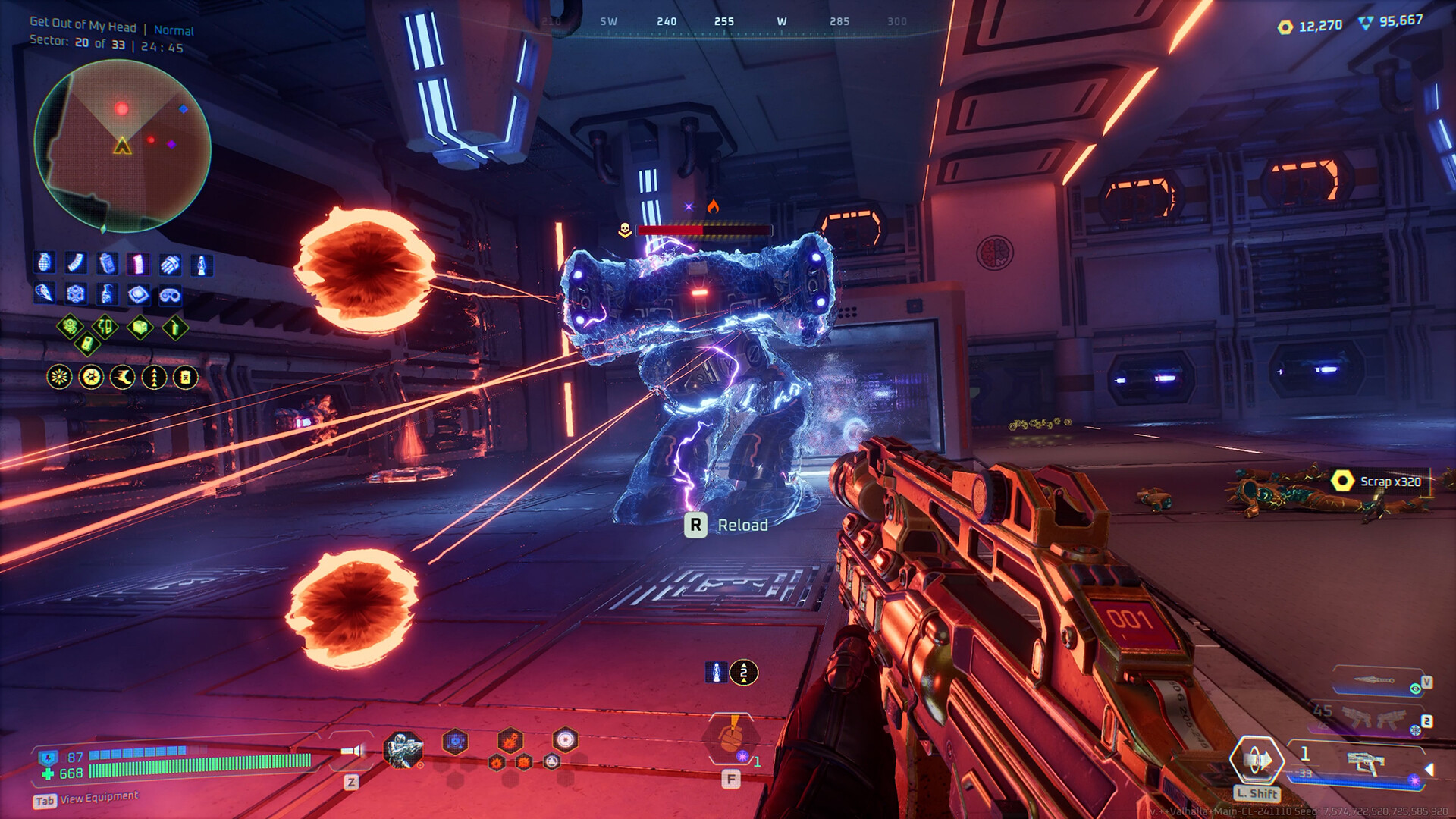
Prophecy released the full PC version of Deadzone: Rogue in August 2025. The science-fiction shooter offers solo play or cooperative sessions for up to three players, with weapons, augments and upgrades that change how a run unfolds. It reached PlayStation 5 and Xbox Series in September, followed by Switch 2 in March 2026.
By May 2026, Prophecy had announced Deadzone Rogue 2. The sequel keeps the emphasis on shooting and repeatable runs while expanding progression and environments. A playable demo arrived on October 8; the full game’s Steam listing still says “Coming soon.” There is work left to finish.
Goren’s career now stretches from gas-station automation to games about hostile machines. Along the way are a public software company, a negotiated split-off, an acquisition, a self-financed studio and several attempts to persuade players to return tomorrow.
That last task gives the story its continuity. A founder can finance development, choose an engine and hire a team. He can even make the game he once wished existed. The player still decides whether to come back. After decades of building software, Goren remains in a business where another person’s next click matters.