In the extended gameplay reveal for DEFECT, a police squad enters an apartment complex, encounters a hostile gang and solves a staffing problem by stealing somebody’s body. A fallen teammate’s consciousness is transferred into a subdued enemy. The recruit changes sides rather abruptly. It is a wonderfully impolite introduction to emptyvessel, a studio interested in making familiar actions produce unfamiliar consequences.
- The game: DEFECT, a cyberpunk tactical shooter with solo, co-op and four-squad competitive modes announced.
- The method: experienced developers, a remote team and tools that shorten the distance between an idea and a playable test.
- The stakes: $11 million in cumulative funding announced in 2025, followed by a publishing deal with NC America.
There is another, quieter staffing question behind that scene. How many people does a game like this need? The studio’s answer begins with the people already there. Its founders, Emanuel Palalic and Garrett Young, worked together at id Software. Their new company brings together experience from franchises including DOOM, Quake, Call of Duty and The Last of Us. Those credits establish competence. They also make the decision to start small more interesting.
01 / The people who wanted their own world
emptyvessel was founded in 2023 and introduced publicly in March 2024. Palalic became CEO and game director; Young became COO and general manager. The foundational team included CTO Wei Ning, art director Alex Palma and animation director Rico Flores. The proposition was specific: give experienced developers creative independence, then keep the scope within their reach.
That matters because a veteran’s résumé can become an expensive decoration. Hiring somebody who knows how a good shooter feels accomplishes little if the organization prevents them from acting on that knowledge. In a 2024 interview, Young emphasized a consistent vision and using people’s skills well. He described a team of 14, with colleagues connected remotely and occasional opportunities to meet in person.
“Gaming’s next massive hit can come from anywhere.”
Garrett Young · studio announcement, March 2024
The studio’s Austin base is a point on the map rather than a daily commute for everyone. Its announced development footprint extends across the United States, Australia, Europe and Japan. Remote work gives it access to people whose lives need not be rearranged around one office. Whether that freedom produces a better finished game remains the experiment.
02 / Four squads ruin everyone’s evening
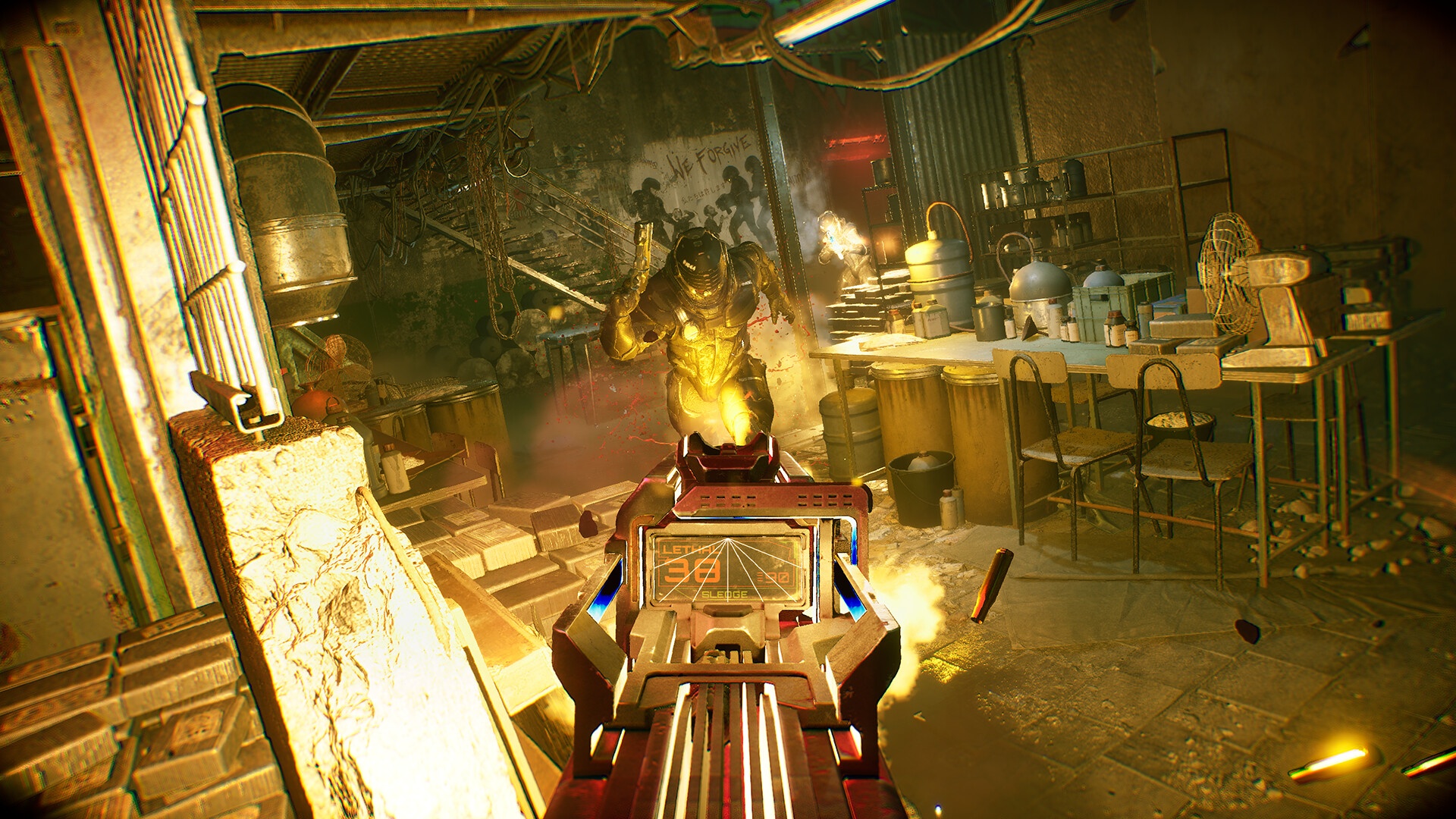
DEFECT occupies the tactical shooter market, where coordination, positioning and knowledge of a space can matter as much as aim. Its proposed audience includes players who enjoy deliberate squad combat and the menace of cyberpunk fiction. Rainbow Six Siege is an adjacent choice for tactical competition; Ready or Not serves an appetite for SWAT-style operations. DEFECT seeks its own place through its factions and the interactions between them.
The setting is humanity’s last city, governed by an authoritarian AI called The System. Its policing force, rogue officers and gangs pursue power in the same hostile environment. Competitive play is advertised as four teams of four. Each squad has business to conduct. A rival’s objective can interrupt your own, making the match a contest over information and timing as well as territory.
Four squads · competing objectives · one shared battleground
The October 2025 extended reveal makes this proposition tangible. Police hack surveillance, work through a gang-controlled building and eventually attempt to reboot the block. Scanners and other tools help them interpret the space. Health stations become places to defend, because their charges are limited. The Body Snatch revival mechanic adds a particularly unsettling tactical option. A room is full of resources, hazards and opportunities for betrayal.
Palalic has described the game as HUD-less, with destruction and equipment changing how players approach combat. The appeal is understandable: fewer abstract indicators, more attention to the place you inhabit. The design challenge is equally apparent. Players still need to understand what is happening while several factions make a mess of it.
03 / A garage becomes a production tool
Small teams need ways to discover bad ideas cheaply. In a January 2026 Xsens case study, Flores describes a motion-capture workflow that can put a performance onto a character the same day. He can capture movements in his garage, test them in the game and polish the ones that work.
His experience with optical capture had involved waits of weeks or months for usable data. Previous work with Xsens persuaded him to adopt its inertial system from the outset here. Specialist stunts can still call for optical capture. Ordinary movement does not always require the same production apparatus.
- CaptureRecord the movement.
- TestTry it in the game.
- PolishRefine what works.
The lesson for another studio is practical: shorten the feedback loop before increasing output. It depends on somebody who understands capture, animation and the game’s needs. A fast pipeline with poor judgment merely makes mistakes arrive sooner. Nor does a focused team remove the work of balancing multiplayer, building environments or maintaining performance across machines.
04 / Eleven million dollars buys more questions
In June 2025, emptyvessel announced a Series A that brought cumulative funding, including its earlier seed round, to $11 million. NCSOFT and 1AM Gaming were lead investors. The stated uses included team expansion, console development, single-player support and remote infrastructure. That figure describes capital raised; it is not an itemized budget for making DEFECT.
The business is the creation of original consumer game IP. NC America’s March 2026 global publishing agreement adds a partner to bring DEFECT to market. Composer Mick Gordon contributes its music, while PETROL Advertising was announced as a branding and campaign partner. Independence here includes choosing collaborators with capabilities the core team needs.
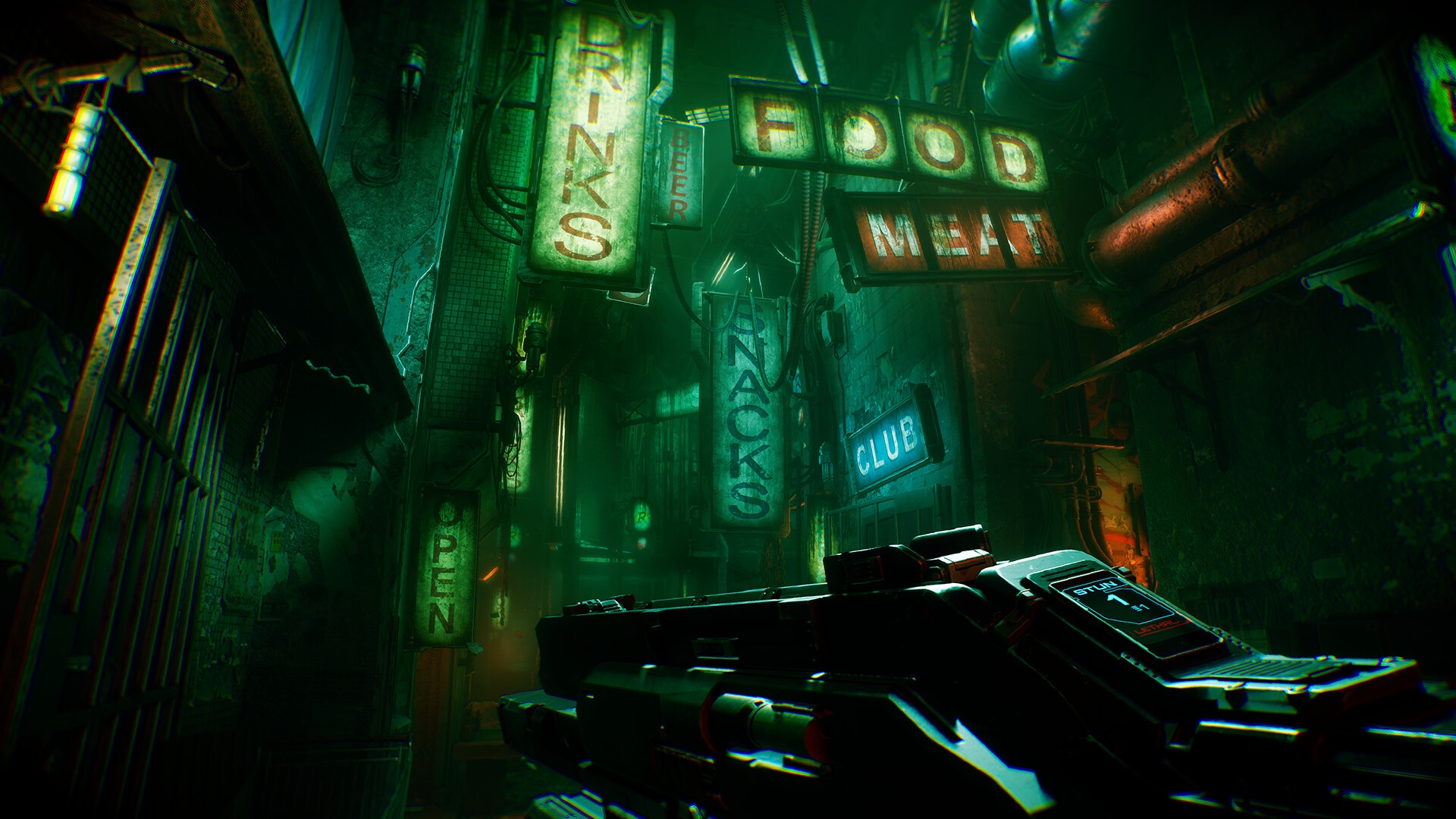
For players, the immediate actions are simple: watch the gameplay, wishlist the game on Steam, Epic or GOG, and register interest in future playtests. As checked in October 2026, Steam still lists a release date to be announced. Single-player and co-op widen the intended audience beyond competitive squads. Their quality, and the final commercial proposition, will be judged when players can actually get inside.
emptyvessel’s interesting claim is therefore still being tested. Its developers have chosen a demanding world and a comparatively compact way of making it. The useful thing to borrow is the discipline of getting an idea into play quickly enough to learn from it. Even a city ruled by an omnipotent machine needs somebody willing to test the doors.