Every live match has an afterlife. First comes the feed for broadcasters, then the stream for fans, then a replay, then a handful of highlights. Somewhere in the usual chain, the same event turns into a small family of files, each waiting to be stored, moved, protected and delivered. Eluvio, a Berkeley software company, looks at that family and asks whether most of its members need to exist.
- Eluvio sells a video platform to broadcasters, sports leagues and studios.
- Its Content Fabric turns one source into authorized live streams, replays and clips on demand.
- United Rugby Championship says URC TV cut operating costs 62% in its first year on the platform.
- The published results belong to URC TV; another media owner would need to test its own workflow and costs.
That question sounds technical until a bill arrives. United Rugby Championship, which runs a club competition spanning five countries, says its old streaming arrangement demanded too much effort for too little return. Media director Adam Redmond described high costs and marginal profitability. The league moved URC TV to Eluvio, kept its existing fans, and offered subscriptions through a rebuilt service. In the first year, it reported operating costs down 62%, transactions up 64% and revenue up 35%, even as it lowered prices. Its subscriber count grew 2.7 times. These are figures from a joint customer announcement, not an independent controlled trial, but they are unusually concrete for an infrastructure pitch.
The copy is the clue
Eluvio calls its system the Content Fabric. The name suggests a single surface; the machinery is a network of nodes, content objects, software tools and a blockchain ledger for ownership and access rules. A media owner can ingest a live feed or a master video, grant rights, stream it to viewers, generate a replay, build a clip and sell access. Eluvio's central trick is composition: reuse the same media parts by reference, then assemble the output a viewer or editor needs at that moment. A new version need not mean another permanent full-size file.
This is where the company's founders have a pleasingly circular biography. Michelle Munson and Serban Simu previously built Aspera, whose FASP technology helped move enormous media files quickly; IBM bought Aspera in 2014. At Eluvio, they turned from moving files faster to asking how many movements could be eliminated. The company was founded in 2017 and launched its Content Fabric in 2019. The old expertise in transport is still there, but the question has changed.
The arrows are conceptual; the actual work happens across Eluvio's software and node network.
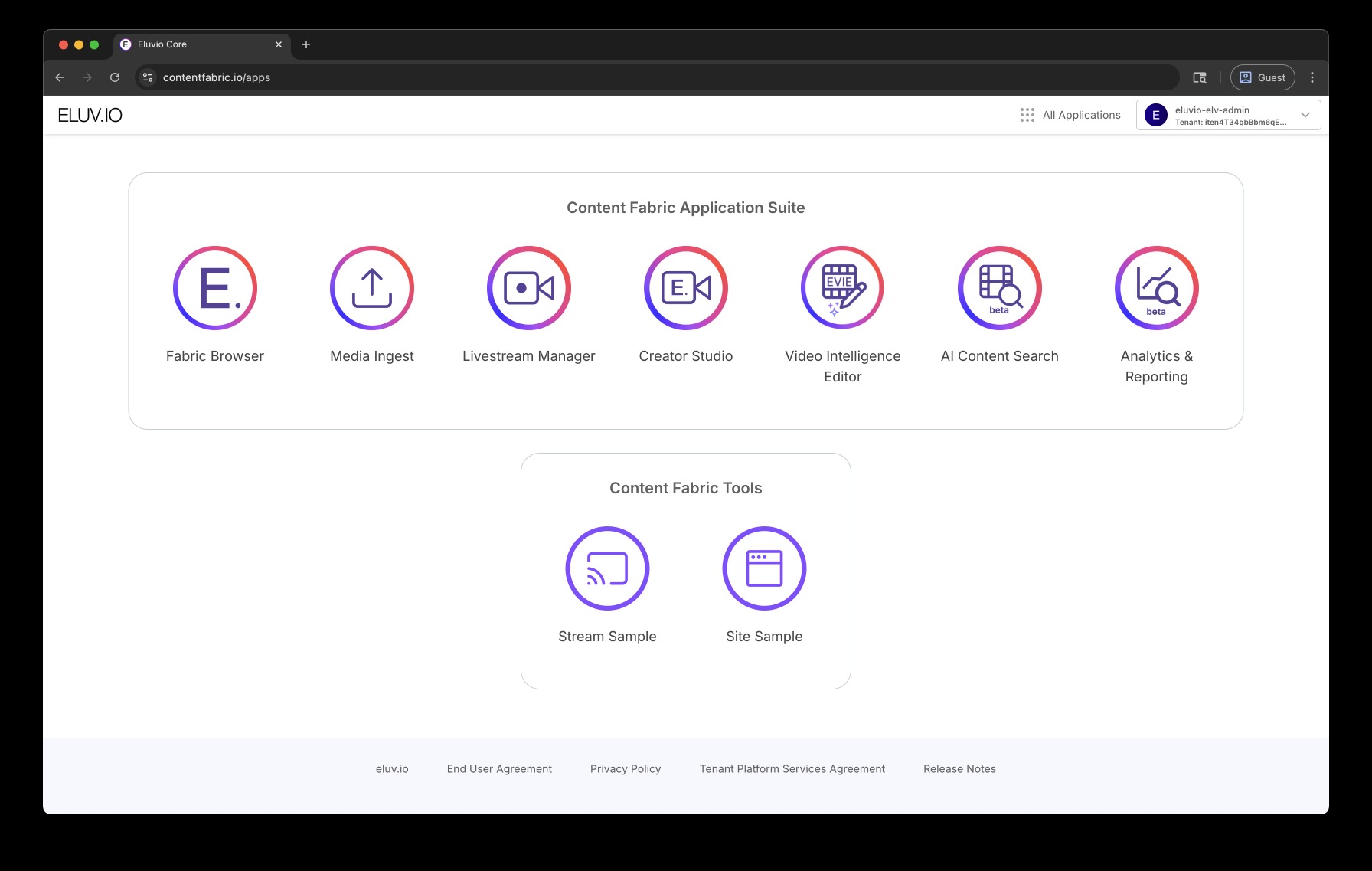
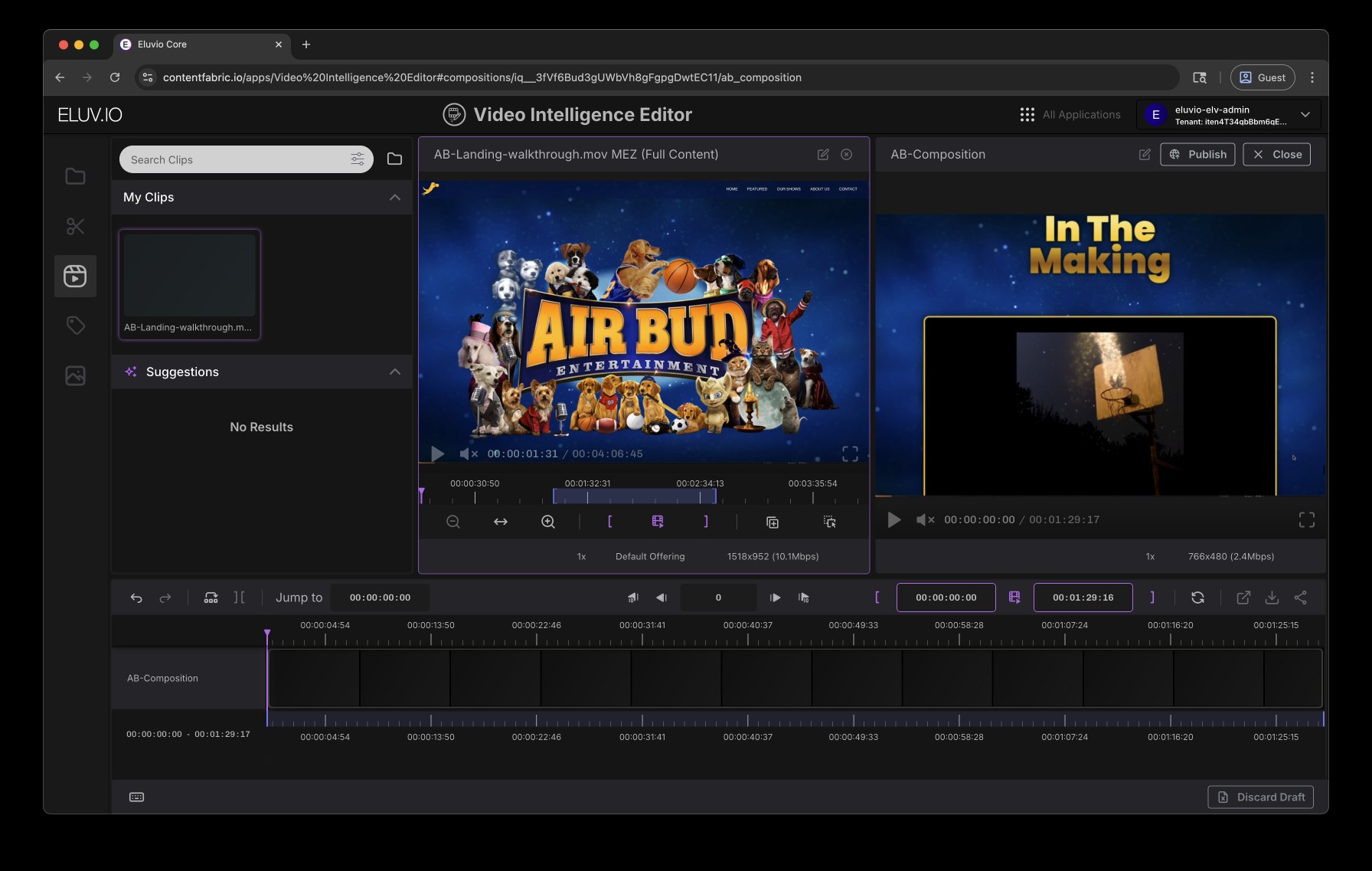
A traditional setup can involve an ingest service, transcoder, origin storage, delivery network, rights system, storefront, player, editor and analytics product. Eluvio combines much of that work. Its Fabric Browser manages media objects. Creator Studio builds and operates viewing destinations. The Media Wallet handles access and commerce. EVIE, the Video Intelligence Editor, finds moments and makes clips from live or stored footage. Analytics reports what viewers watched and what they bought. Developers can use public APIs and client code rather than accept only a finished interface.
A league gives the arithmetic a face
URC TV now carries more than 180 live games, with replay, DVR and highlights, for viewers in more than 150 countries. Eluvio receives match feeds, prepares the versions devices need and serves them with digital rights protection. A fan can watch on a browser, phone or connected television; the league can sell monthly and season passes. Its access rules still respect the awkward geography of sports rights. A stream that may be sold in one territory cannot simply be opened everywhere because the network can reach everywhere.
“In the old world, we were running at extremely high streaming costs and expending a lot of effort for relatively little reward.”Adam Redmond, URC Media Director
The first thing that failed was the economics of the old arrangement, according to Redmond: operating costs were outrunning the return. What changed the league's mind was a working example at its partner European Professional Club Rugby. The migration then had a practical test - preserve the installed audience while introducing the new subscription service. URC says it did so. The lesson a smaller rights holder can borrow is specific: measure the cost of the entire path from contribution feed to purchase and replay, then ask which intermediate copies and vendors are actually earning their keep. A 62% reduction cannot be pencilled into somebody else's budget in advance.
The audience is not always a fan
At UEFA EURO 2024, the end users of an Eluvio service were broadcast licensees. UEFA, Telstra Broadcast Services and Eluvio spent nearly a year building a Radio International Sound streaming service for 51 matches. Rights holders around the world could receive original match video and sound, add commentary in their own language, and feed local production. Telstra carried the source from stadiums to its London control room and into Eluvio's Fabric. The service offered secure logins, individual watermarks, multiple audio tracks and reporting. Telstra's case study says the Fabric-to-player portion ran at about two seconds of latency, with roughly five to six seconds from backhaul to screen.
That deployment shows why “streaming” can be a misleadingly small word. A consumer wants a picture that starts; a broadcaster wants the right feed, at the right time, with permissions, resilience and a trail of evidence about delivery. Eluvio's market is the owner of that complexity. Warner Bros. used the platform for WB Movieverse releases, including a 4K edition of The Flash with collectible extras. Cricket Australia launched early access to Cricket TV in September 2026, adding another direct-to-fan sports service to the roster. These are different businesses; the common buyer controls valuable media and wants more ways to distribute it.
What the ledger is doing here
Eluvio's blockchain can sound like a detour into an earlier internet fashion. Its quieter job is to record ownership, versions and access policies beside content. The company says the network uses proof of authority rather than the power-hungry proof of work associated with early cryptocurrencies. The argument is operational: if the right to open, edit or sell an asset travels with that asset, a media owner may need fewer disconnected entitlement systems. The Warner Bros. movie releases made the ledger visible through digital ownership; in a rugby subscription, the fan mostly sees a login and a match.
There is a price to the new approach, even when its contract is private: migration work, integration with existing identity and rights systems, and trust in a platform that replaces several familiar pieces. Eluvio does not publish a standard tariff. Its 2021 Series A is sometimes repeated as a $100 million funding round, but Fox Corporation said $100 million was the company's valuation when Fox made its strategic investment; the amount raised was not disclosed. Buyers should request a cost model for their own traffic, archive, devices and rights map rather than treating a customer success figure as a quote.
The company continues to expand the same architectural bet. The 2025 Bangkok release added live broadcast distribution and AI-assisted clipping. The 2026 Bucharest release brought broadcast feeds, consumer streaming, monetization and inline video intelligence together. Eluvio says EVIE can tag and search frames, then create highlights without moving the underlying media. TV Tech gave two of its products Best of Show awards at IBC 2026. The awards are welcome recognition; the more interesting score remains the one on a customer's ledger.
Eluvio's sharpest idea is almost impolite to an industry built around elaborate pipelines. Before buying another box to handle the next copy, ask why the copy exists. For a league with rights to sell, a live schedule to fill and an archive to reuse, that question can change the economics. For a casual publisher with a small library and a simple player, the work of changing systems may outweigh the gains. The useful habit survives either way: count every file, handoff and fee between the source and the person pressing play.