The office has karaoke, homemade Tunisian food and children at the table. There is singing and dancing of a kind, Elena Petrova suggests, that colleagues may decline to acknowledge on Monday. The occasion is a birthday. The gathering belongs to a monthly tradition at Ad Astra, the language-services company she founded. For a business devoted to communication, this is a rather satisfying way to conduct an internal check: put down the agenda and see whether anybody stays for dinner.
Petrova calls these get-togethers a favorite tradition. The detail gives her work a useful scale. A company can organize communication across countries and still need a room where colleagues can spend time together. In her telling, food and music do some of that work. Even the most diligent slide deck would struggle to compete with karaoke.
Her professional life has several such rooms: the places where she once interpreted, the organization she now runs, the interviews she hosts. Across them, a practical question keeps returning. How do you arrange things so that people can understand one another?
Diplomats, footballers and a language business
Her early assignments included spoken-language interpretation and language instruction for diplomats, schools, media organizations and the Zenit football club in Russia. It is an unusually varied apprenticeship. A diplomatic exchange and a football organization have different rhythms, different vocabularies and different expectations of the person helping the conversation along. The common requirement is attention to somebody else’s meaning.
After moving to the United States, Petrova worked in language-services management and business development. She had experienced the work at the point of delivery; now she was learning how to organize and sell it. Ad Astra followed in 2010. Her explanation of the motive is direct: “I wanted to ensure equal access to information for all.”
There is a long distance between that sentence and running a company. Access needs an actual service: the right person, an agreed assignment, a workable way to connect. Petrova’s career puts those practical details beside the principle. The founder had already been the professional whose presence helped make the exchange possible.
She has described travel and learning as continuing interests, including exploring new places, cultures and languages and making friends. In her account, curiosity about other people does double duty. It is part of her work and part of what she chooses to do away from it. The itinerary may change; the interest travels well.
The paperwork has a speaking part
By 2023, Petrova was discussing company building and AI with Deborah Fell on Success Beneath the Surface. She spoke about assembling a team around shared principles and treating technology as a way to expand human capability. The conversation tied commercial value to cultural understanding. It also placed her among founders trying to make those ideas survive the less philosophical demands of running a business.
In a 2024 conversation with localization interviewer Robin Ayoub, she described an organization using AI in business development, marketing and reporting. Her emphasis was on identifying a problem the technology could solve. She also discussed telephone interpreting for government agencies and legal firms working with migrants, where the business of understanding crosses directly into the business of navigating an unfamiliar system.
That combination suggests a useful reading of her approach: technology belongs close to a defined task. A tool has to earn its place in the operation. The appealing promise is easier work; the demanding question is whose work becomes easier, and how.
AdAstraConnect gives that approach a concrete form. The platform brings together interpretation and translation requests, scheduling, reporting and billing. Interpreters have tools for managing assignments and availability. Digital service verification records the completed session, the client’s confirmation, a signature and time information. A conversation ends; its administrative afterlife can continue for quite a while.
- 01Complete
the session - 02Confirm
the service - 03Record time
and signature - 04Report
and bill
The platform connects the exchange with the record that follows it.
The sequence is dry enough to be useful. A missing confirmation can create another email, another follow-up, another delay. Putting those steps together makes visible a part of language work that an observer might overlook. The exchange needs expertise; the organization also needs to know what happened.
In 2024, Ad Astra announced John Arnott’s appointment as chief technology officer to lead development of its proprietary AI platform. Petrova described responsible use of the technology as part of the company’s direction. The appointment made the ambition an organizational decision, with a named executive responsible for the work.
Give the colleagues a microphone
Petrova has another way of examining how an organization works: ask the people inside it. In July 2025, Connected Conversations, the podcast she hosts, brought together three Argentina-based Ad Astra colleagues. Giuliana Medeghini, Nicolás Calleri and Celeste Marderwald discussed community across borders, tools, training and mentorship. Humor was among the subjects, which seems a sensible inclusion for a group whose work depends on understanding people.
The episode gives the company’s global character individual names and jobs. Recruitment, resource analysis and podcast production involve different daily decisions. Letting colleagues describe that experience makes community a subject people can answer back about. A microphone can become a useful management instrument when it makes room for a voice besides the founder’s.
Two weeks later, Petrova interviewed Amparo Villar García about becoming a professional interpreter. Their discussion distinguished training, certification and readiness for actual assignments. García, who had led Ad Astra’s training function since 2022, brought experience across court proceedings, conferences and business interpreting. The episode also discussed the developing online Skills Academy.
These conversations reveal an interest in the route into the profession. Speaking two languages is a starting point; an assignment introduces questions of ethics, preparation and judgment. Petrova’s own early career gives her a reason to care about that transition. The company needs professionals who can do the work, and the prospective professional needs a way to learn what the work requires.
The questions travel
The podcast’s scope extends beyond her company. In January 2026, Petrova sat down with Omari Jeremiah, founding director of Next Generation Language Access. Their subjects included interpreter training for young people, community advocacy and the role of language access in public life. That choice of guest carries the career question into education: who gets introduced to this work early enough to imagine doing it?
An earlier conversation with Eugenia Urrere, founder of Indigenius, considered Indigenous languages in technology and the people responsible for their stewardship. The subject complicates any easy account of translating at scale. Languages carry cultural knowledge. Decisions about who participates in their digital life therefore reach beyond the convenience of a translated interface.
In August 2026, Lisa Mae Brunson joined Petrova for a discussion of belonging and the work of Wonder Women Tech. The conversation examined how spaces can be designed for people who have been excluded. Together, these guests suggest the reach of Petrova’s curiosity: professional preparation, cultural participation and the ordinary arrangements that decide whether someone can join in.
She has also written about a conversation prompted by overhearing Russian on Washington’s U Street. Her reflection connected that encounter with her interview with Ukrainian activist Margaryta Suvorova. Here, listening begins outside the scheduled meeting. The relevant skill is recognizing that a person nearby might have an experience worth hearing.
What happens after the applause
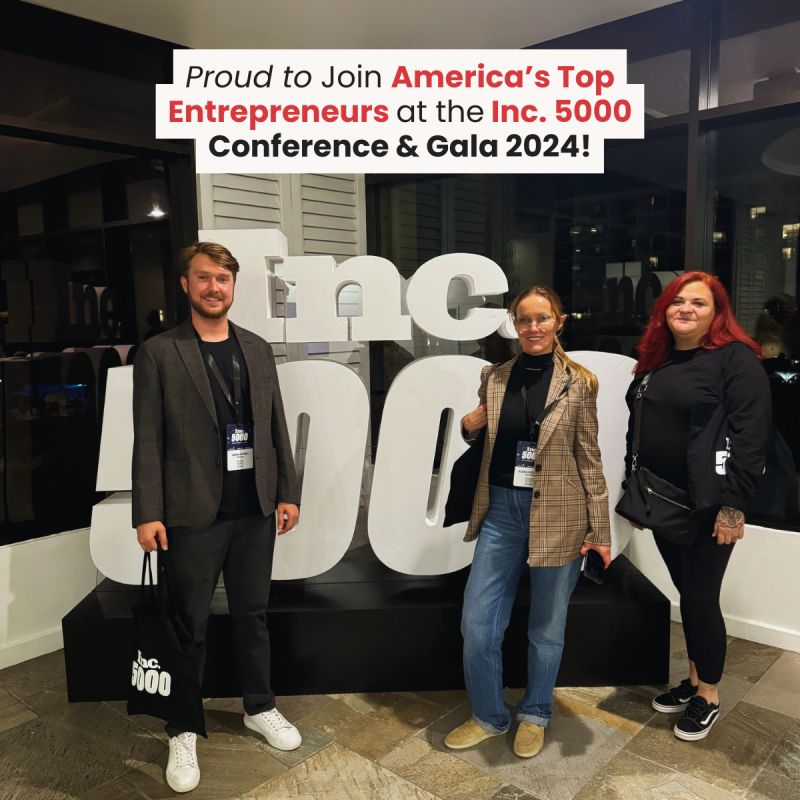
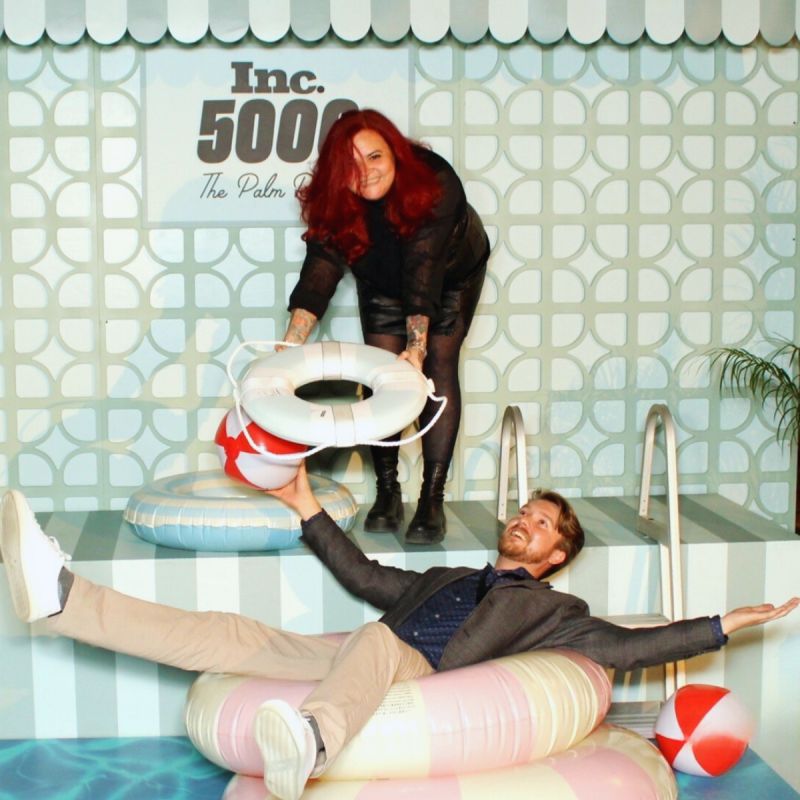
There are conventional business markers in this story. Ad Astra appeared at No. 4,267 on the 2024 Inc. 5000, a ranking based on revenue growth from 2020 to 2023. Petrova attended that year’s conference with Tirza Hidalgo and Vadim Petrov. The company’s photographs show the formal gathering and some less formal enjoyment of it. A growth award appears perfectly compatible with having fun at the venue.
Other developments were less photogenic. The company announced completion of a SOC 2 Type II audit and achievement of ISO 9001 certification in 2024. For an organization entrusted with information and recurring service commitments, security controls and quality processes belong in the same picture as growth. They give the ambitions something more durable than an event backdrop.
Petrova’s own account of ambition has changed. In a July 2026 anniversary reflection, she recalled wanting to build the biggest company. She also remembered a Saint Petersburg childhood spent listening to her grandmother’s kitchen stories, and a period in India reading Viktor Frankl and Rumi while reconsidering what her work should leave behind in others. The anniversary brought the young listener and the business founder into the same frame.
“I wanted to build the biggest one.”
Elena Petrova, recalling her early ambition
Today she runs the company and keeps making time for the person with something to say. The next exchange may need a trained interpreter, a better system or a chair at the table. Petrova’s work keeps bringing her back to the arrangements that make it possible.
Keep the conversation going
- Ad Astra website
- Elena on LinkedIn
- Connected Conversations on YouTube
- Listen on Spotify
- Listen on Apple Podcasts
- Watch the Robin Ayoub interview
- Sixteen Julys
- Success Beneath the Surface
- Conversations with the Argentina team
- Interpreter training with Amparo Villar García
- Omari Jeremiah on language access
- Lisa Mae Brunson on belonging
- Ad Astra’s 2024 Inc. 5000 announcement
- Security audit announcement
- Quality certification announcement