When Michael Kriz announced he was leaving Acclaro, one colleague remembered the furniture. Annie Inigo-Metcalfe recalled assembling IKEA pieces and sharing pizza straight from the box. For a business built to help companies communicate across borders, it was an agreeable origin image: people in a room, trying to make the pieces fit.
Another memory came from Spanish translator Fernando González. An accounting problem had remained unresolved until Kriz got on the phone and dealt with it personally. González discovered only later that he had been speaking to the CEO. The encounter stayed with him long enough to surface when the founder said goodbye.
These are small recollections, offered by people who worked with him. They give a human scale to a career otherwise described through languages, software and international expansion. A company can have a global footprint and still be remembered for who picked up the telephone.
A business education, with a French connection
By the time Kriz founded Acclaro in 2002, he had already worked inside the language business. His career included International Communications, Lionbridge and GlobalWorks. He held an undergraduate degree from Tulane University and an MBA from Babson College. The future founder had spent time with both the product and the commercial machinery around it.
Former colleague Rick Roberts remembered meeting him at International Communications after Kriz arrived from Paris. Roberts’s account describes technical knowledge alongside business judgment, and remembers the respect Kriz showed other people. Kriz lists French among his languages. The connection with language was more personal than a market entry on a spreadsheet.
At GlobalWorks, where he was vice president of marketing, another colleague, Gale Grant, recalled his combination of marketing, technology and globalization experience. Those disciplines make useful companions. A product can work perfectly and still fail to explain itself. A polished campaign can arrive in another country with the wrong associations attached.
Acclaro began as a New York firm and grew into an enterprise with offices and affiliates on four continents. In 2007, it ranked 43rd in Deloitte’s Technology Fast 500. The ranking supplies a marker of early commercial growth. The geography supplies another: customers needed help speaking to people far beyond the founder’s own neighborhood.
The expensive little words
Kriz’s explanation of localization could be refreshingly commercial. Talking about apps and international competition, he warned that a successful idea would attract someone willing to take it into other markets. Leaving those markets unattended meant accepting that somebody else might get there first.
“If someone's eating my lunch, I'd rather it be me.”
Michael Kriz, on international competition
He also drew attention to the tiny pieces of language that can determine whether an app gets discovered. An app-store title and description might contain only a handful of words. That brevity increased the importance of choosing them well. The customer was paying for judgment as well as a word count.
His comparison was to writing: translating required effort of the same kind. This is easy to recognize in your own language. Almost anyone can fill a box with text. Making a stranger understand it, care about it and click the intended button takes rather more thought. A shorter sentence does not necessarily mean a smaller problem.
In 2014, Acclaro packaged another version of this judgment into a brand evaluation service. Consultants in the intended markets assessed names, logos and creative ideas. They considered sound, meaning, cultural relevance and the associations a design might provoke. The process offered businesses an outside opinion before they committed themselves too far.
Kriz’s point was that branding which crosses borders successfully often benefits from planning and feedback early in the creative process. An American executive could admire a name for months without hearing what another audience heard in it. The overseas reader had not attended the workshop, seen the mood board or promised to be supportive.
Warhol, greeting cards and the receiving end
Some of the company’s projects made that audience unusually tangible. Acclaro worked with The Andy Warhol Museum on Chinese and Japanese versions of educational materials and its D.I.Y. Pop App. The work accompanied the museum’s Asian exhibition activity. A visitor’s encounter with the art included the language that explained how to participate.
In 2013, the relationship produced a social media contest. Participants could turn an image representing their culture into a digital screen print using the museum’s app. Museum curator Nicholas Chambers selected winners, with a separate public choice. Translation helped make an activity available; the audience supplied the images and the cultural references.
There was a lighter example in the company’s holiday e-card creator. A 2011 release offered greetings in 12 languages, with choices of artwork and music. Users could send a message in a language they did not themselves speak. Kriz presented the gesture as a way to acknowledge the increasingly international relationships businesses maintained.
The scale was modest: choose a greeting, choose a language, choose a picture. Yet the exercise asked the sender to make a small adjustment for the recipient. A holiday card is a fairly forgiving place to learn that another person’s language deserves attention. It also gives a translation company something more festive to demonstrate than a file-transfer protocol.
The handoff was part of the job
The technical side of Kriz’s career was developing alongside these projects. In 2014, Acclaro’s technical services manager Ian Barrow described connecting a customer’s content management system with the agency’s translation system. Engineers established the connection and set rules for how often work moved and how urgently it needed attention.
That account discussed automation, shared translation memories and reduced file handling. Kriz welcomed the prospect of removing effort and cost that might otherwise make companies postpone international expansion. The practical ambition was to let customers spend less time managing the passage of content through the service.
Created in a system→Language
Adapted for a market→Release
Reviewed and delivered
In January 2017, Acclaro became a translation partner for WPML, the WordPress multilingual plugin. Kriz described the connector as a response to demand for continuous translation. A website keeps changing. Its international versions need a workable relationship with those changes, rather than a ceremonial translation followed by years of neglect.
The integration joined two different kinds of expertise. WPML supplied the technical environment; Acclaro supplied the language service. For Kriz, the connector extended an existing strategy of using technology and integration to meet translation needs. The plumbing had a purpose: fewer awkward steps between an edited page and its next audience.
A larger company, then a different seat
In October 2020, Acclaro announced gold-level sponsorship of Women in Localization. Kriz spoke about supporting professional development, mentoring and peer connections. It was a specific commitment to the people building careers in the industry, alongside the company’s work for customers.
The organization’s activities included education and networking across its international chapters. Acclaro also described its LocLife event series as a place to address industry issues. These initiatives widened the founder’s subject beyond deliveries and accounts. A language business depends on people with expertise, and those people need opportunities to develop it.
February 2024 brought a change in the company’s structure. Acclaro and Jonckers announced their merger, backed by Mayfair Equity Partners. Silke Zschweigert became group CEO, while Kriz initially remained CEO of Acclaro. The combination joined technology and service operations across different geographies.
Kriz emphasized their complementary capabilities and the opportunity to invest further in AI, people and services. The transaction put Acclaro within a larger group after more than two decades as the business he had founded. It also placed the future of language services squarely in the discussion about how technology and human expertise would work together.
In January 2025, he announced that he was finishing his time at Acclaro. He thanked colleagues and said he would maintain an external advisory connection. A departure after 23 years is a substantial change in a working life. The messages it prompted returned to encounters, shared work and the experience of building something together.
Back at the table
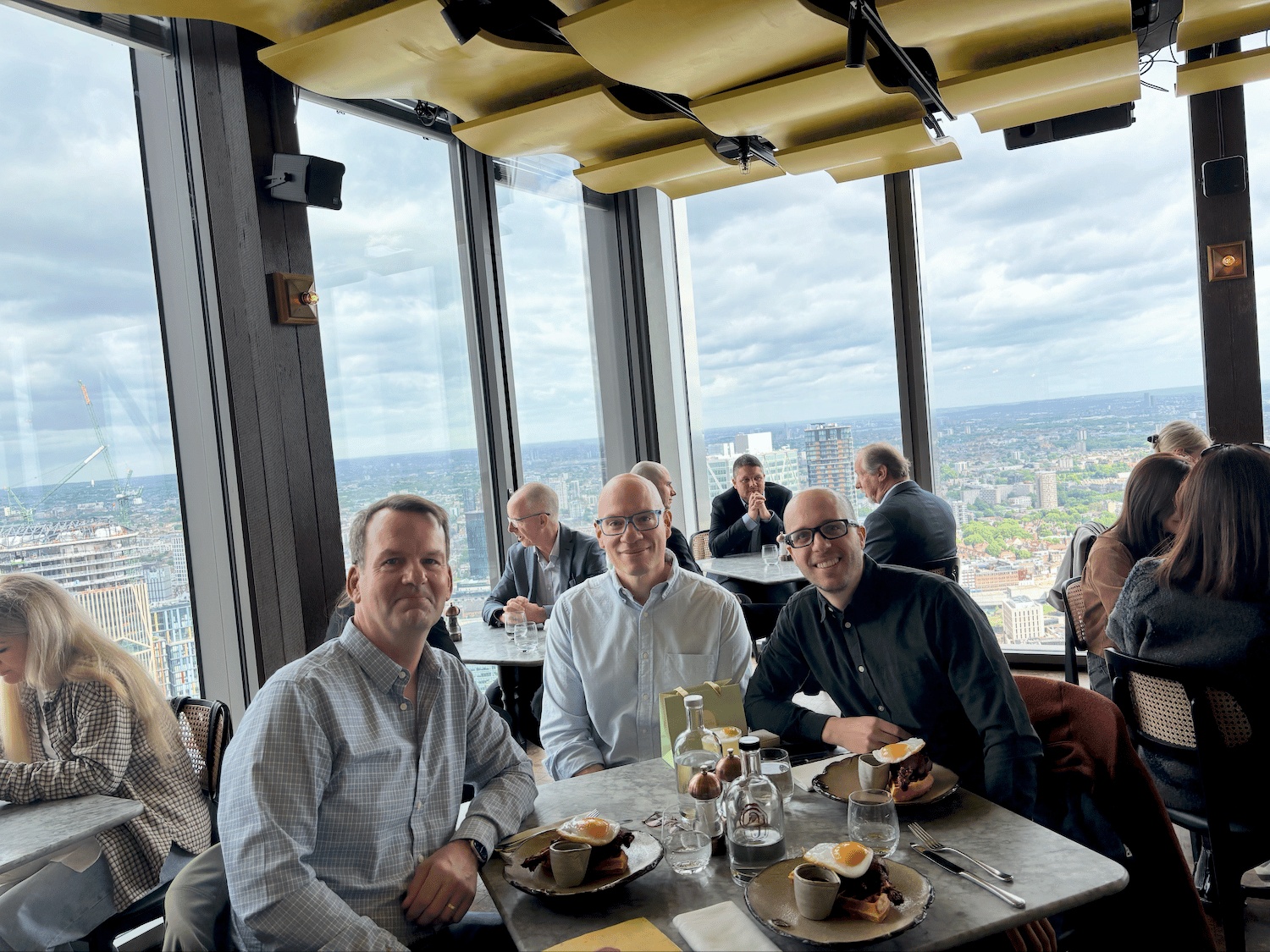
He is now a co-founder of Blackbird.io. In May 2026, he and fellow co-founder Bruno Bitter were visiting customers and attending SlatorCon in London. The photograph from that trip shows Kriz at a table with Bitter and Remote.com’s Diego Conca, the city spread out behind them.
Blackbird connects tools and systems involved in multilingual content. Its platform addresses orchestration, context and governance: how content moves between software, AI models, service providers and the rules a business needs it to follow. The subject is familiar territory approached through another company.
In September 2026, Kriz described the opportunity in the process surrounding translation. Faster translation still leaves terminology requirements, approvals and decisions about which human or AI resource should handle the work. His stated interest was in that surrounding process, where he saw room to build.
The continuity is striking. Brand names needed checking. Museum visitors needed usable instructions. Websites needed connections. Teams now need their expanding collection of content tools to work together. Kriz has kept finding business problems in the details between one person’s finished task and another person’s next step.
There is something pleasingly consistent about colleagues fitting furniture together in Acclaro’s early days and Kriz later connecting systems. The pieces have become more complicated. Making them fit remains useful work.