The word was “Jobs.” On one Smartling customer’s website, it meant employment. Elsewhere, it was the name of a virtual award honoring Steve Jobs. The careers page was translated first. Later, Spanish-speaking users completing Apple-related activities received an award whose name suggested a profession. A perfectly serviceable translation had wandered into the wrong room.
Jack Welde retold the incident with the customer’s good humor intact. It was a small embarrassment with a useful lesson: knowing a language does not tell you what somebody means. For the Smartling co-founder and former CEO, much of the interesting work happens around the words. Show people what they are looking at. Give them enough information to make a sound decision. Then get the machinery out of their way.
His career makes an unusual route to that conviction. There is a software business sold to Apple, an Air Force cockpit, a spell studying language, and years spent watching companies postpone a task they knew they needed to do. The connective tissue is the practical business of helping people act when the information in front of them is incomplete.
A company called Trio. There were three of them.
At the University of Pennsylvania, Welde studied computer engineering and linguistics, and interned with sociolinguist William Labov. Software has rules; language has rules, exceptions, social baggage, and people who will cheerfully ignore the rules. Studying both was useful preparation for a business in which a technically correct result can still sound peculiar.
His senior project helped produce an early personal information manager. He co-founded Trio Development, which Apple acquired in 1993. The product became Claris Organizer. Even the company name came with a modest explanation: three founders, Trio. The naming committee could presumably adjourn early.
The Apple connection gives his later “Jobs” anecdote an accidental symmetry. Long before he was trying to prevent software from confusing a surname with a vacancy, he had helped build software that reached Apple. His subsequent positions included senior vice president of product at eMusic and operating and technology roles at SheSpeaks and RunTime Technologies.
The cockpit’s contribution
Welde attended Penn on an ROTC scholarship and spent roughly a decade as an Air Force pilot, including time living in Germany. He also earned an MBA from Cameron University in Germany. He grew up in a military family that traveled internationally; living across borders preceded the business of helping companies cross them.
He has described his military experience as an education in leadership: carrying out a plan with incomplete information, working within constraints, and looking after people. In 2021, he said he was still flying. The connection he drew to running a company was quite specific. Managers must make decisions before every uncertainty has disappeared, while balancing the needs of customers, employees, partners, and the business.
“Good today, perfect tomorrow.”
A Smartling core value Welde connected to his military experience
That phrase can sound suspiciously convenient to anyone waiting for a software fix. Welde’s explanation gives it a stricter meaning: release something useful, hear from the people using it, and keep improving. The second half creates an obligation. Tomorrow must contain some work.
There is also a quieter example of his influence. In 2007, developer Ben Nadel described Welde as a mentor and wrote about receiving Seth Godin’s The Dip from him. The book concerns when to persist and when to quit. It is an apt gift from someone whose career involved both returning to entrepreneurship and choosing which recurring problem deserved a company.
The item that never left the roadmap
At eMusic, Welde saw a product with international appeal meet the limits of its language. In his account, the business repeatedly discussed localization, yet the work remained on the roadmap. He noticed that the company’s reception varied across markets, and language kept entering the explanation.
This was a recognizable organizational predicament. A team racing to find customers builds for the audience it knows. Later, international ambition arrives carrying a collection of engineering chores. Text is entangled with code. Layouts have been designed around English. Different writing systems need support. Everyone can agree that expansion matters while leaving its prerequisites for another meeting.
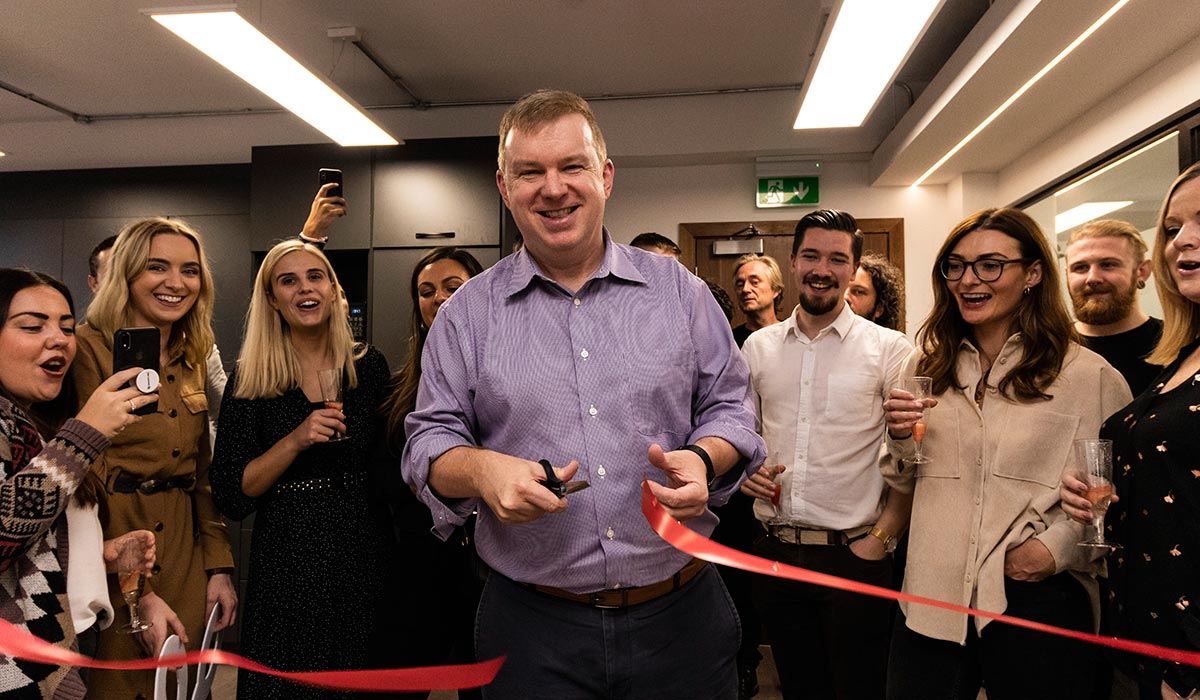
Welde founded Smartling with Andrey Akselrod in 2009. The two had worked at RunTime, where Akselrod was chief architect. Their earlier experience put them close to the systems companies used to publish content. The opportunity was in making translation fit those systems, so that a growing business could keep publishing across languages without starting a fresh administrative expedition every time.
The work surrounding the words
Smartling’s early tools reveal how much of translation involves preparation. Its 2011 self-service offering included style guidance about formal and informal address and a glossary for words that should remain unchanged. A brand name, for example, should not emerge from the process as a surprisingly literal description of itself.
These choices belong to people, but software can help people make them consistently. Welde’s product thinking put a frame around the translator’s work: gather the content, supply instructions, coordinate participants, and return the finished material to the place it belongs. The translation itself sits inside a larger system of decisions.
By 2014, Smartling offered developers ways to connect translation with their existing tools and associate text with its visual setting. The unglamorous details mattered. Developers needed usable files back. Translators needed to see what they were changing. A process that satisfied only one group could still leave the other group doing repairs.
The workflow approach also shaped how Welde explained the company in 2017: content could enter through an API or web proxy, pass through assigned collaborators and review, and reach publication. In that arrangement, automation handles movement and coordination. People can spend more of their attention on judgment, including the small ambiguities that become large mistakes when nobody asks a question.
A word needs somewhere to stand.
A cloud company makes a paper book
In 2019, Smartling took an unexpectedly physical turn. Its Move the World with Words campaign included a printed book celebrating translators. Welde and brand strategist Adrian Cohn discussed the effort together. A company selling software had decided that some of its most useful explanation could come from showing the people doing the work.
The book told the stories of 12 translators. Producing it meant travel, photography, and the logistical fuss that comes with visiting people rather than retrieving another dashboard. Material appeared along the way, including images shared before the whole campaign was complete. The release followed the same preference for trying things and learning from the response.
There was a commercial point to the attention. Customers cared about the people translating their brands. Giving those people faces and stories made a relationship visible that software marketing can easily reduce to a processing step. The book let translators occupy the foreground for once. A cloud platform had found a use for a coffee table.
A change of mind, then a change of seat
Welde’s view of machine translation evolved with the technology. In 2021, he described a shift from the company’s early skepticism to building its own neural machine translation engines in 2020. Changing the method while continuing to care about the result is a useful test of an engineer’s convictions. A tool earns its place by what it can do.
Smartling’s international business was becoming more substantial, too. By October 2019, its Dublin operation had 18 staff. Welde discussed plans to expand that team, which primarily handled sales and customer support. The business depended on working relationships across borders as well as the ability to move content across them.
co-found Smartling
becomes CEO in April
Process Innovation Challenge
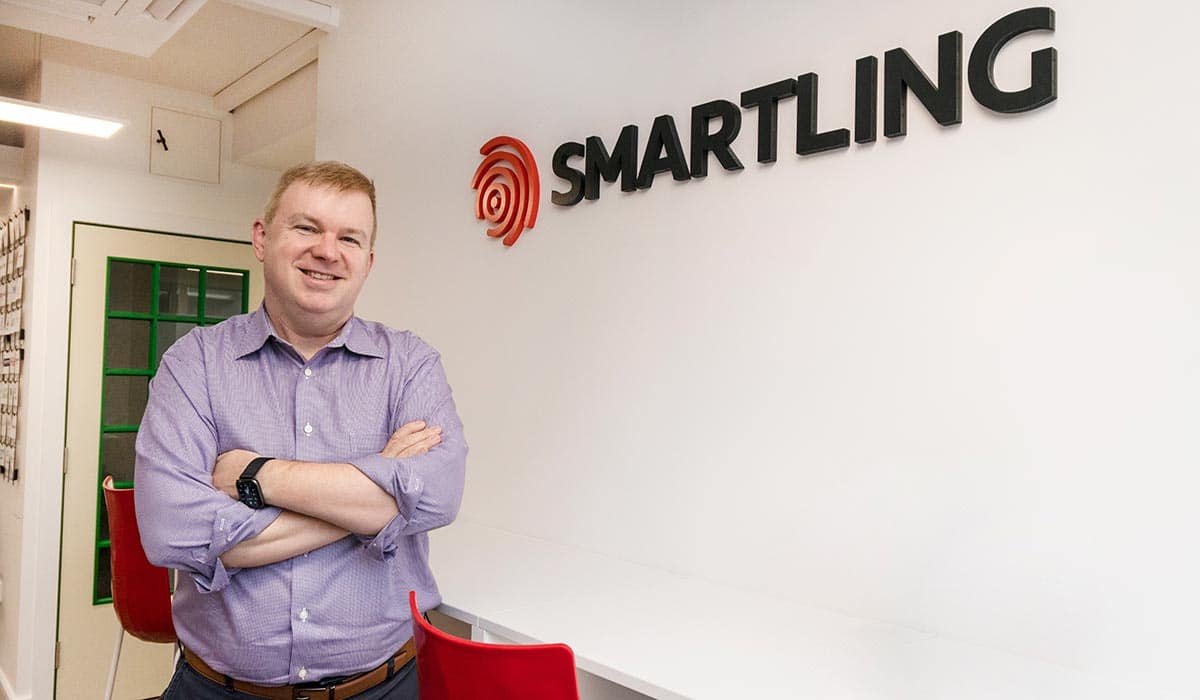
In December 2021, Battery Ventures made a $160 million growth investment in Smartling. The following April, Bryan Murphy became CEO. Welde moved into the presidency with responsibility for product development and strategy, and continued on the board. The handover separated the chief executive’s job from the product work that had helped bring the company into existence.
Later in 2022, he won the US Process Innovation Challenge at LocWorldWide48 in San Jose. His presentation concerned extracting visual context automatically from video, giving translators a way to see text in use. The subject suited his long-standing interest: better decisions begin with a better view of the problem.
Making understanding part of the job
One ambition Welde expressed in 2019 was to make translation a normal part of an organization’s workflow. He also acknowledged a product designer’s awkward responsibility: additional capabilities can make software harder to understand. Building the feature and making it feel simple are separate pieces of work.
That tension runs through his story. An engineer studies language. A pilot learns to act with imperfect information. A founder discovers that international demand can outpace a company’s ability to speak to it. Each setting rewards someone who notices what the person doing the work has been left to guess.
The “Jobs” mistake remains a fitting place to leave him. A translator was doing a reasonable thing with insufficient context. Welde’s business grew around the effort to supply what was missing. Before asking someone to choose the right word, it helps to show them where they are.