The cheapest part of translation is now the first draft. Open a general-purpose AI tool, paste a paragraph and watch another language appear before your coffee cools. For a tourist menu or a friendly email, that may be enough. For an airline changing a cancellation policy across 11 websites, a bank revising regulated copy, or a software company shipping a feature in 20 markets, the draft is where the trouble starts.
Smartling has built a business in that trouble. The New York company connects to the places where content lives, pulls out the words that need work, applies translation memory and brand terminology, routes the job through machine or human hands, checks the result, and sends approved content home. Its customers include IBM, British Airways, Canva, IHG, PayPal, Pinterest, Shopify, State Farm and Lyft. The product is less a digital dictionary than an air-traffic control system for words.
That distinction matters because raw translation is being commoditized. Smartling is not trying to win by claiming it has the one model that speaks French. Its defense is the operational layer around many models: content connectors, visual context, glossaries, approvals, audit trails, quality scoring, professional linguists and a memory of everything the customer translated before.
The model writes the sentence. The business is in making the sentence safe to ship.
01 / The machine behind the sentenceWhat Smartling actually does
A typical job begins in a content management system, code repository, help desk, design file or commerce platform. Smartling offers more than 50 integrations, plus APIs and a website translation proxy called the Global Delivery Network. The source content is ingested into a central translation management system. A team can then choose a large language model, a neural machine translation engine, professional translation, or a blend.
The platform keeps language assets close at hand. Translation memory reuses approved phrases. A glossary protects product names and technical terms. Style rules tell the system whether a brand is formal, brisk or playful. Visual context shows a linguist where the line will appear, because “Book” means one thing beside a hotel and another beside a library. Reports expose bottlenecks, spend, edit rates and quality over time.
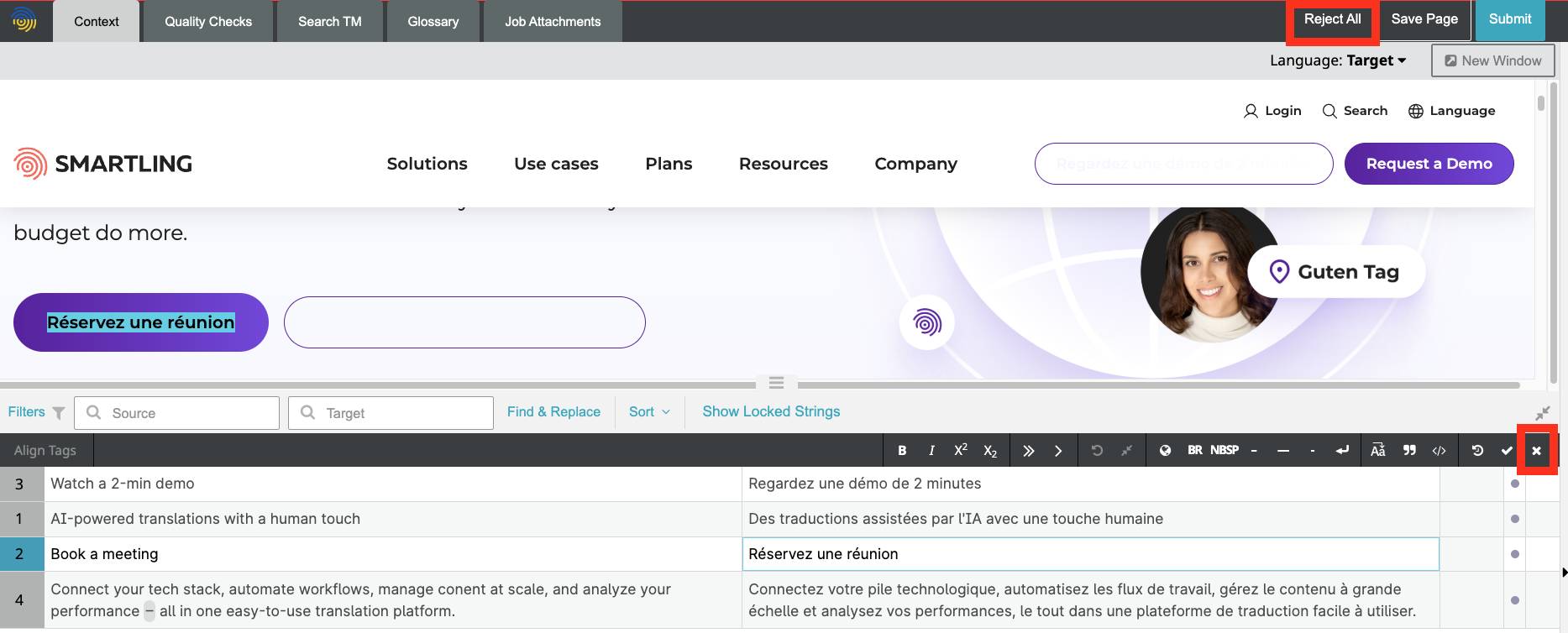
Smartling also sells managed language services. That puts vetted translators, editors, transcreators and localization specialists inside the same workflow. The company’s AI-Powered Human Translation product uses machines for speed and people where judgment still earns its keep. Customers are not forced into a single recipe; high-volume support content can run mostly through automation while legal copy or a campaign slogan receives closer review.
02 / The origin storyFirst, the spreadsheet had to die
Jack Welde and Andrey Akselrod founded Smartling in 2009, when enterprise translation still relied heavily on emailed files, brittle handoffs and project managers playing detective. The early thesis was straightforward: put translation management in the cloud and connect it to the content systems already producing the work. Funding followed, including a $25 million Series D led by ICONIQ Capital in 2014 and a $160 million growth investment from Battery Ventures in 2021.
The first thing to fail in old localization programs was rarely language skill. It was the handoff. Someone forgot a file, translated an outdated version, lacked a screenshot, or finished the work only to discover that nobody owned publishing. Smartling attacked those coordination costs. Its 2016 acquisitions of mobile-localization company Jargon and multimedia specialist VerbalizeIt widened the kinds of content the platform could handle.
Then the market changed its mind about the machine. Neural translation improved; large language models made fluent output ordinary; buyers became less interested in whether AI belonged in the workflow and more interested in how much review it could safely remove. Smartling repositioned around LanguageAI and reported that its translation business grew 40 percent in 2023. It later said AI translation usage grew 218 percent during 2025. Those are company-reported figures, but the direction is the point: the debate moved from experimentation to production.
03 / Proof in the plumbingThe case study that explains the product
IBM offers the cleanest example. Its global marketing organization publishes across more than 170 countries, with a steady stream of product names, launches and updates. Before the new system, files and status checks moved manually across tools. The company needed translation to live inside Adobe Experience Manager and Workfront, not beside them.
Smartling connected those systems and worked with IBM’s watsonx as part of the AI foundation for translation memory and post-editing. Requests, source files and references could move automatically; finished translations returned to structured folders ready for publishing. IBM says average time to market dropped from around 20 days to under 10, translation quality improved by about 40 percent, and the workflow reached 99.5 percent automation. Millions of words now move through it each month.
The copyable move is not “buy AI.” It is to map the round trip. Where does content begin? What metadata travels with it? Which phrases must never change? Who reviews which risk tier? How is quality measured? How does approved work return without a human downloading, renaming and uploading a file? A model can improve one box. A system improves the arrows.
04 / Pilots beat proclamationsWhat changed their mind
British Airways began with a contained bet: use Smartling’s Global Delivery Network for a Korean-language site supporting a new route. Developers had been preparing files and previews by hand, pulling them away from product work. The pilot translated more than 500,000 words and launched in time for the first flight. It expanded into 11 localized websites, with the airline reporting that new language sites arrived in half the usual time.
That pattern is worth stealing. Pick one language, one content source and one business deadline. Record the old cycle time, edit rate, publishing labor and cost. Run the same measures after the pilot. Expand only when the operational numbers improve. “Global transformation” is a foggy project; “launch the Korean route page before the first departure” is a test.
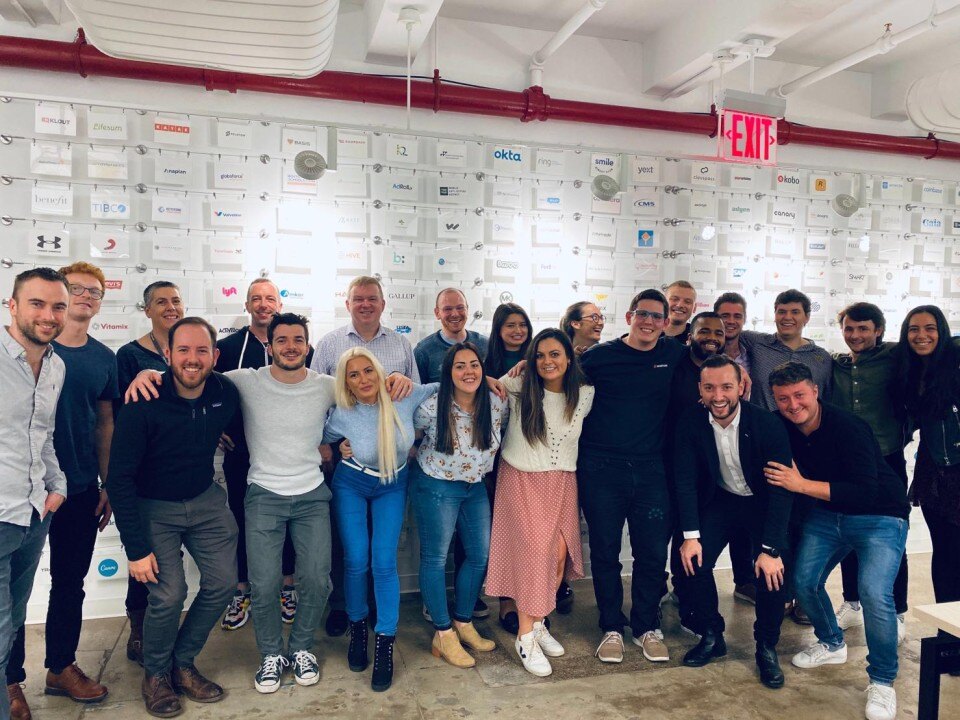
Yext shows the compounding effect. As its translation memory accumulated approved language, the company supported six times as many languages while cutting effective cost per word by 25 percent. Its correction rate for Japanese strings fell to 0.17 percent, an 87 percent reduction in words needing edits. The lesson is unusually practical: do not treat every sentence as brand new. Save approved language and make the system earn interest on it.
05 / The bill and the boundariesWhat it costs - and when it does not work
Smartling does not publish a simple price list. Contracts are custom, shaped by platform scope, integrations, word volume, languages, workflow complexity and whether the customer buys managed language services. That makes the sticker price difficult to compare with a self-serve translation app. The fair comparison is total operating cost: software, translators, internal project management, developer time, rework and the revenue cost of a late launch.
The platform is easiest to justify when content changes constantly, several systems feed the translation queue, brand terminology matters, multiple reviewers need visibility, and mistakes are expensive. It is much harder to justify for a quarterly brochure, a one-language microsite or a team that can finish the job in an afternoon. Enterprise machinery becomes comedy when the process is smaller than the procurement form.
Good conditions
- Recurring, high-volume content
- Many markets and source systems
- Clear owners and approval rules
- Reusable terminology and memory
- Quality can be measured
Bad conditions
- Occasional, low-risk copy
- No maintained glossary
- Messy or unstable source content
- Nobody owns in-market review
- A generic model is already enough
The system also cannot repair a confused source strategy. If the English changes every day, product names are inconsistent and local teams disagree about tone, automation will move that confusion faster. Human review remains sensible for regulated claims, culturally delicate campaigns, humor and high-consequence instructions. AI quality scoring can reduce sampling work; it does not make risk disappear.
06 / Where it fitsThe market around the model
Smartling sits in a crowded field. Phrase, Lokalise, Transifex, Crowdin, Smartcat, RWS, memoQ and XTM sell overlapping translation-management capabilities. DeepL competes from the model side; TransPerfect and Lionbridge bring large service organizations; Weglot makes website translation approachable for smaller teams. A determined company can also assemble its own stack from an LLM API, a database, automation tools and freelancers.
Smartling’s distinction is the breadth of the bundle: enterprise workflow software, AI translation, managed linguists, visual context, a web proxy, more than 50 connectors, APIs, quality analytics and now an MCP server. Launched in 2025, that server lets developers and content teams call Smartling from compatible AI tools such as Claude Code, VS Code and Cursor while retaining the customer’s glossary, memory and preferred translation engine. In May 2026, the company added LQA Agent, automatic model selection, AI style rules, language adaptation and instant translation.
This is Smartling’s latest bet: translation becomes an invisible capability inside other work, while governance remains centralized. The user should not need to visit a separate dashboard for every sentence, but the company still needs to know what happened. It is an enterprise-software idea in its purest form - make the complicated machine disappear for the worker without making it disappear for the auditor.
Smartling’s moat is not knowing more languages. It is knowing where every word belongs.
The broader lesson travels beyond localization. When a foundation model makes output abundant, value shifts toward context, proprietary memory, workflow, evaluation and distribution. Smartling has spent 17 years collecting those less glamorous pieces. If it succeeds, the company will not be the place employees go to translate. It will be the reason translation happens correctly while they are somewhere else.